
Minneapolis Institute of Art
Spider and Web
Maruyama Ōshin
- Date
- early 19th century
- Medium
- Hanging scroll, ink on paper
- Department
- Asian Art
- Institution
- Minneapolis Institute of Art
A lone spider descends from its web, barely visible on an almost-blank paper. In Japan, the spider and its web were considered a sign that someone would be visiting. This belief came from the Chinese superstition that one would have a visitor if a web got caught in one’s clothes. During the Edo period (1603–1868), women in brothels favored the spiderweb as a kimono pattern because they hoped to catch good clients much as the spider catches its prey. Asia
The authoritative record is held by Minneapolis Institute of Art. LinkedCulture surfaces this object and its connections; it does not alter institutional metadata.
Related across collections
Semantically similar works from Minneapolis Institute of Art and other institutions.

Beauty catching a spider
Minneapolis Institute of Art
Women Chasing Crickets on an Autumn Moor
Cleveland Museum of Art

Monkey and Trainer
Minneapolis Institute of Art
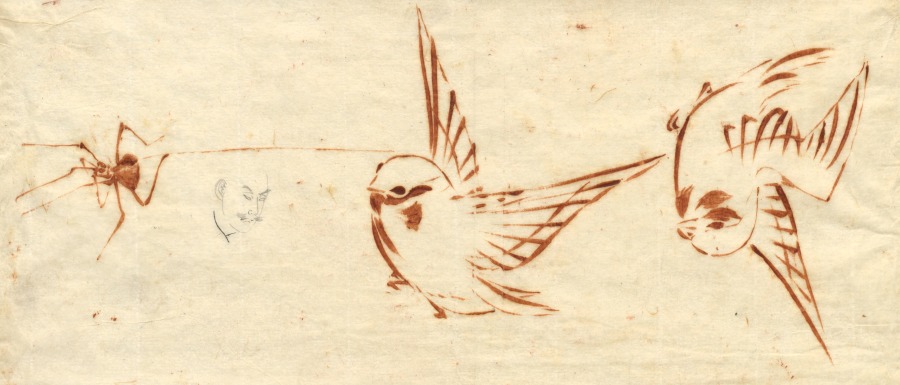
Sketch Page with Birds and Spider
Cleveland Museum of Art

Beauty Receiving a Visitor
Cleveland Museum of Art

Outer robe (uchikake) for the spider disguised as maid Kochō in the Kagura dance Tsuchigumo (Earth Spider)
Minneapolis Institute of Art
Catching Fireflies
Cleveland Museum of Art

Woman and Man at Entrance Gate of Enoshima
Minneapolis Institute of Art

Ferry at Rokugō
Minneapolis Institute of Art
The Moon-Viewing Promontory, from One Hundred Views of Famous Places in Edo
Cleveland Museum of Art

Courtesan on parade, with two kamuro and two shinzo
Minneapolis Institute of Art
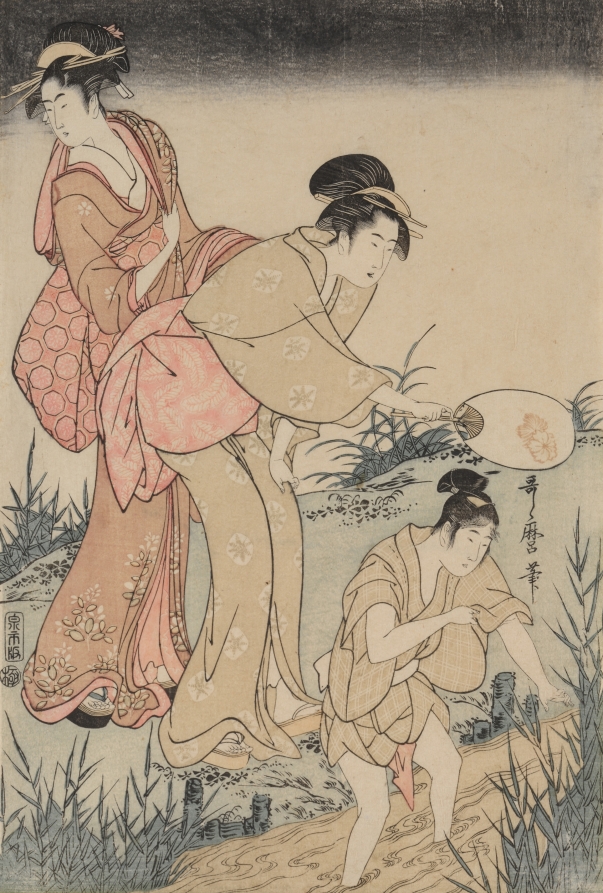
Catching Fireflies Beneath a Willow Tree (right)
Cleveland Museum of Art