Minneapolis Institute of Art
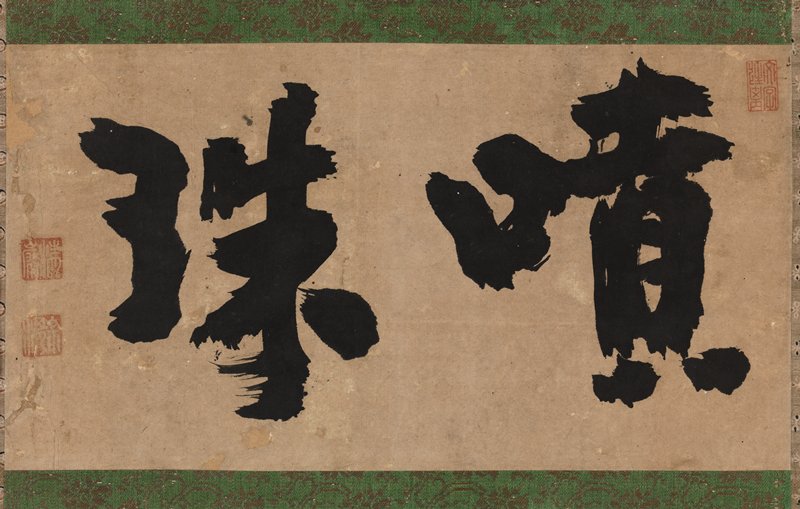
Sophisticated Eloquence (Funju 噴珠)
Seigan SōiLinkedCulture matchlcp-5921a06fdbb2
- Date
- mid 17th century
- Medium
- Hanging scroll, ink on paper
- Department
- Asian Art
- Institution
- Minneapolis Institute of Art
- Object ID
- 122356
From the Minneapolis Institute of Art record
Three generations of tea masters in the late 1400s and 1500s are credited with transforming the Japanese tea ceremony and developing the form of tea preparation known as wabi-cha , based on the notion of rustic simplicity: Murata Jukō (1423–1502), Takeno Jōō (1502–1555), and his follower Sen no Rikyū (1522–1591). Instead of using only luxurious Chinese tea utensils as had been the practice, these three men preferred rougher Japanese ceramic utensils or even those handmade from bamboo. They also sought the calligraphy of Zen monks, known as bokuseki (ink traces), to hang in the alcove of the tearoom. The words on such a scroll might offer an opportunity for contemplation or may set the scene of an entire gathering. This scroll includes only two characters that mean “sophisticated eloquence.” The artist, Seigan Sōi, was a Zen monk and abbot of Daitokuji, an enormous Zen monastic complex in the heart of Kyoto. Asia
The authoritative record is held by Minneapolis Institute of Art. LinkedCulture surfaces this object and its connections; it does not alter institutional metadata.
Get printable QR codesHide QR codes
Open QR codes for this object page and the museum record. They stay collapsed until needed.
Provenance & credit
As published by the source institution. Coverage varies — not every institution's open-data feed includes ownership history.
- Credit line
- Mary Griggs Burke Collection, Gift of the Mary and Jackson Burke Foundation
Related across collections
Semantically similar works from Minneapolis Institute of Art and other institutions.