
Minneapolis Institute of Art
Ewer
China
- Date
- 16th century
- Medium
- Porcelain with underglaze blue decoration
- Department
- Asian Art
- Institution
- Minneapolis Institute of Art
Blue-and-white porcelain directly modeled on Persian and Islamic metalware was produced as early as the Yongle era (1403–25), most likely as diplomatic gifts for central Asian and Middle Eastern rulers. This pear-shaped ewer, with its elongated spout, delicate handle, and slender proportions, while later in date, is likewise inspired by Islamic metalwork. The underglaze blue-and-white decoration however is entirely in Chinese taste. The heart-shaped pictorial panels depict scholars and their attendants in landscape settings. The remaining decoration of flower blossoms, Daoist attributes, and border patterns are also typically Chinese and can be traced back to at least the 14th and early 15th centuries. The ewer is a good example of the adaptation of foreign objects to Chinese aesthetic preferences. Its base contains a four-character inscription in underglaze blue, which reads fu shou k'ang ning, an auspicious mark wishing happiness, longevity, peace, and tranquility for the owner. China
The authoritative record is held by Minneapolis Institute of Art. LinkedCulture surfaces this object and its connections; it does not alter institutional metadata.
Related across collections
Semantically similar works from Minneapolis Institute of Art and other institutions.

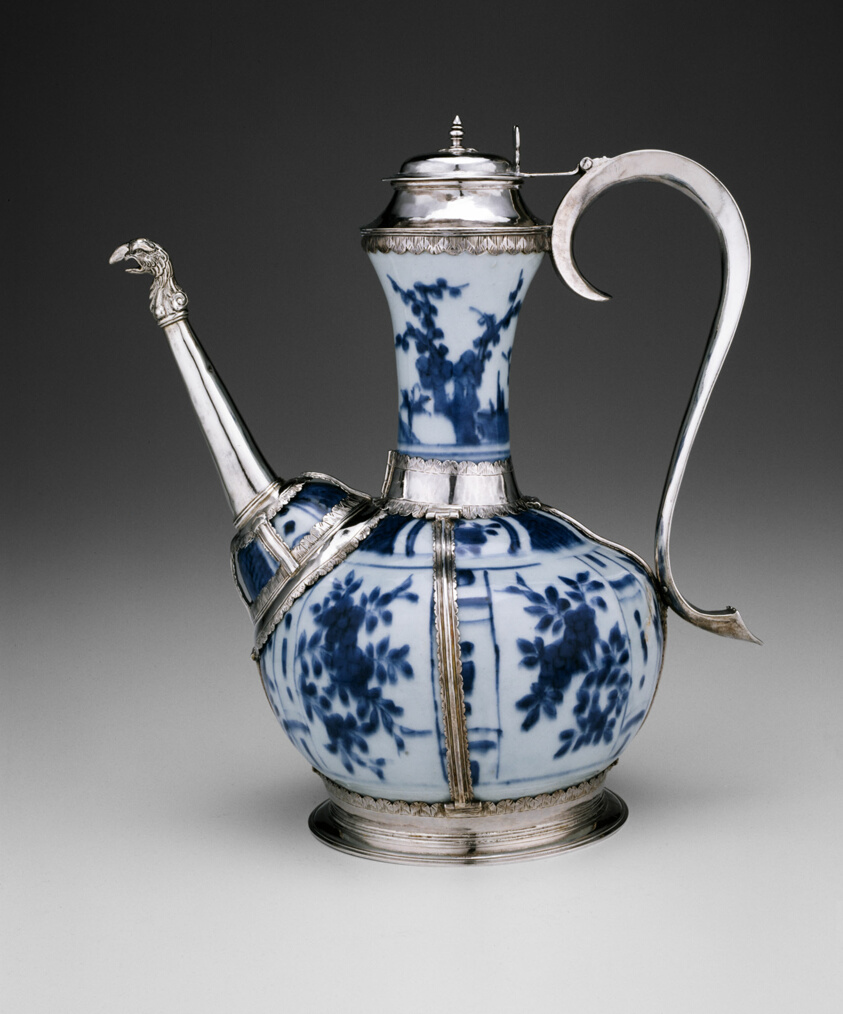
Ewer with pheasant-head stopper
Minneapolis Institute of Art
Ewer
Art Institute of Chicago

Ewer
Minneapolis Institute of Art

Ewer
Getty Museum
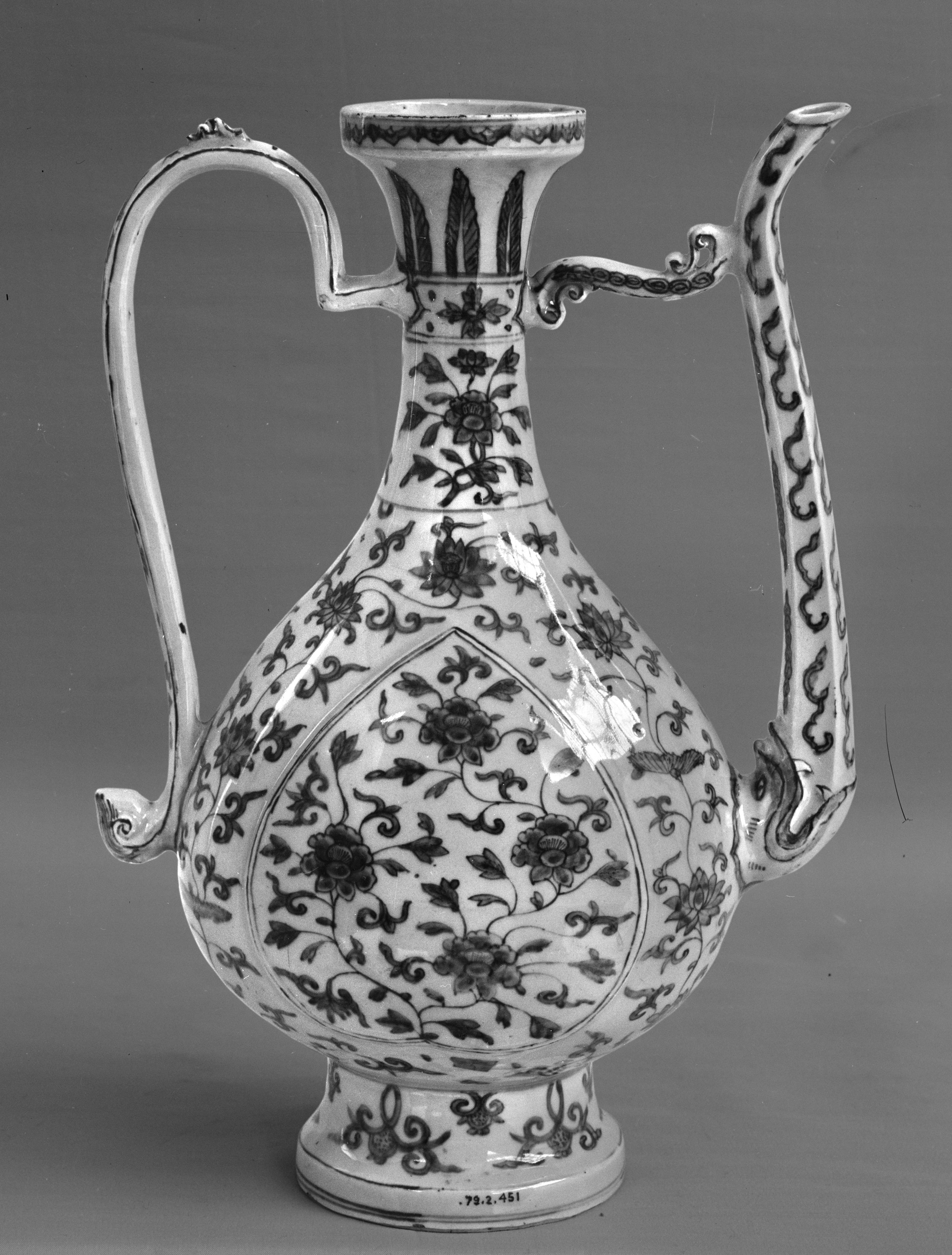
Ewer
The Metropolitan Museum of Art

Ewer and Cover
Minneapolis Institute of Art

Wine ewer and cover
Minneapolis Institute of Art

Ewer
Minneapolis Institute of Art
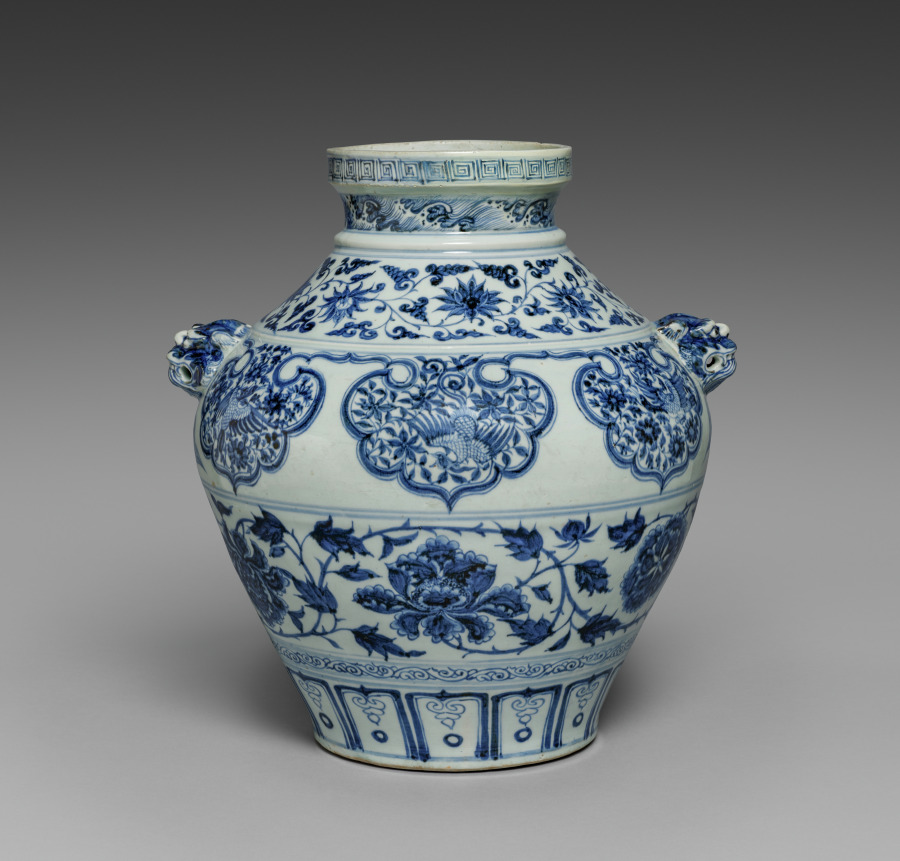
Jar with Lion-Head Handles
Cleveland Museum of Art

Wine Ewer and Basin
Minneapolis Institute of Art

Chicken-head ewer
Minneapolis Institute of Art

Imperial deep dish
Minneapolis Institute of Art