
Minneapolis Institute of Art
Hawks
China
- Date
- late 15th century
- Medium
- Ink and light colors on silk
- Department
- Asian Art
- Institution
- Minneapolis Institute of Art
Chinese eagle and hawk compositions were designed to capture not only the bird’s regal appearance, but also its fierce spirit as a hunting companion or bird of prey. Such temperament is vividly demonstrated in the painting depicting the hawk and a fallen egret: while the hawk is imposing and calm, the egret is panicky and terrified, engaged in a mortal struggle. Paintings of eagles and hawks from the Ming dynasty are often invested with moral messages. The image of a large eagle or hawk standing on a lofty cliff surrounded by a roiling sea has a symbolic overtone that comes from a pun – the Chinese term standing for ocean wave or tide is pronounced in the same fashion as the word meaning court. Thus ‘Qingchao duli’ can be read as ‘standing alone in clean tides’, or ‘standing along in a clean court’. While other eagle and hawk compositions were designed to offer an admonition to the ruler, the present theme was aimed at encouraging court officials (in the treacherous mid-Ming court, officials who fought against corruption frequently found themselves alone and in need of great courage). An eagle or hawk anchoring its talons firmly on the solid rock was not unlike an honorable official standing alone in court, surrounded by corrupt forces. China, Asia
The authoritative record is held by Minneapolis Institute of Art. LinkedCulture surfaces this object and its connections; it does not alter institutional metadata.
Related across collections
Semantically similar works from Minneapolis Institute of Art and other institutions.

Hawks
Minneapolis Institute of Art
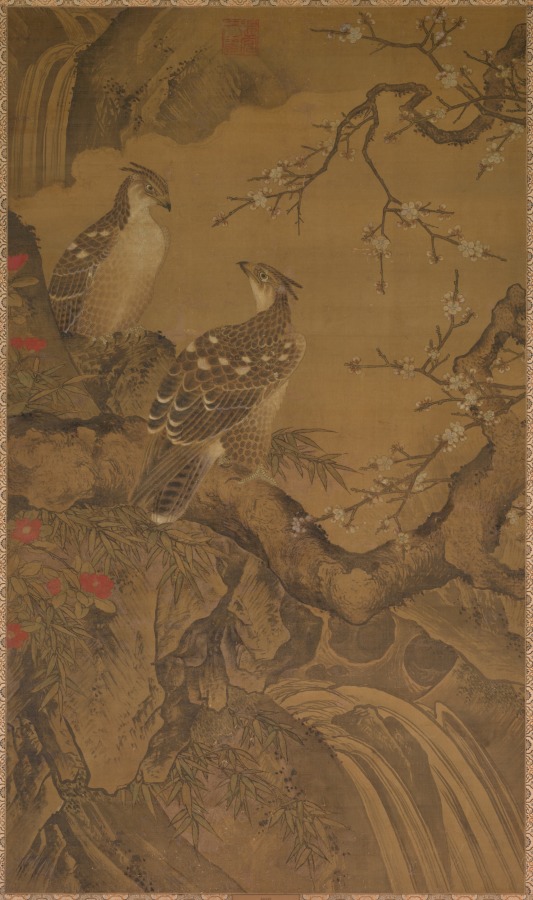
Eagles
Cleveland Museum of Art

Eagle on Rock by Waves
Minneapolis Institute of Art
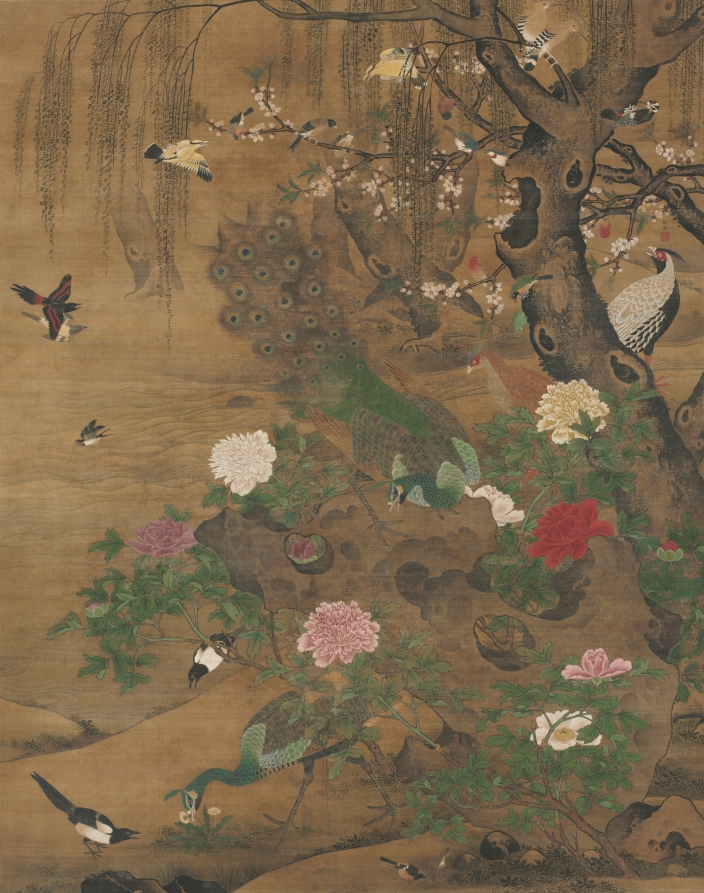
Birds Gather under the Spring Willow
Cleveland Museum of Art
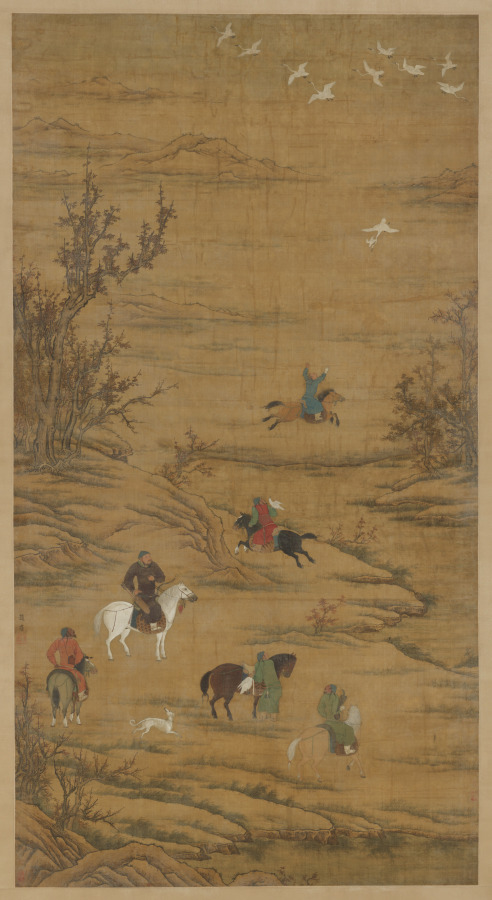
Hunting on Horses
Cleveland Museum of Art
![Hawks by a Stream [right of a pair]](https://6.api.artsmia.org/800/118453.jpg)
Hawks by a Stream [right of a pair]
Minneapolis Institute of Art
![Hawks by a Stream [left of a pair]](https://0.api.artsmia.org/800/118454.jpg)
Hawks by a Stream [left of a pair]
Minneapolis Institute of Art
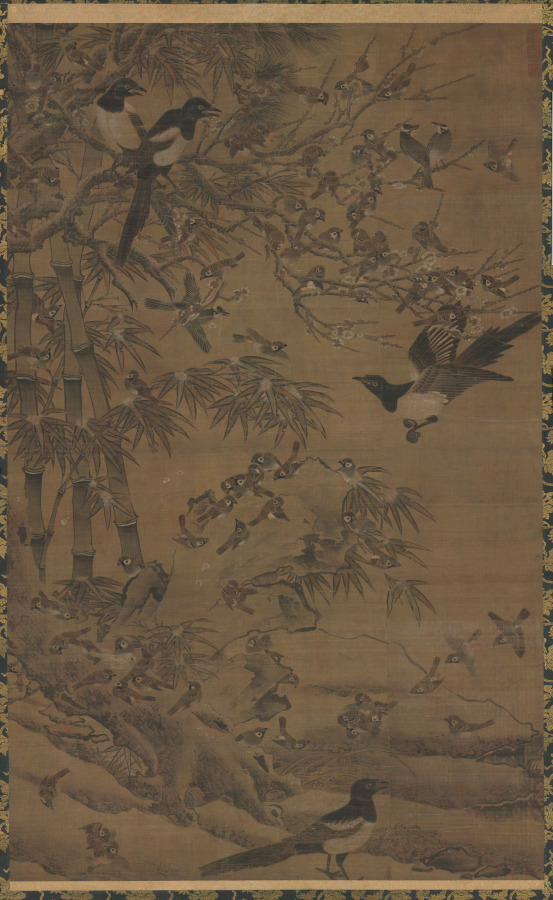
A Hundred Birds and the Three Friends
Cleveland Museum of Art
Waterfowl and Reeds
Cleveland Museum of Art
Eagle on a Tree Trunk
Cleveland Museum of Art
Leaping Carp
Cleveland Museum of Art

Fishing Under a Pine Tree
Minneapolis Institute of Art