
Minneapolis Institute of Art
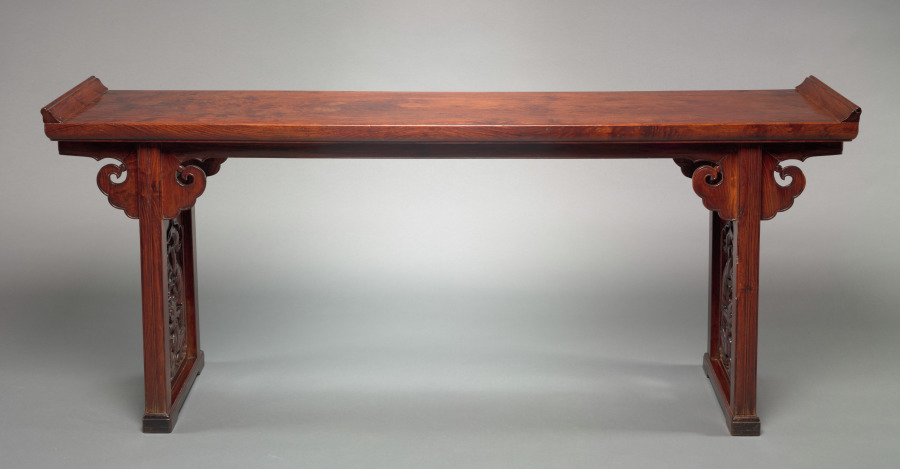
Recessed-leg Altar Table
China
- Date
- 16th-18th century
- Medium
- Huanghuali hardwood
- Department
- Asian Art
- Institution
- Minneapolis Institute of Art
Throughout China, long side tables with everted ends were often placed against the back walls of reception halls and temples where they were used in a ceremonial context. These altar tables could be set with ancestral tablets, Buddhist or Taoist images, and a variety of ritual utensils including censers, candlesticks, flower vases, and offering plates. Sometimes called wall tables, they could also serve a variety of secular functions throughout the household, including the display of precious objects. It is understandable that these major pieces of ceremonial furniture would often be of grand proportions and ornate decoration. This magnificent example is especially praiseworthy. Its top consists of a single, thick plank of beautifully grained huang-hua-li twelve-and-a-half feet in length. It is the second longest such table recorded and among the most elegantly proportioned of the few massive, single plank, long tables to survive. The work is elaborately decorated with richly carved dragon spandrels and openwork panels of serpentine dragons inset between the legs. Asia
The authoritative record is held by Minneapolis Institute of Art. LinkedCulture surfaces this object and its connections; it does not alter institutional metadata.
Related across collections
Semantically similar works from Minneapolis Institute of Art and other institutions.

Corner Leg Long Table
Minneapolis Institute of Art

Portable Long Table
Minneapolis Institute of Art
Side Table
Cleveland Museum of Art

Long Table
Minneapolis Institute of Art

High-Waisted Table
Minneapolis Institute of Art

Recessed Leg Reading Table
Minneapolis Institute of Art

Recessed-leg Table with Stone Top
Minneapolis Institute of Art

Rectangular Table
Minneapolis Institute of Art
Side Table with Everted Ends
Cleveland Museum of Art

Painter's Table (tiao'an)
Minneapolis Institute of Art

Corner-leg Painting Table
Minneapolis Institute of Art

Two-Drawer Table
Minneapolis Institute of Art