
Minneapolis Institute of Art
(New Year's Decorations)
Kōbi 公美; Kōshū 公秀
- Date
- 19th century
- Medium
- Woodblock print (surimono), ink and color on paper
- Department
- Asian Art
- Institution
- Minneapolis Institute of Art
Not only do New Year's decorations in Japan add to the festivities, but also carry symbolic meaning derived from time-honored traditions. Depicted here are three kinds of New Year's decorations. The wooden plate on the right is decorated with ceremonial bows (hamayumi, in Japanese) and arrows (hamaya). Because hama, which originally referred to the target used in archery, is written with the characters break (ha) and evil (ma), these evil breaking bows and arrows are believed to repel bad sprits. Bamboo leaves, green pine needles and a branch of flowering plum are three plants associated with strength and fortitude. The red lacquered cup next to the plate is used to drink special sake (toso) on New Year's Day. Spiced with medicinal herbs, the sake was believed to ensure good health. Lastly, to the left are the dried sardines, a symbol of fertility, tied with colored paper cords (mizuhiki), thus wishing the families prosperity in the New Year. Asia
The authoritative record is held by Minneapolis Institute of Art. LinkedCulture surfaces this object and its connections; it does not alter institutional metadata.
Related across collections
Semantically similar works from Minneapolis Institute of Art and other institutions.

New Year's Celebration
Minneapolis Institute of Art
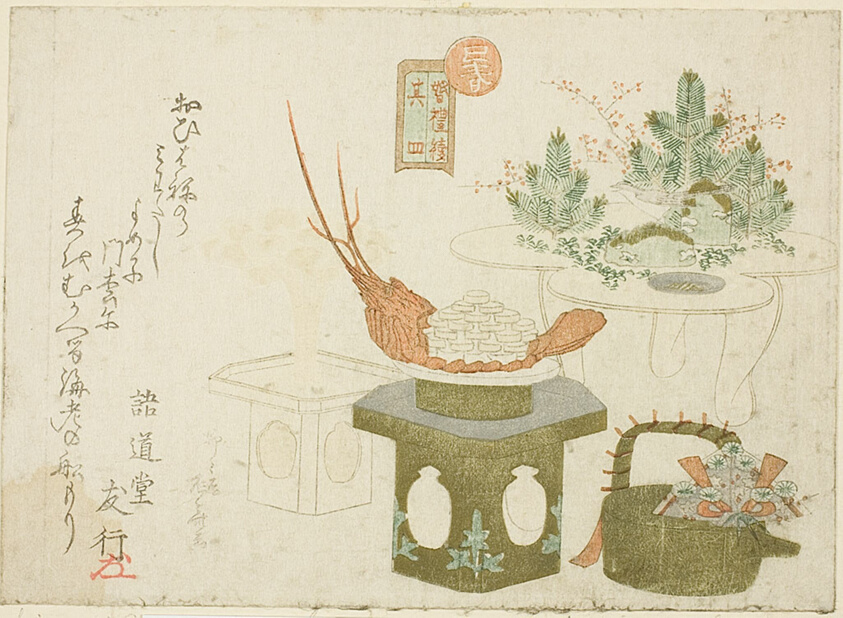
New Year's Decorations
Art Institute of Chicago
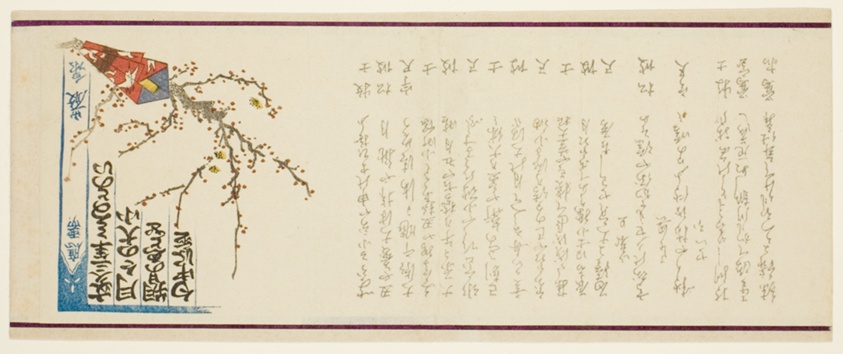
New Year Gift
Art Institute of Chicago
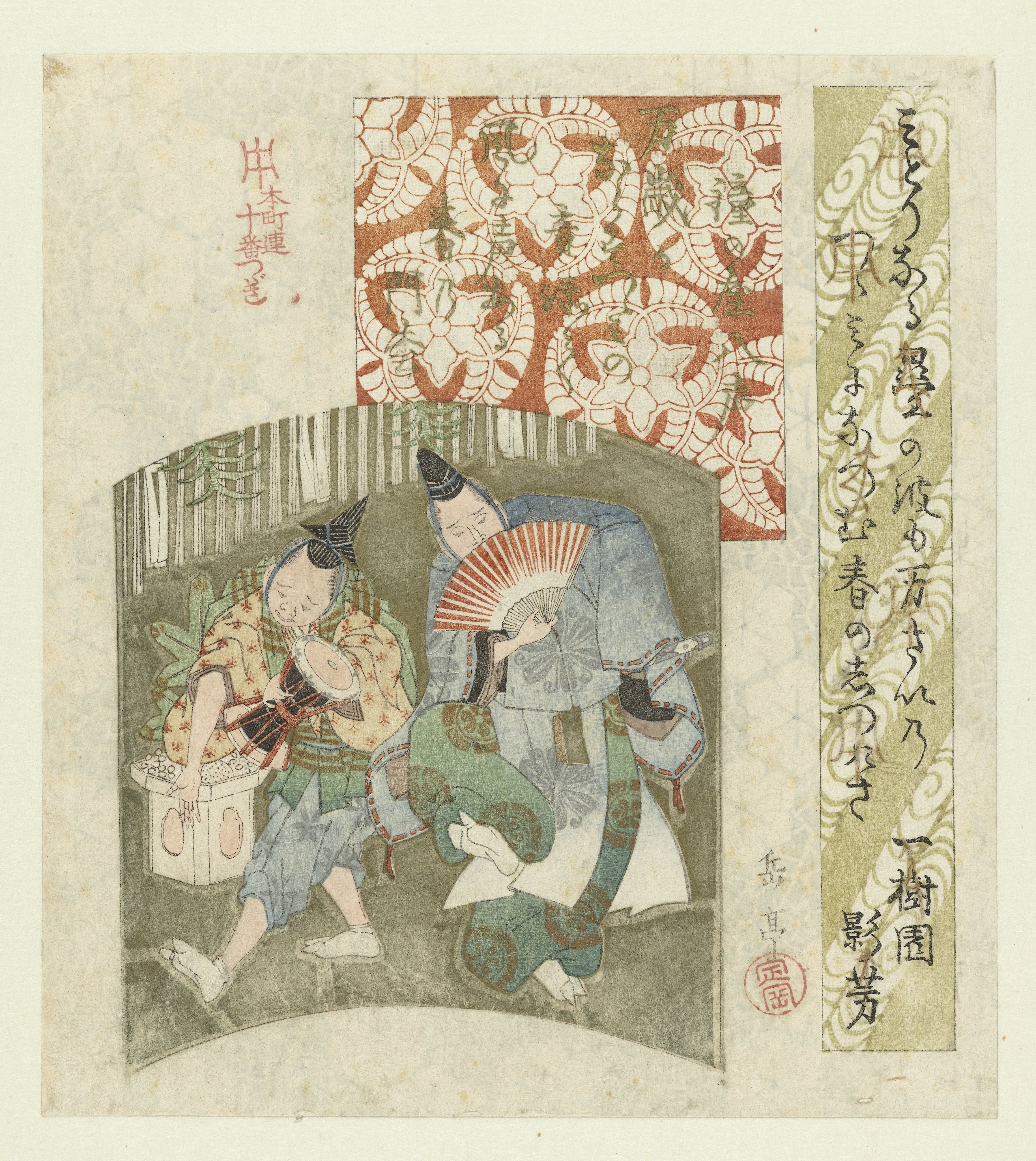
Nieuwjaars-dansers op een scherm
Rijksmuseum

Toy tiger
Minneapolis Institute of Art
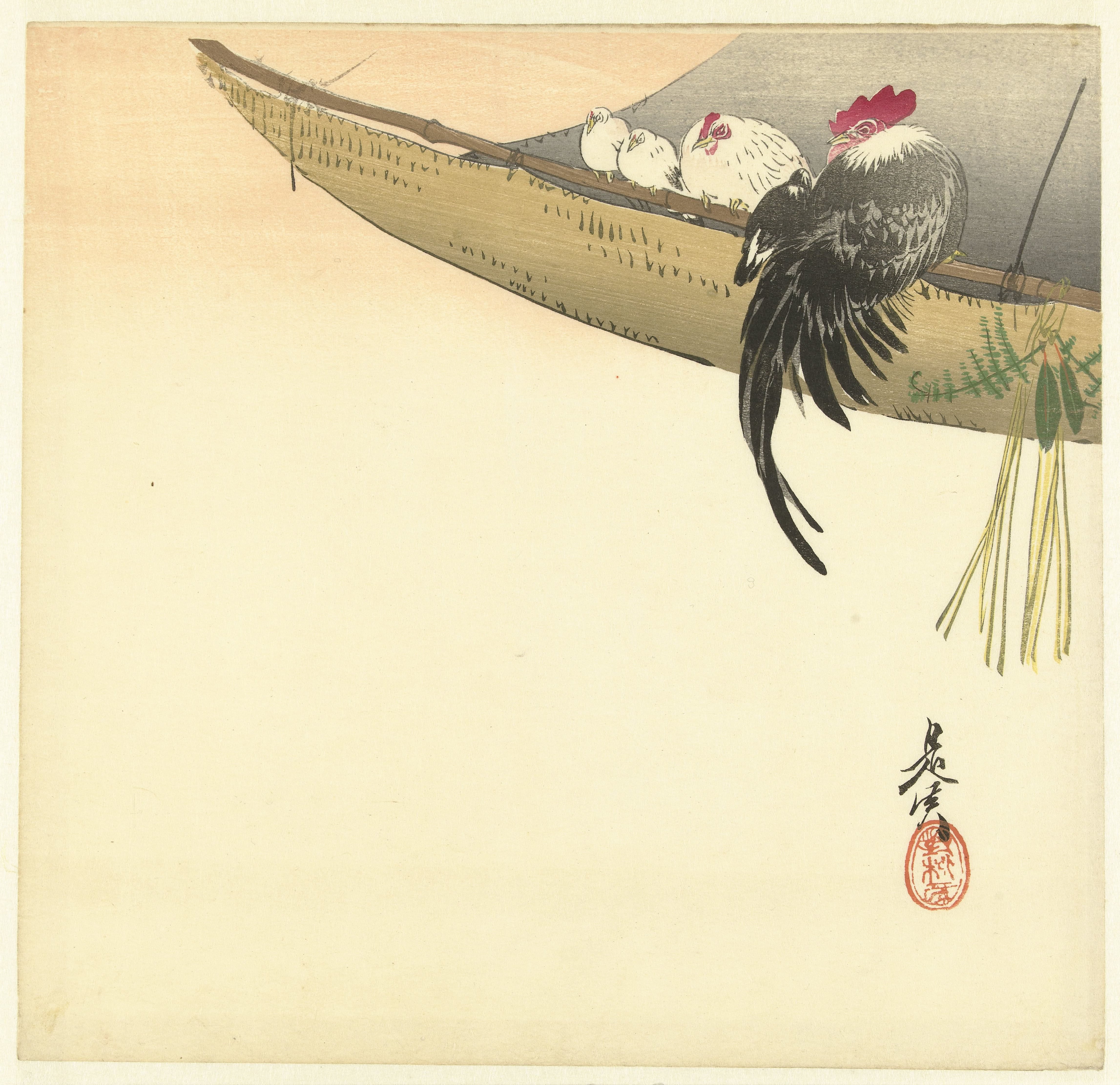
Nieuwjaarsdag in het jaar van de haan
Rijksmuseum
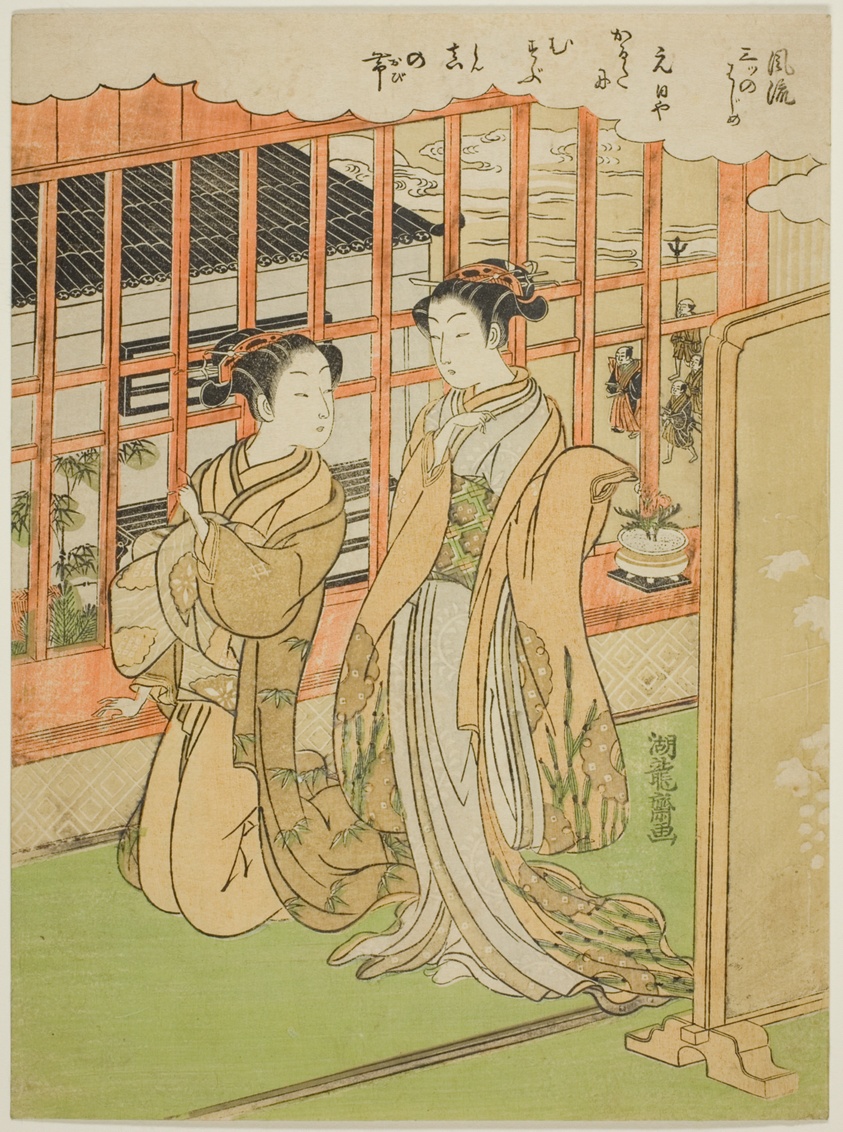
New Year's Day, from the series "Fashionable Three Beginnings (Furyu mittsu no hajime)"
Art Institute of Chicago
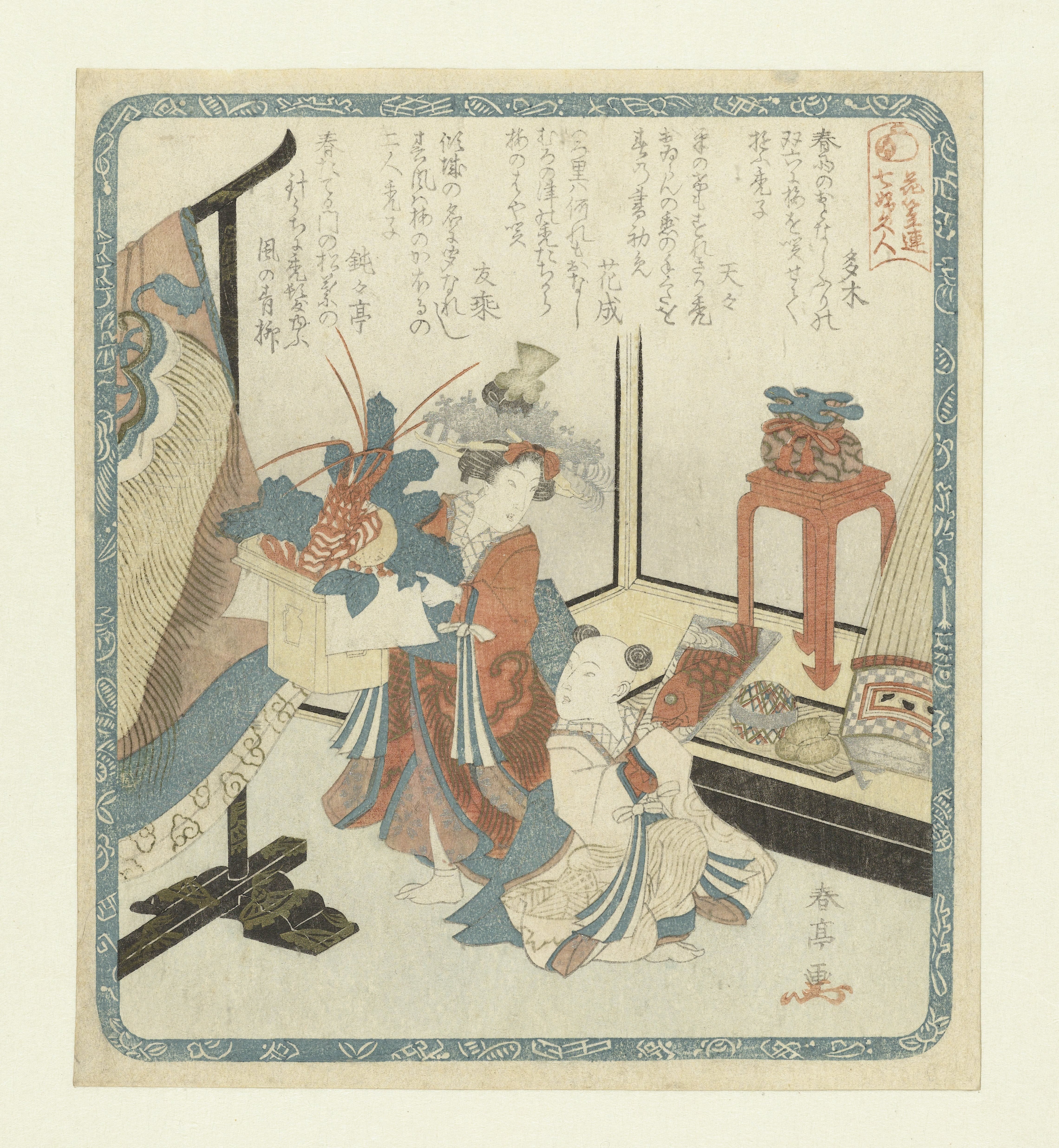
Kamuro en Shinzô op nieuwjaarsdag
Rijksmuseum

New Year’s Sake
Art Institute of Chicago
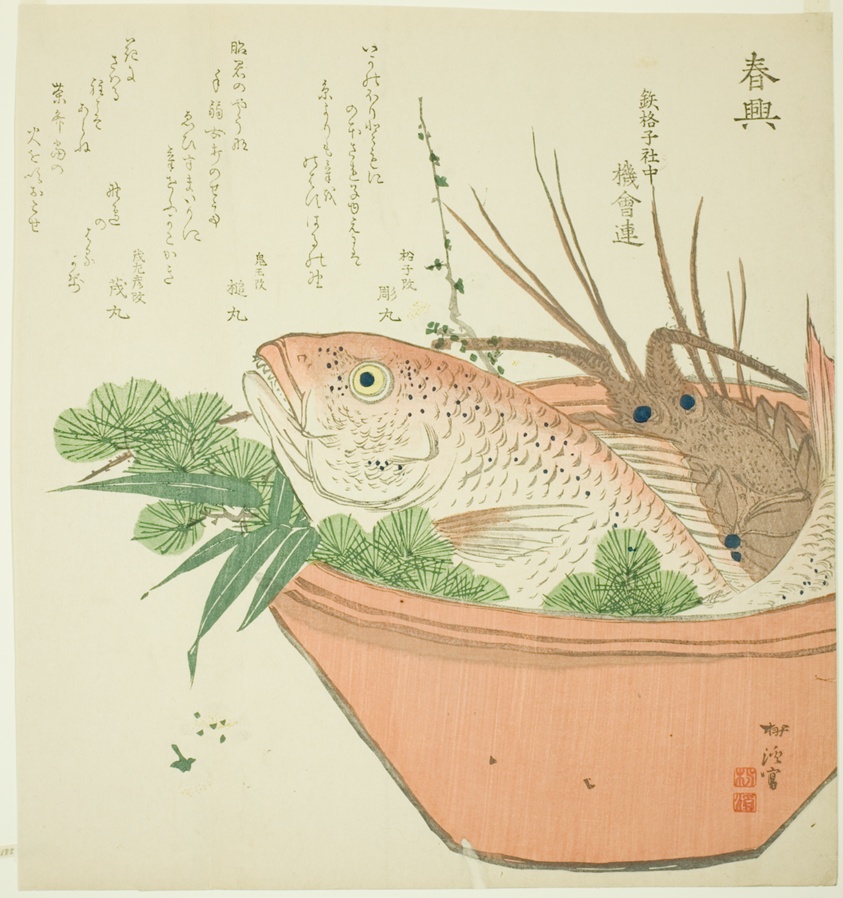
New Year's Offering
Art Institute of Chicago
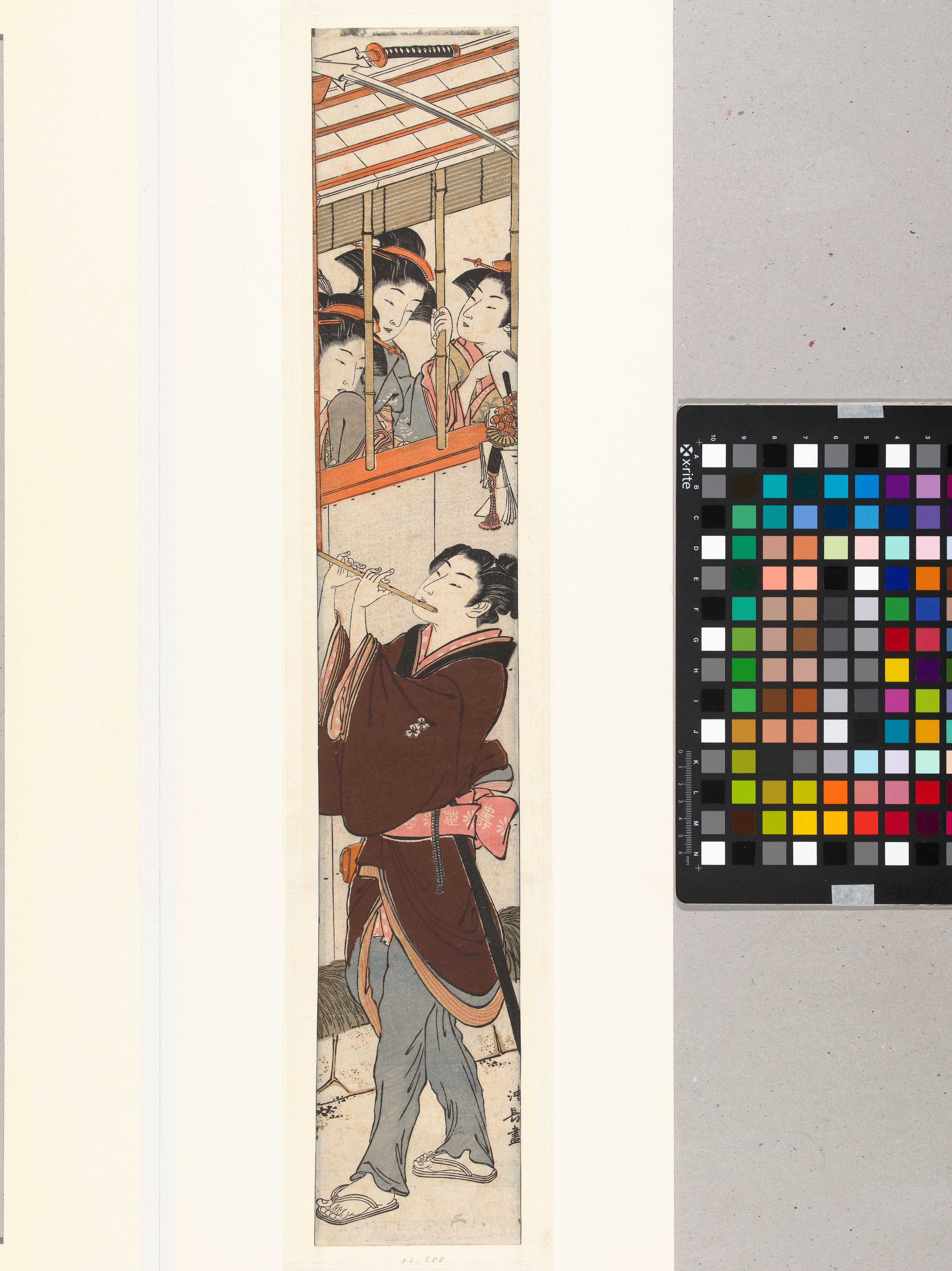
Nieuwjaarsoptreden
Rijksmuseum

(Carrying the New Year decorations)
Minneapolis Institute of Art