
Minneapolis Institute of Art
Plate with man riding an elephant for the Indian market
China
- Date
- c. 1785
- Medium
- Porcelain
- Department
- European Art
- Institution
- Minneapolis Institute of Art
India's elite consumer markets attracted sumptuous objects made of fragile and costly materials from around the world. This plate was made in Jingdezhen, in Eastern China, from porcelain, a material not produced by India's own artistic ateliers. Its ornamentation reflects the Indo-Islamic tastes of India's courts: the central image is of a man astride an elephant, wielding a whip. Stylistically, the rider adheres to types found in contemporaneous Indo-Islamic manuscripts, while the elephant is oddly formed, as if its painter had never seen one before-or is it a conscious attempt to synthesize recognizably Indian and Chinese artistic styles? The borders of the plate contain white floral patterns punctuated by colorful exotic flowers, probably emulating the rich floral ornamentation that frequently decorated the borders of manuscripts. The owners of the vase or plate would have prized both possessions for their origins along global trade routes, in which India's political elites exerted significant energy and control. From Venice, Italy to Jingdezhen, China, these objects illustrate the expansiveness of this trading circuit, and how both tastes and individuals fluidly navigated the European-Asian markets.
The authoritative record is held by Minneapolis Institute of Art. LinkedCulture surfaces this object and its connections; it does not alter institutional metadata.
Related across collections
Semantically similar works from Minneapolis Institute of Art and other institutions.

Altar Frontal
Minneapolis Institute of Art
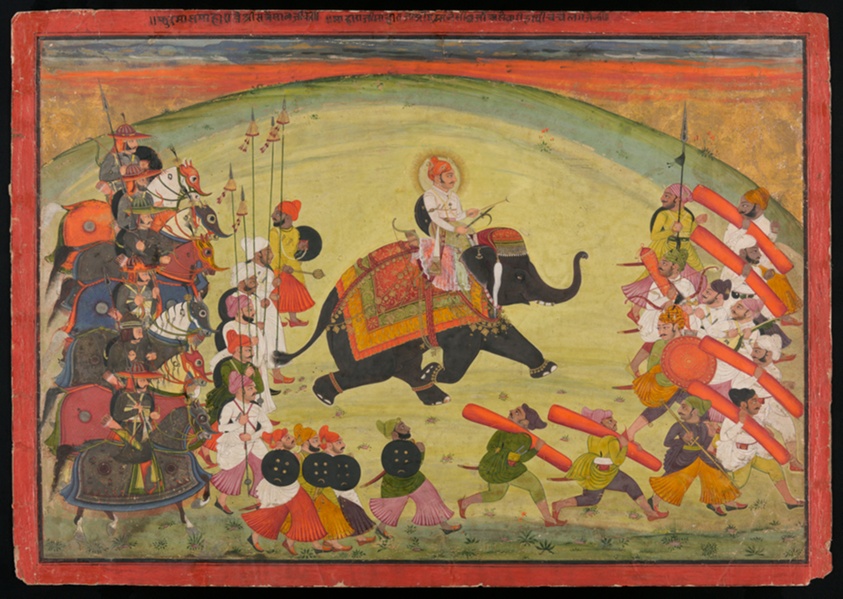
Maharao Guman Singh Riding an Elephant in Procession
Art Institute of Chicago

Bowl Depicting a Lady Riding an Elephant
Minneapolis Institute of Art

Plate
Minneapolis Institute of Art
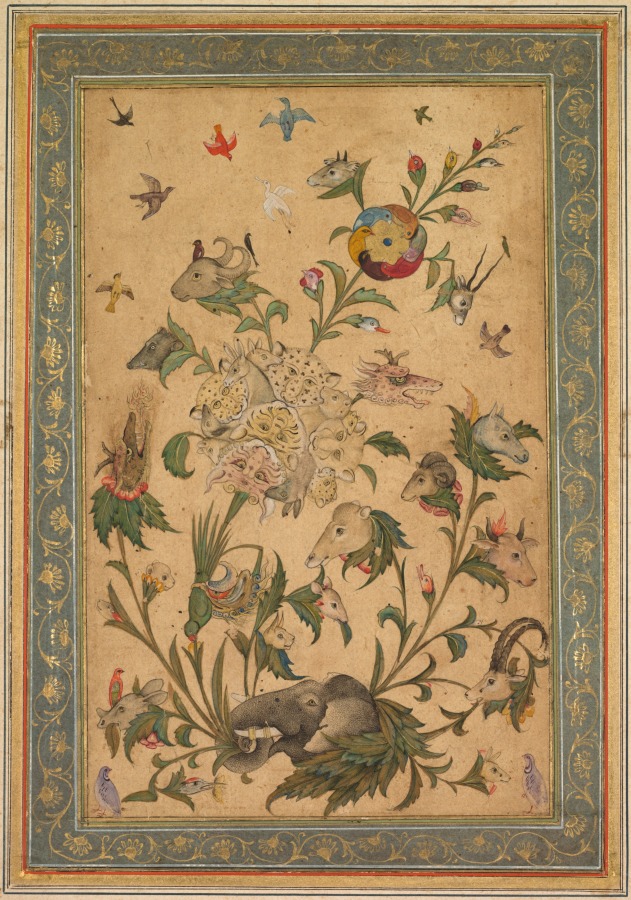
A floral fantasy of animals and birds (Waq-waq)
Cleveland Museum of Art

Plate
Minneapolis Institute of Art
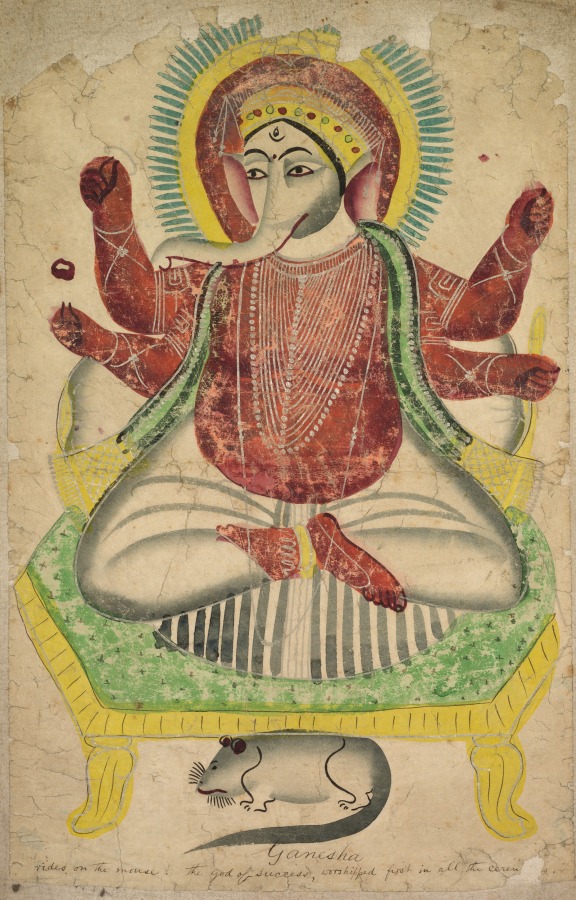
Ganesh
Cleveland Museum of Art
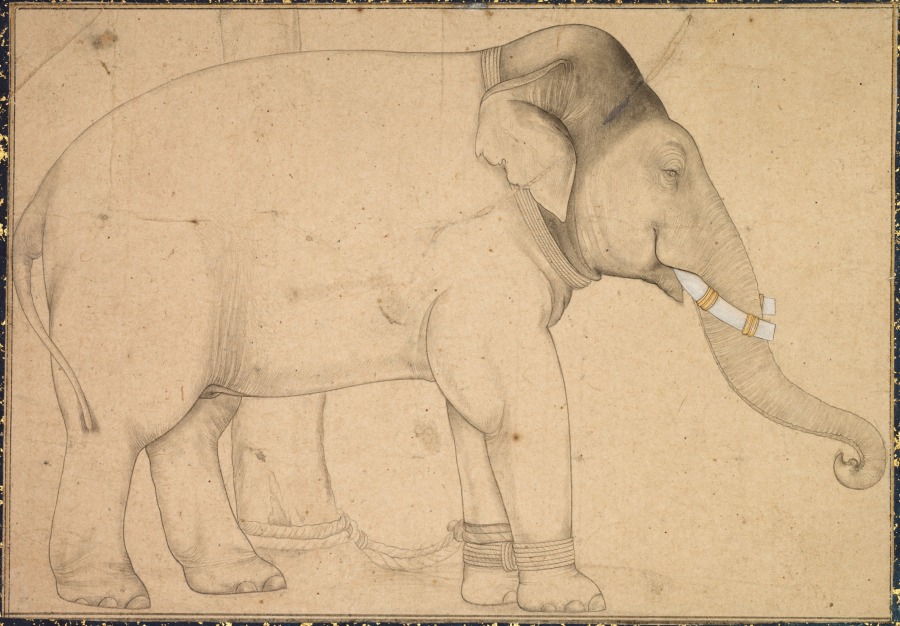
Drawing of an Elephant
Cleveland Museum of Art

Lidded Vase
Getty Museum
Ewer
Art Institute of Chicago

Figure of an Elephant
Getty Museum

Vase
Minneapolis Institute of Art