Minneapolis Institute of Art
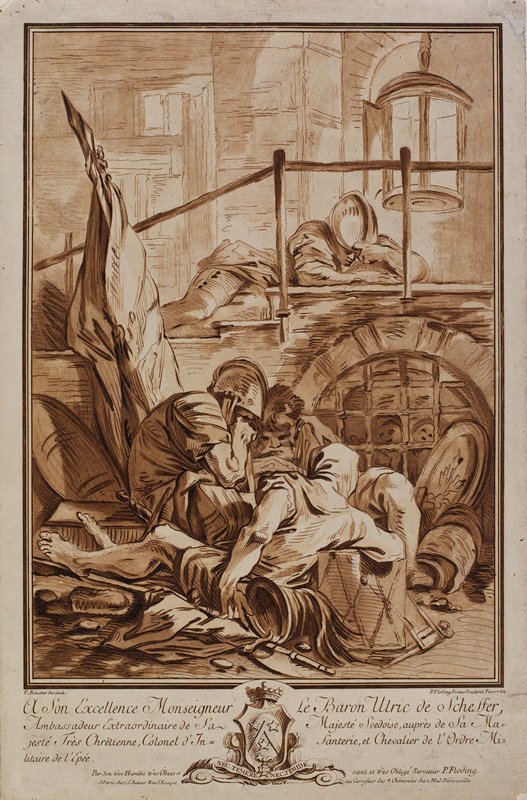
Un Corps de Garde
Per Gustav Floding; after François Boucher
- Date
- 1762
- Medium
- Engraving, etching and aquatint (lavis) in bistre ink
- Department
- European Art
- Institution
- Minneapolis Institute of Art
In the 18th century, France and Sweden were strong military allies, and upperclass Swedes adopted French artistic trends. Born in Stockholm, Per Gustav Floding was sent to Paris as a young man to learn the art of engraving. He remained there for most of his career but retained close ties to his homeland. King Adolf Frederick was so pleased with a portrait that Floding made of him that he gave the artist money to re-equip his studio. This led directly to Floding’s invention of a new printmaking technique, lavis aquatint. The technique involved covering the copper printing plate with powdered resin, heating it to make it adhere, and then subjecting it to repeated acid baths while selectively applying protective coatings between the successive immersions. The result is a field of minute dots of various sizes, which simulate the effect of dilute ink washes when printed. As we see here, various effects could be achieved by printing the plate in various colors. Un Corps de garde is one of Floding’s first productions in his new technique (see also Mia 2002.185.2 and 92.22). It is based on a drawing by François Boucher whose fame gave rise to a veritable industry devoted to reproducing his drawings and paintings. Floding dedicated the image to Ulrik Scheffer, whose military career led to his appointment as a military advisor to the king. We do not know if Scheffer appreciated the irony of having his name attached to a corps of sleeping guardsmen. Europe
The authoritative record is held by Minneapolis Institute of Art. LinkedCulture surfaces this object and its connections; it does not alter institutional metadata.
Related across collections
Semantically similar works from Minneapolis Institute of Art and other institutions.

Un Corps de Garde
Minneapolis Institute of Art

Head of a Bearded Man, Leaning Back
Minneapolis Institute of Art
Perseus and Andromeda
Minneapolis Institute of Art

Head of a Young Woman in a Headdress, Leaning Left
Minneapolis Institute of Art
The Arrival of Monsieur de la Bourdonnais, plate 3 from Paul et Virginie
Art Institute of Chicago

The Wagon Driver and the Milkmaid
Minneapolis Institute of Art

Bossuet (en pied)
Minneapolis Institute of Art
Effect of Moon at Dieppe
Cleveland Museum of Art
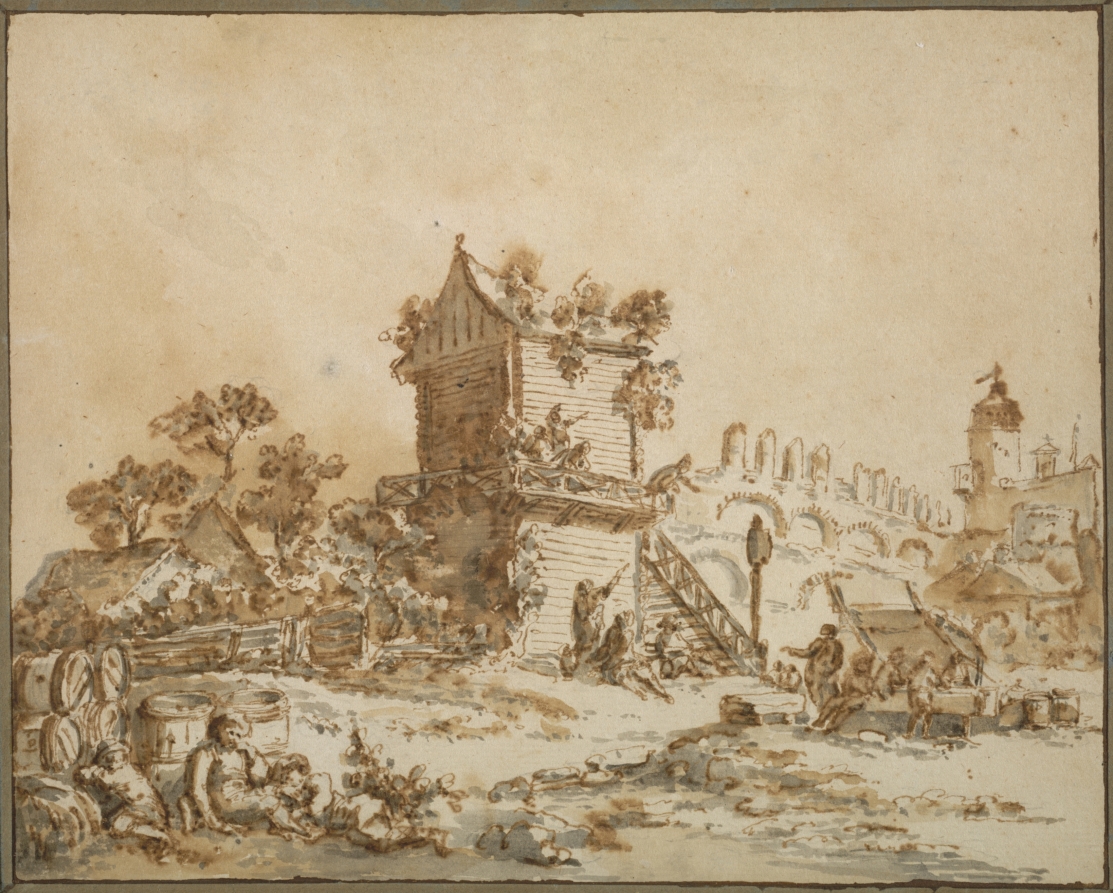
The Moscow Tavern
Cleveland Museum of Art
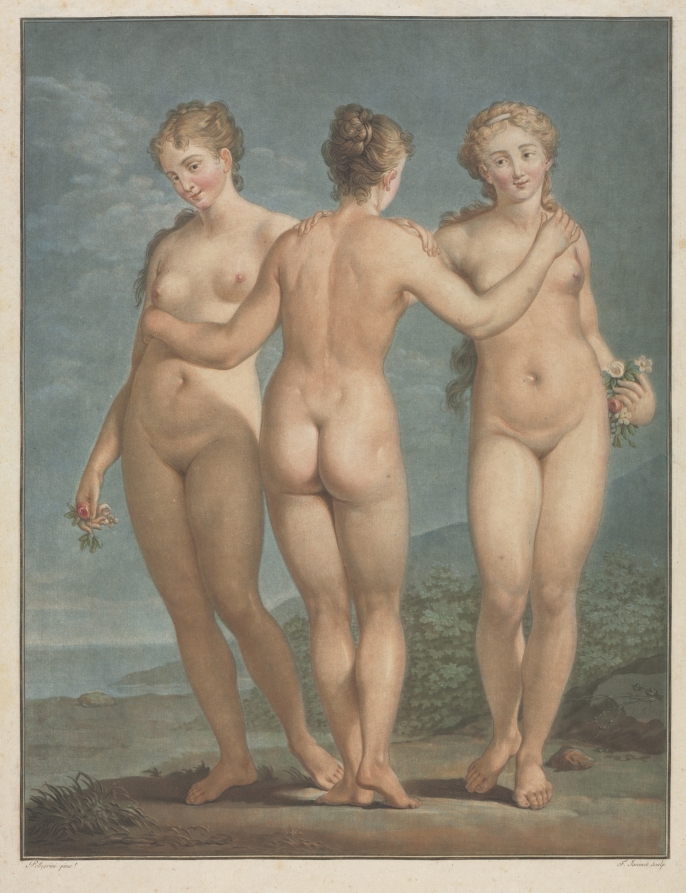
The Three Graces
Cleveland Museum of Art
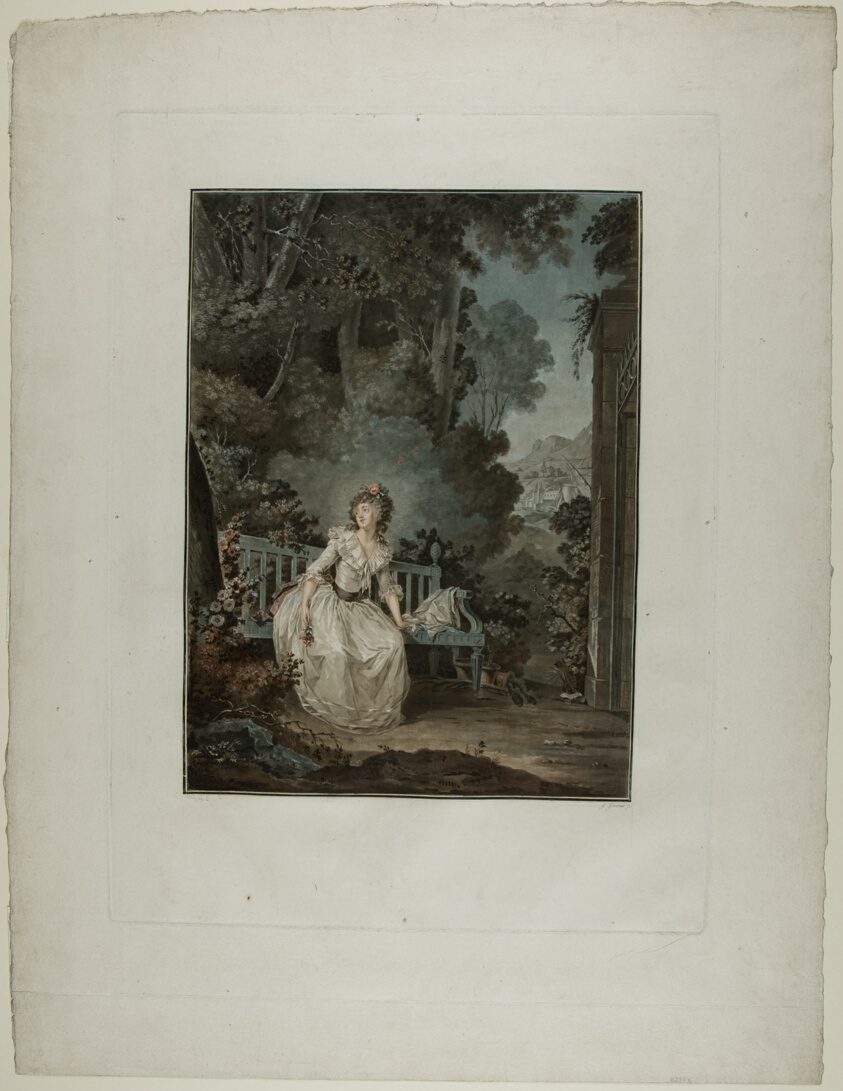
Madame Dugazon in the Opera “Nina, ou La folle par amour” (Nina, or The Woman Maddened by Love)
Art Institute of Chicago

Printing plate for The Tempest (Le Tempête)
Minneapolis Institute of Art