Rijksmuseum
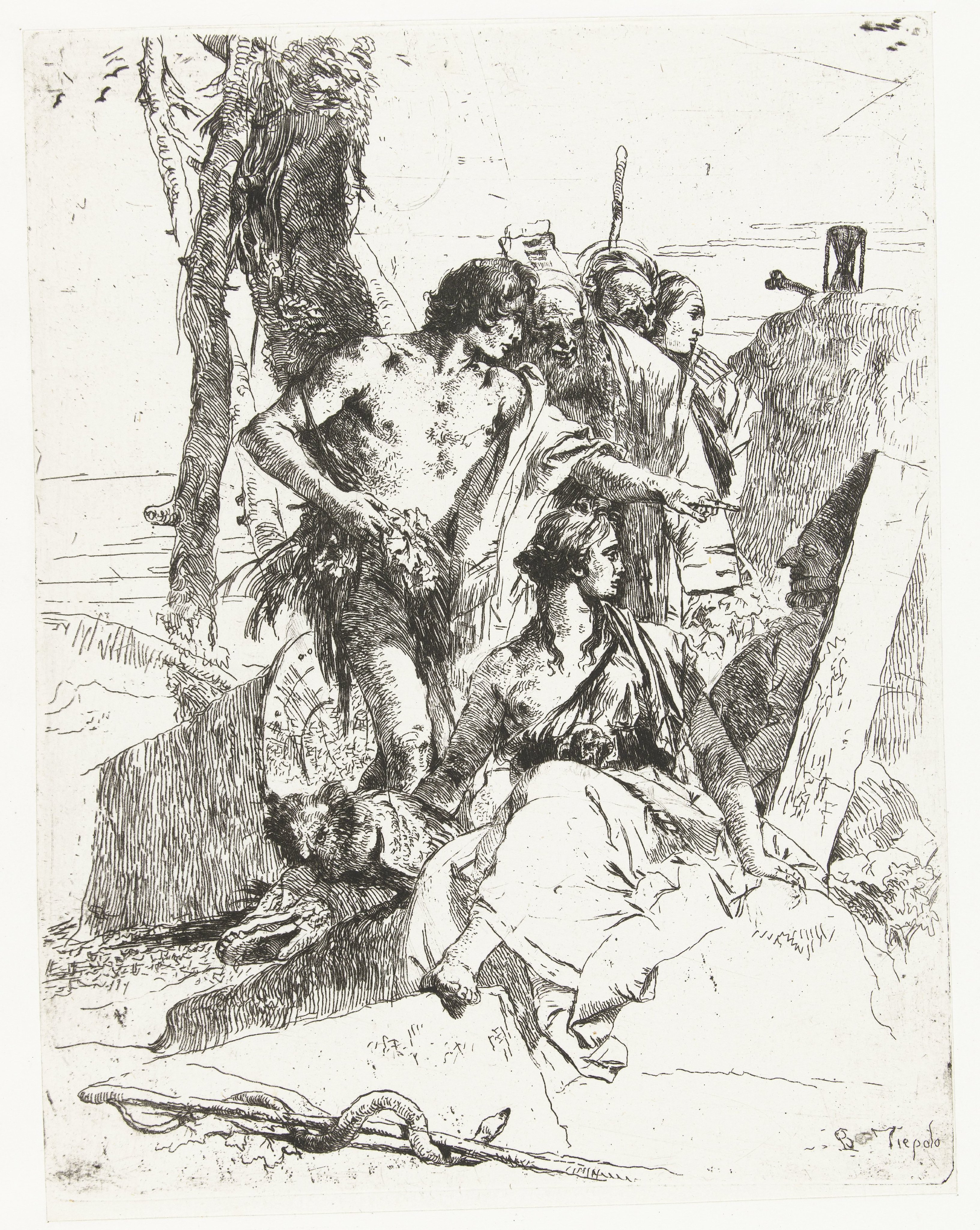
De ontdekking van het graf van Pulcinella
From the Rijksmuseum record
Rijksmuseum’s catalogue record
- Object type
- print†
- Dating
- in or before c. 1750
- Material
- paper†
- Place
- Italy†
Also in Rijksmuseum’s record. The museum’s own label for these fields has not been confirmed yet, so each is named by its field in the museum’s data.
- dc:creator
- Giovanni Battista Tiepolo†
- edmfp:technique
- etching
† LinkedCulture’s stored copy of the museum’s words; separators may differ slightly from the museum’s page.
Taken from LinkedCulture’s stored copy of Rijksmuseum’s record. A fresh capture of the museum’s own record has not been made for this object yet.
The authoritative record is held by Rijksmuseum. LinkedCulture surfaces this object and its connections; it does not alter institutional metadata. The fields above are the museum’s, under its own labels. LinkedCulture’s derived fields are listed separately below and marked as ours.
Get printable QR codesHide QR codes
Open QR codes for this object page and the museum record. They stay collapsed until needed.
Linked open data
Authority identifiers that link this record into the wider web of cultural data — stable references you can follow to the source.
- Creator
- WikidataQ186202
How LinkedCulture maps this record
To search objects from different museums together, LinkedCulture reads each museum’s record into a common set of fields. The values below are LinkedCulture’s, under LinkedCulture’s names. They are not Rijksmuseum’s wording; the museum’s own record is shown above under its own labels.
- Object ID
- RP-P-1950-665
- Object Type
- print
- Rijksmuseum field “Object type” · derived by LinkedCulture from the museum field
- Creator
- Giovanni Battista Tiepolo
- Rijksmuseum field
dc:creator(museum’s label not yet confirmed) · derived by LinkedCulture from the museum field
- Rijksmuseum field
- Culture
- Italy
- Rijksmuseum field “Place” · derived by LinkedCulture from the museum field · A place label, not a culture.
- Medium
- paper
- Rijksmuseum field “Material” · derived by LinkedCulture from the museum field
- Tags
- etching
- Rijksmuseum field
edmfp:technique(museum’s label not yet confirmed) · derived by LinkedCulture from the museum field
- Date
- in or before c. 1750
- Rijksmuseum field “Dating” · copied as is
- Begin Year
- 1750
- Rijksmuseum field “Dating” · derived by LinkedCulture from the museum field
- End Year
- 1750
- Rijksmuseum field “Dating” · derived by LinkedCulture from the museum field
The museum’s own record has not been captured for this object yet, so the museum fields shown above are limited to values LinkedCulture stored unchanged.
Related across collections
Semantically similar works from Rijksmuseum and other institutions.