Art Institute of Chicago
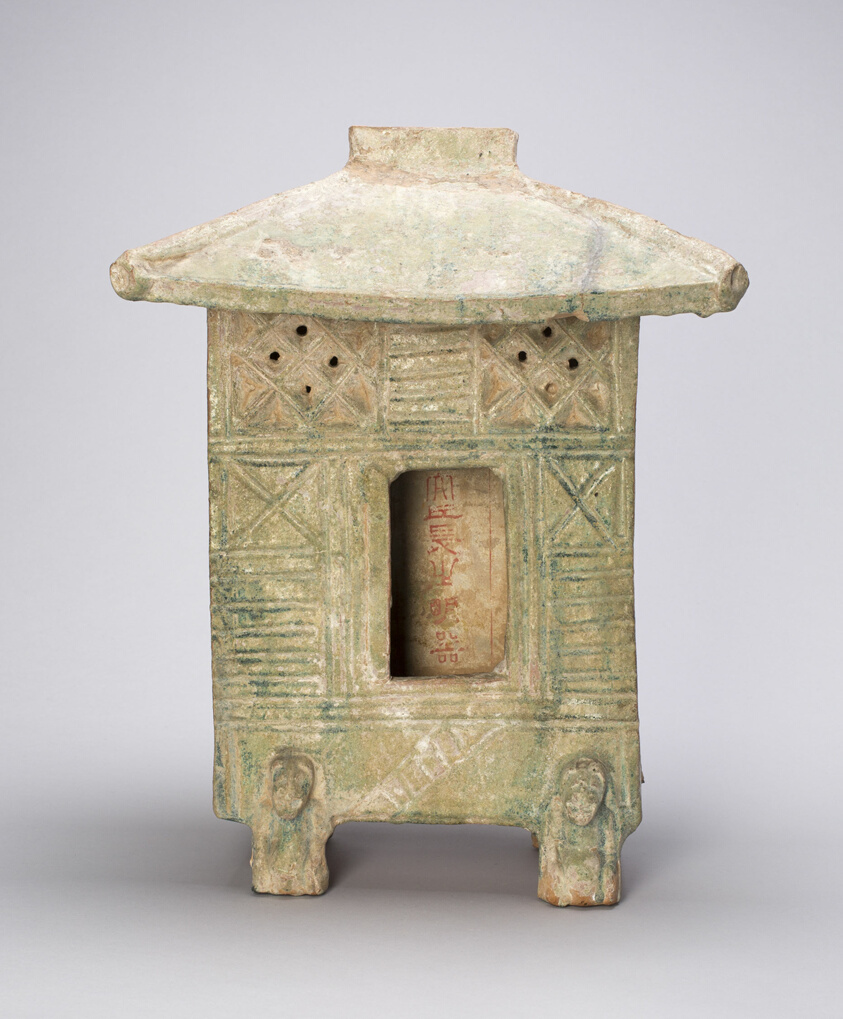
Granary (Cang)
China, probably Henan province
- Date
- Eastern Han dynasty (A.D. 25–220)
- Medium
- Brick-red earthenware with green lead glaze, carved and molded decoration
- Culture
- China
- Department
- Arts of Asia
- Institution
- Art Institute of Chicago
As burial practices filtered down from the Han aristocracy to officials and landowners, tomb models related to farming, an honored occupation, became increasingly popular. The granary, used to store millet, barley, and wheat, was depicted either as a jar or as a small building. The two-story granary found in southern Chinese tombs of the Western Han dynasty (206 B.C.-A.D. 9) was a wood or ceramic model elevated on stilts. By the Eastern Han dynasty, this rectangular structure had spread to northern China and was raised on legs that were formed as crouching bears, a convention common to Han art. The inscription painted on the door of this granary states that it was made for the tomb of a local official.
The authoritative record is held by Art Institute of Chicago. LinkedCulture surfaces this object and its connections; it does not alter institutional metadata.
Linked open data
Authority identifiers that link this record into the wider web of cultural data — stable references you can follow to the source.
- Object type
- AAT300301253
Related across collections
Semantically similar works from Art Institute of Chicago and other institutions.
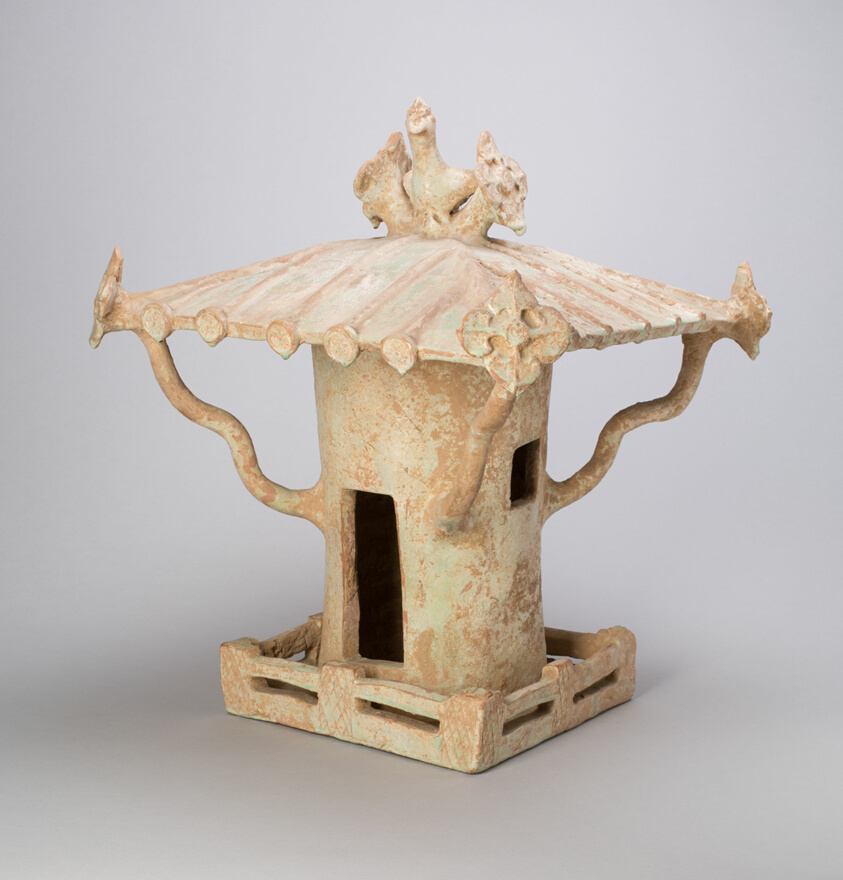
Top Story of a Tower (Tomb Model)
Art Institute of Chicago

Granary Jar
Minneapolis Institute of Art

Grain Storage Building, from a model farmstead
Minneapolis Institute of Art
Funerary Model of a Cylindrical Granary with an Angled, Tiled Roof and with Three Short Legs, Each in the Form of a Crouching Bear
Harvard Art Museums
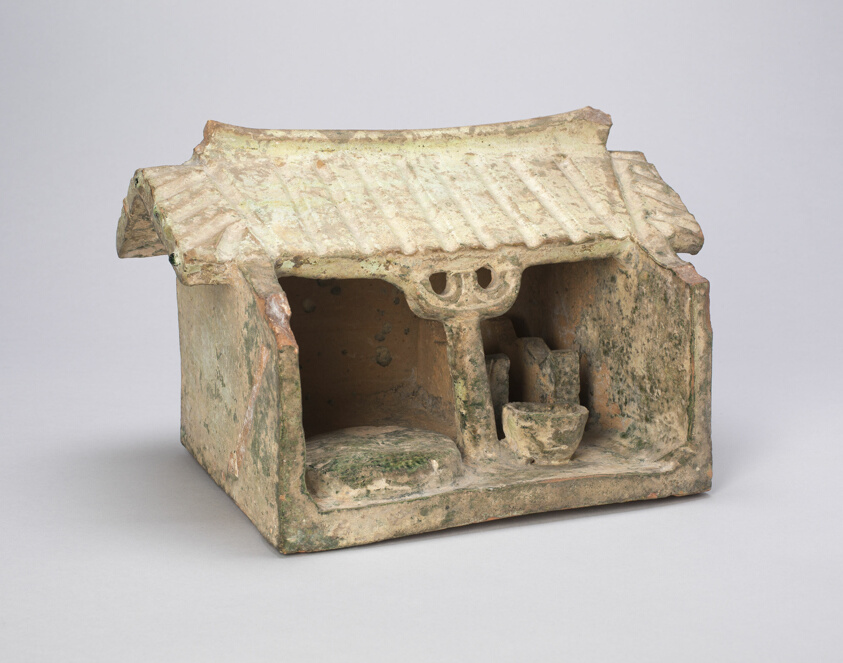
Farm Shed with Grain Mill
Art Institute of Chicago
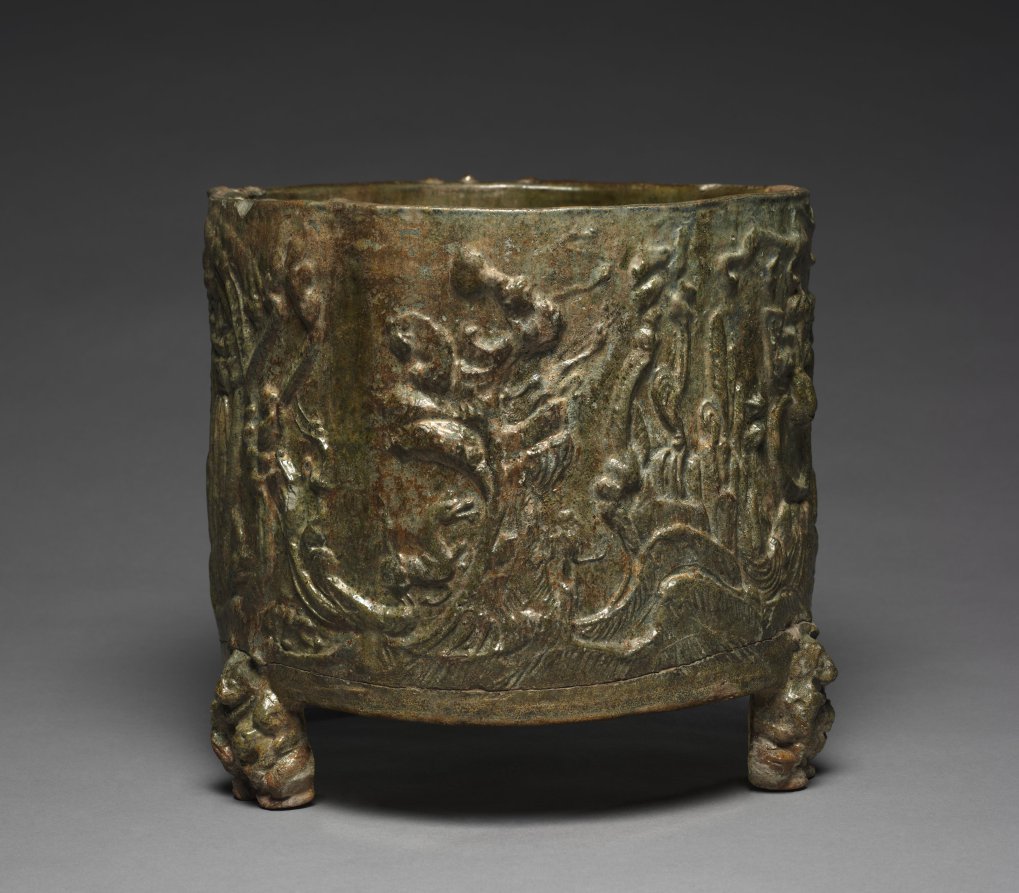
Cylindrical Jar
Cleveland Museum of Art
Standing, Bearded Male Figure, Probably a Guardian Warrior, Wearing Helmet with Protective Neck and Ear Flaps, Cape, and Pointed Boots, with His Arms at His Sides
Harvard Art Museums
Relief with Rampant Tiger and Boar from a Funerary Stove Model
Cleveland Museum of Art
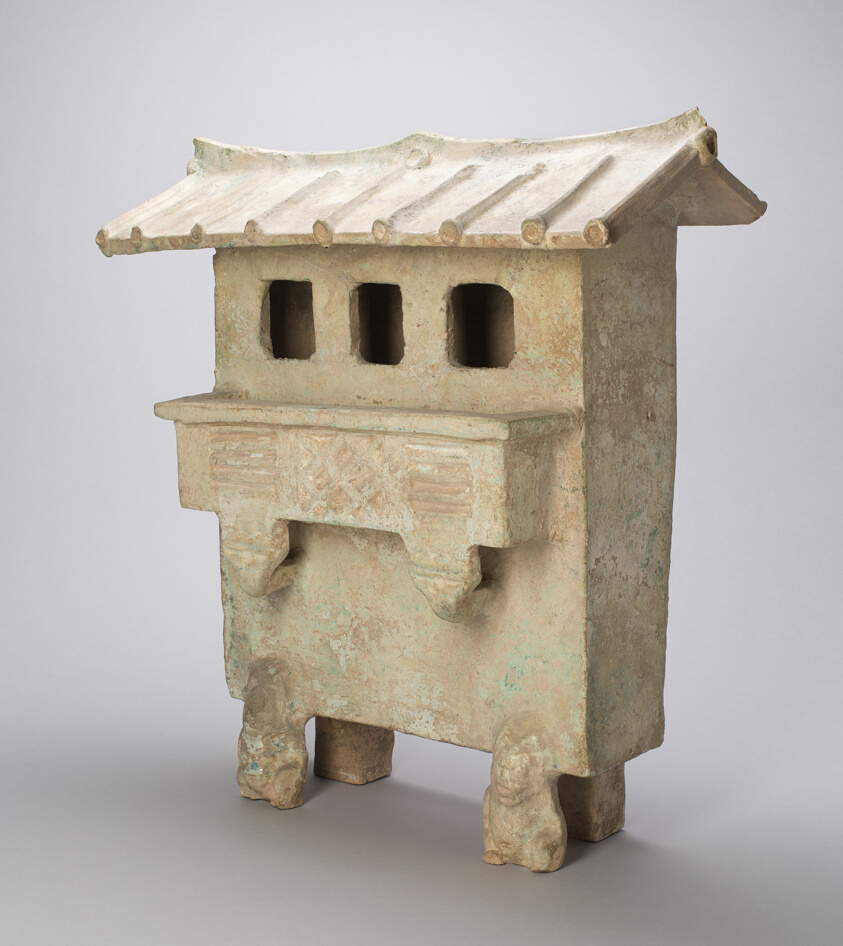
Model of a Two-Story Structure
Art Institute of Chicago

Model of a Farmstead
Minneapolis Institute of Art
Tomb Figurine in the Form of a Standing, Plump Court Lady with Upturned, Pointed Shoes and an Elaborate Coiffure, Her Hands in a Gesture at Chest Level
Harvard Art Museums

Milling shed
Minneapolis Institute of Art