Art Institute of Chicago
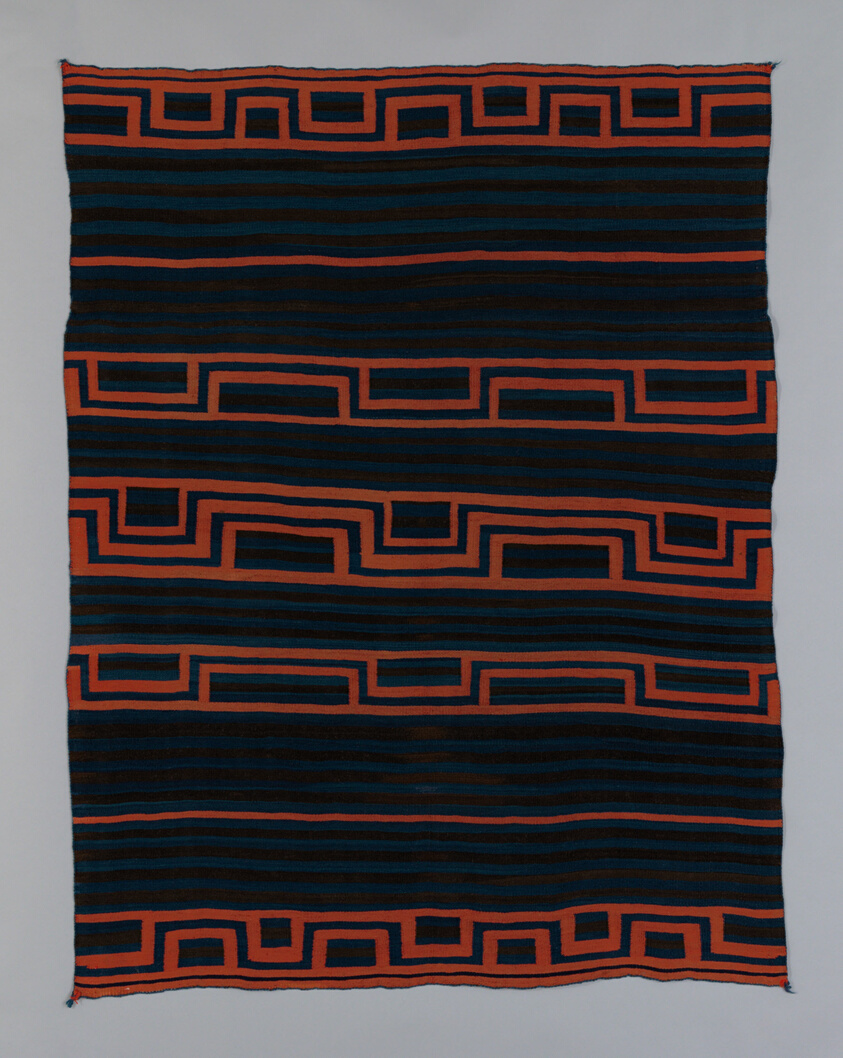
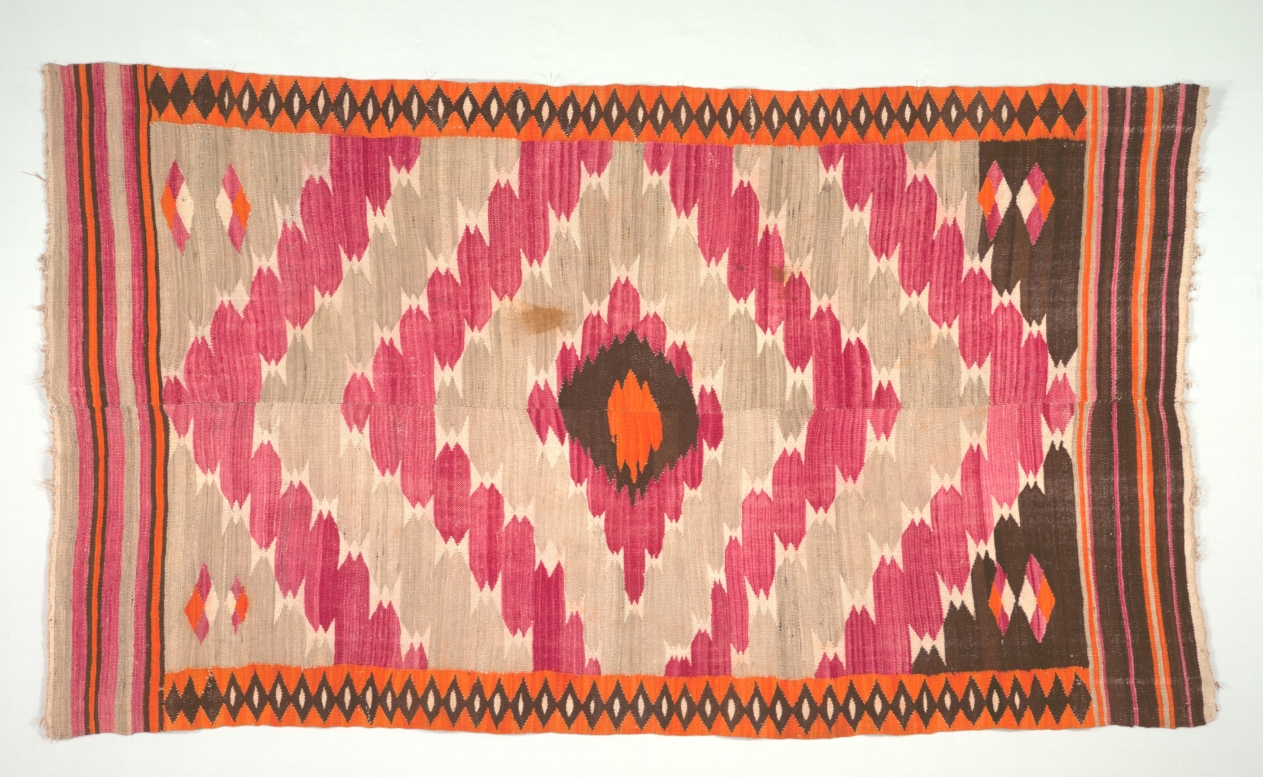
Moqui-Style Sarape
Navajo (Diné)
- Date
- c. 1870
- Medium
- Wool, single interlocking tapestry weave; two selvages present
- Culture
- Navajo
- Department
- Textiles
- Institution
- Art Institute of Chicago
The Spanish-derived word sarape is used to identify blankets made throughout the greater Southwest and Mexico that are longe then they are wide and traditionally are worn around the shoulders like a shawl. This exceptionally fine example displays many attributes associated with classic Navajo textiles, including its traditional tapestry weave, the augmented tassels placed at the corners, and the twining that appears along the edges. The design is based upon Moki-style textiles, which were typically woven with alternating blue-and-brown lines often accented with additional bands of white. Although the name given to this style derives from the Spanish term for the Hopi ( Moki or Moqui ), these patterns found favor among Pueblo and Navajo weavers and are one of the oldest designs that appear in Navajo textiles. Demonstrating the creativity and cultural identity of the artist, this sarape blends Moki design traits with a distinctly Navajo signature—that of bold crimson banding superimposed over the subtle striping.
The authoritative record is held by Art Institute of Chicago. LinkedCulture surfaces this object and its connections; it does not alter institutional metadata.
Related across collections
Semantically similar works from Art Institute of Chicago and other institutions.
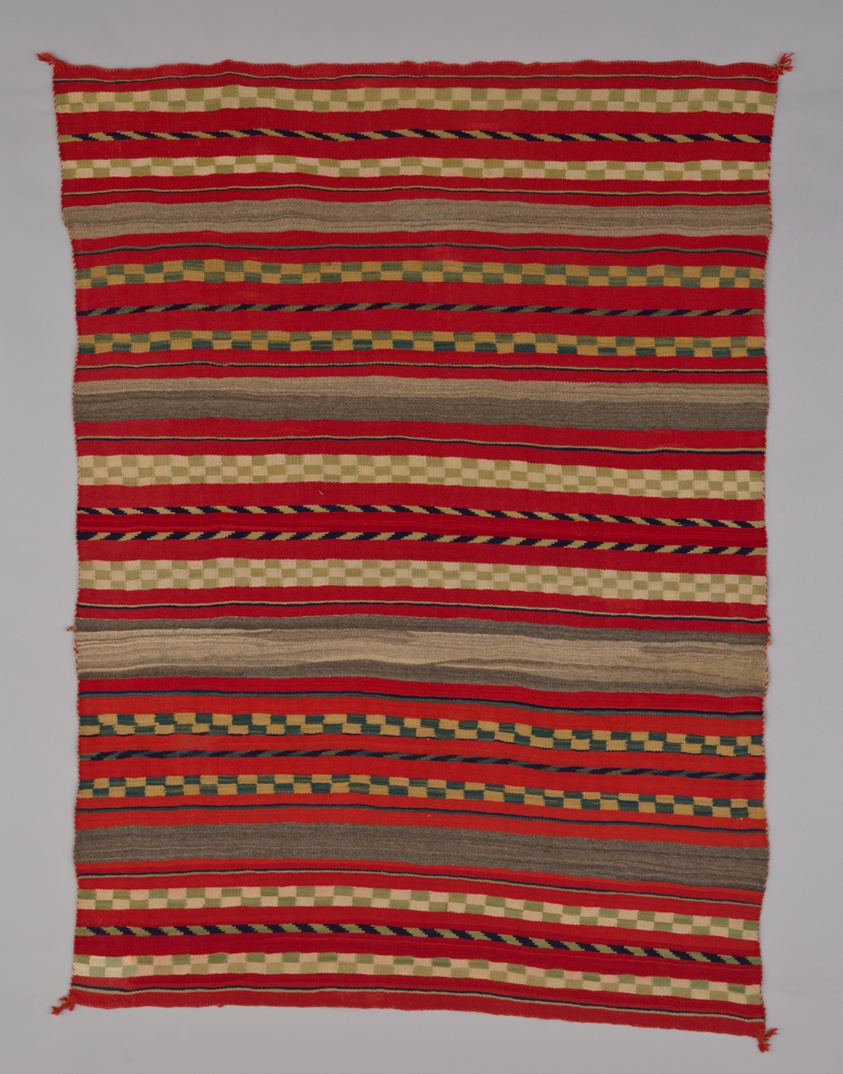
Sarape with Compound Banded Design
Art Institute of Chicago
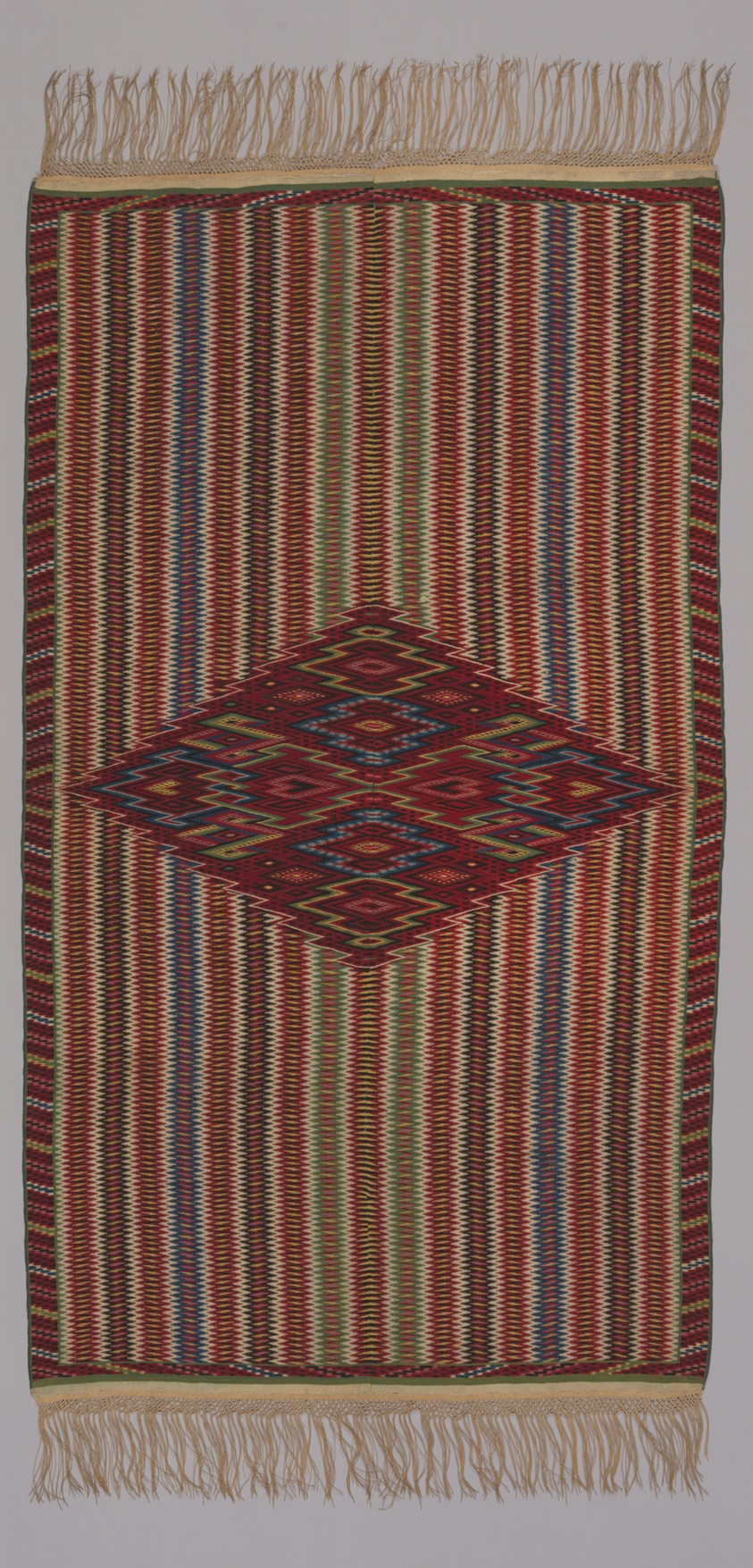
Man's Sarape (Wearing Blanket)
Art Institute of Chicago
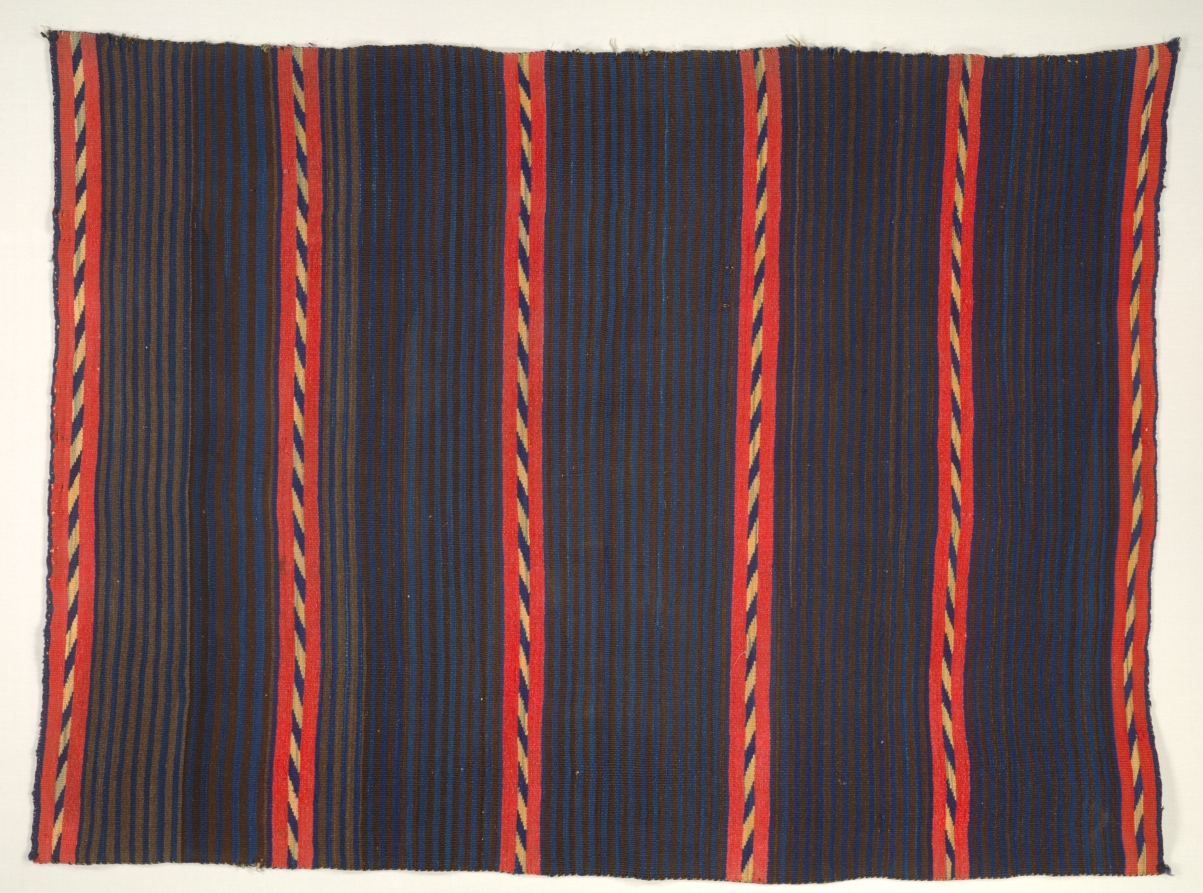
Wearing Blanket with Moki (Moqui) Stripes
Cleveland Museum of Art
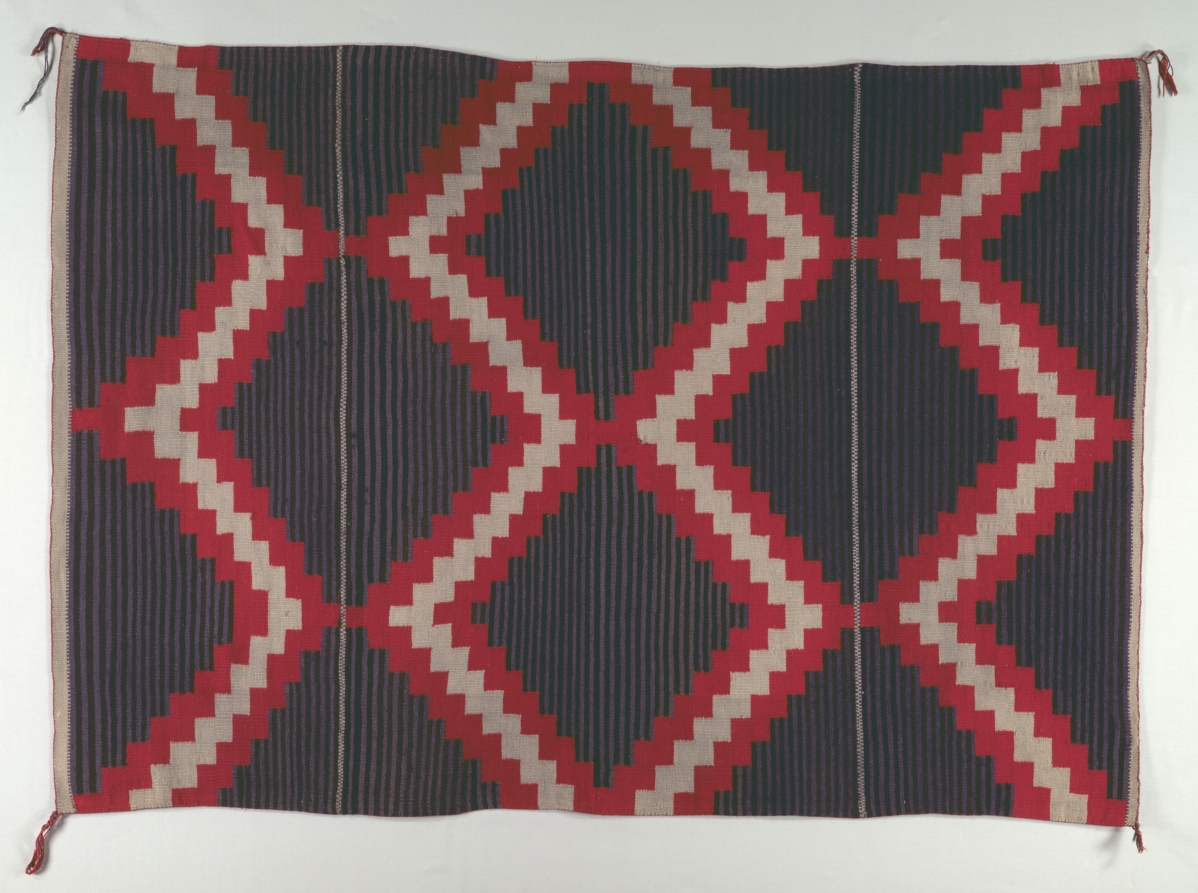
Hubbell Revival-Style Rug with Moki (Moqui) Stripes
Cleveland Museum of Art
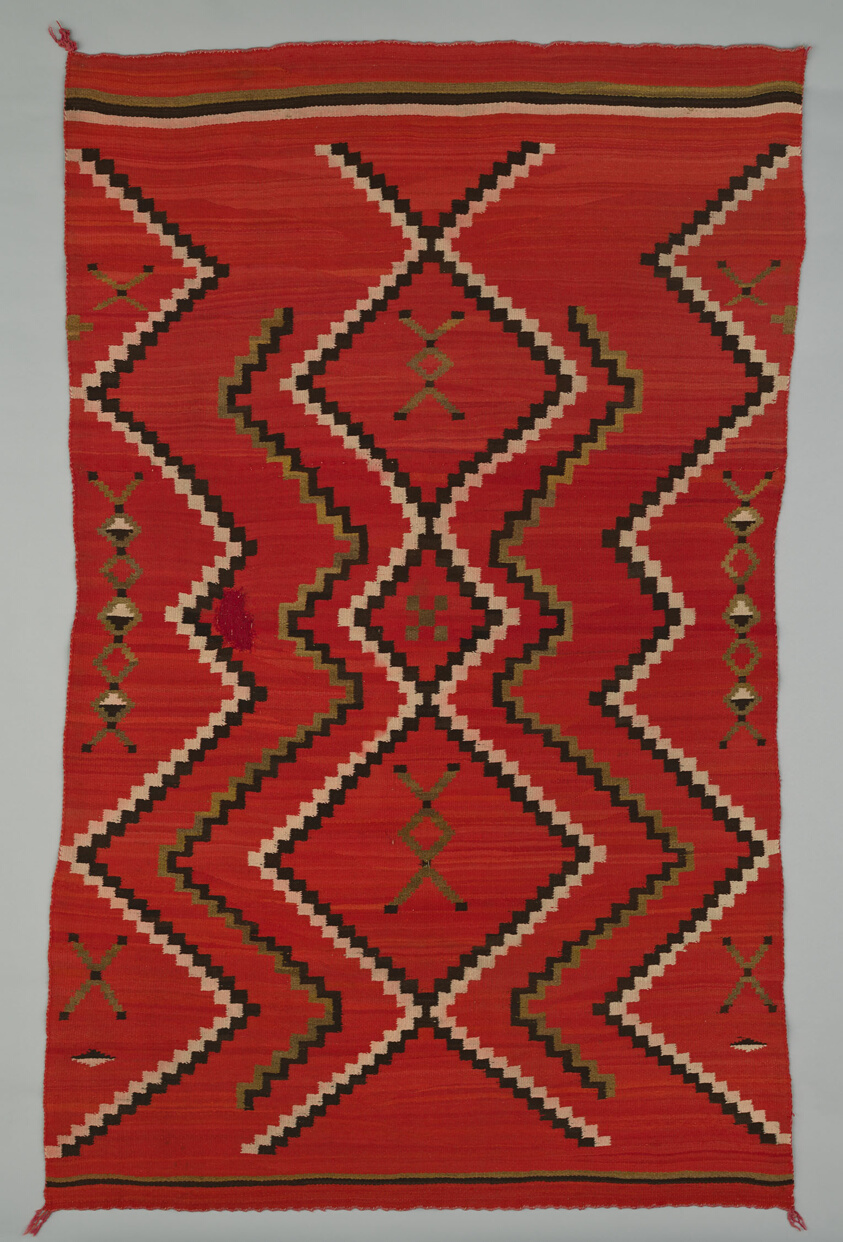
Sarape with Terraced Zigzag Design
Art Institute of Chicago
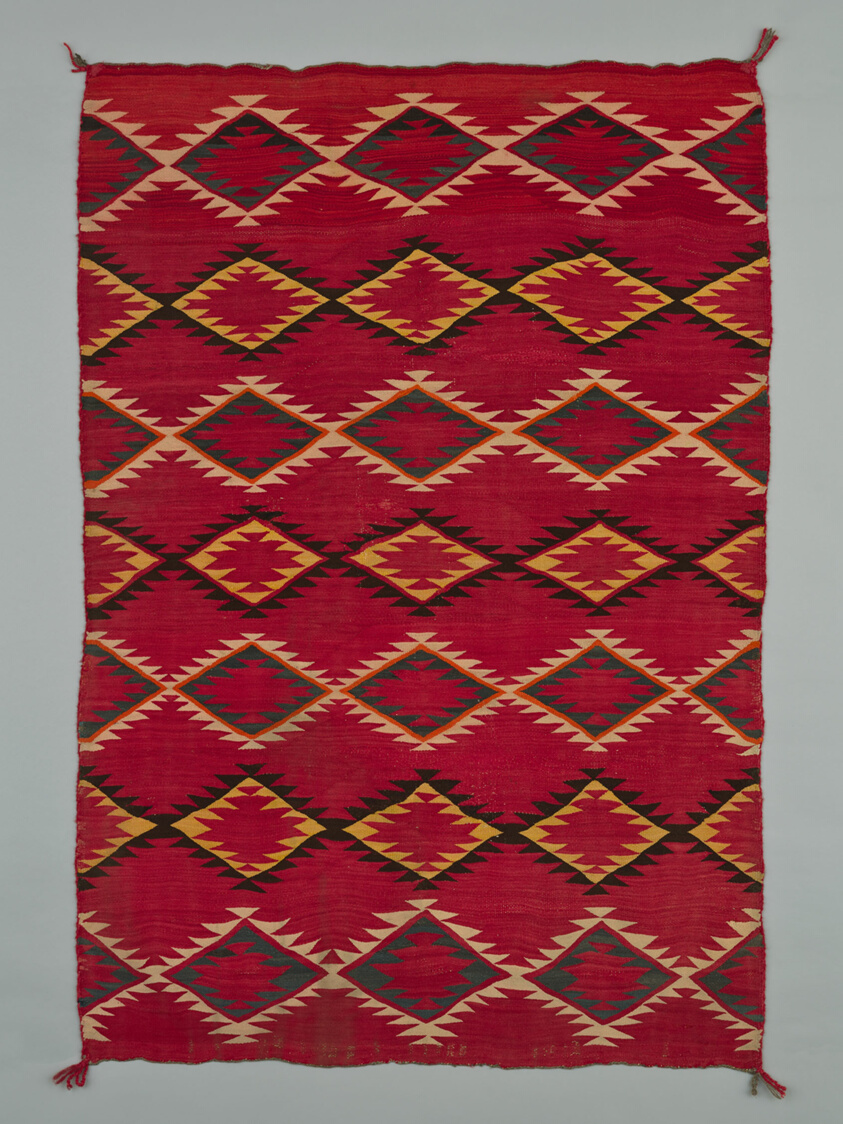
Sarape with Serrated Diamond Pattern
Art Institute of Chicago
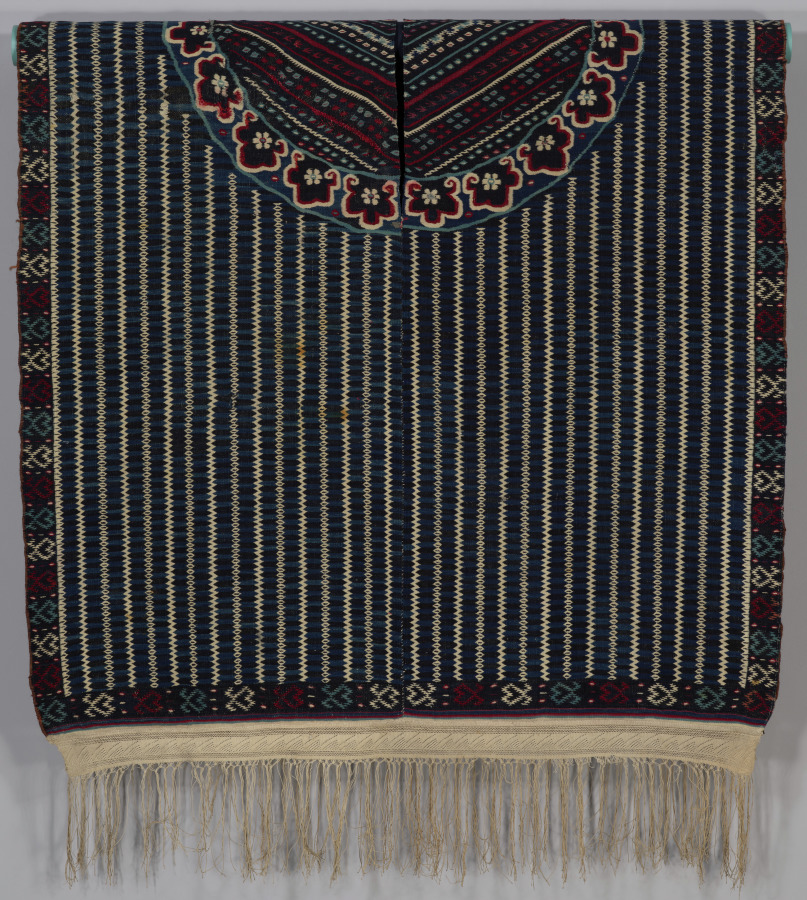
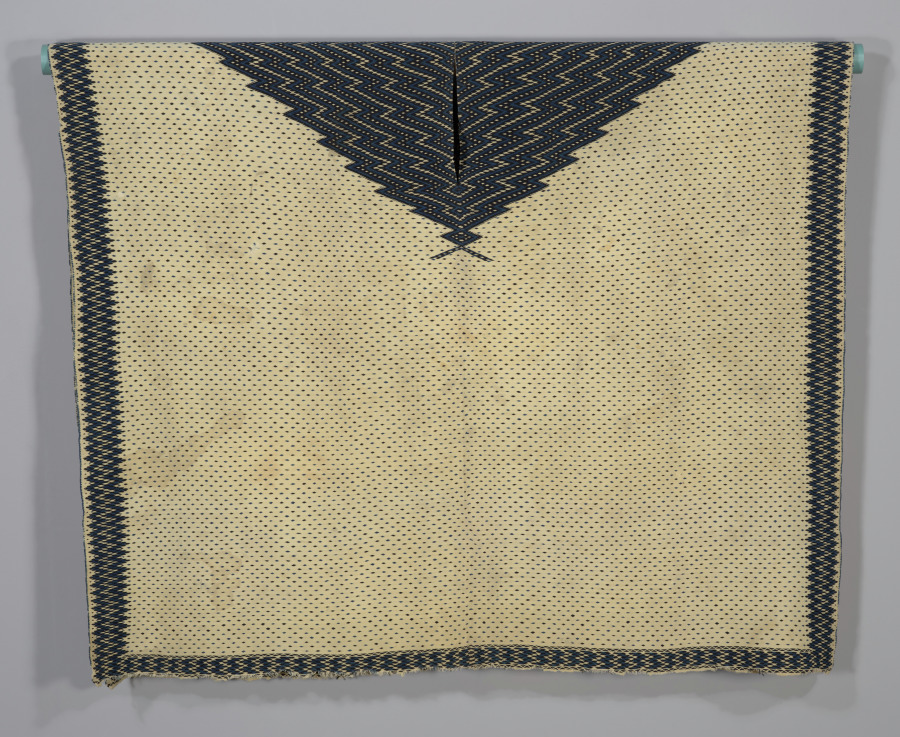
Saltillo Sarape
Cleveland Museum of Art
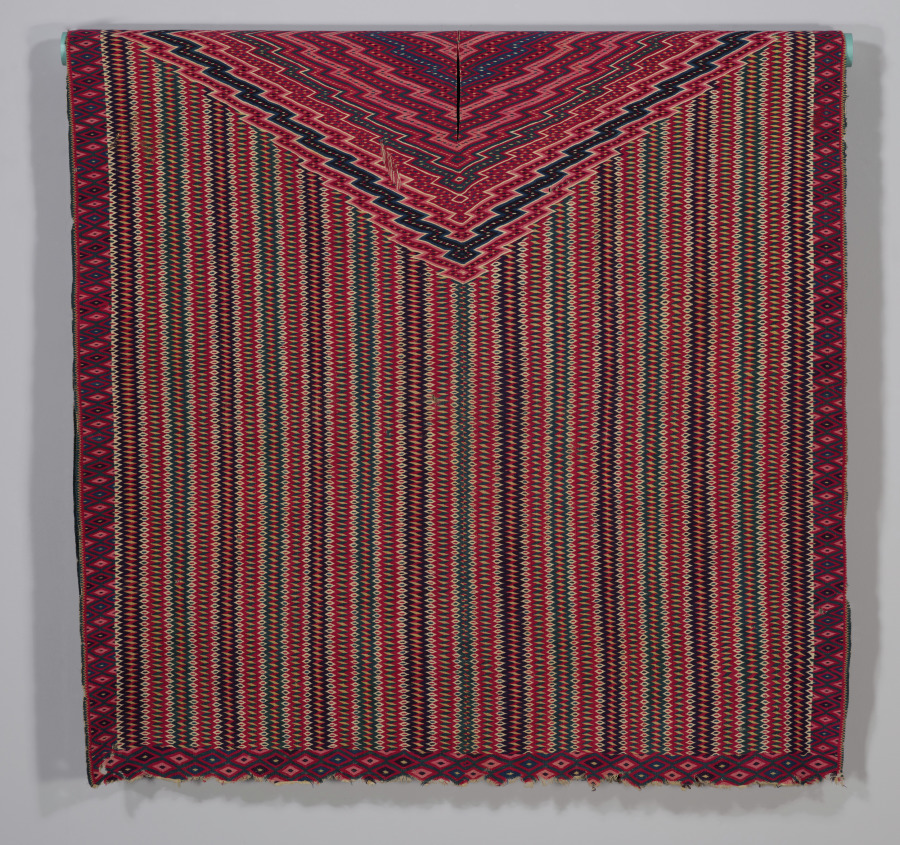
Saltillo Sarape
Cleveland Museum of Art
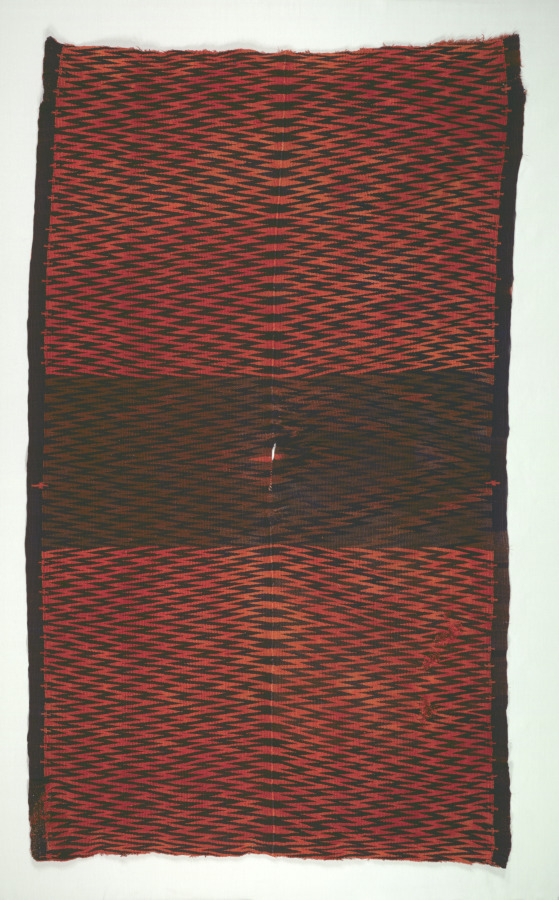
Saltillo Sarape
Cleveland Museum of Art
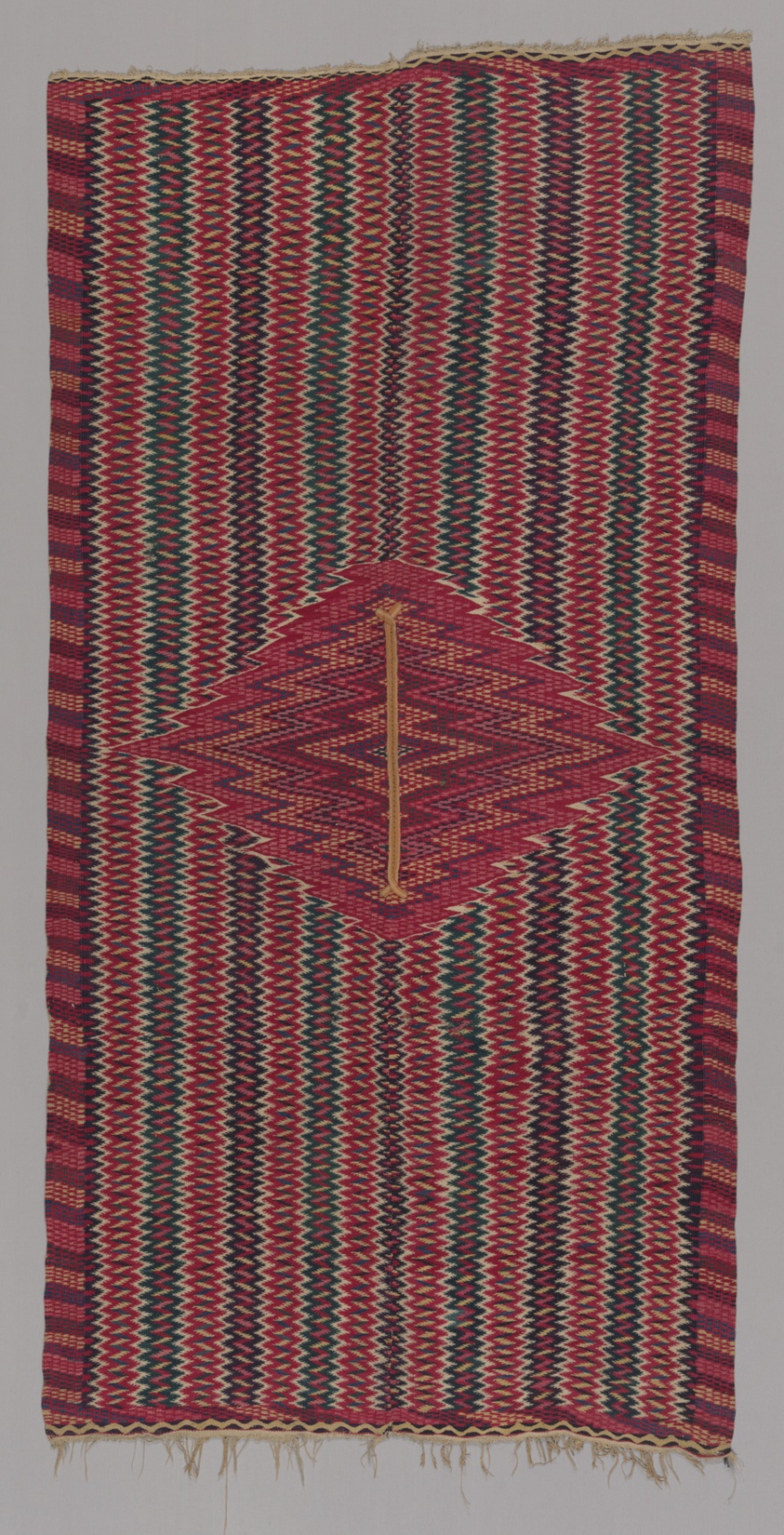
Saltillo Style Blanket/ Sarape
Cleveland Museum of Art
Sarape
Art Institute of Chicago
Blanket/ Sarape
Cleveland Museum of Art