Art Institute of Chicago
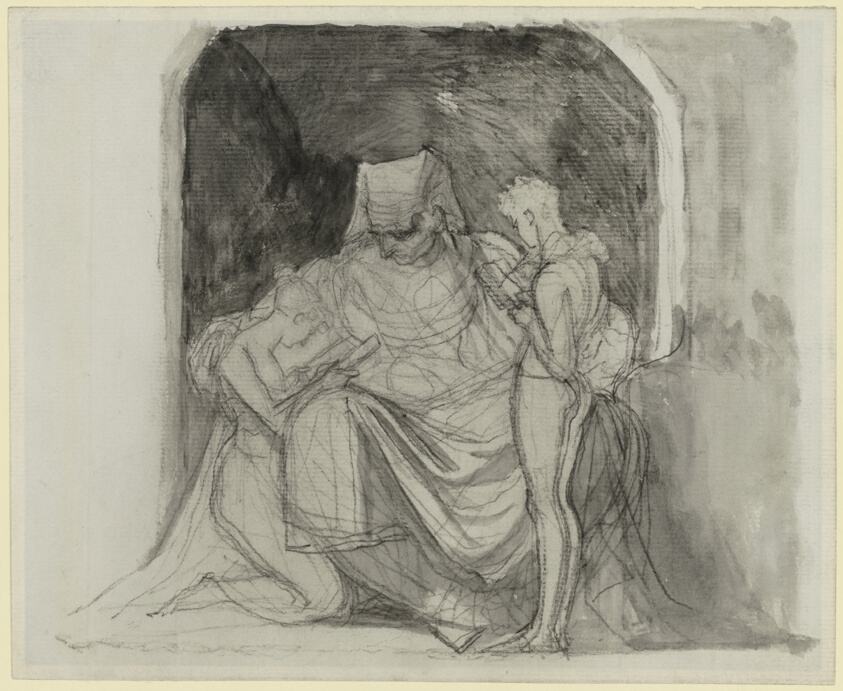
The Spirit of Knowledge
Henry FuseliLinkedCulture matchlcp-51a294594c6f
- Date
- 1798
- Medium
- Black chalk and brush and gray wash on ivory laid paper
- Culture
- England
- Department
- Prints and Drawings
- Institution
- Art Institute of Chicago
- Object ID
- 150038
From the Art Institute of Chicago record
One of the most original and probing artists of the late 18th century, Fuseli worked principally in London but went to Rome for eight years beginning in 1770. The influence of Michelangelo’s prophets and sibyls is tangible in this allegorical figure, probably drawn in London a decade after he left Rome; at this time Fuseli had recently met William Blake, who treated a similar subject in his Book of Job .
The authoritative record is held by Art Institute of Chicago. LinkedCulture surfaces this object and its connections; it does not alter institutional metadata.
Get printable QR codesHide QR codes
Open QR codes for this object page and the museum record. They stay collapsed until needed.
Provenance & credit
As published by the source institution. Coverage varies — not every institution's open-data feed includes ownership history.
- Credit line
- Given in honor of Dorothy Braude Edinburg by Lowell Libson and the Directors of Spink-Leger
- Provenance
- Private collection, England, by 1930 [a letter from Lowell Libson of Spink-Leger Pictures dated Sept. 15, 1998 in curatorial file]. Trevor Roberts, England, to 1948 [Libson letter]; Ian Phillips, England, from 1948-1998 [London 1998 exh. cat.]; Leger Galleries, London; given to the Art Institute, 1998.
Linked open data
Authority identifiers that link this record into the wider web of cultural data — stable references you can follow to the source.
- Object type
- AAT300033973
Related across collections
Semantically similar works from Art Institute of Chicago and other institutions.