Art Institute of Chicago
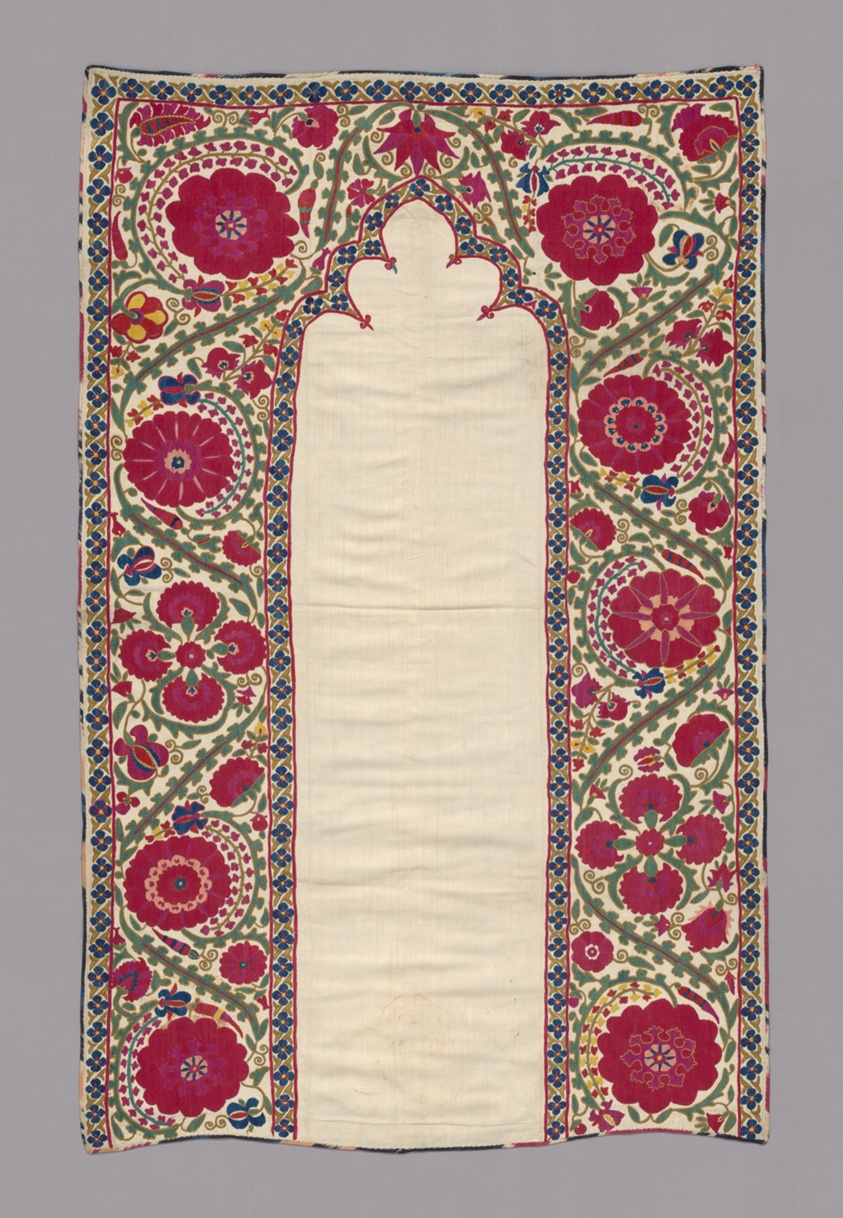
Mihrab or Jai-namaz Suzani
Bukhara Khanate (in present day Uzbekistan)
- Date
- 18th century
- Medium
- Linen, plain weave; pieced; embroidered with silk
- Culture
- Uzbekistan
- Department
- Textiles
- Institution
- Art Institute of Chicago
Suzanis, from the Persian (Farsi) term suzan , meaning needle, are large, hand-embroidered textiles traditionally made by women in Uzbekistan and Tajikistan as part of a bride’s dowry. Larger examples [see 2019.794] would have been used as a wall hanging or bed cover. Bukhāra, Uzbekistan, is well-known for the suzani style with its embroidered frame, as displayed on this example. This arch-like design represents a mihrab, the niche in a mosque that indicates the direction of Makkah (Mecca) for Muslim prayers. When hanging near an entryway, a mihrab suzani serves to welcome guests.
The authoritative record is held by Art Institute of Chicago. LinkedCulture surfaces this object and its connections; it does not alter institutional metadata.
Related across collections
Semantically similar works from Art Institute of Chicago and other institutions.
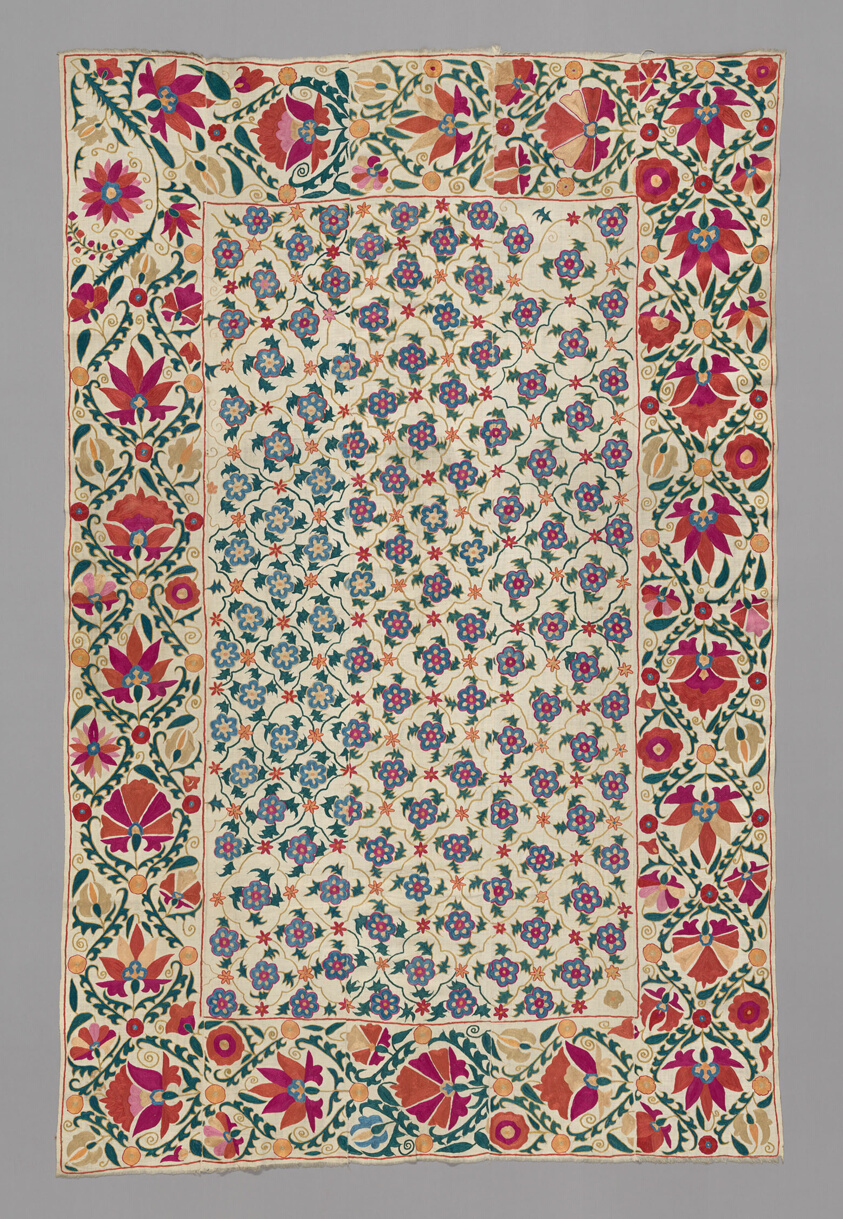
Suzani (large embroidered hanging or cover)
Art Institute of Chicago
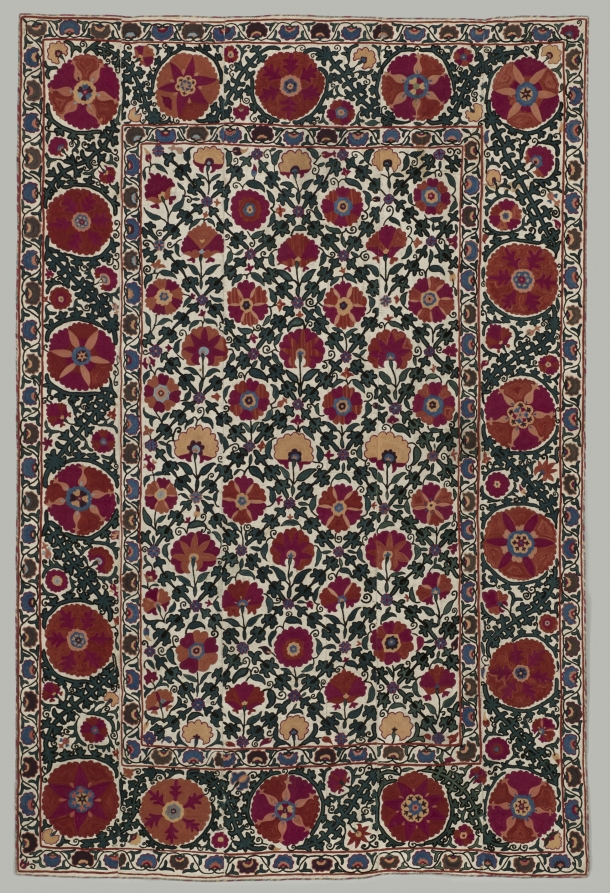
Wall Hanging
Cleveland Museum of Art
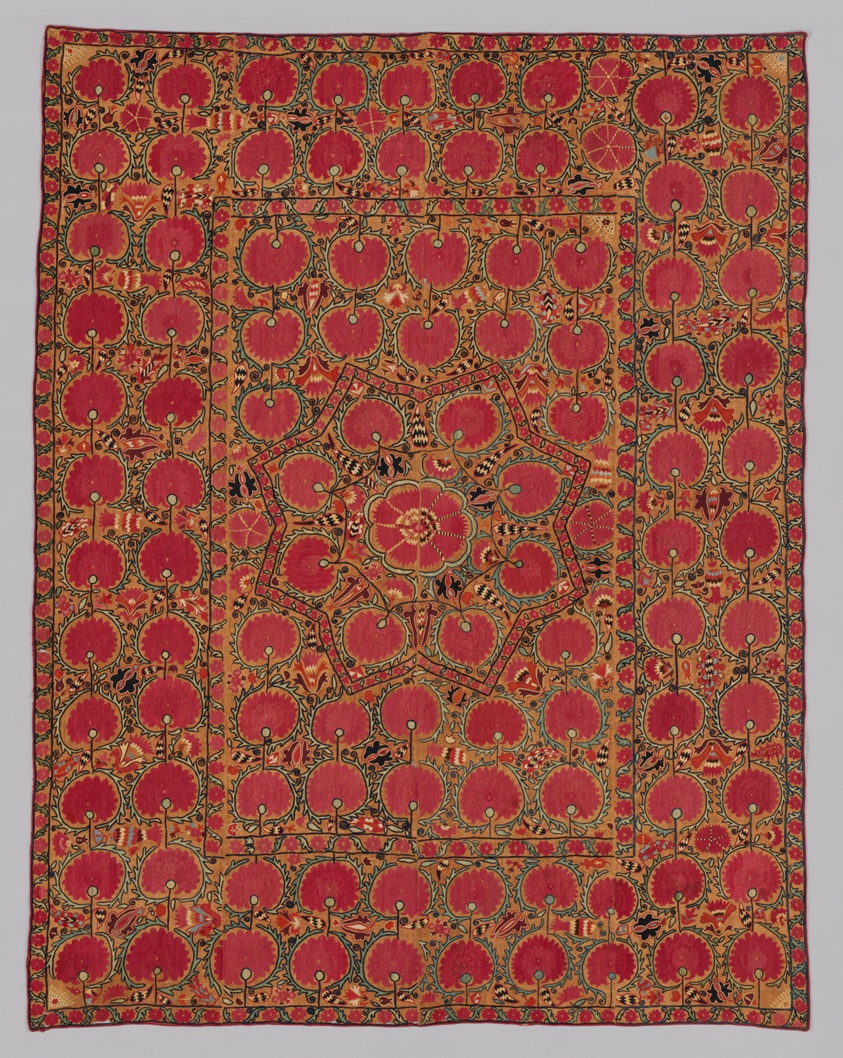
Suzani (large hanging or cover)
Art Institute of Chicago

Suzani
Minneapolis Institute of Art

Suzani (large embroidered hanging or cover)
Art Institute of Chicago
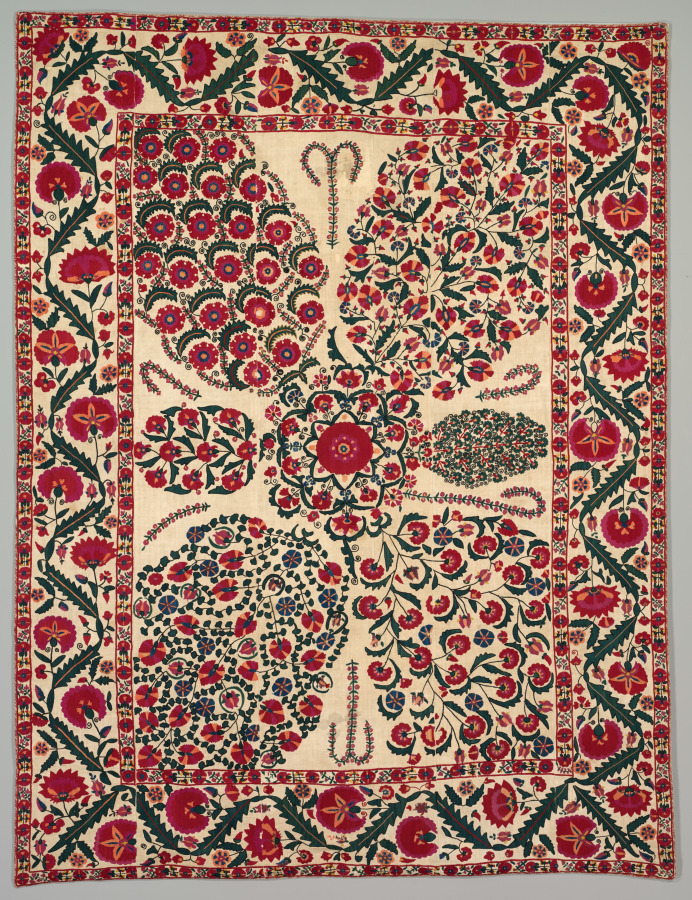
Suzani with floral sprays
Cleveland Museum of Art
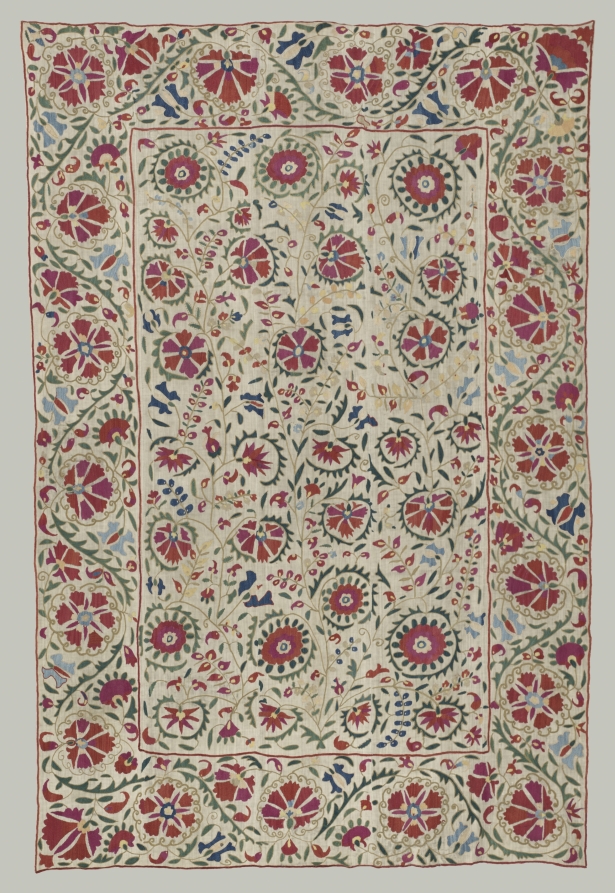
Suzani: Curtain or Bed Cover
Cleveland Museum of Art
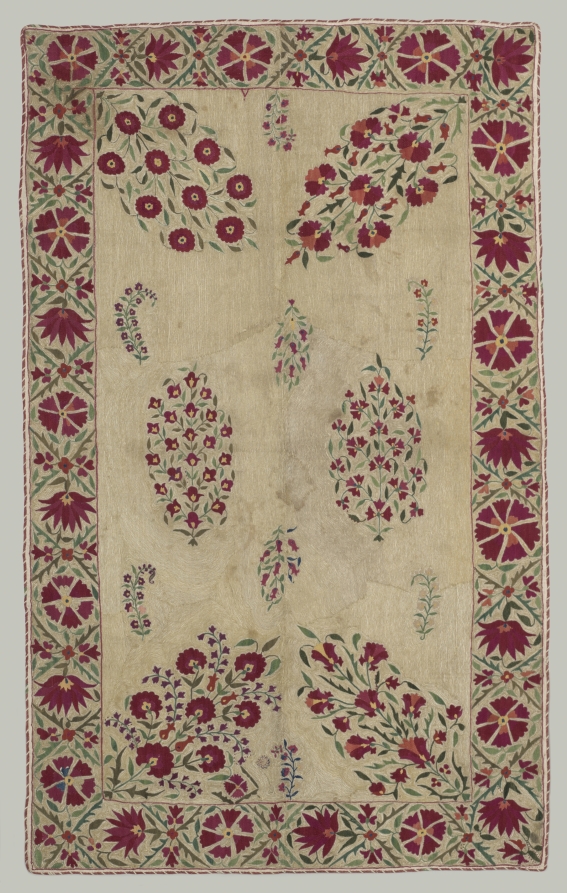
Suzani: Divan Cover
Cleveland Museum of Art

Suzani
Minneapolis Institute of Art
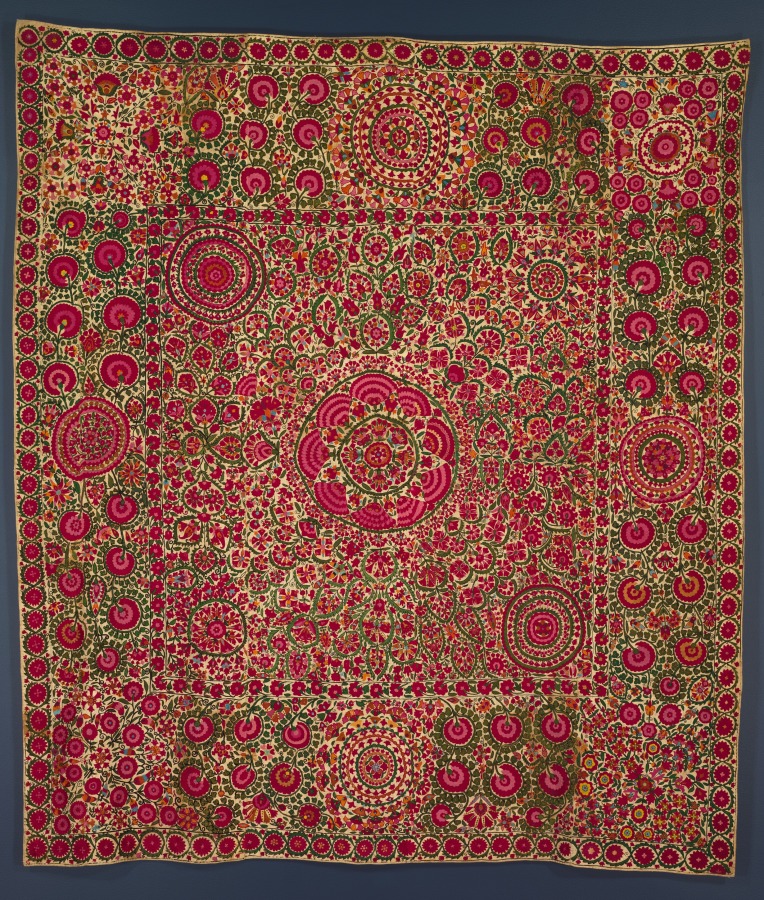
Curtain or bedcover
Cleveland Museum of Art

Suzani
Minneapolis Institute of Art

Suzani
Minneapolis Institute of Art