Art Institute of Chicago
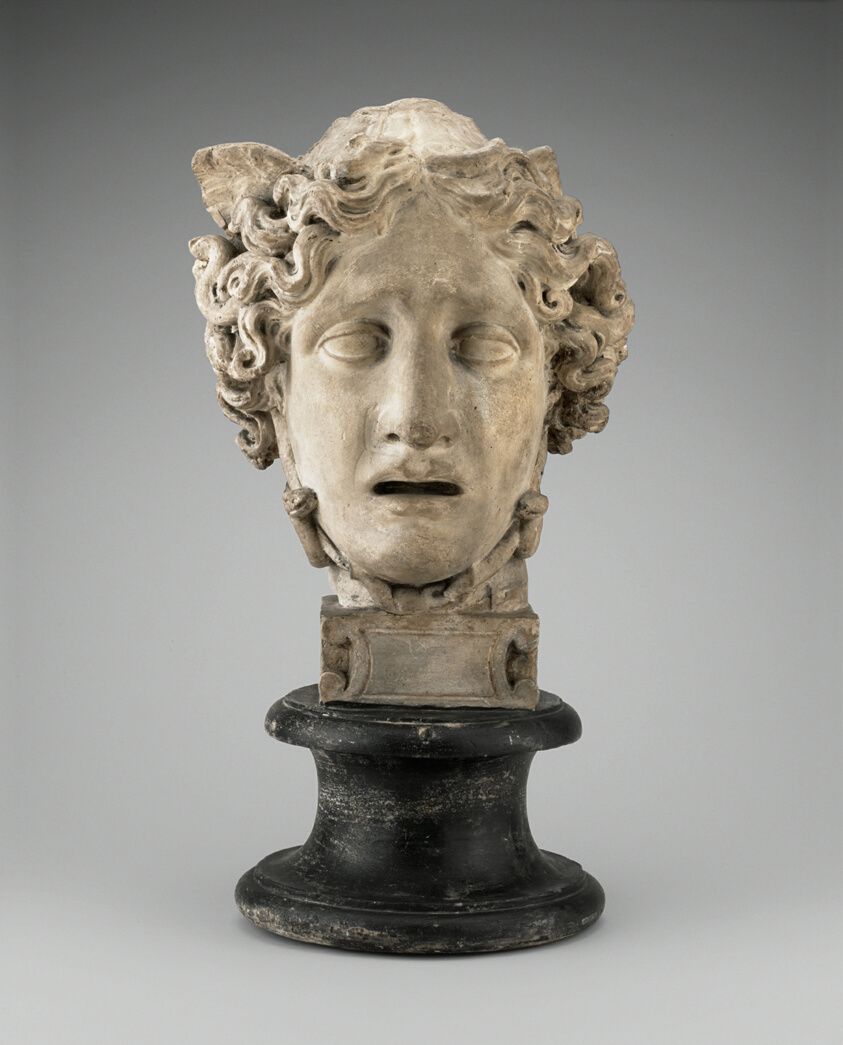
Head of Medusa
Antonio Canova (Italian, 1757–1822)LinkedCulture matchlcp-0fb6f09c562c
- Date
- c. 1801
- Medium
- Plaster
- Culture
- Italy
- Department
- Painting and Sculpture of Europe
- Institution
- Art Institute of Chicago
- Object ID
- 160236
From the Art Institute of Chicago record
Neoclassical sculptor Antonio Canova dominated Rome’s artistic scene at the turn of the 19th century. This plaster is a partial model for his large-scale marble statue Perseus Holding the Head of Medusa . According to Greek mythology, Medusa was a serpent-haired creature called a Gorgon whose gaze turned anyone who beheld her into stone. Perseus killed Medusa as she slept by using a mirrored shield to approach her and sever her head, which he continued to carry as a weapon, using it to petrify his enemies. Here, Canova depicted Medusa’s decapitated head, with its blank eyes, slack mouth, and cheeks caressed by snakes.
The authoritative record is held by Art Institute of Chicago. LinkedCulture surfaces this object and its connections; it does not alter institutional metadata.
Get printable QR codesHide QR codes
Open QR codes for this object page and the museum record. They stay collapsed until needed.
Provenance & credit
As published by the source institution. Coverage varies — not every institution's open-data feed includes ownership history.
- Credit line
- Lacy Armour Endowment
- Provenance
- Sold, Sotheby's, London, 14 December 2001, lot 117, to Daniel Katz, Limited, London [according to Danny Katz]; sold to the Art Institute, 2002.
Linked open data
Authority identifiers that link this record into the wider web of cultural data — stable references you can follow to the source.
- Object type
- AAT300301253
Related across collections
Semantically similar works from Art Institute of Chicago and other institutions.