Art Institute of Chicago
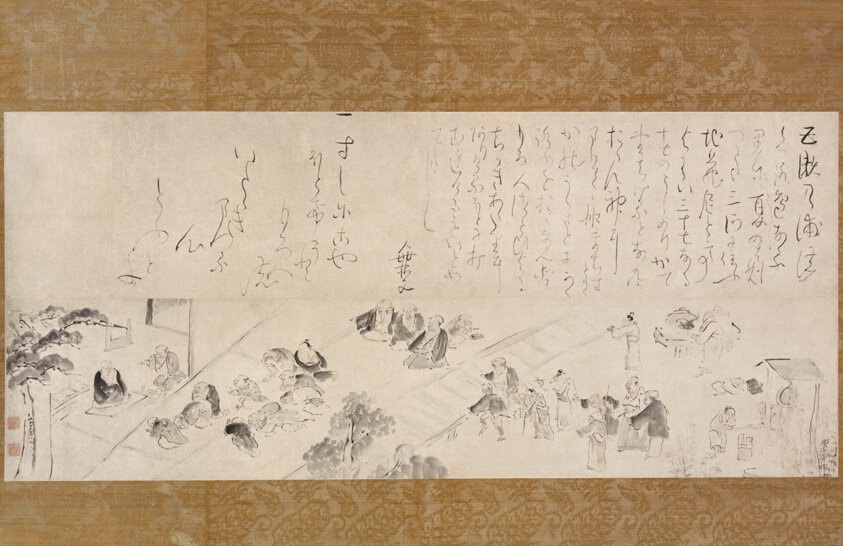
Group Pilgrimage to the Jizo Nun
Ike Taiga
- Date
- 1755/65
- Medium
- Hanging scroll; ink on paper
- Culture
- Japan
- Department
- Arts of Asia
- Institution
- Art Institute of Chicago
Ike Taiga was a revolutionary known for revitalizing Japanese painting traditions in the eighteenth century. He infused the Chinese-inspired ink painting ( nanga ) that was gaining favor among intellectuals in Kyoto with a purely Japanese aesthetic and humor. Group Pilgrimage to the Jizo Nun is a snapshot of contemporary life in Japan presented from Taiga’s unique perspective. The print depicts pilgrims making offerings to the Jizo nun, a holy woman believed to be able to communicate with the bodhisattva Jizo, who had the power to save souls in the afterlife. Group Pilgrimage contains an inscription relating the story of the Jizo nun. Taiga was a master calligrapher, poet, and seal carver and was well versed in all forms of writing, from ancient seal script to cursive kana. Here he rendered the inscription in a cursive, informal style very much in keeping with the spontaneity of the painting itself. Taiga was also renowned for his use of finger painting and other odd techniques. Although opinions vary as to whether or not this work is a finger painting, it is clear that Taiga did not use a traditional brush. It seems likely that this could be a “paper twist painting,” in which the artist worked with scraps of twisted paper charged with ink. Inscription: Artist’s inscription and signature The 19 columns on the right side of the hanging scroll, comprising an 18-line prose describing the scene of crowd’s pilgrimage to worship the Jizō nun with his signature mumei 無名, reads as follows: 五漱乃浦濃 久路鳥なる 古とし 里尓夏のはじ免 つらた三河に住ふ 地蔵尼と亭 よハい三十七なる 十七のとしよりかて 堂ちけるとな九 可於見神耳 万ふると船まち寸とて か能うらきとに可く 路ふを於かまん登 毛呂人佐とひよる ちかきあた里耳 ありけるふとに 打 春連曽るといとめ てた 無名 In Gosu no Ura, the village where the black birds were born, I visited this year– at the beginning of the summer–[a nun] living in Mikaw, who is called the Jizo ama [Jizo nun]. She is thirty-seven years of age. From the age of seventeen, I have traveled without fail. I come by boat to this bay in order to see the face of this kami and to worship her. To say nothing of the masses and the elite [i.e., everyone] who have come nearby to these gates to worship. If one lands [by ship] at this temple, it will truly be auspicious! Mumei [one of Taiga’s art name] The 7 columns on the left side of the hanging scroll, comprising a thirty-one-syllable Japanese verse, read as follows: 寸し尓古や 本と希曽と 毛呂人濃 いただき 万つる も とふと支 Nun of great refinement! Saying, “This is the Buddha,” The multitudes come and worship. You are truly remarkable. Artist Signature: Mumei 無名 Artist Seals: Shin’nei Ike shi; Mumei (Translated by Hans Thomsen)
The authoritative record is held by Art Institute of Chicago. LinkedCulture surfaces this object and its connections; it does not alter institutional metadata.
Linked open data
Authority identifiers that link this record into the wider web of cultural data — stable references you can follow to the source.
- Object type
- AAT300033618
Related across collections
Semantically similar works from Art Institute of Chicago and other institutions.

Heart Sutra and Landscape
Minneapolis Institute of Art

Portraits of Ike Taiga and His Calligraphies in Seal and Grass Styles
Minneapolis Institute of Art
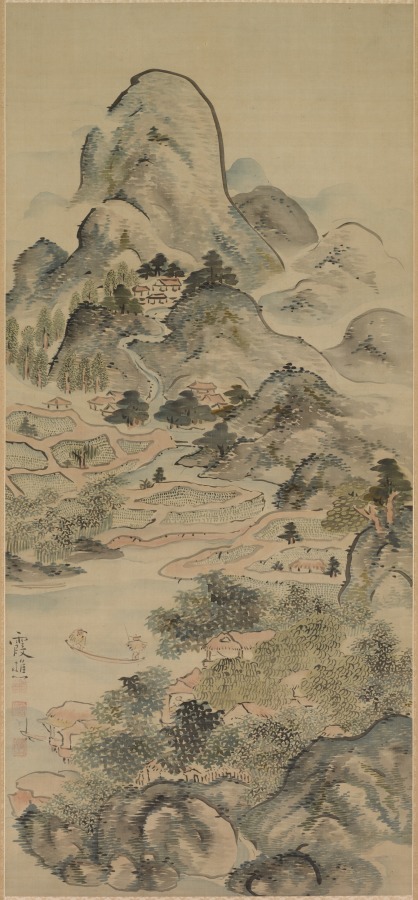
Fishing in Springtime
Cleveland Museum of Art

Bamboo Endures the Frost
Minneapolis Institute of Art
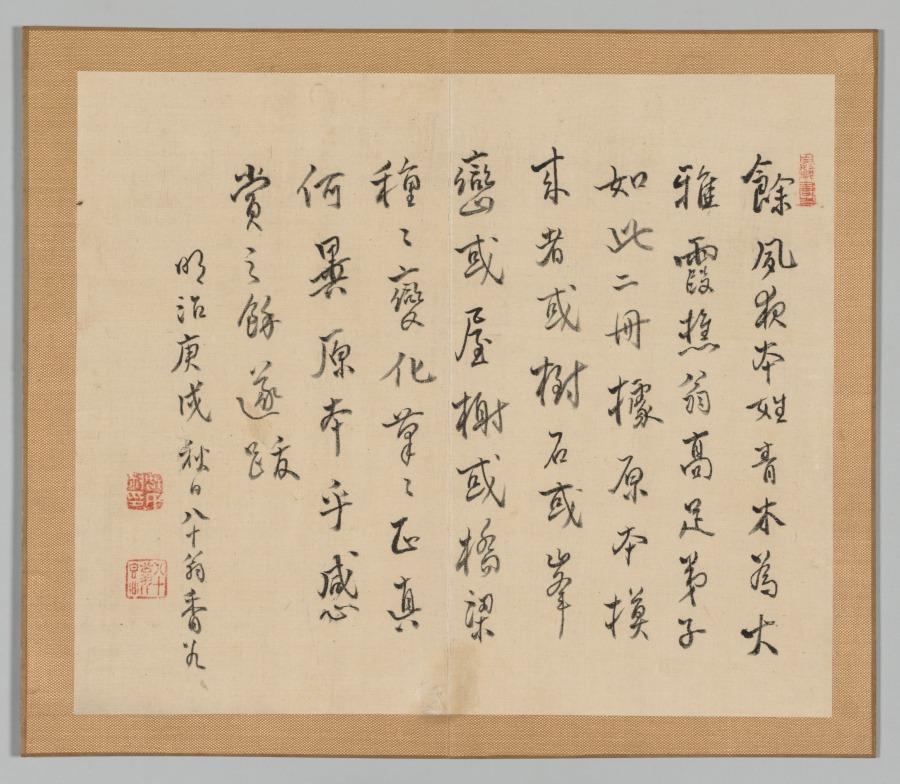
Postscript from “Reverberations of Taiga”
Cleveland Museum of Art

Friends Visiting in the Mountains
Minneapolis Institute of Art
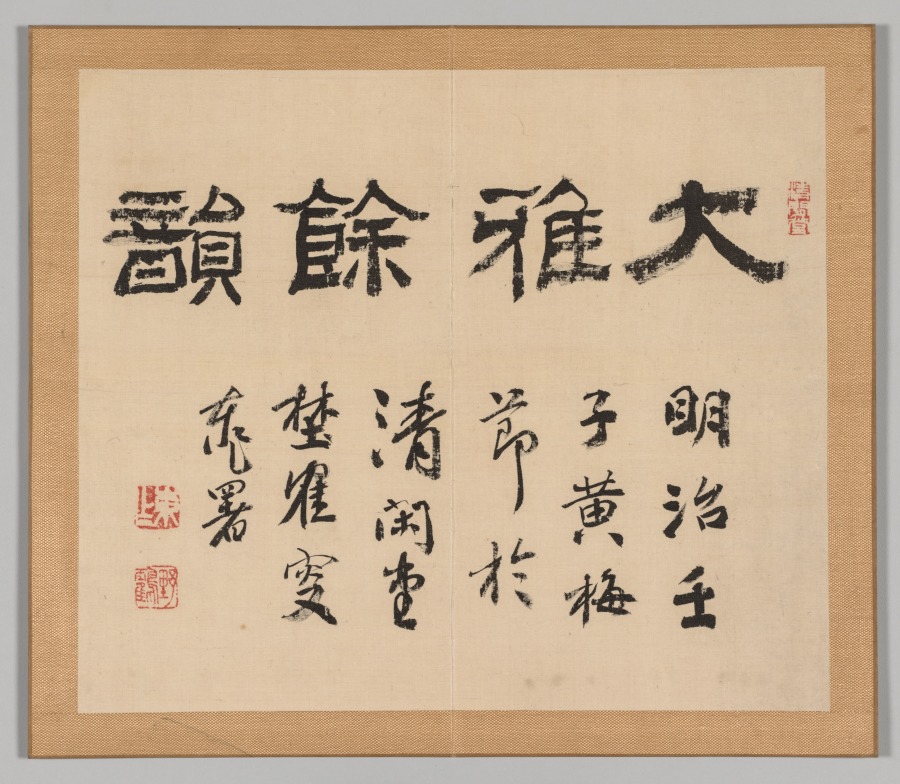
Title from "Reverberations of Taiga"
Cleveland Museum of Art

Scholarly Communion
Minneapolis Institute of Art

Landscape with River View
Minneapolis Institute of Art

Pure Sound of the Rivers and Mountains
Minneapolis Institute of Art
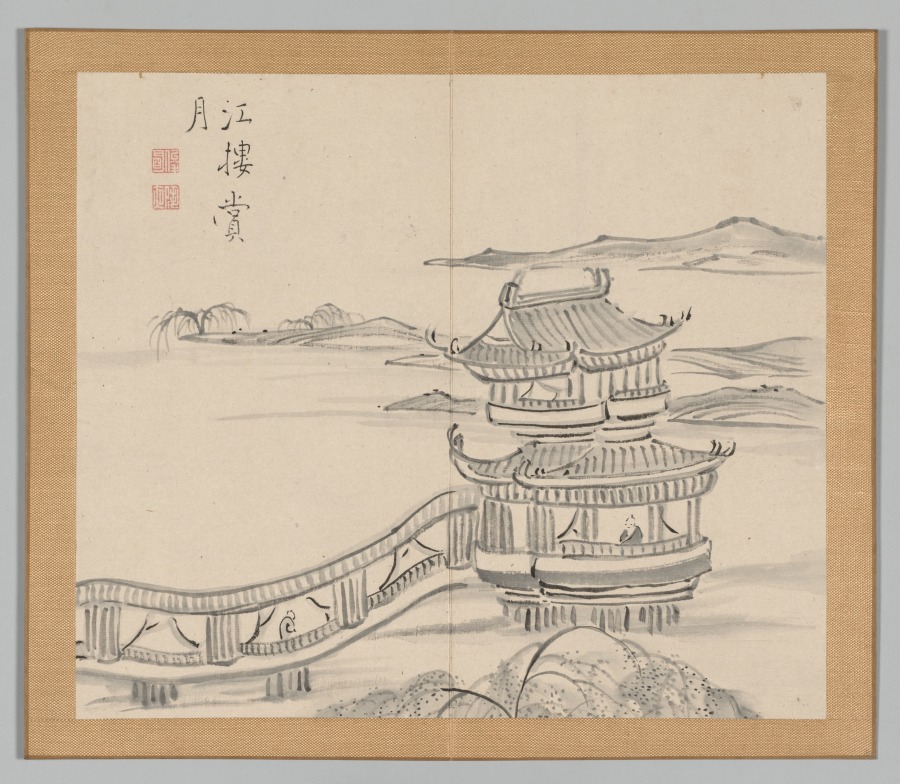
Reverberations of Taiga, Volume 2 (leaf 25)
Cleveland Museum of Art

The Four Accomplishments
Minneapolis Institute of Art