Art Institute of Chicago
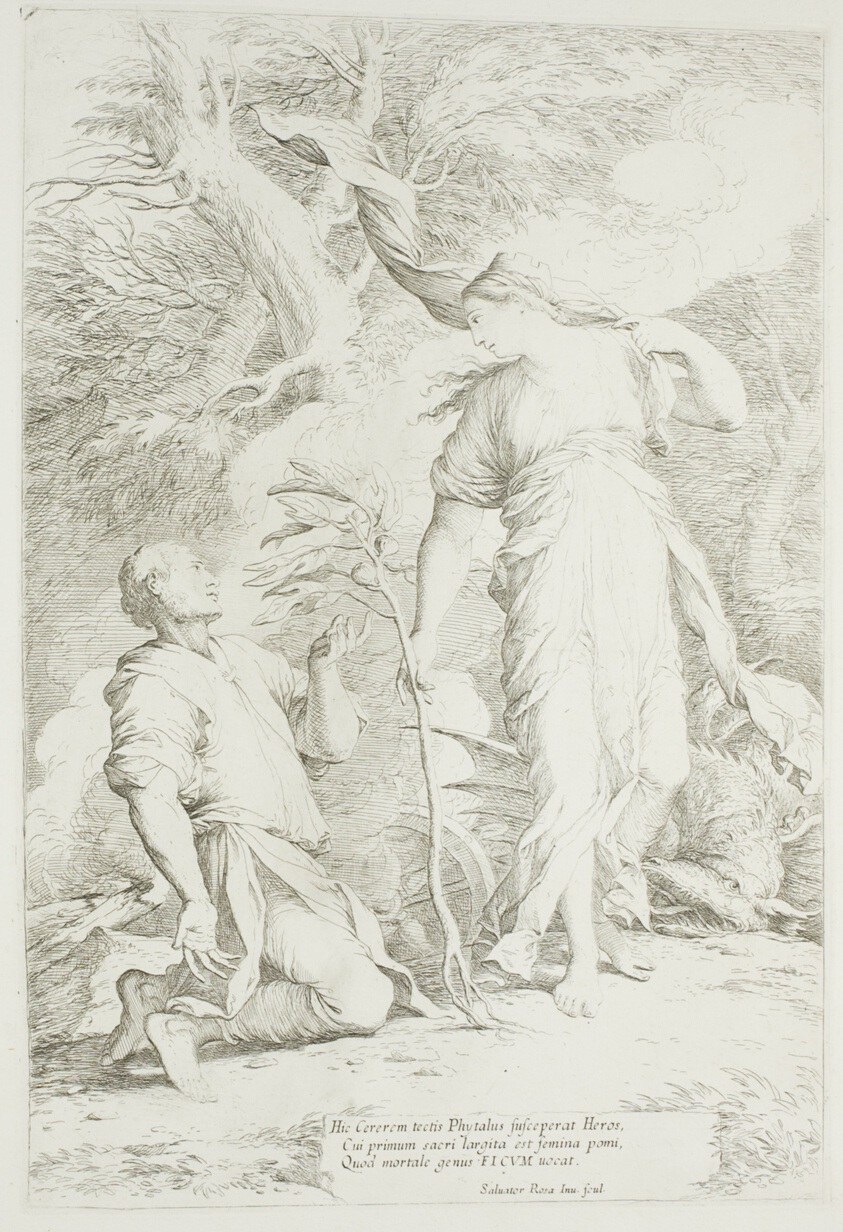
Ceres and Phytalus
Salvator RosaLinkedCulture matchlcp-889caa857911
- Date
- c. 1662
- Medium
- Etching with drypoint in black on ivory laid paper
- Culture
- Italy
- Department
- Prints and Drawings
- Institution
- Art Institute of Chicago
- Object ID
- 216039
From the Art Institute of Chicago record
Salvator Rosa produced 17 large etchings in the early 1660s, frequently adopting mythological lore peppered with classical literature. Ceres and Phytalus deliciously celebrates the fig, of which Rosa was particularly fond. Phytalus, a king of Attica, is said to have given the goddess Ceres shelter on her journey to find her daughter Proserpina, whom Pluto had abducted into the underworld. Rosa’s inscription reads, “Here the hero Phytalus had received Ceres into his house, on whom she first bestowed the seeds of the sacred fruit which mortals call the FIG.” This honeyed crop subsequently became a staple of Mediterranean cuisine.
The authoritative record is held by Art Institute of Chicago. LinkedCulture surfaces this object and its connections; it does not alter institutional metadata.
Get printable QR codesHide QR codes
Open QR codes for this object page and the museum record. They stay collapsed until needed.
Provenance & credit
As published by the source institution. Coverage varies — not every institution's open-data feed includes ownership history.
- Credit line
- Gift of Pia Gallo in honor of Martha Tedeschi
Linked open data
Authority identifiers that link this record into the wider web of cultural data — stable references you can follow to the source.
- Object type
- AAT300041273
Related across collections
Semantically similar works from Art Institute of Chicago and other institutions.