Art Institute of Chicago
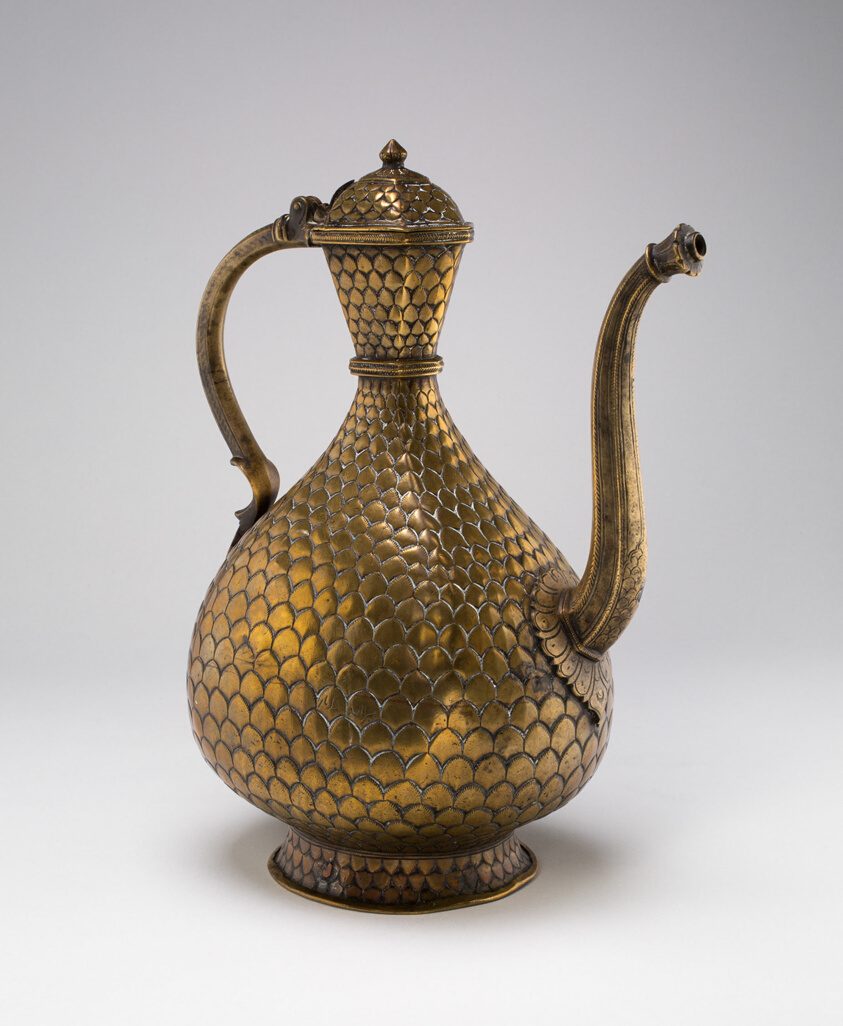
Ewer with Engraved Fish Scale Pattern, Inscribed in Persian with the name "Khairullah"
India
- Date
- Early 18th century
- Medium
- Brass repoussé
- Culture
- India
- Department
- Arts of Asia
- Institution
- Art Institute of Chicago
The Sultans of the Deccan (r. 1347-1636) in South India combined the Persian aesthetic with the Indic to forge a new Indo-Islamic idiom. In this ewer, we see the confrontation of the Indic preference for a sensuous fullness of volume, weight, balance, and a naturalistic silhouette (representing shapes such as gourds, mangoes, fruits, and birds) with the Islamic preference for the abstract, ethereal, and attenuated silhouette from Iran. The Indic aspect of this Indo-Islamic vessel is evident in the voluptuous, bottom-heavy, pear-shaped belly on raised on a pedestal foot, rising to a tall slender neck with a disk or “bulge” in the center, to a dome shaped top. The curvaceous handle echoes the rounded belly, while the spout, with a chased band of chevron, rises in a gentle S-curve to a lotiform mouth. A fully opened lotus surrounds the base of the spout. It is chased in a repoussé fish-scale motif, a naturalistic trait which at first blush would signify its Indian origin, but which may be a motif imported from Turkey, as seen in Iznik ceramics of the late 16th century. It is inscribed with the Persian name “Khairullah,” probably the owner’s name. Inscriptions indicate that the object was valued.
The authoritative record is held by Art Institute of Chicago. LinkedCulture surfaces this object and its connections; it does not alter institutional metadata.
Linked open data
Authority identifiers that link this record into the wider web of cultural data — stable references you can follow to the source.
- Object type
- AAT300411641
Related across collections
Semantically similar works from Art Institute of Chicago and other institutions.
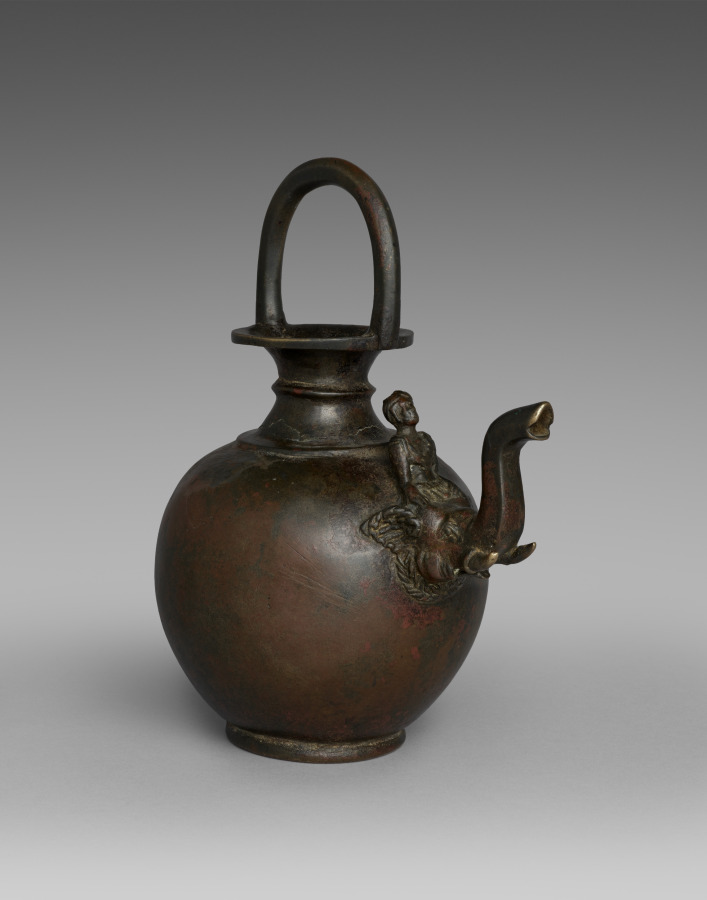
Ewer with Spout in the Form of an Elephant with a Mahut
Cleveland Museum of Art
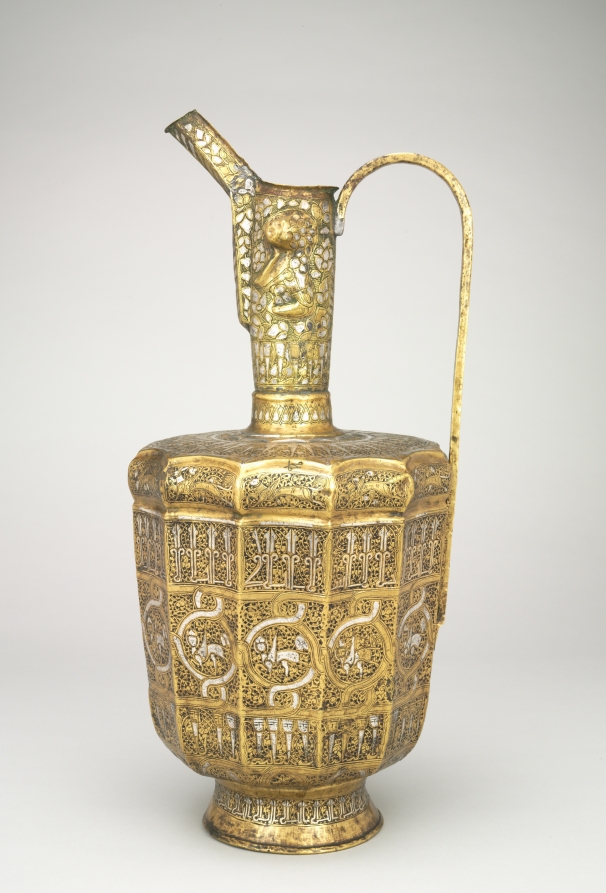
Twelve-sided Ewer with Sphinxes and Human-Headed Inscriptions
Cleveland Museum of Art

Ewer with bird, vegetal, and calligraphic motifs
Minneapolis Institute of Art
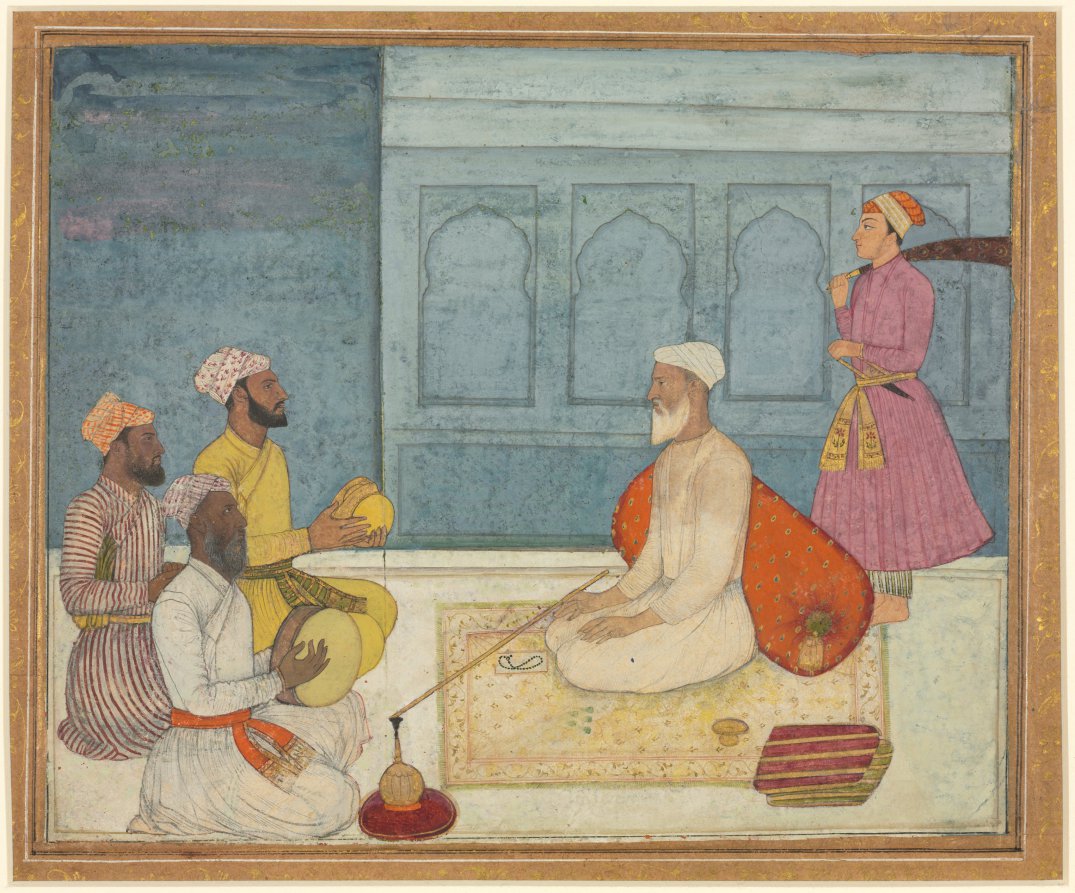
Sultan and Musicians
Cleveland Museum of Art

Bowl with phoenix motifs
Minneapolis Institute of Art
Luxury Ewer Extending Good Fortune to the Owner
Cleveland Museum of Art

Ewer (water pitcher)
Minneapolis Institute of Art

Bowl Depicting a Lady Riding an Elephant
Minneapolis Institute of Art
Bird-shaped Vessel
Cleveland Museum of Art

Bowl
Minneapolis Institute of Art

Water vase (Lota)
Minneapolis Institute of Art
Bowl with Birds
Art Institute of Chicago