Cleveland Museum of Art
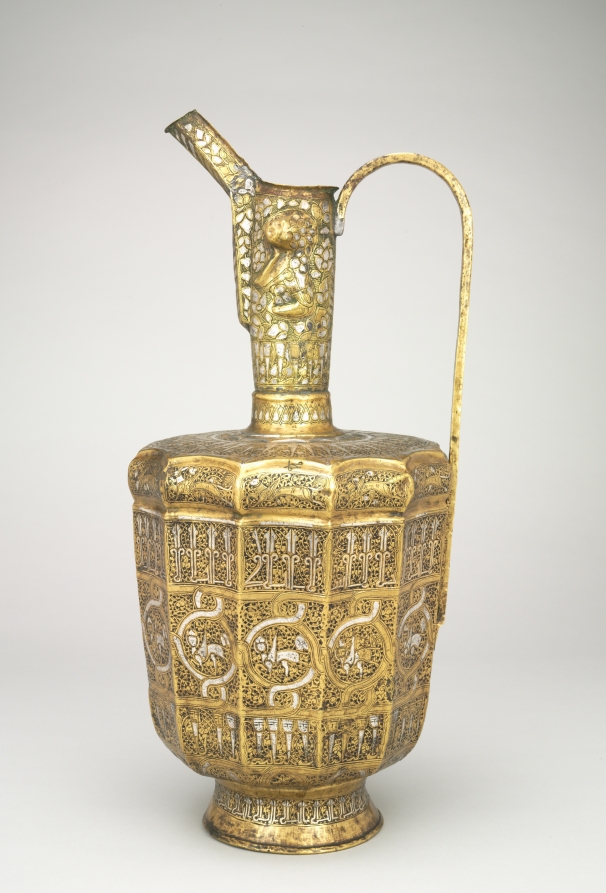
Twelve-sided Ewer with Sphinxes and Human-Headed Inscriptions
- Date
- 1300–1350
- Medium
- hammered sheet of brass inlaid with silver
- Culture
- Iran, Khurasan, Ilkhanid period (1256–1353)
- Department
- Islamic Art
- Institution
- Cleveland Museum of Art
The spout and neck of the ewer display a crouching and seated lion in raised relief. Winged hare-like animals march around the top of the body, set off by foliate scrolls, while sphinxes process around the center. The bottom of the ewer’s body is encircled by an inscription with human heads, which only appear on metalwork in Islamic art. Ewers like this, and similar elaborate vessels, would have been used in court banquets and elite homes across the Islamic world. Calligraphy with human heads, known as animated script, developed in northeast Iran during the 1100s.
The authoritative record is held by Cleveland Museum of Art. LinkedCulture surfaces this object and its connections; it does not alter institutional metadata.
Related across collections
Semantically similar works from Cleveland Museum of Art and other institutions.
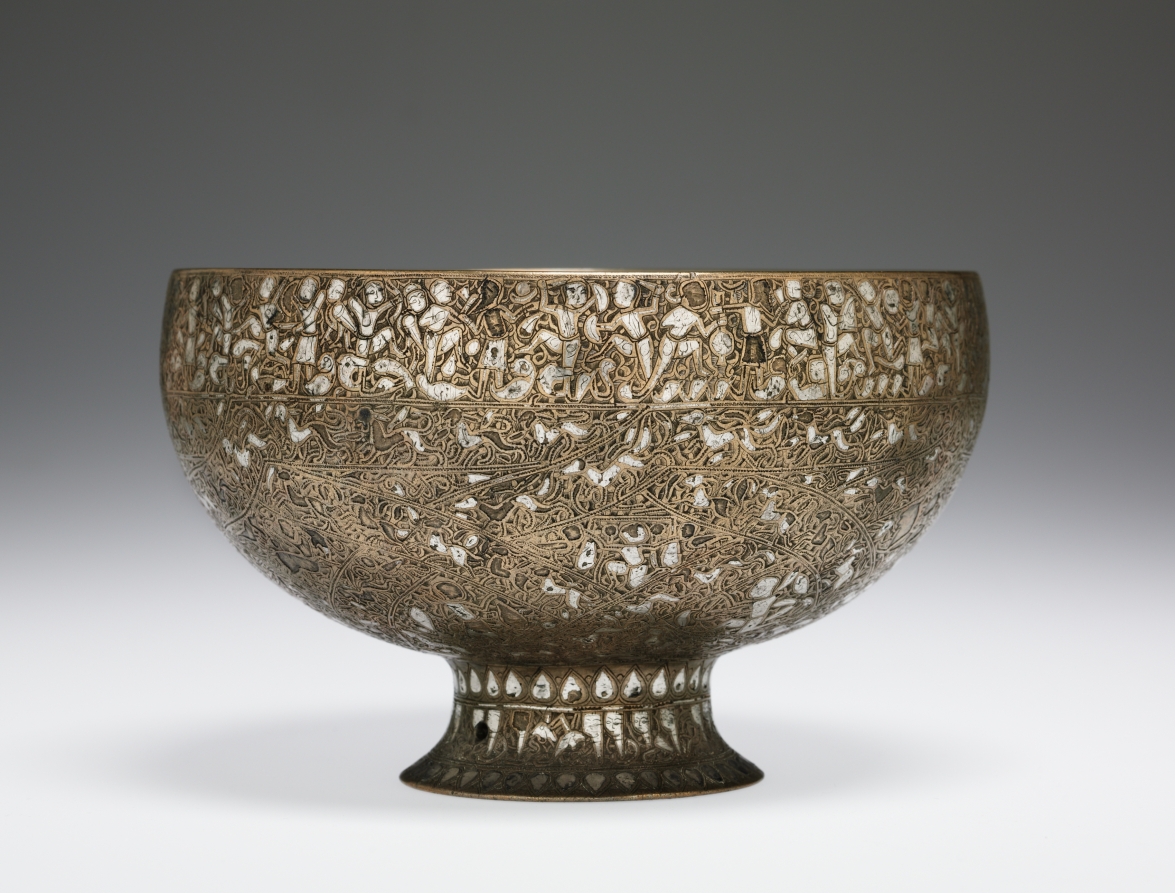
The Wade Cup with Animated Script
Cleveland Museum of Art
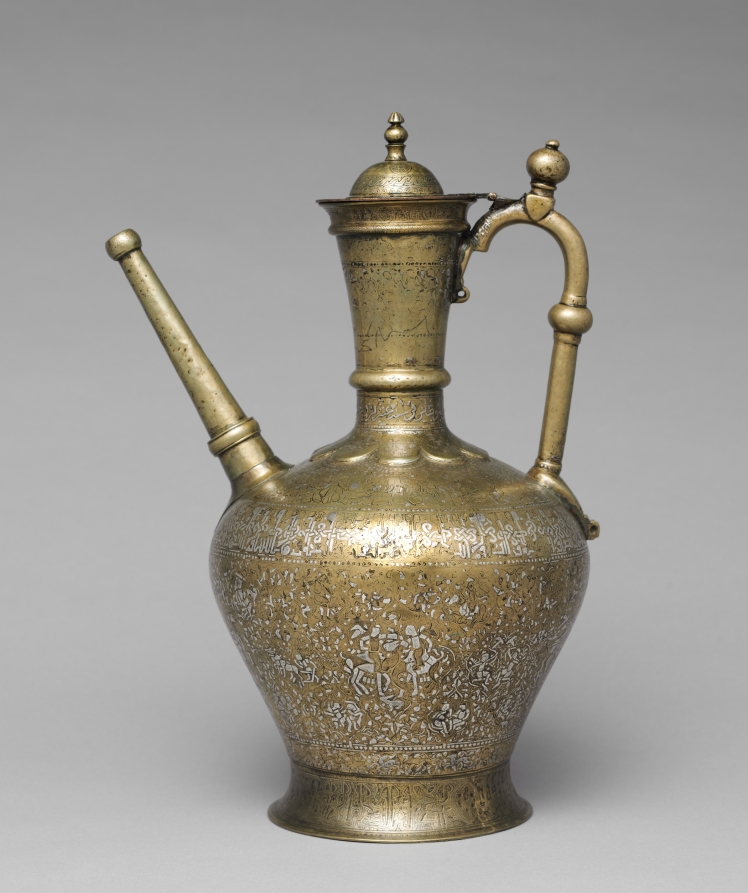
Luxury Ewer Extending Good Fortune to the Owner
Cleveland Museum of Art
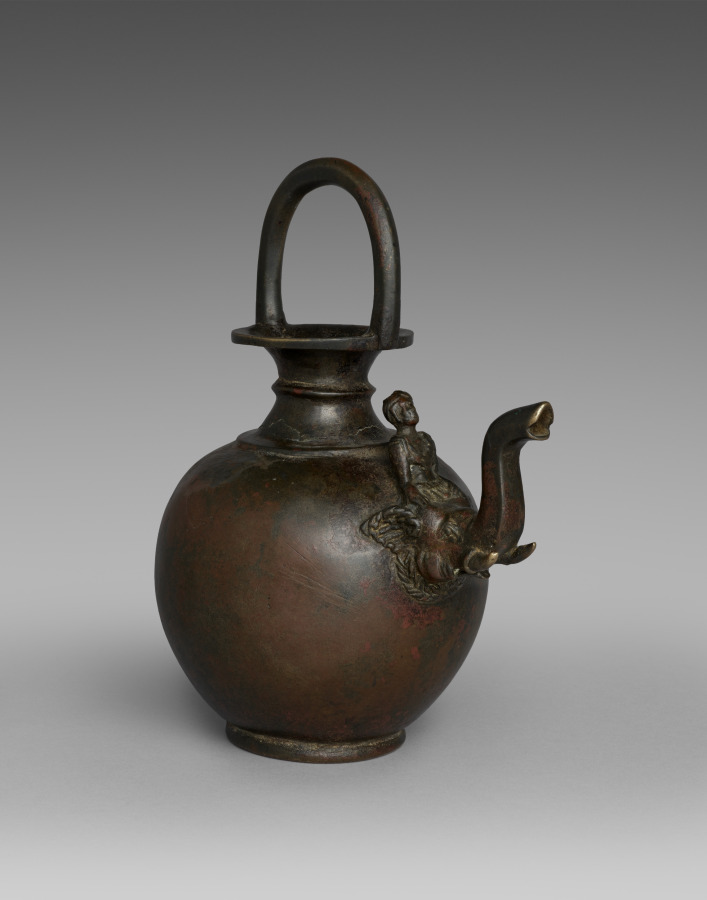
Ewer with Spout in the Form of an Elephant with a Mahut
Cleveland Museum of Art
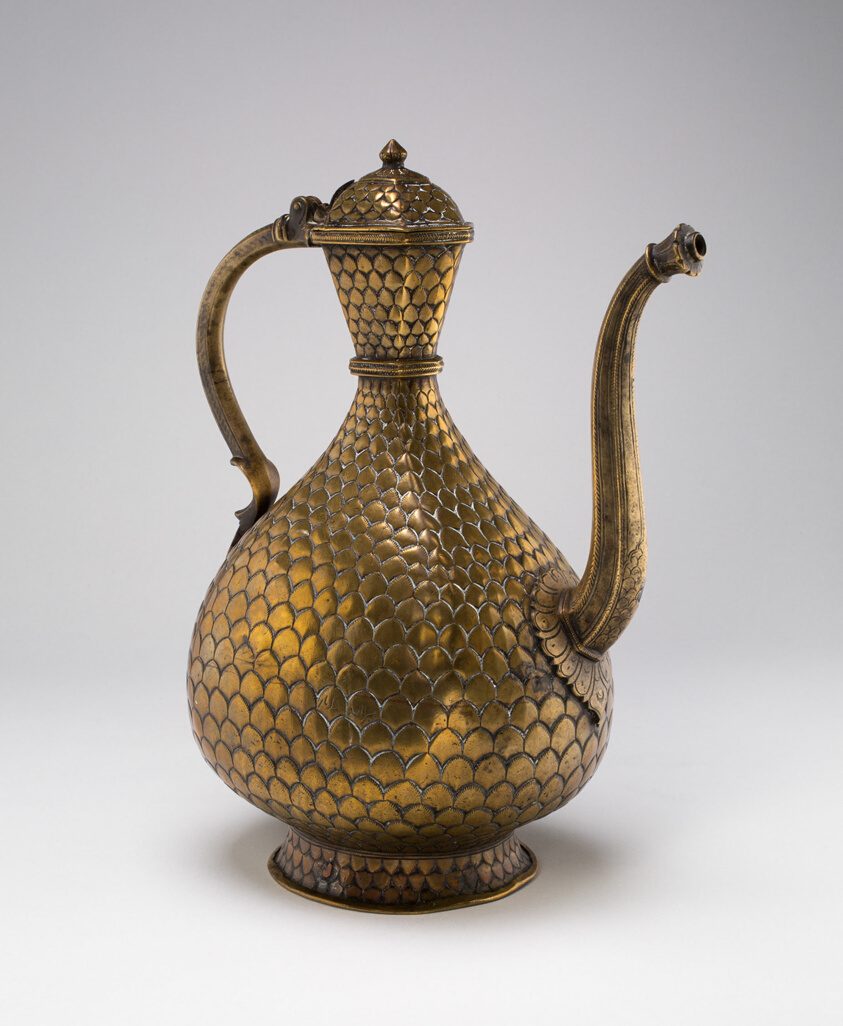
Ewer with Engraved Fish Scale Pattern, Inscribed in Persian with the name "Khairullah"
Art Institute of Chicago
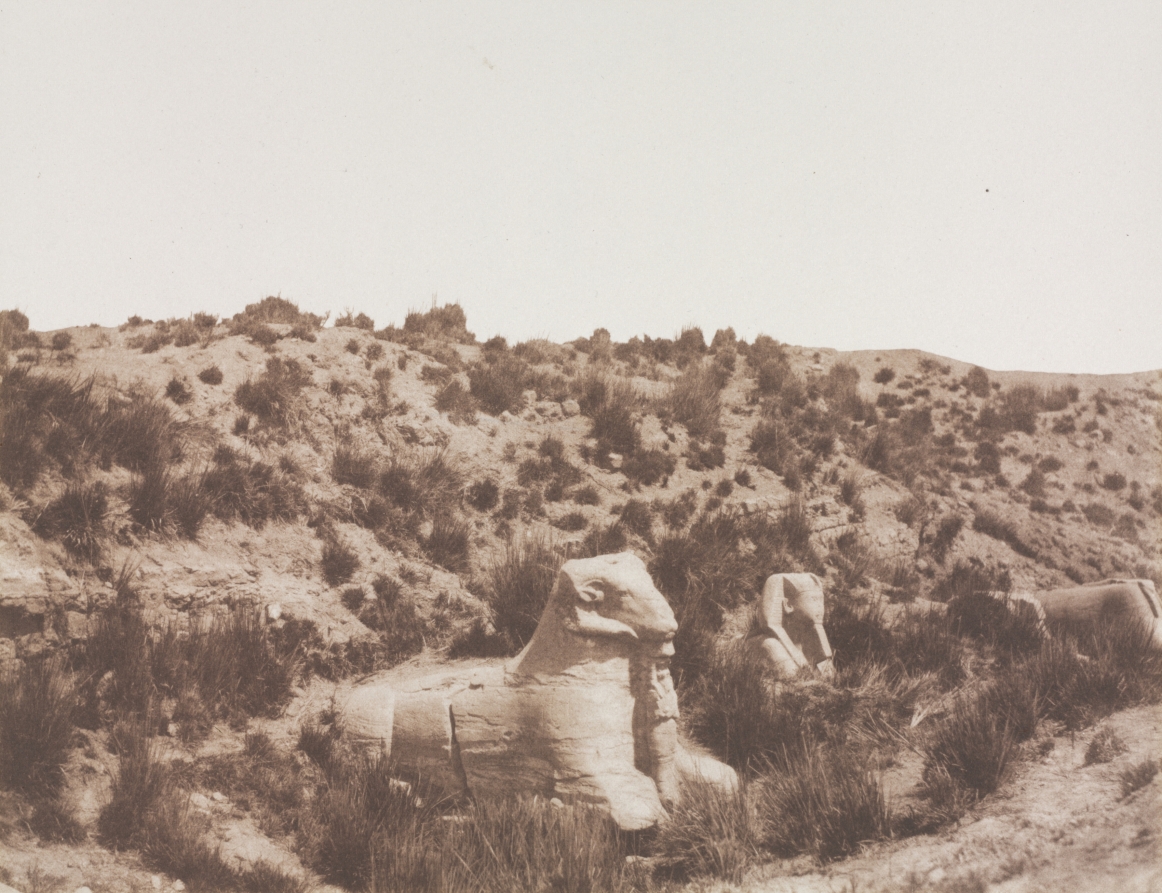
Sphinxes with a Human Head and with a Ram Head at Point Y. Karnak (Thebes)
Cleveland Museum of Art

Chicken-Head Ewer
Minneapolis Institute of Art
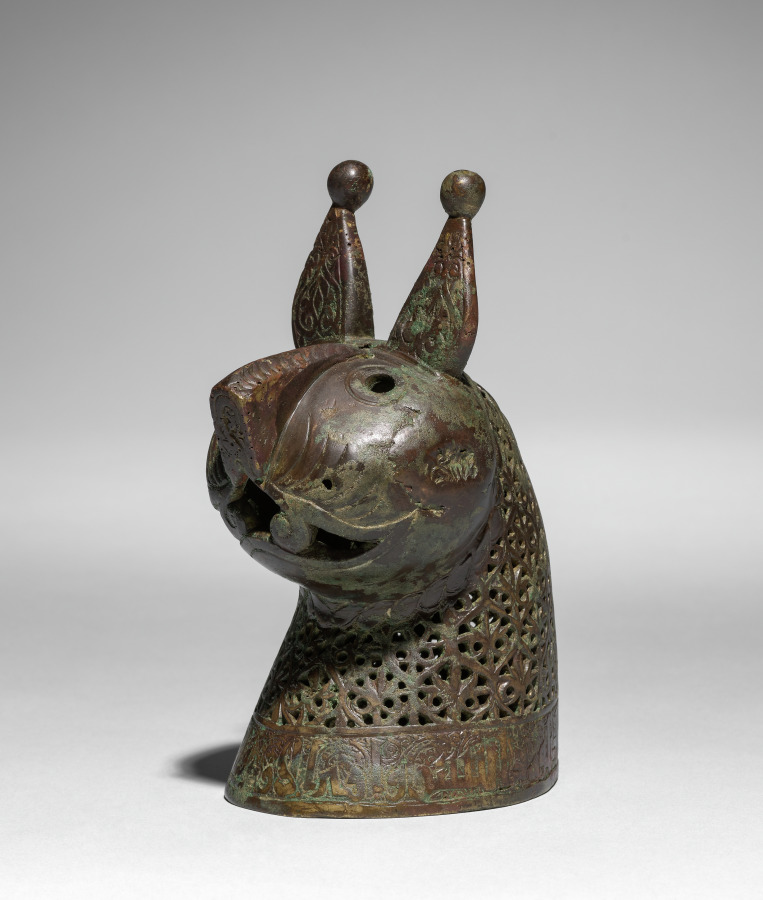
Head for a Feline Incense Burner
Cleveland Museum of Art

Panel
Minneapolis Institute of Art

Ewer with bird, vegetal, and calligraphic motifs
Minneapolis Institute of Art
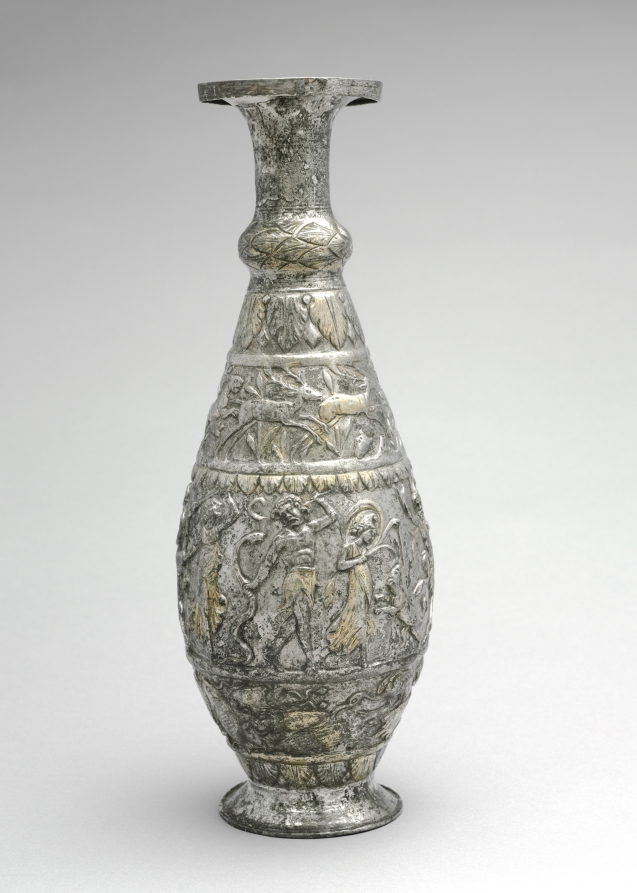
Ewer (Pitcher) with Game, Seafood, and Wine Scenes
Cleveland Museum of Art
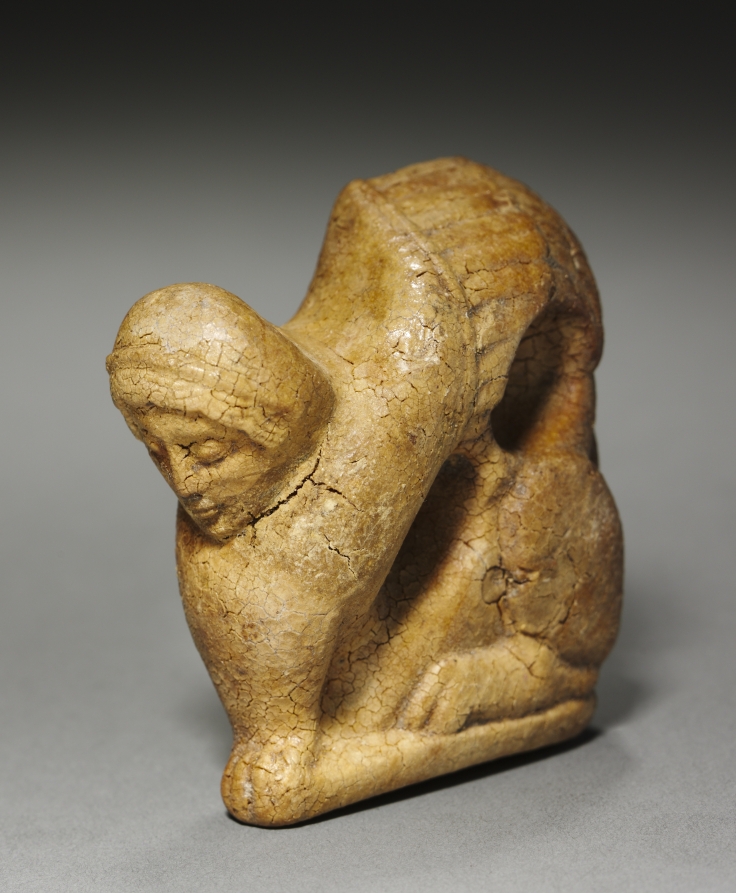
Sphinx
Cleveland Museum of Art

Bowl Depicting a Lady Riding an Elephant
Minneapolis Institute of Art