Art Institute of Chicago
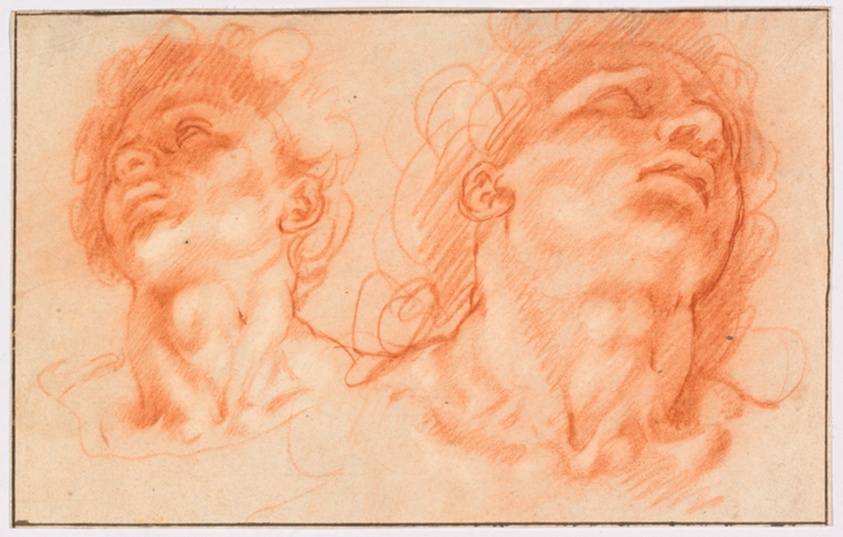
Two Male Heads after the Antique, the Sons of Laocoön
Hendrick GoltziusLinkedCulture matchlcp-6b28e43172af
- Date
- c. 1605
- Medium
- Red chalk on ivory laid paper
- Culture
- Netherlands
- Department
- Prints and Drawings
- Institution
- Art Institute of Chicago
- Object ID
- 224216
From the Art Institute of Chicago record
Surviving drawings in other collections prove that Hendrick Goltzius studied firsthand the famed Laocoön group, an ancient Roman sculpture unearthed to great fanfare in the early 1500s. The monument was widely revered as an ideal representation of human torment, made more famous by printed representations. Goltzius created this red-chalk drawing at least a decade after his visit to Rome in 1591, employing specific motifs for his own expressive ends. Extracting the faces of Laocoön’s sons from the sculptural ensemble and reversing their left-to-right order, Goltzius blended the red chalk to emphasize the protruding volumes of the neck muscles. By applying greater pressure, he reinforced the contour lines of the figures, particularly around the sides of their faces.
The authoritative record is held by Art Institute of Chicago. LinkedCulture surfaces this object and its connections; it does not alter institutional metadata.
Get printable QR codesHide QR codes
Open QR codes for this object page and the museum record. They stay collapsed until needed.
Provenance & credit
As published by the source institution. Coverage varies — not every institution's open-data feed includes ownership history.
- Credit line
- Regenstein Acquisition Fund
- Provenance
- Sold by Max (Sándor) Hevesi (1894–1948), Vienna to I.Q. (Johan Quirijn) van Regteren Altena (1899–1980), Amsterdam, 1929 [Inventory book: '845. t. Goltzius. 2 koppen']; by descent; sold, Christie’s, London, July 10, 2014, lot 23, to the Art Institute of Chicago.
Linked open data
Authority identifiers that link this record into the wider web of cultural data — stable references you can follow to the source.
- Object type
- AAT300033973
Related across collections
Semantically similar works from Art Institute of Chicago and other institutions.