Art Institute of Chicago
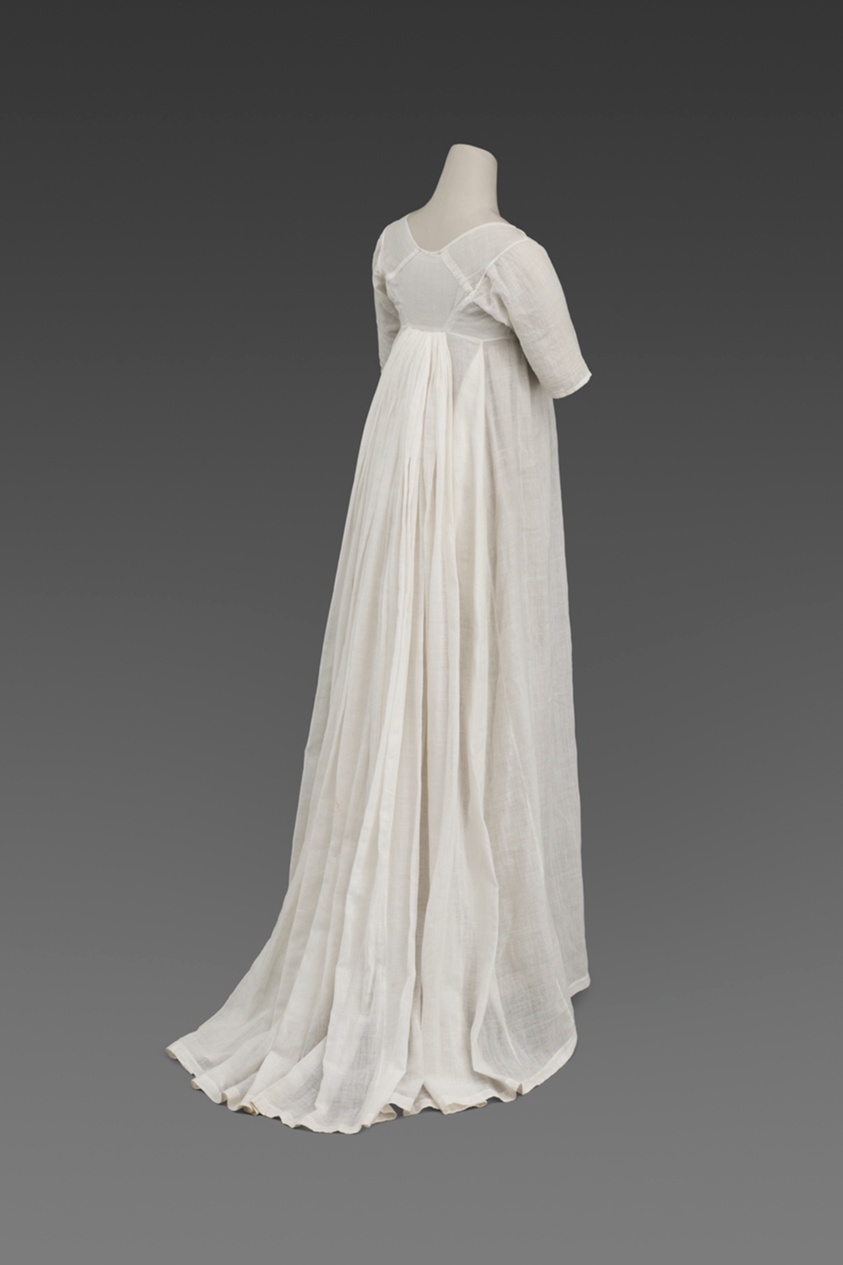
Woman's Day Dress
Made in France with cotton imported from India
- Date
- c. 1800
- Medium
- Cotton, hand-spun, hand-woven plain weave called mulmul or muslin
- Culture
- India
- Department
- Textiles
- Institution
- Art Institute of Chicago
Indian cotton weavers have been creating delicate, sheer textiles for hundreds, if not thousands, of years. Elite men and women on the Indian subcontinent valued such fine, cotton muslin—a specialty of Bengal that was made entirely by hand—for fashionable clothing. White cotton dresses first appeared in French fashion in the 1780s; the simplicity of the delicate column-like silhouette was seen as an ideal expression of Neoclassical femininity, a look inspired by Classical Greek and Roman statuary. The quality of this cotton was nearly impossible to replicate using European industrial methods, adding to its cachet.
The authoritative record is held by Art Institute of Chicago. LinkedCulture surfaces this object and its connections; it does not alter institutional metadata.
Linked open data
Authority identifiers that link this record into the wider web of cultural data — stable references you can follow to the source.
- Object type
- AAT300209261
Related across collections
Semantically similar works from Art Institute of Chicago and other institutions.
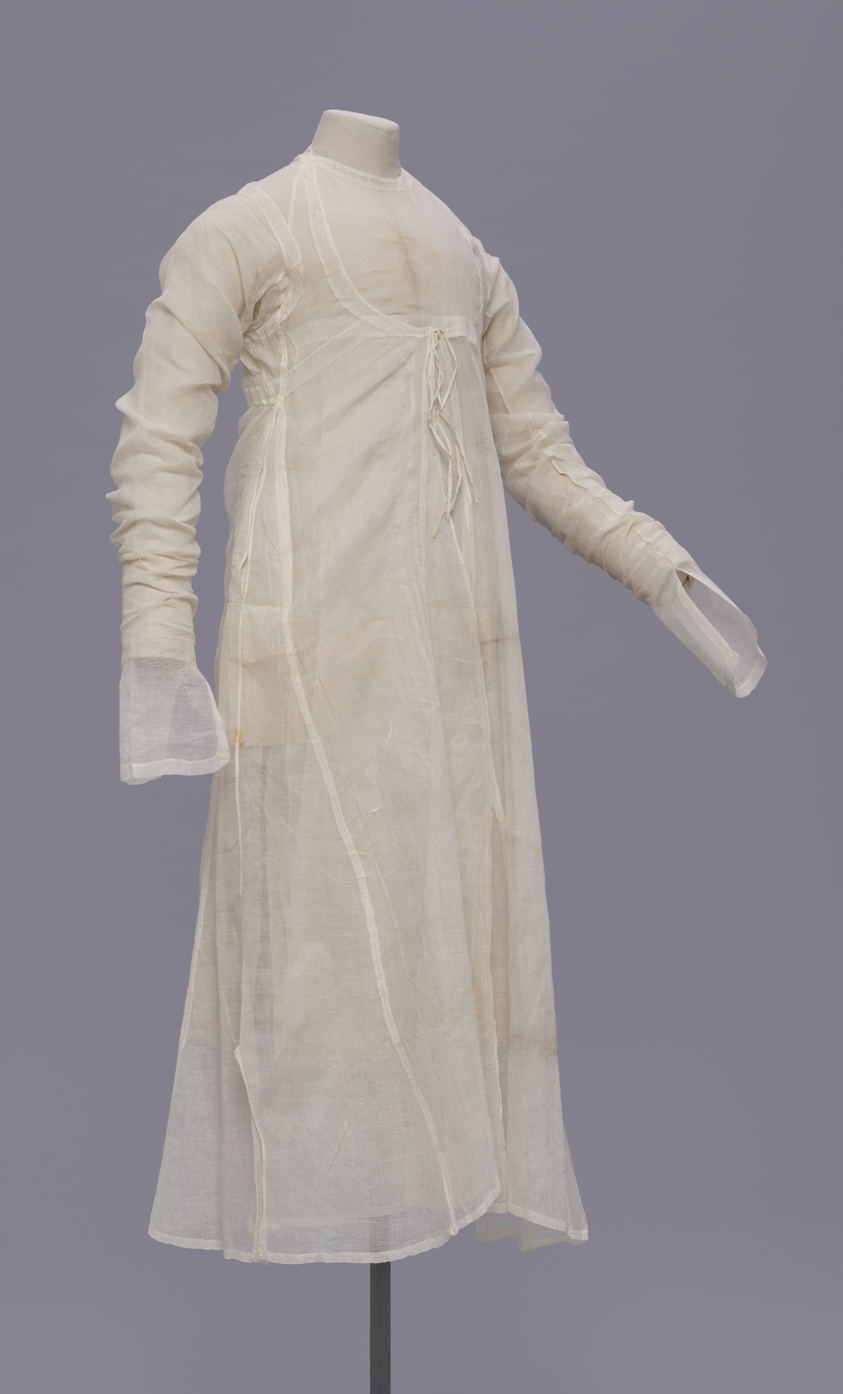
Man's Angarkha (Outer Robe)
Art Institute of Chicago
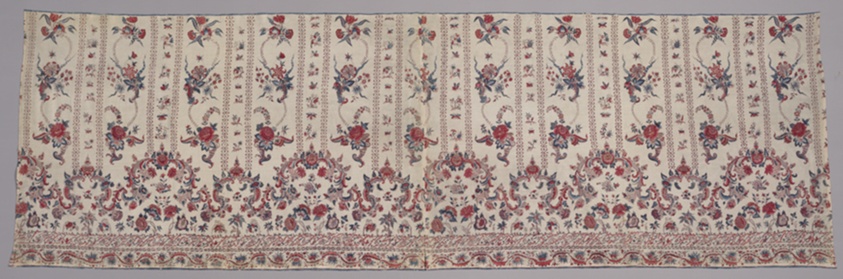
Panel of Chintz for a Woman's Skirt
Art Institute of Chicago
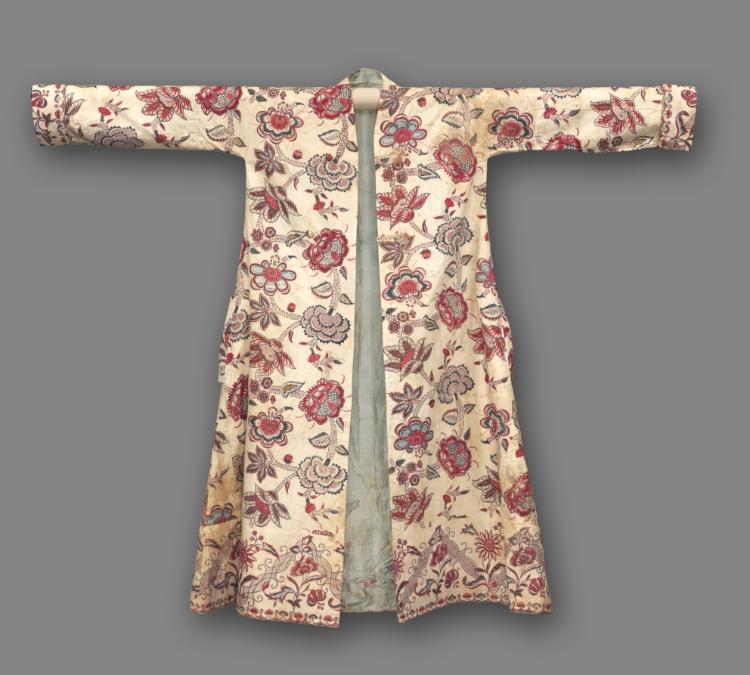
Man's Morning Coat
Cleveland Museum of Art

Woman's wedding veil (Abochhini)
Minneapolis Institute of Art

Painted cotton Pha nung textile panel
Minneapolis Institute of Art

Textile panel
Minneapolis Institute of Art
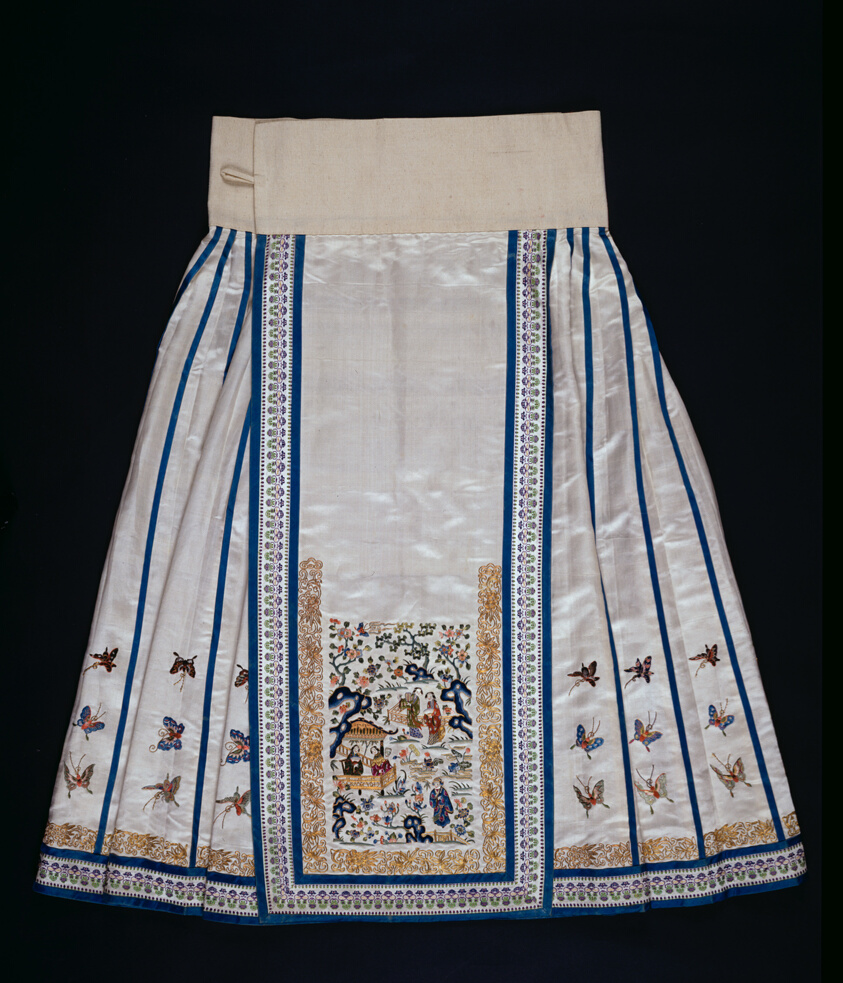
Woman's Qun (Semiformal Domestic Skirt)
Art Institute of Chicago
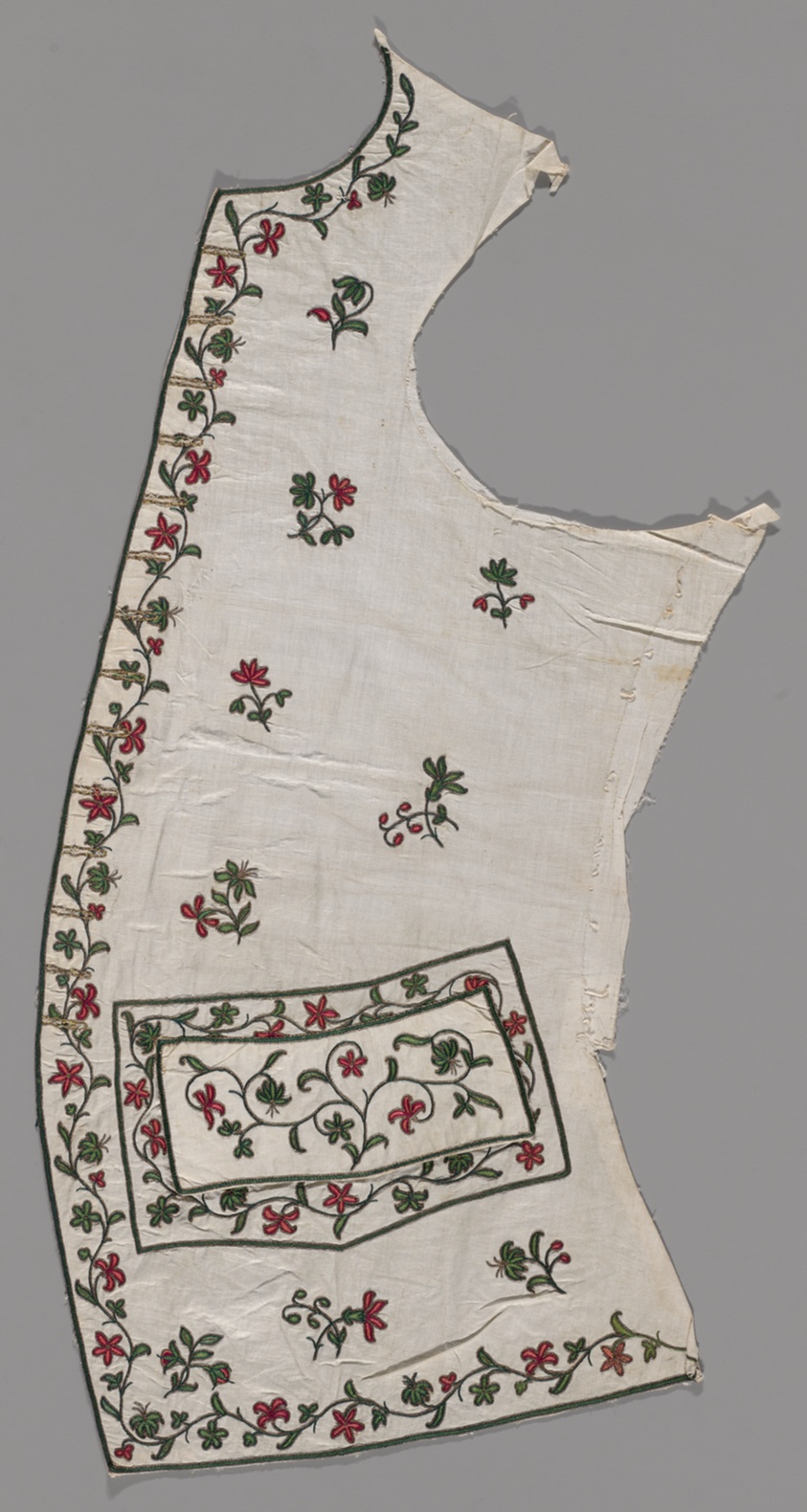
Pair of Waistcoat Front Panels
Art Institute of Chicago

Woman's tunic (Abho)
Minneapolis Institute of Art

Shawl
Minneapolis Institute of Art
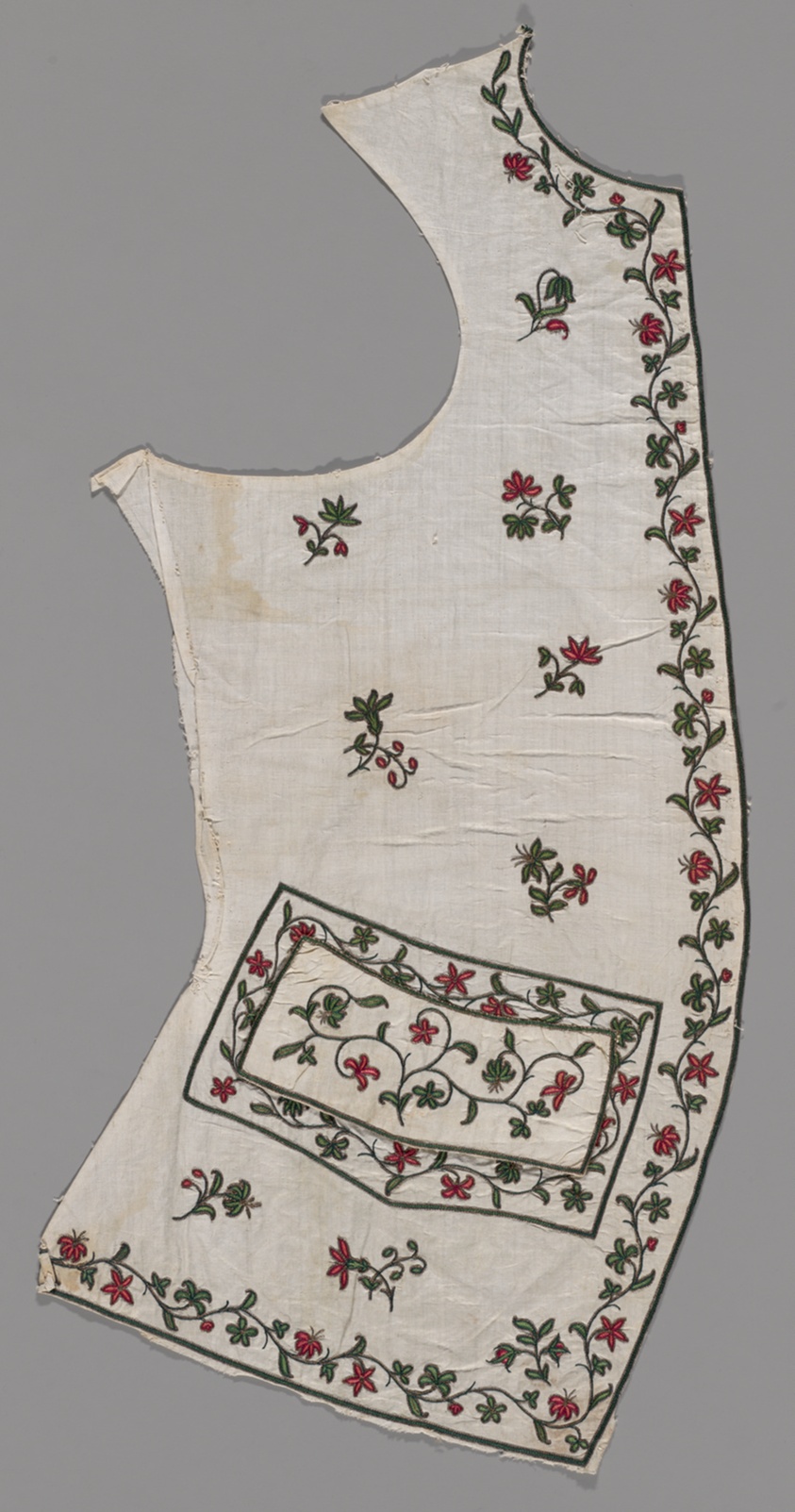
Waistcoat Front Panel
Art Institute of Chicago

Advantages of Wearing Muslin Dresses!
Minneapolis Institute of Art