Art Institute of Chicago
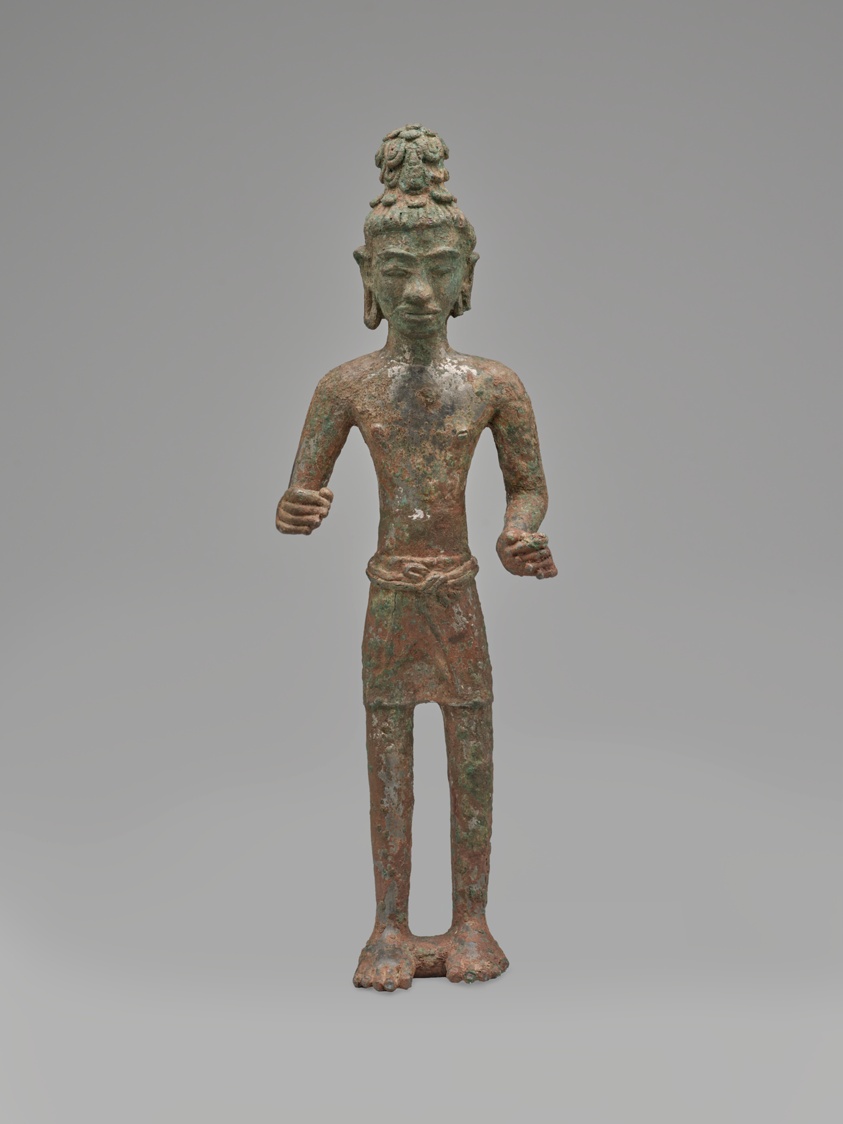
Standing Bodhisattva
Probably Thailand, possibly from Plai Bat Hill, Buriram provinceLinkedCulture matchlcp-eb5ee616f5a5
- Date
- Pre-Angkor period, 7th‒8th century
- Medium
- Bronze
- Culture
- Southeast Asia
- Department
- Arts of Asia
- Institution
- Art Institute of Chicago
- Object ID
- 25650
From the Art Institute of Chicago record
This small bronze sculpture represents a two-armed Bodhisattva, traditionally identified as Maitreya, the future Buddha, although this is not certain. Stylistically attributed to the pre-Angkor period (7th‒8th century), it is of Mon‒Khmer origin, possibly from Buriram province in northeast Thailand, where several similar pieces have been found. The figure’s ascetic appearance features a chignon adorned with a small stupa or caitya , finely looped hair, and the absence of jewelry. The statue wears a short sampot (male wrapping garment) around the hips. The hand attributes, likely a water jar and lotus bud, were probably cast separately and are now lost. A joined tang beneath the feet suggests attachment to a now-lost base, reflecting early bronze casting techniques.
The authoritative record is held by Art Institute of Chicago. LinkedCulture surfaces this object and its connections; it does not alter institutional metadata.
Get printable QR codesHide QR codes
Open QR codes for this object page and the museum record. They stay collapsed until needed.
Provenance & credit
As published by the source institution. Coverage varies — not every institution's open-data feed includes ownership history.
- Credit line
- Gift of Mr. and Mrs. William H. Wolff
- Provenance
- With William H. Wolff (1906–1991), New York, by Oct. 1965 [this and the following according to invoice, Oct. 25, 1965; copy in curatorial object file]; given to the Art Institute of Chicago, July 14, 1966.
Linked open data
Authority identifiers that link this record into the wider web of cultural data — stable references you can follow to the source.
- Object type
- AAT300301253
Related across collections
Semantically similar works from Art Institute of Chicago and other institutions.