Art Institute of Chicago
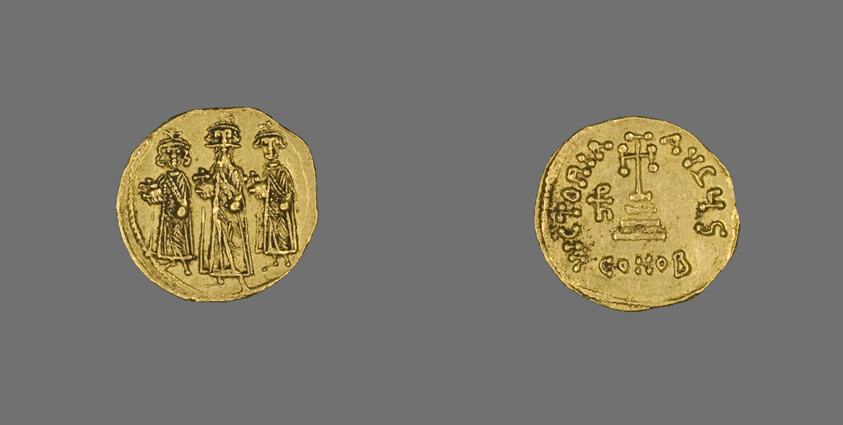
Solidus (Coin) of Heraclius
Byzantine; minted in Constantinople (now Istanbul, Turkey)LinkedCulture matchlcp-7c5dfd394f33
- Date
- 638-641
- Medium
- Gold
- Culture
- Byzantine Empire
- Department
- Arts of Greece, Rome, and Byzantium
- Institution
- Art Institute of Chicago
- Object ID
- 36631
From the Art Institute of Chicago record
On the front (obverse) of this coin Emperor Heraclius is flanked by his two sons, Heraclius Constantine and Heraclonas. All are facing front and holding globes. On the back (reverse) is a Greek cross on 3 steps, with the monogram of Heraclius to the left of the cross. Coins were an ideal way for Byzantine emperors to circulate their images throughout the empire and beyond, since they were used to pay for imported merchandise and to pay foreign mercenaries. They could also be employed as powerful vehicles for propaganda, promoting dynastic succession and emphasizing the earthly emperor’s god-given right to rule. This coin is a gold solidi weighing 4.5 grams. From the fourth century on, the solidus was the preferred gold coin issued by Byzantine emperors. The solidus remained essentially unaltered in weight and purity until the tenth century.
The authoritative record is held by Art Institute of Chicago. LinkedCulture surfaces this object and its connections; it does not alter institutional metadata.
Get printable QR codesHide QR codes
Open QR codes for this object page and the museum record. They stay collapsed until needed.
Provenance & credit
As published by the source institution. Coverage varies — not every institution's open-data feed includes ownership history.
- Credit line
- Gift of Emily Crane Chadbourne
- Provenance
- Emily Crane Chadbourne (1871- 1964), Paris, London, and Chicago; given to the Art Institute of Chicago, 1940.
Linked open data
Authority identifiers that link this record into the wider web of cultural data — stable references you can follow to the source.
- Object type
- AAT300037334
Related across collections
Semantically similar works from Art Institute of Chicago and other institutions.