Art Institute of Chicago
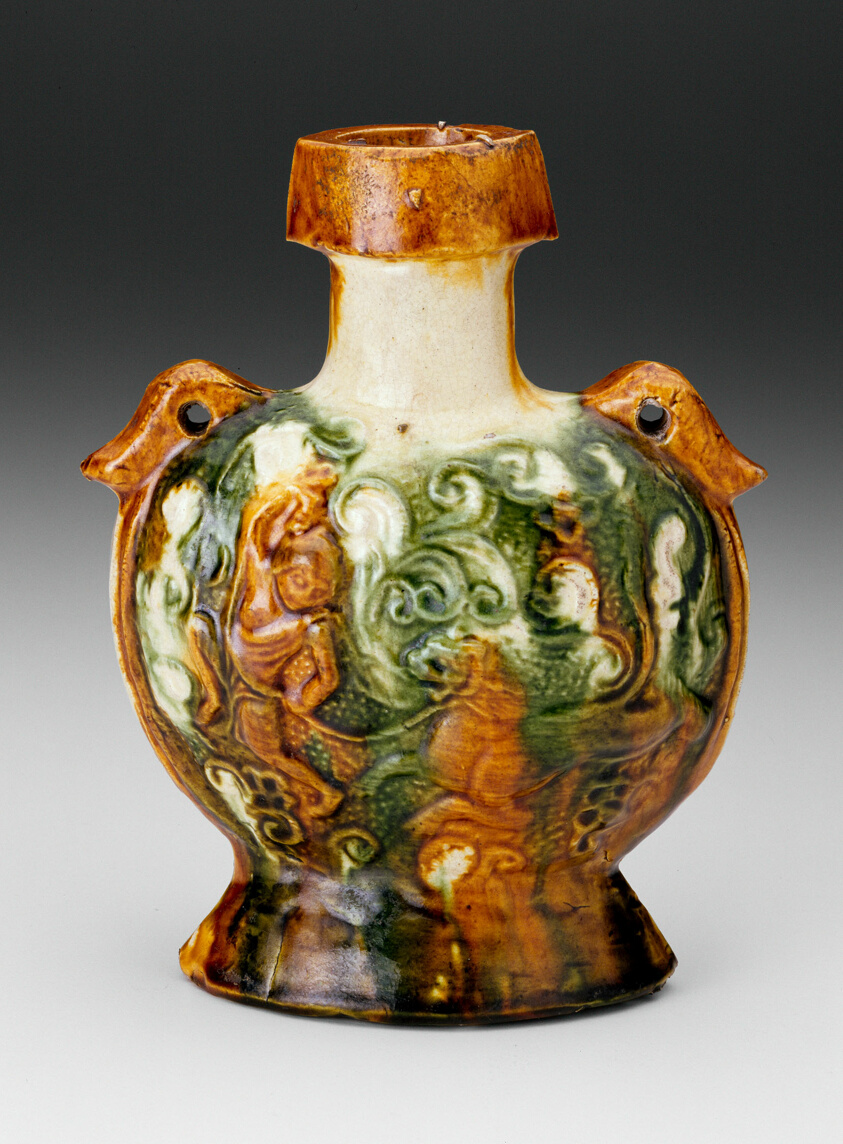
Pilgrim Flask
China
- Date
- Tang dynasty (618–907), first half of 8th century
- Medium
- Earthenware with three-color (sancai) lead glazes
- Culture
- China
- Department
- Arts of Asia
- Institution
- Art Institute of Chicago
Trans-Asiatic trade expanded the Chinese repertoire of simple, wheel-thrown clay shapes to include composite forms pressed in molds. This pilgrim flask—a vessel shape that may imitate forms originally made in glass, leather, or metalwork —depicts a young boy adorned with a billowing scarf, who dances with a lion. Although similar images can be traced back to Hellenistic Greece (c. 300-200 B.C.), the extent of such Classical influence on the much later art of Tang dynasty China has yet to be determined. This vessel displays a fluid “three-color” ( sancai ) glaze, named after the archetypical combination of bright green, amber, and white (transparent) lead-rich glazes that have been colored with carefully measured recipes of metallic oxides. The green derives from copper and the amber from iron.
The authoritative record is held by Art Institute of Chicago. LinkedCulture surfaces this object and its connections; it does not alter institutional metadata.
Related across collections
Semantically similar works from Art Institute of Chicago and other institutions.
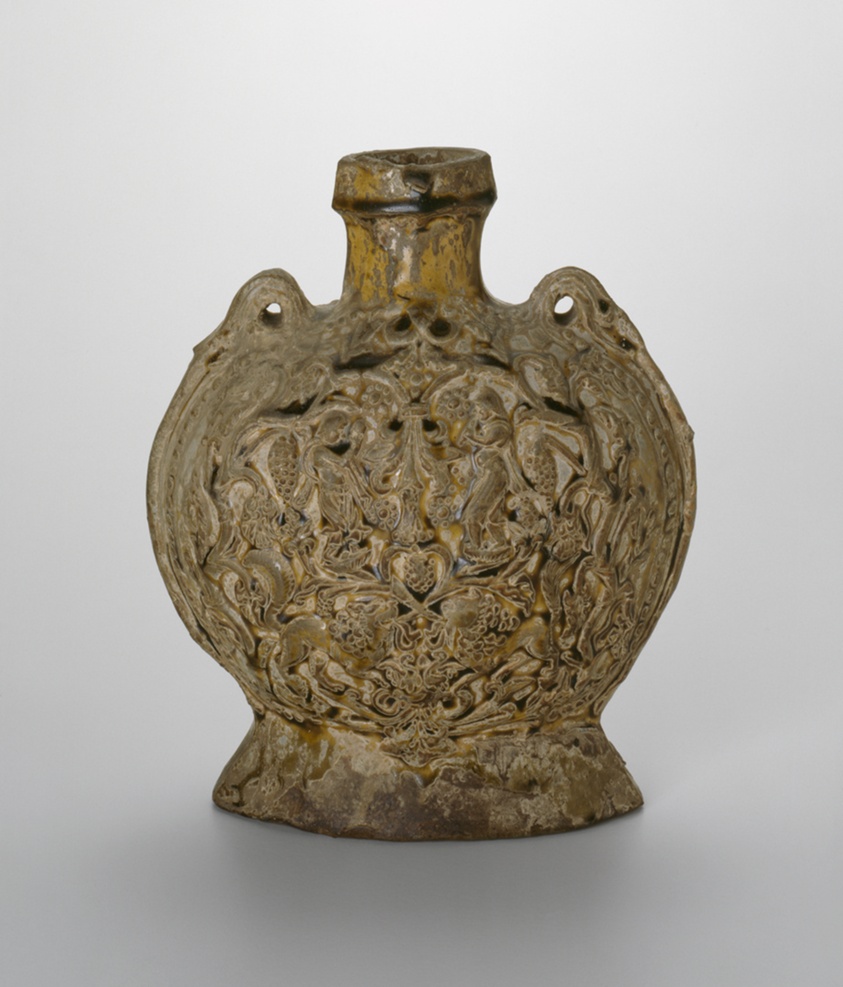
Pilgrim Flask (Bian Hu)
Art Institute of Chicago

Pilgrim Flask
Getty Museum
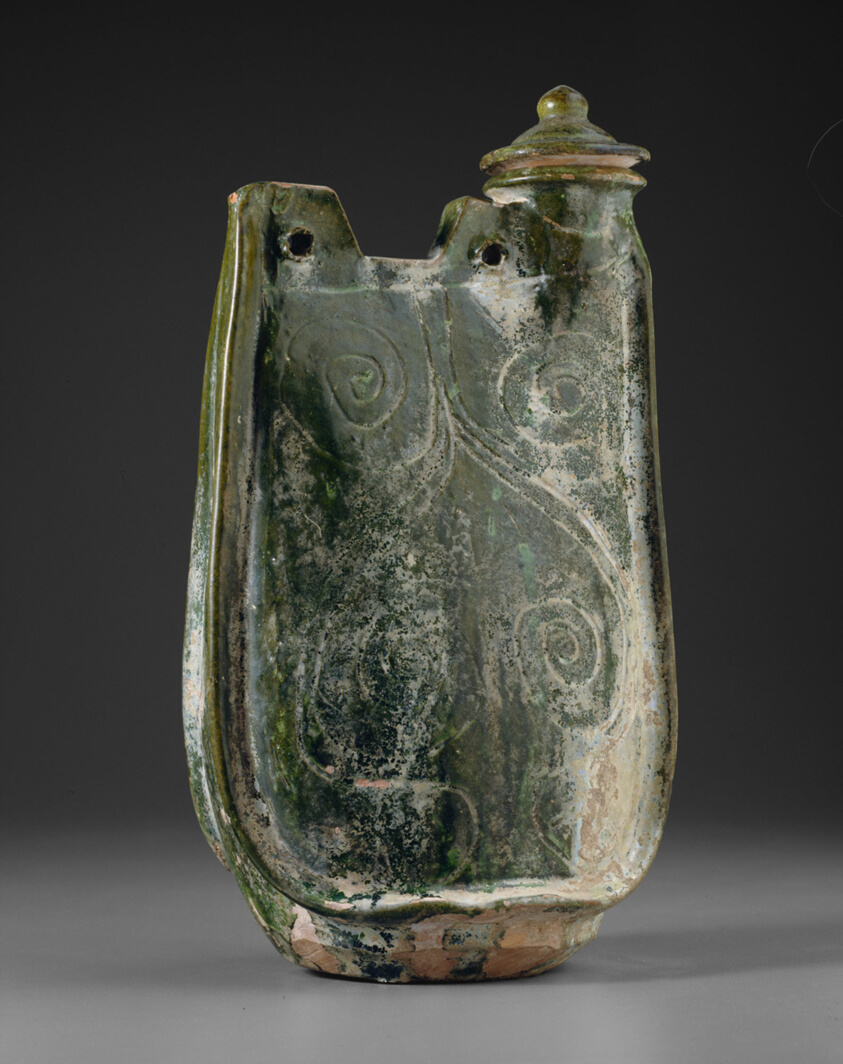
Covered Pilgrim Flask with Scrolls
Art Institute of Chicago
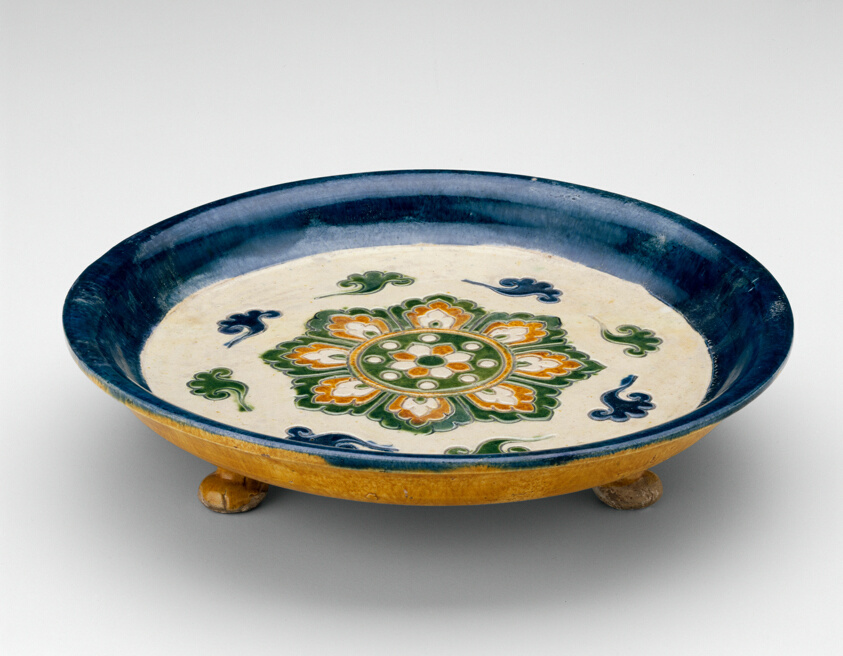
Footed Dish with Lotus Medallion and Cloud Scrolls
Art Institute of Chicago

Pilgrim Flask
Getty Museum
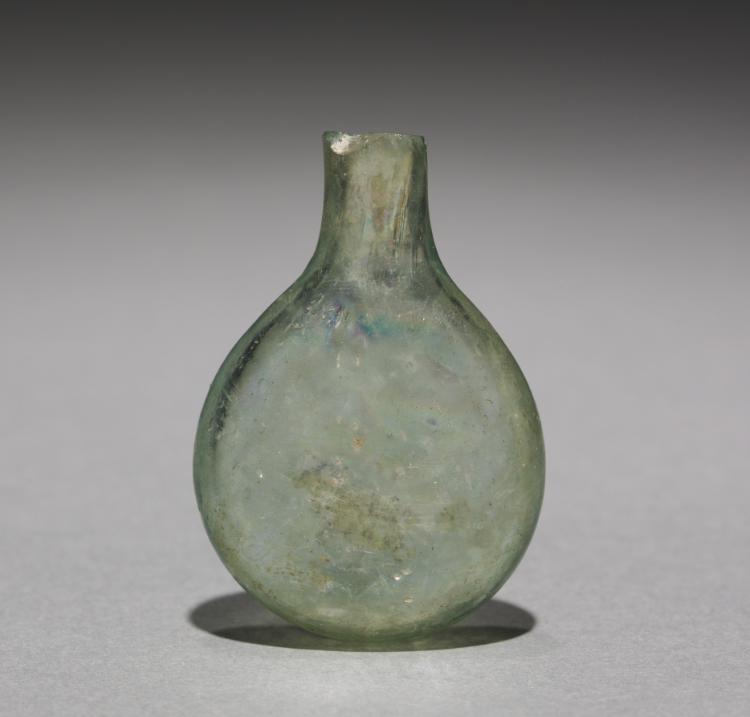
Pilgrim's Flask
Cleveland Museum of Art

Flask with figural decoration
Minneapolis Institute of Art

Moon flask
Minneapolis Institute of Art
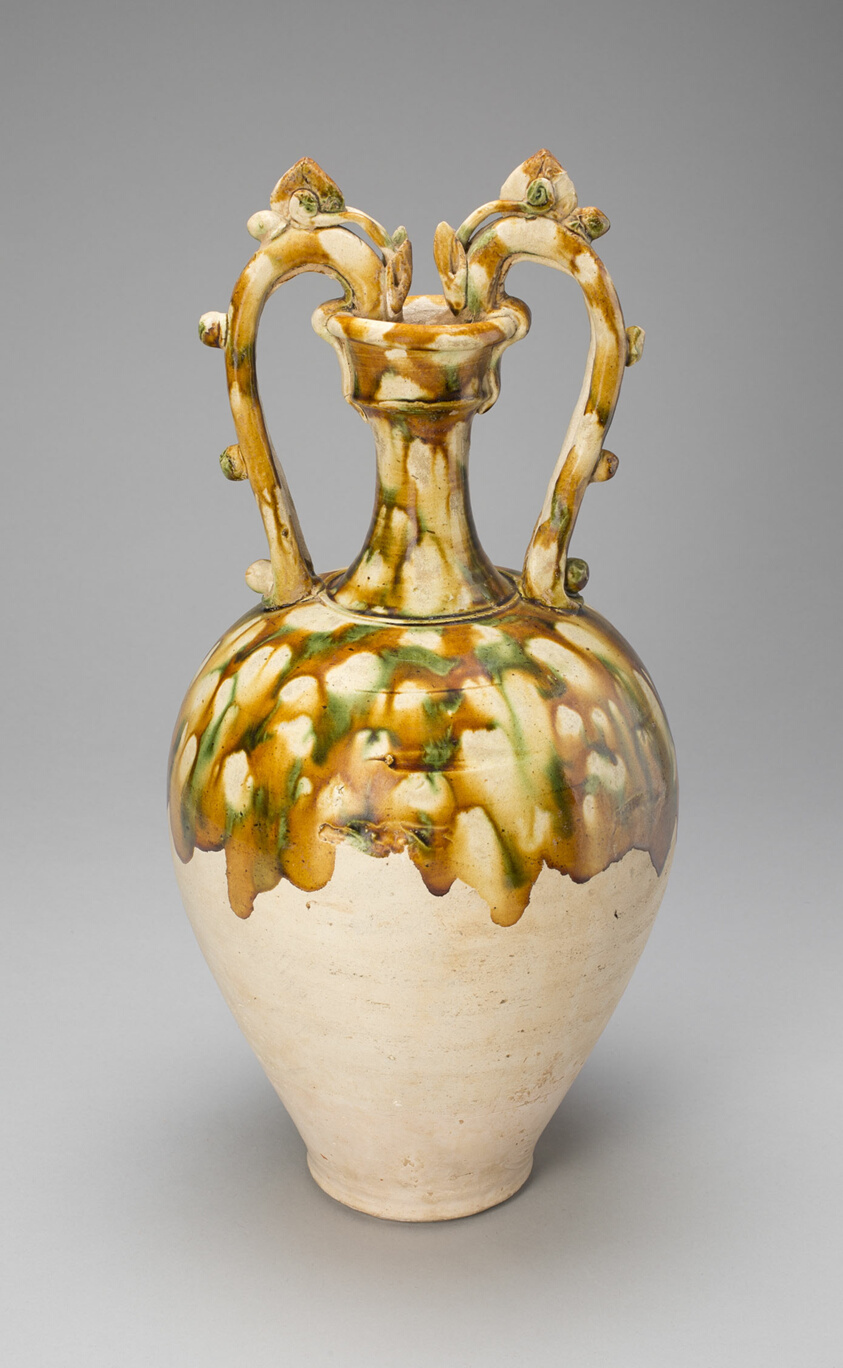
Dragon-Handled Amphora 三彩双龙耳瓶
Art Institute of Chicago

Pilgrim Flask
Getty Museum

Pilgrim Flask with Marine Scenes
Getty Museum
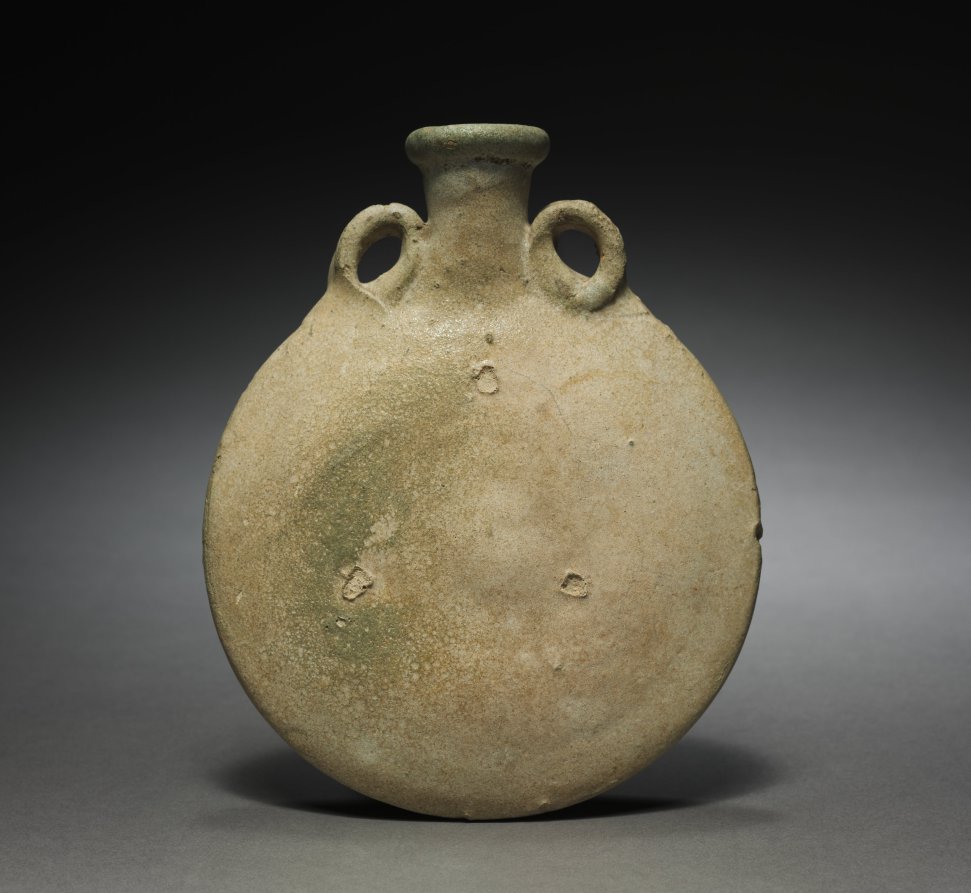
Pilgrim Flask
Cleveland Museum of Art