Art Institute of Chicago
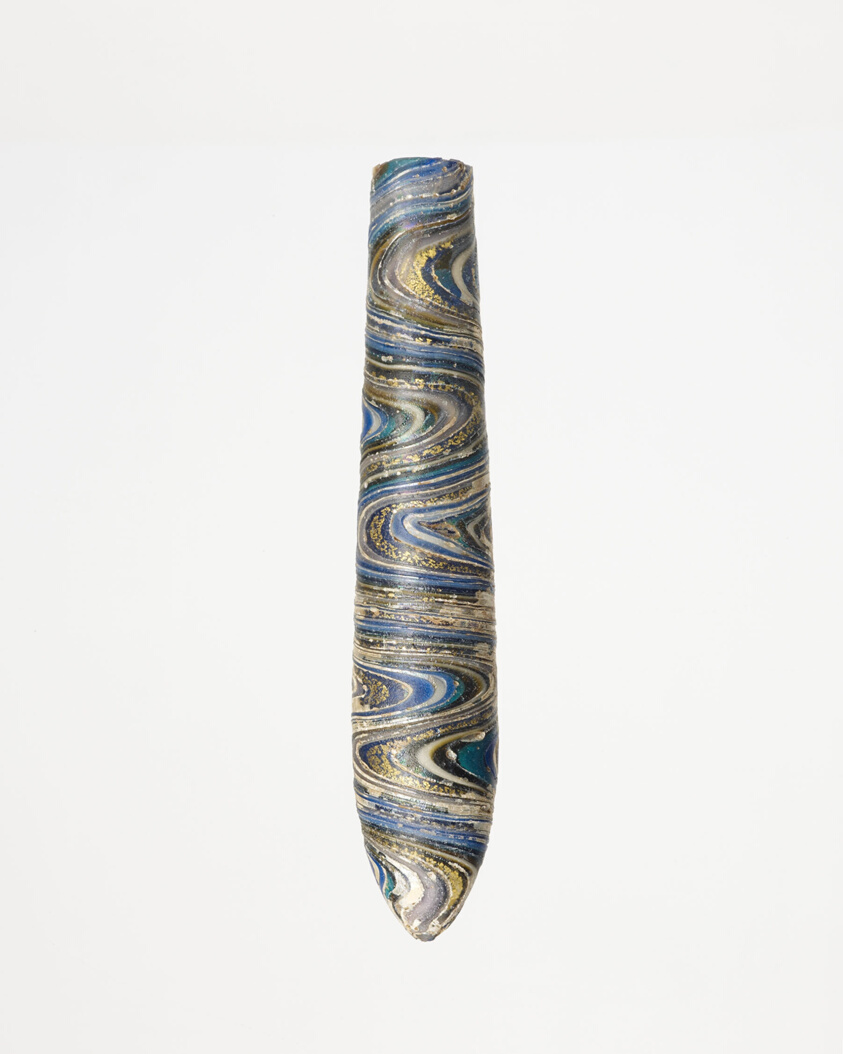
Alabastron (Container for Scented Oil)
Late Hellenistic or early Roman; eastern MediterraneanLinkedCulture matchlcp-443ad29fc9bb
- Date
- Early 2nd-1st century BCE
- Medium
- Glass, mosaic glass technique
- Culture
- Eastern Mediterranean Region
- Department
- Arts of Greece, Rome, and Byzantium
- Institution
- Art Institute of Chicago
- Object ID
- 43397
From the Art Institute of Chicago record
Containers like this one were used to store precious oils. The flaring rim functioned as an applicator to spread the thick, scented oil over the skin; while the vessel itself was designed to fit comfortably in the user's hand. In this particularly lavish example, gold leaf was sandwiched between layers of colorless glass and worked into wavy bands with other colored canes. Initially affordable among only the wealthy, glass was used widely in the Roman world to create a variety of everyday objects such as those displayed here, including delicate cosmetic containers that held perfumes and oils and various forms of tableware designed for serving food and drink.
The authoritative record is held by Art Institute of Chicago. LinkedCulture surfaces this object and its connections; it does not alter institutional metadata.
Get printable QR codesHide QR codes
Open QR codes for this object page and the museum record. They stay collapsed until needed.
Provenance & credit
As published by the source institution. Coverage varies — not every institution's open-data feed includes ownership history.
- Credit line
- Gift of Theodore W. and Frances S. Robinson
- Provenance
- Theodore W. and Frances S. Robinson, Chicago, by 1931; given to the Art Institute of Chicago, 1941.
Linked open data
Authority identifiers that link this record into the wider web of cultural data — stable references you can follow to the source.
- Object type
- AAT300193015
Related across collections
Semantically similar works from Art Institute of Chicago and other institutions.