Art Institute of Chicago
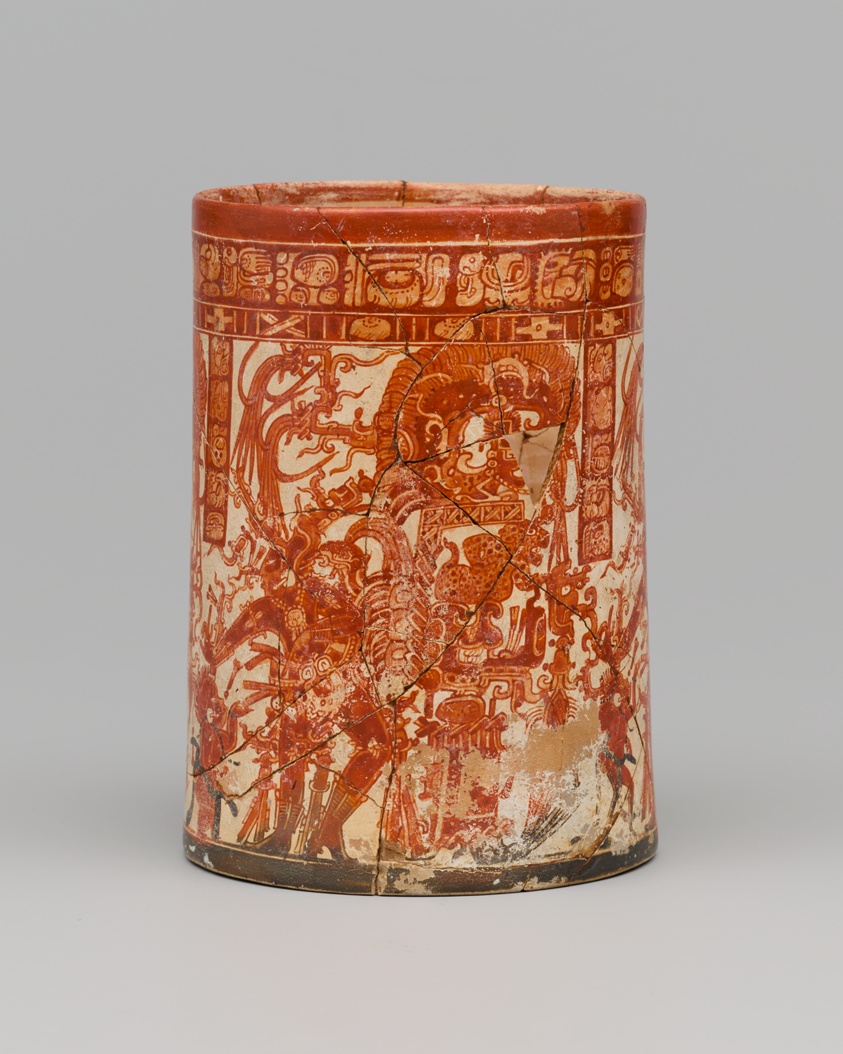
Vessel with Dancing Maize Gods
Aj Maxam (Maya)
- Date
- 780–810
- Medium
- Earthenware and pigment
- Culture
- Petén
- Department
- Arts of the Americas
- Institution
- Art Institute of Chicago
According to ancient Maya belief, after several failed attempts the gods succeeded in populating the earth when they created humanity out of maize, the staff of life. In the Popol Vuh , a sixteenth-century epic of the K’iche’ Maya, the death and resur¬rection of the maize god was likened to seed corn that sprouted and produced new life. This vessel from the Late Classic period (600–800) depicts a Maya ruler attired as the maize god in three almost-identical panels. On his back, the ruler wears an enormous rack containing brilliant feathers, heraldic beasts, and related emblems. Just as maize plants sway to and fro, the maize god dances to the rhythm of life—often, as seen here, in the company of a dwarf. Among the Maya, dwarfs were seen as special beings with powerful spiritual connections to the earth and the interior world below. This vase refers to a rite of passage in which dwarfs assist the soul of the deceased into the domain of the dead, from which it would eventually be reborn in the royal lineage, just as maize sprouts again in the cycle of nature’s renewal. This vase of the Dancing Lords may have been painted as a funerary offering for a noblewoman with dynastic connections in the city of Naranjo, where it was made.
The authoritative record is held by Art Institute of Chicago. LinkedCulture surfaces this object and its connections; it does not alter institutional metadata.
Linked open data
Authority identifiers that link this record into the wider web of cultural data — stable references you can follow to the source.
- Object type
- AAT300386308
Related across collections
Semantically similar works from Art Institute of Chicago and other institutions.

Serving Vessel
Minneapolis Institute of Art

Plate
Minneapolis Institute of Art
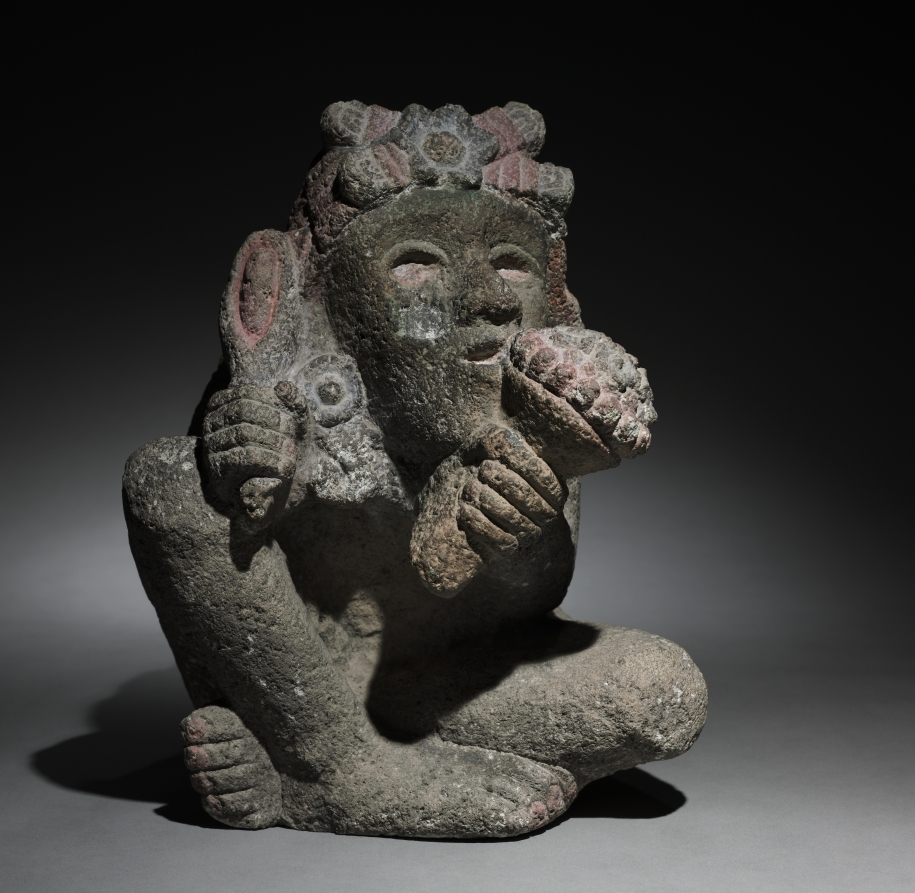
Seated Male Carrying Maize
Cleveland Museum of Art

Vessel
Minneapolis Institute of Art
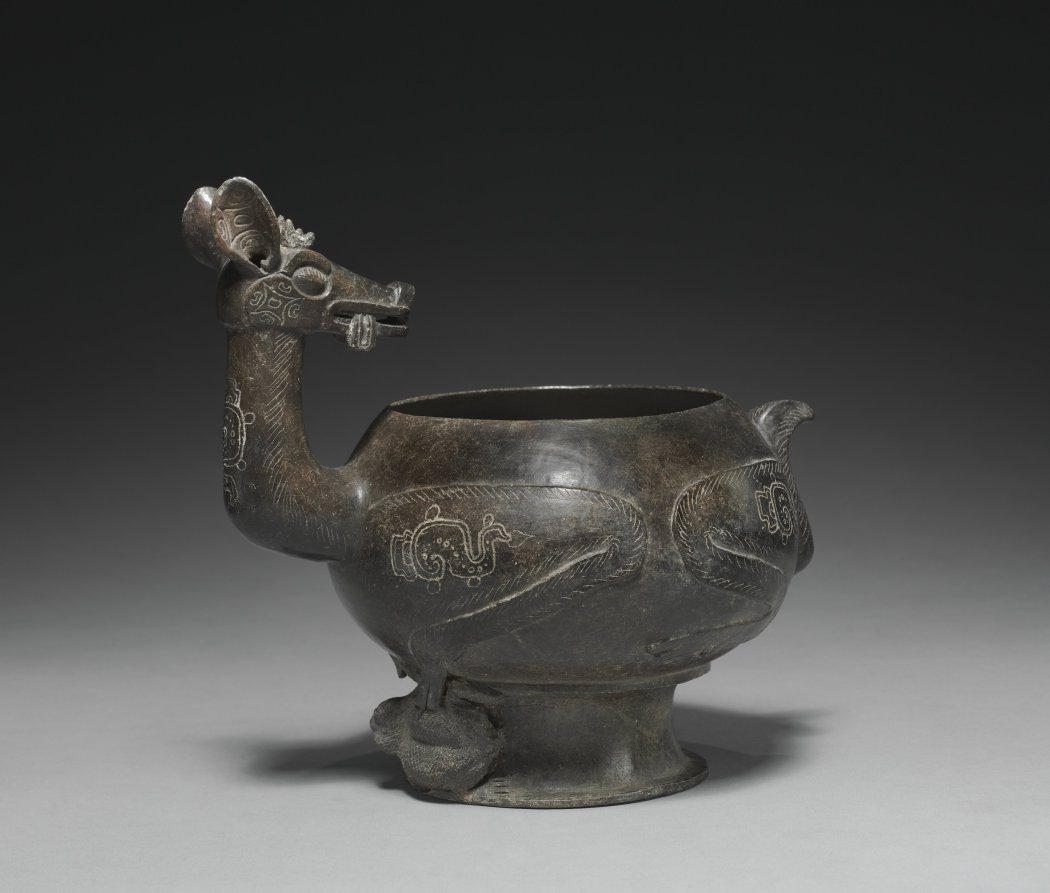
Deer Effigy Vessel
Cleveland Museum of Art
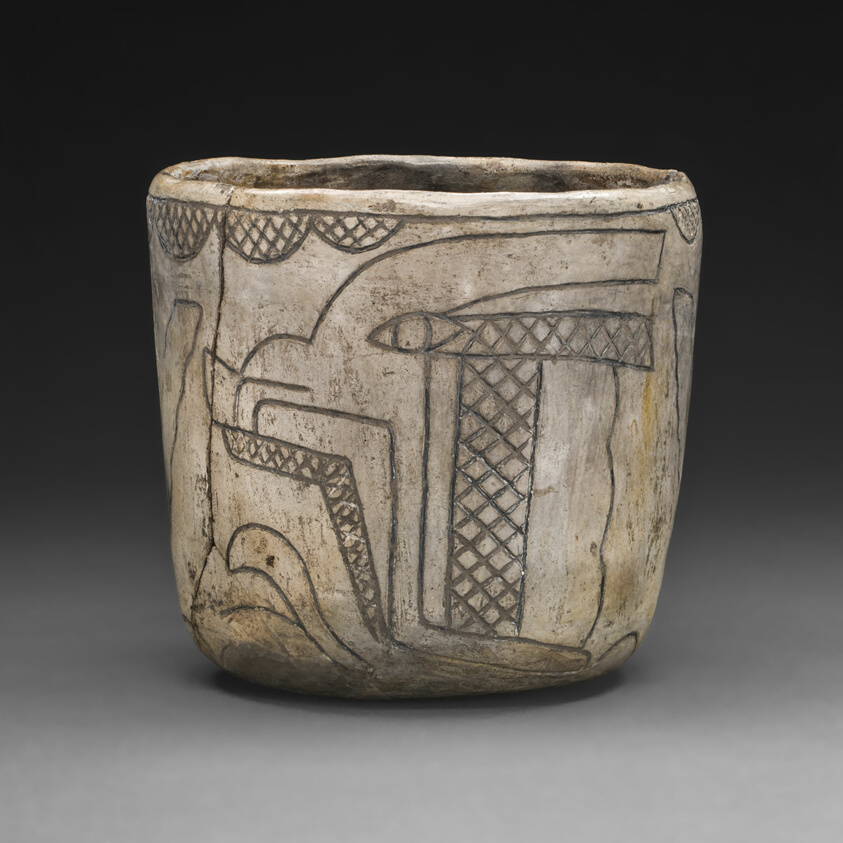
Cup with Profile Head of the Maize God
Art Institute of Chicago
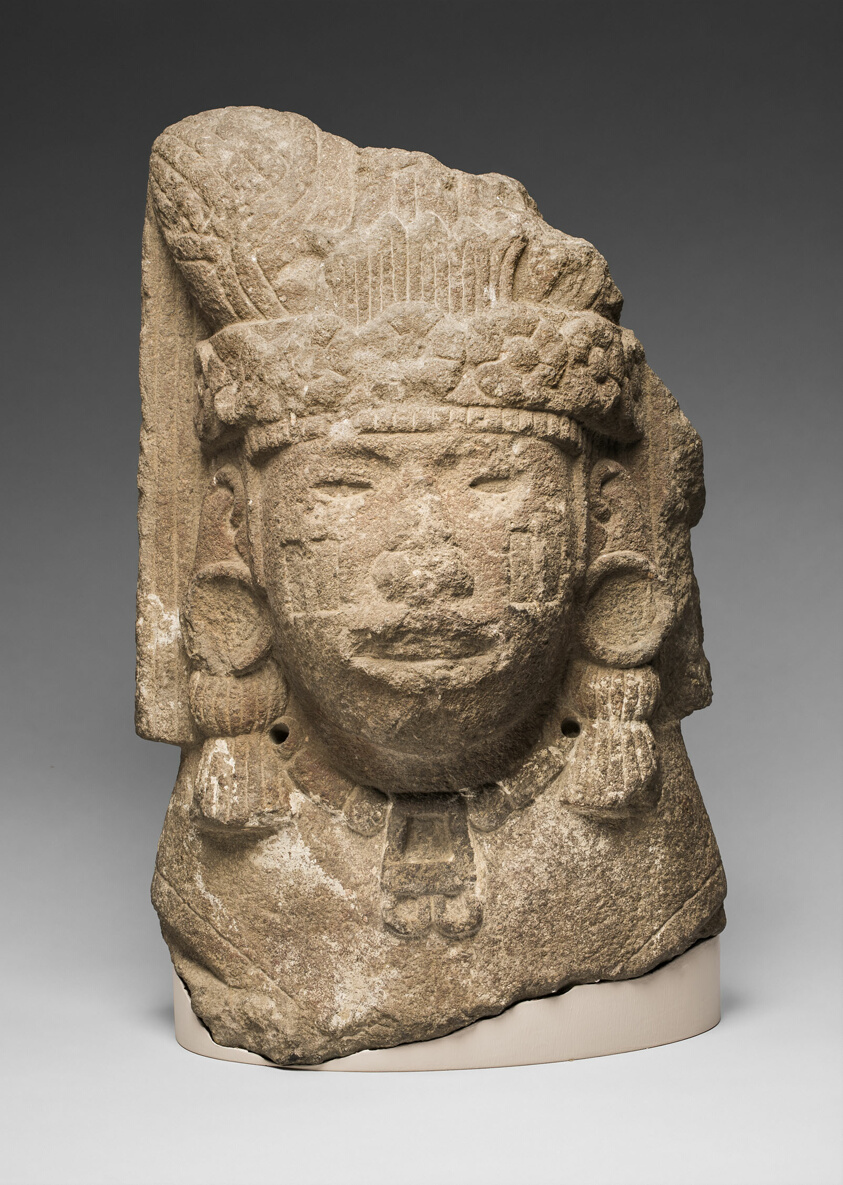
Head of Xilonen, the Goddess of Young Maize
Art Institute of Chicago
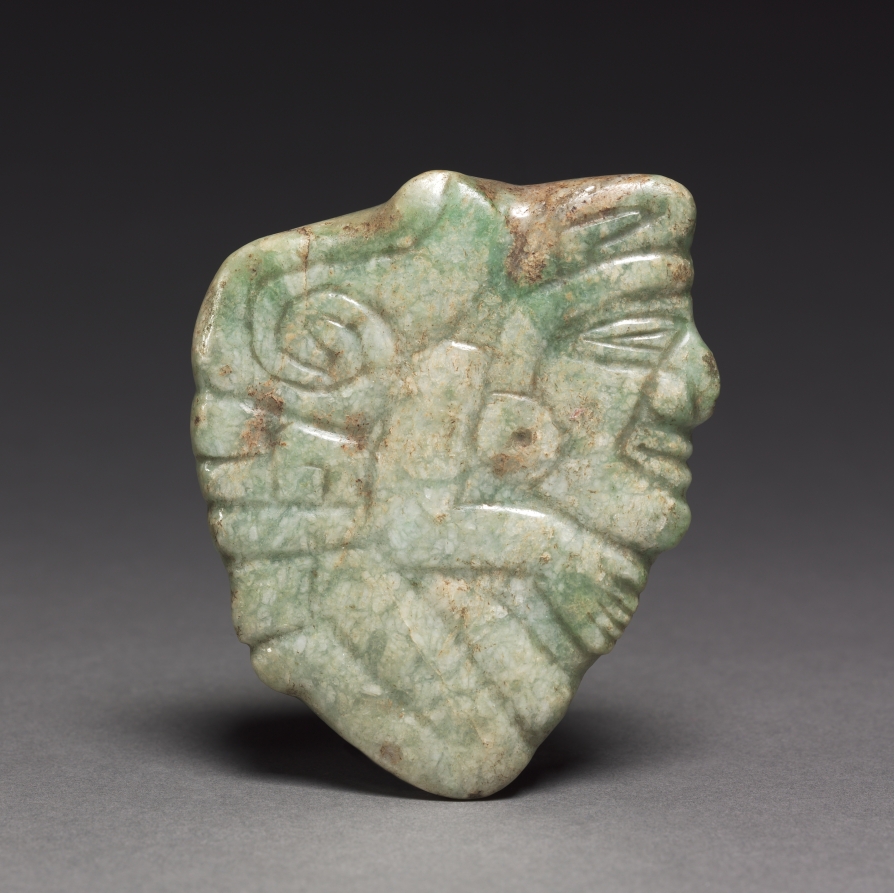
Deity Plaque
Cleveland Museum of Art
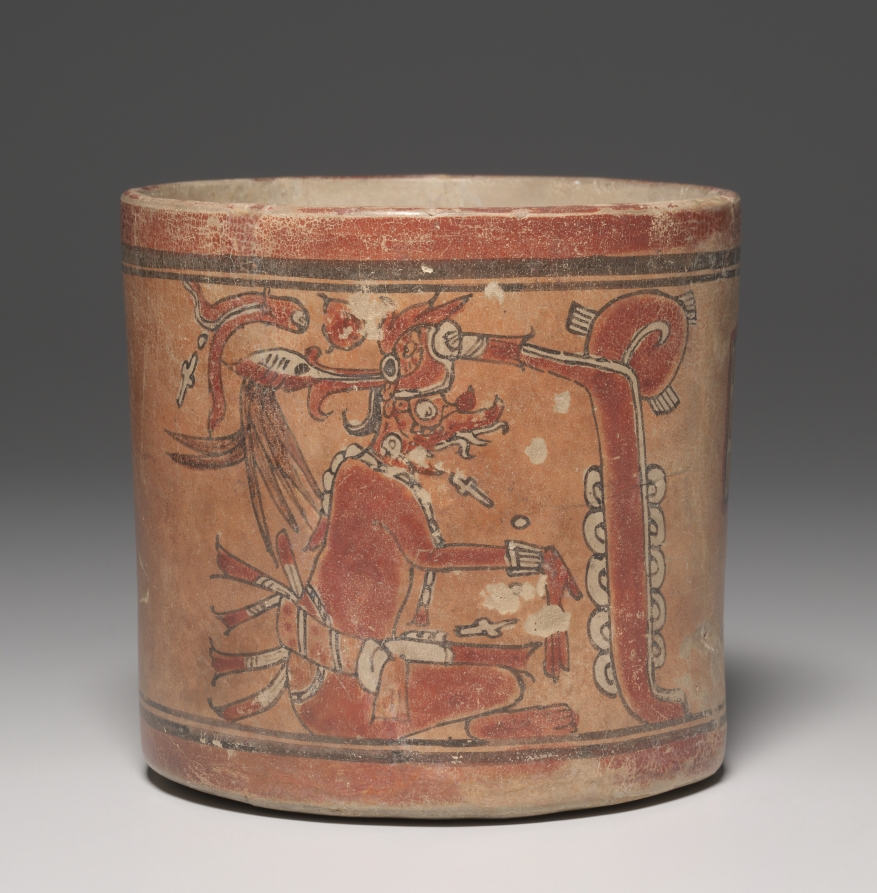
Cylinder Vessel with Deities
Cleveland Museum of Art
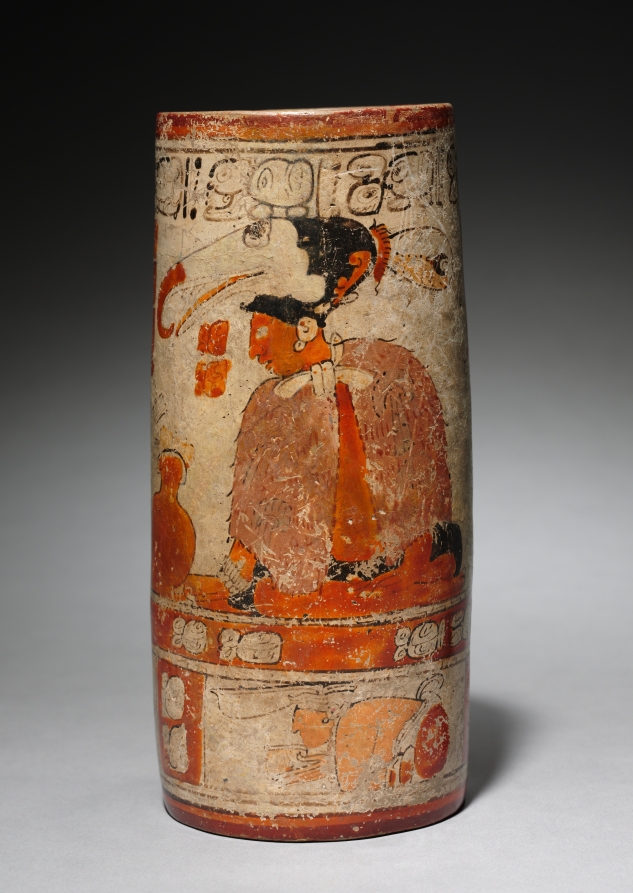
Painted Vase with Ruler and Scribe
Cleveland Museum of Art

Vase
Minneapolis Institute of Art
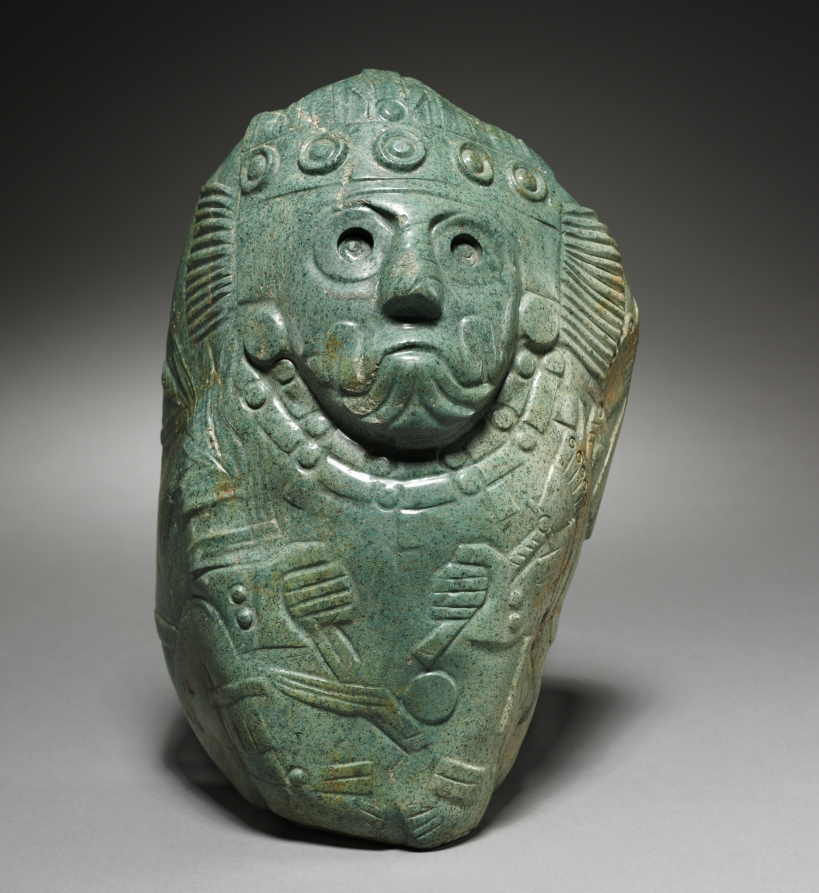
Tlaloc
Cleveland Museum of Art