
Minneapolis Institute of Art
Plate
Maya artist
- Date
- c. 500–800 CE
- Medium
- Clay, pigments
- Culture
- Maya
- Department
- Arts of the Americas
- Institution
- Minneapolis Institute of Art
Among the Maya, members of the nobility offered elaborately painted vessels to each other as gifts to maintain political and social connections among leading families. They often commissioned these items from scribes, literate aristocrats who painted images and wrote hieroglyphic texts on ceramics and in codices (singular: codex; books on bark paper). Painted ceramics also functioned as serving dishes for important feasts and for making offerings. Maya ceramic painting reached its peak between 600 and 900, when artists produced innovative designs combining hieroglyphs with geometric elements, and images of humans and gods. The central figure here is the Maize God, the most important Maya god. He is recognizable by his unique attributes including his head and hairdo, elongated to imitate the shape of an ear of corn and cornsilk, and the red body paint covering all but his face. Guatemala, Mexico, Americas
The authoritative record is held by Minneapolis Institute of Art. LinkedCulture surfaces this object and its connections; it does not alter institutional metadata.
Related across collections
Semantically similar works from Minneapolis Institute of Art and other institutions.
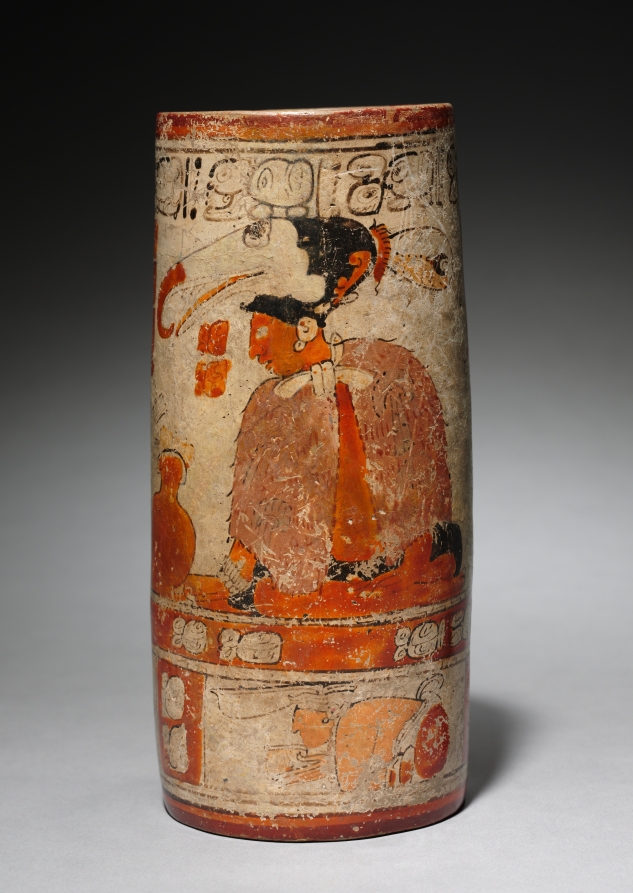
Painted Vase with Ruler and Scribe
Cleveland Museum of Art
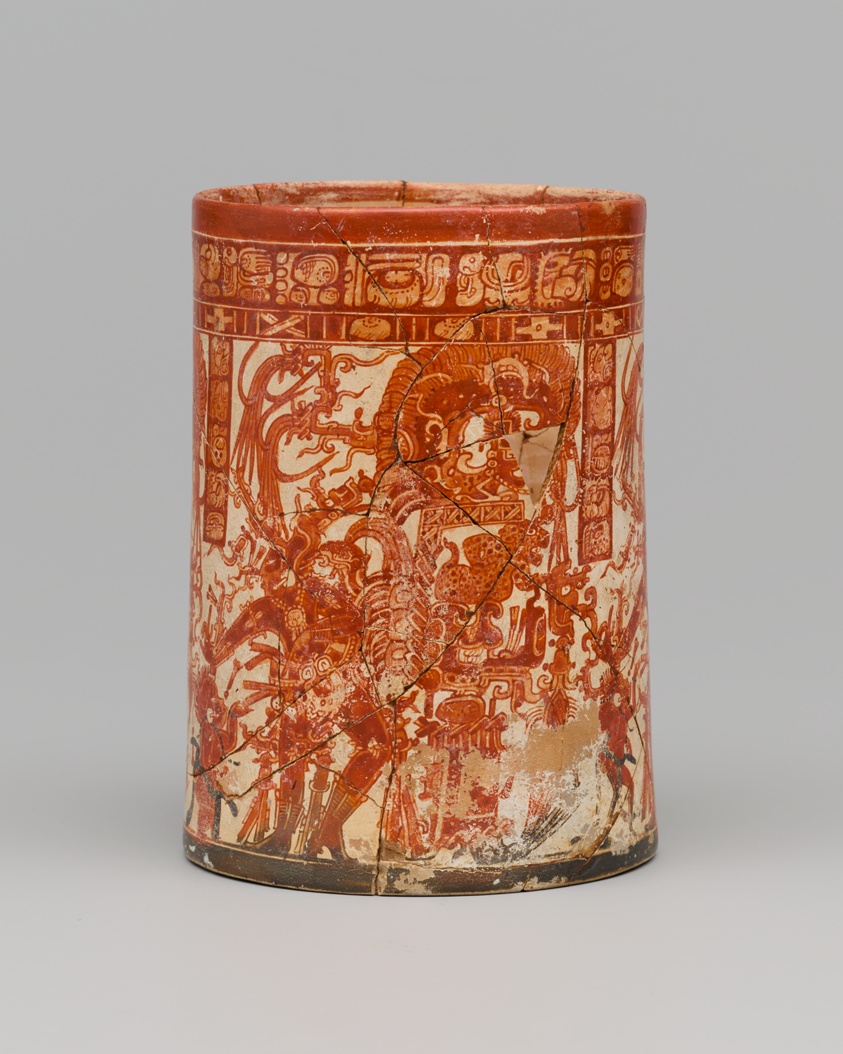
Vessel with Dancing Maize Gods
Art Institute of Chicago
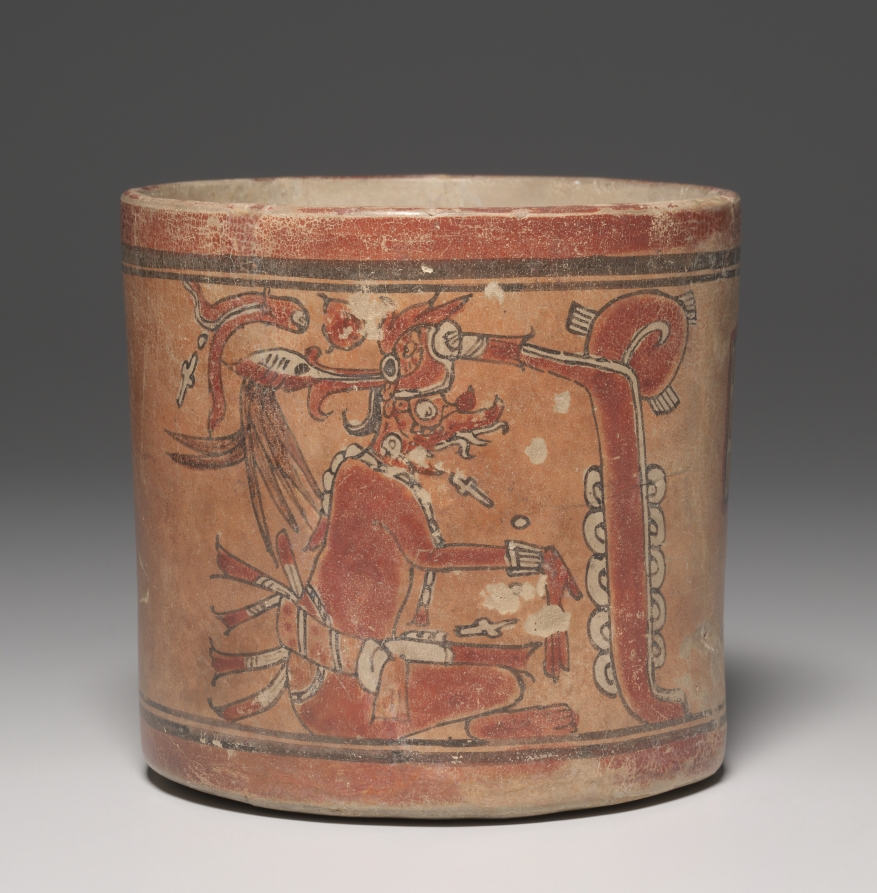
Cylinder Vessel with Deities
Cleveland Museum of Art

Serving Vessel
Minneapolis Institute of Art

Whistle
Minneapolis Institute of Art
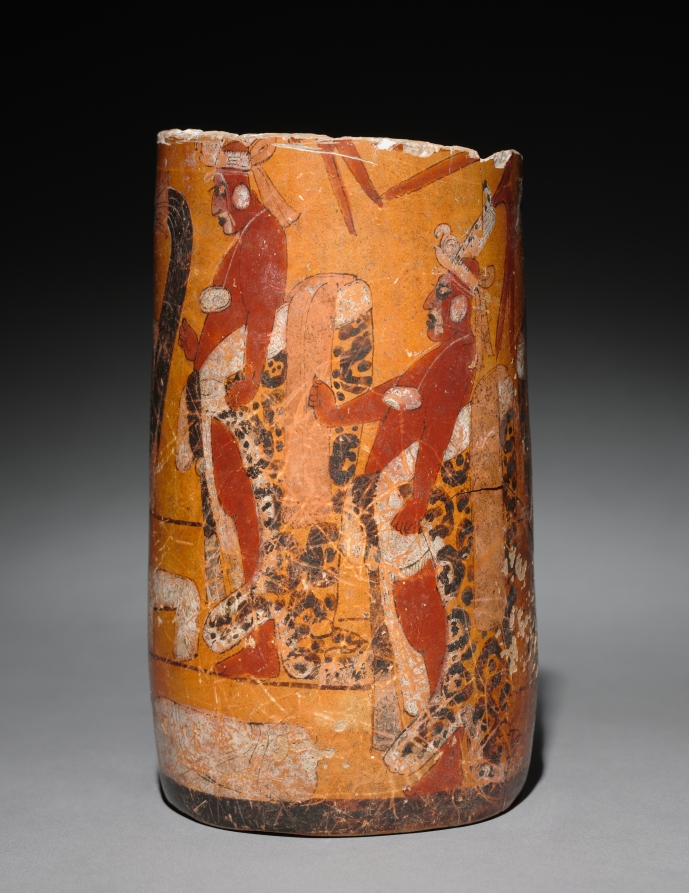
Cylindrical Vessel with Palace Scene
Cleveland Museum of Art

Plate
Minneapolis Institute of Art

Plate
Minneapolis Institute of Art
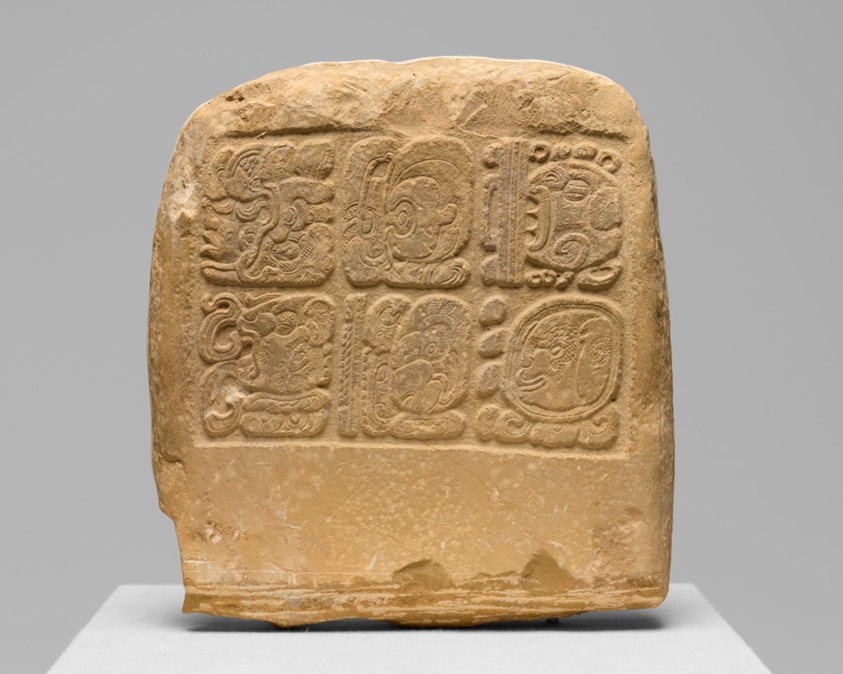
Hieroglyphic Panel
Art Institute of Chicago
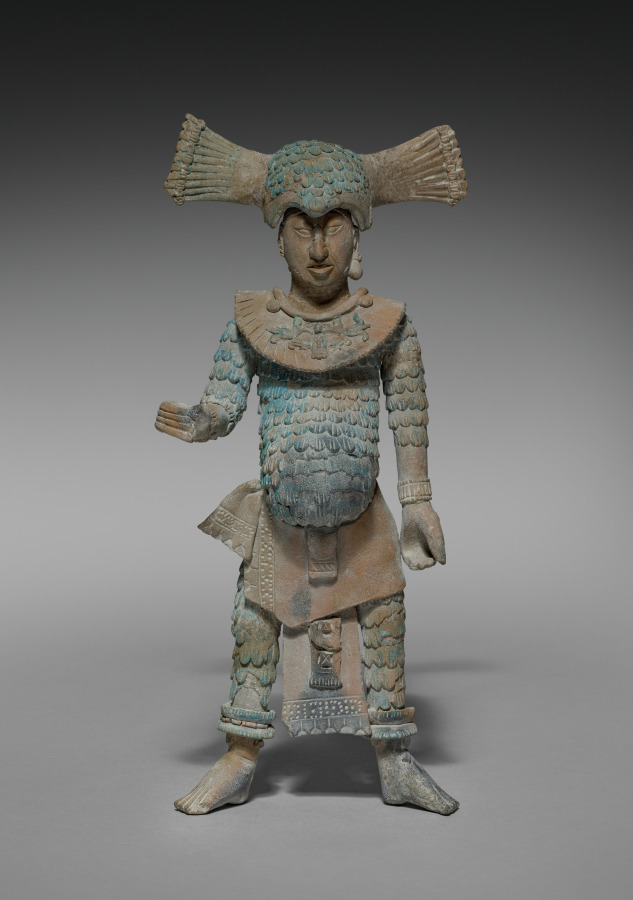
Warrior Figurine with Removable Headdress
Cleveland Museum of Art
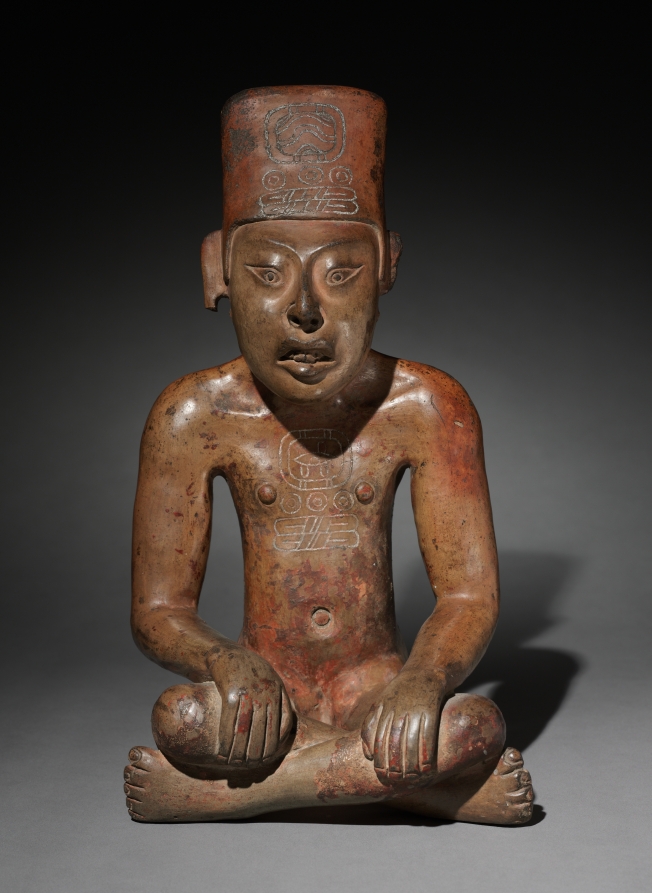
Seated Figure
Cleveland Museum of Art
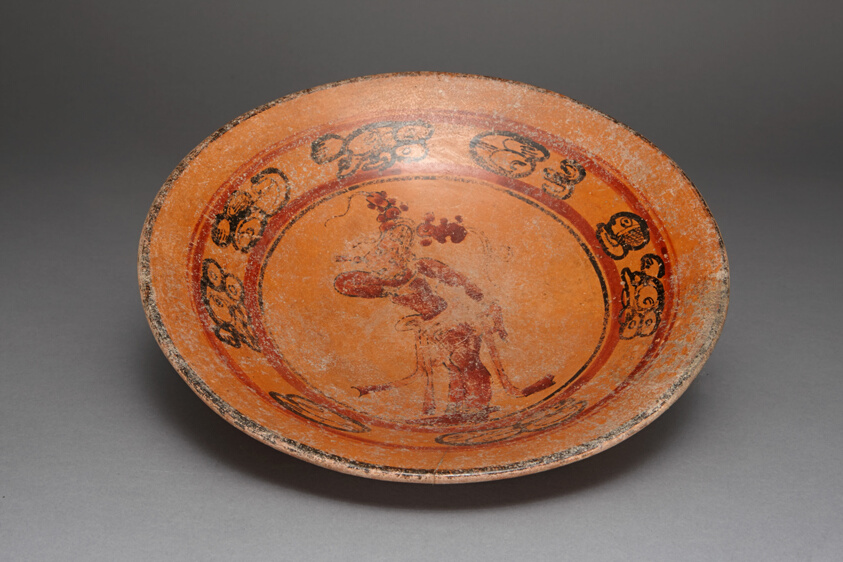
Plate Depicting a Dancing Figure
Art Institute of Chicago