Art Institute of Chicago
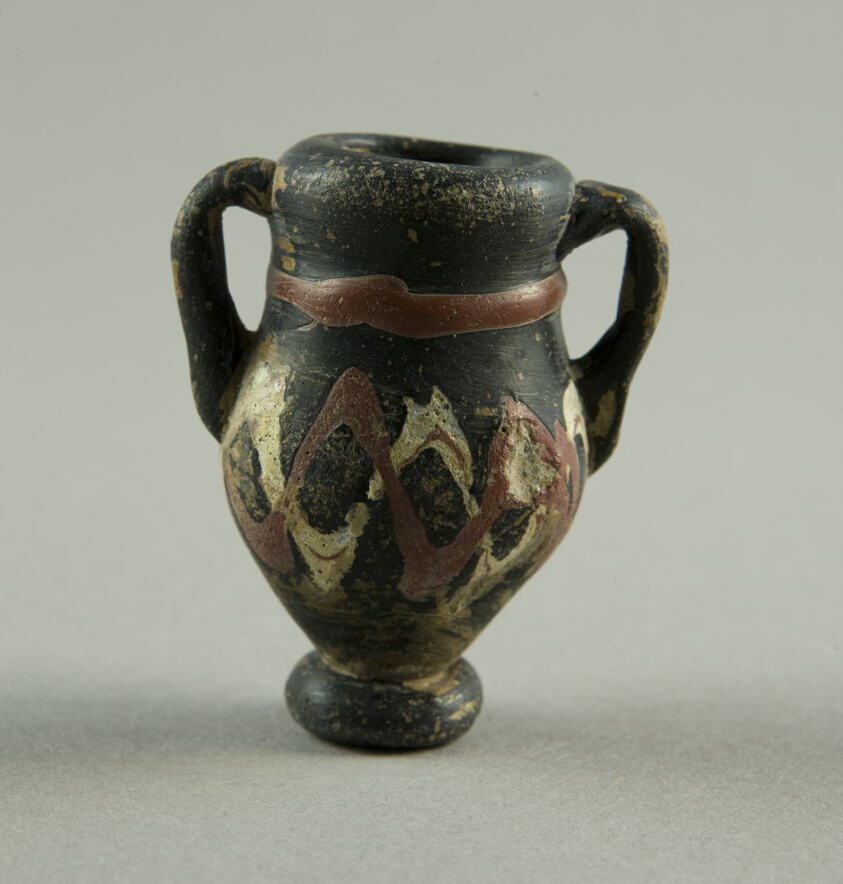
Amphoriskos (Container for Oil)
ByzantineLinkedCulture matchlcp-06395b34ef5e
- Date
- 5th-7th century
- Medium
- Glass, core-formed technique
- Culture
- Mediterranean Region
- Department
- Arts of Greece, Rome, and Byzantium
- Institution
- Art Institute of Chicago
- Object ID
- 67448
From the Art Institute of Chicago record
Initially affordable only among the wealthy, glass was used in ancient Rome as containers for oils, perfume, and tablewares. The word “amphoriskos”, Greek for “small amphora”, refers to this object’s shape, a miniature version of the two-handled metal or ceramic vessels that contained oil or wine. Core-formed glass was made by dipping a removable core that gives the vessel its shape into a molten glass mixture. The technical achievements and prestige of glass continued through the Byzantine period.
The authoritative record is held by Art Institute of Chicago. LinkedCulture surfaces this object and its connections; it does not alter institutional metadata.
Get printable QR codesHide QR codes
Open QR codes for this object page and the museum record. They stay collapsed until needed.
Provenance & credit
As published by the source institution. Coverage varies — not every institution's open-data feed includes ownership history.
- Credit line
- Gift of Theodore W. and Frances S. Robinson
- Provenance
- Theodore W. and Frances S. Robinson, Chicago, by 1931; given to the Art Institute of Chicago, 1949.
Linked open data
Authority identifiers that link this record into the wider web of cultural data — stable references you can follow to the source.
- Object type
- AAT300193015
Related across collections
Semantically similar works from Art Institute of Chicago and other institutions.