Art Institute of Chicago
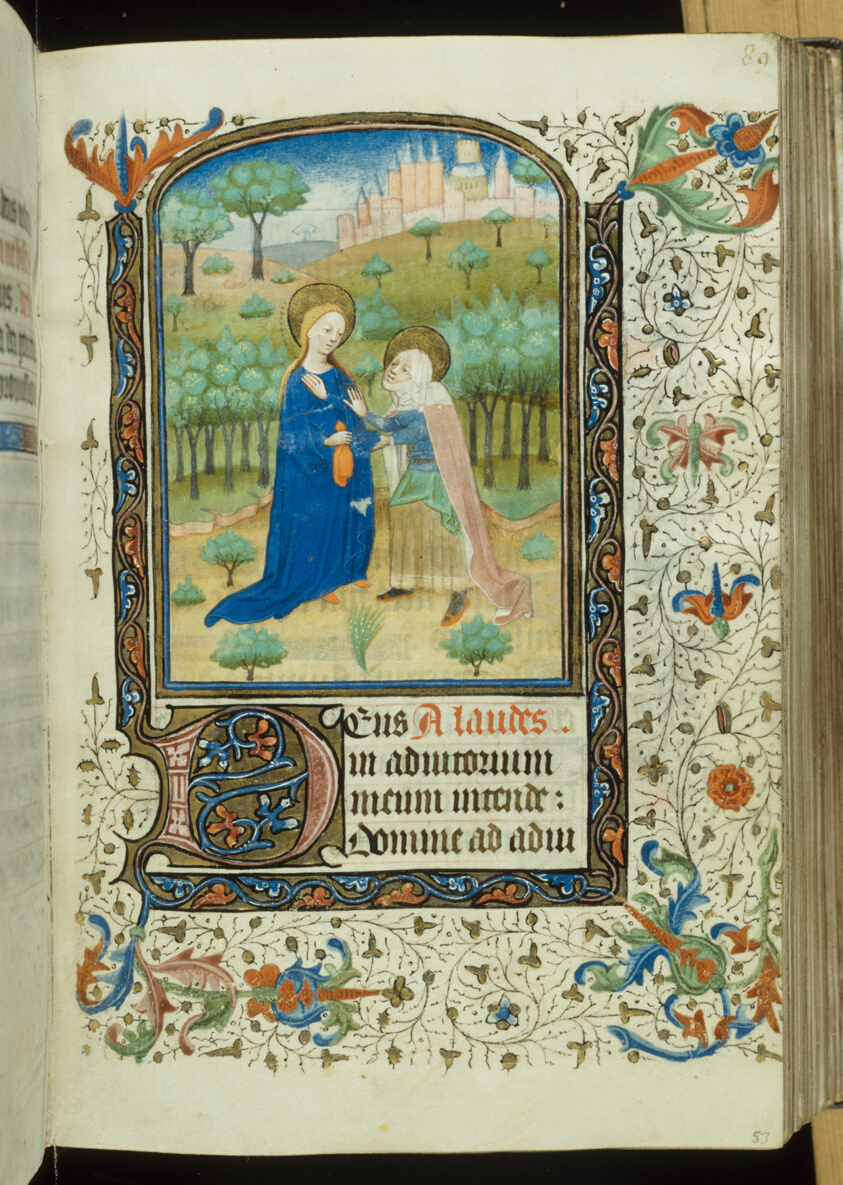
The Visitation, from a Book of Hours
Workshop of the Master of the Ghent PrivilegesLinkedCulture matchlcp-69dbc04c6283
- Date
- c. 1440-1445
- Medium
- Manuscript with 230 folios, 12 full-page miniatures and other decorations in gold leaf, tempera and colored inks, and littera textualis inscriptions in Latin and French in dark black ink, ruled in red with red rubrics, on parchment, with two parchment fly leaves upper cover, three parchment fly leaves lower cover, sheets with gilded edges, in modern binding of brown morocco leather over wooden boards
- Culture
- Flanders
- Department
- Prints and Drawings
- Institution
- Art Institute of Chicago
- Object ID
- 71519
From the Art Institute of Chicago record
Books of Hours were the most popular book of the Middle Ages and Renaissance; more of them were produced from c. 1250–1550 than any other type of book, devotional or otherwise. This example has been attributed to the workshop of the prolific Master of the Ghent Privileges, and characteristically ornaments a sequence of prayers and devotional reading to be recited at precisely set times of the day and night. Images such as this tender scene of the encounter between the Virgin and her cousin Saint Elizabeth, both miraculously with child, helped introduce the different segments of the Hours of the Virgin, the core section of all Books of Hours.
The authoritative record is held by Art Institute of Chicago. LinkedCulture surfaces this object and its connections; it does not alter institutional metadata.
Get printable QR codesHide QR codes
Open QR codes for this object page and the museum record. They stay collapsed until needed.
Provenance & credit
As published by the source institution. Coverage varies — not every institution's open-data feed includes ownership history.
- Credit line
- Anonymous gift
Linked open data
Authority identifiers that link this record into the wider web of cultural data — stable references you can follow to the source.
- Object type
- AAT300028051
Related across collections
Semantically similar works from Art Institute of Chicago and other institutions.