Art Institute of Chicago
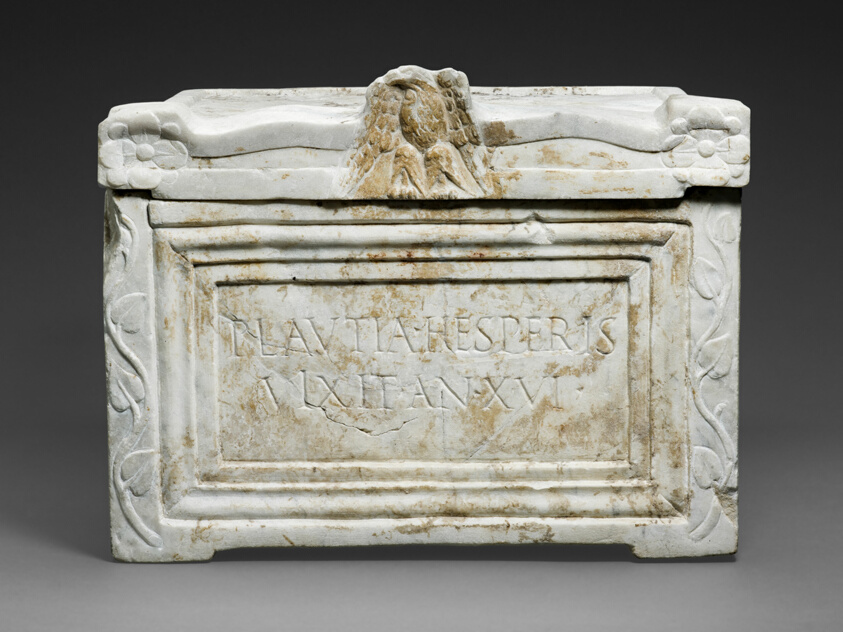
Cinerary Urn of Plautia Hesperis
RomanLinkedCulture matchlcp-e70b76de214d
- Date
- 1st century
- Medium
- Marble
- Culture
- Italy
- Department
- Arts of Greece, Rome, and Byzantium
- Institution
- Art Institute of Chicago
- Object ID
- 96273
From the Art Institute of Chicago record
Prior to A.D. 100, the Romans typically cremated their dead and placed the ashes and remaining bones in urns and ossuaries (containers used to hold skeletal remains). The front of this urn is adorned with heart-shaped ivy leaves and an inscription that identifies the deceased, a young woman named Plautia Hesperis. Much like modern headstones, the inscription indicates the length of her life (“Lived 16 years”). The lid is adorned with simple rosettes at the corners, while an eagle, thought by the Romans to carry the deceased’s soul into the realm of the gods, is perched at its center.
The authoritative record is held by Art Institute of Chicago. LinkedCulture surfaces this object and its connections; it does not alter institutional metadata.
Get printable QR codesHide QR codes
Open QR codes for this object page and the museum record. They stay collapsed until needed.
Provenance & credit
As published by the source institution. Coverage varies — not every institution's open-data feed includes ownership history.
- Credit line
- Gift of Mrs. George A. Thorne
- Provenance
- Mrs. George A. (Louise Ehrman) Thorne (1872-1955), Chicago; given to the Art Institute, 1923.
Linked open data
Authority identifiers that link this record into the wider web of cultural data — stable references you can follow to the source.
- Object type
- AAT300234126
Related across collections
Semantically similar works from Art Institute of Chicago and other institutions.