Cleveland Museum of Art
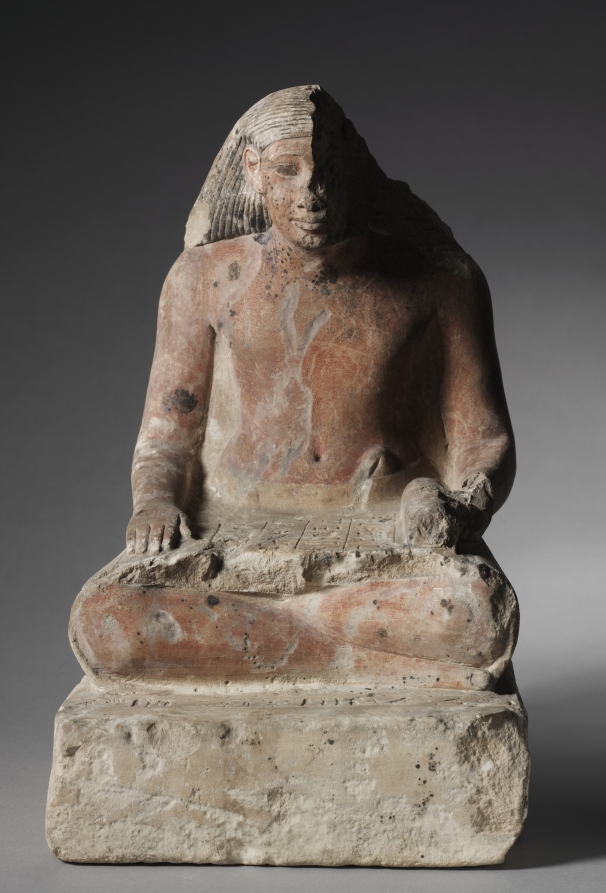
Seated Scribe of Medthu
- Date
- c. 1479–1425 BCE
- Medium
- limestone, originally painted
- Culture
- Egypt, New Kingdom (1540–1069 BCE), Dynasty 18, reign of Tuthmosis III (1479–1425 BCE)
- Department
- Egyptian and Ancient Near Eastern Art
- Institution
- Cleveland Museum of Art
Medthu, the overseer of the two granaries and scribe of accounts of the fields of Amen, sits cross-legged on the ground in the traditional pose of a scribe. His striated, bell-shaped wig, the stripes of which run parallel to his forehead, completely reveals his ears and passes behind his shoulders. His short, belted kilt is stretched tight to support he papyrus that is partly unrolled across his lap. He holds the rolled-up portion with his left hand, and his right hand rests flat on the papyrus, which curls around his right thigh. The papyrus is inscribed in sunk relief with seven columns of hieroglyphs that face the scribe. The Middle Kingdom type of wig helps date the statue more closely to the earlier part of Dynasty 18, around the time of Tuthmosis III. Later in Dynasty 18 the coiffure was fashionably updated. The scribe statue has a long and distinguished history, having first appeared in Dynasty 4 (c. 2613 to 2494 BC).
The authoritative record is held by Cleveland Museum of Art. LinkedCulture surfaces this object and its connections; it does not alter institutional metadata.
Related across collections
Semantically similar works from Cleveland Museum of Art and other institutions.

Statue of a Seated Poet (Orpheus?)
Getty Museum
Seated Goddess on Throne, pulling aside her veil
Harvard Art Museums
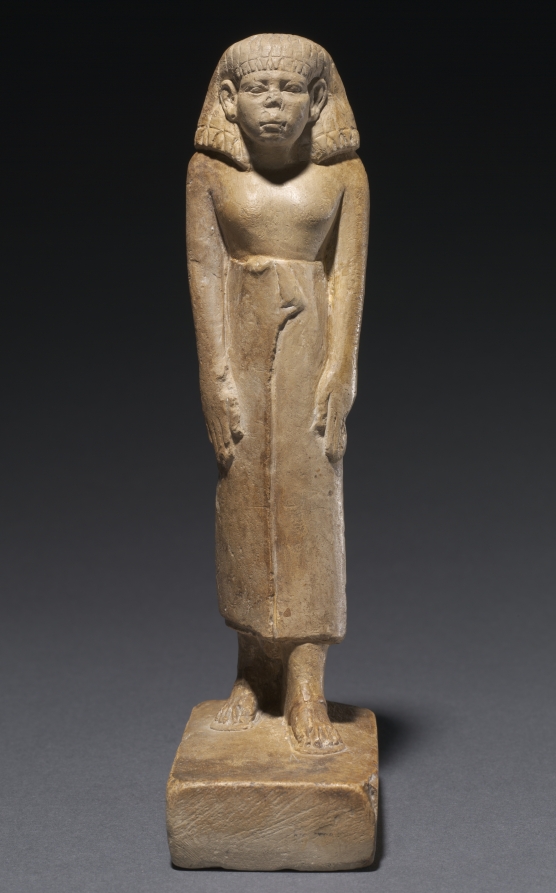
Statuette of a Man
Cleveland Museum of Art
Seated Statuette of a Goddess
Harvard Art Museums
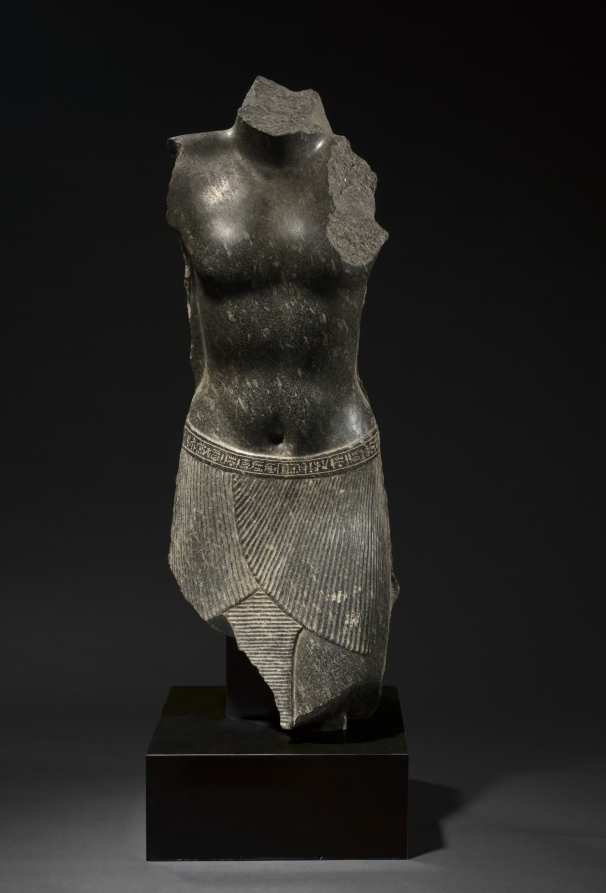
Torso of Amenpayom
Cleveland Museum of Art
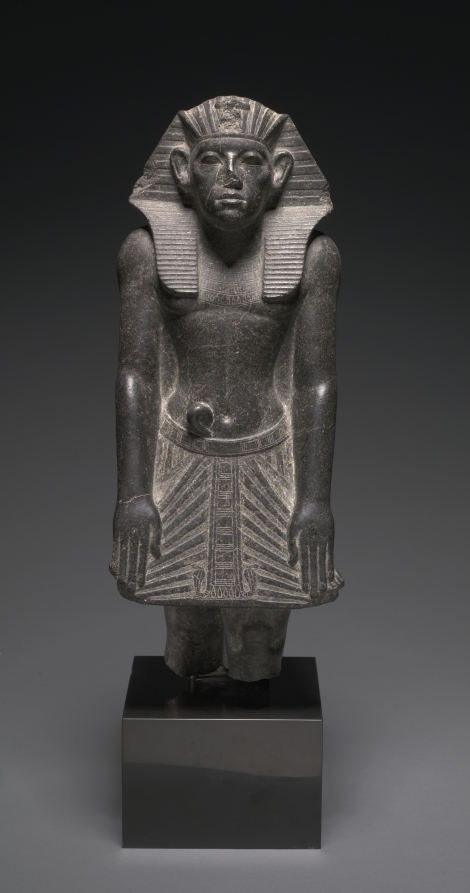
Statue of Amenemhat III
Cleveland Museum of Art

Imitation of a Statuette of Athena
Getty Museum
Imhotep divinisé
Joconde

Statuette of a Woman
Getty Museum

Relief with the Seer Calchas
Getty Museum
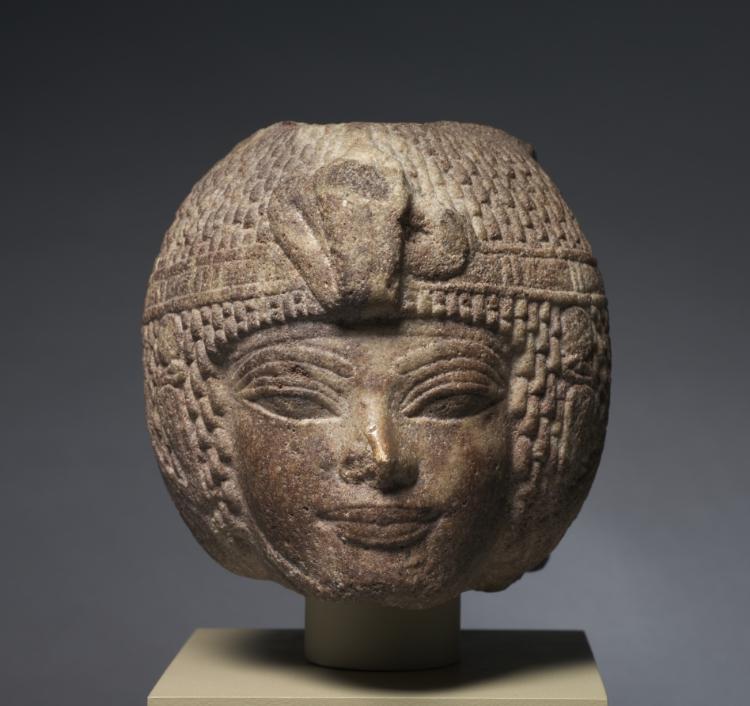
Head of Amenhotep III Wearing the Round Wig
Cleveland Museum of Art
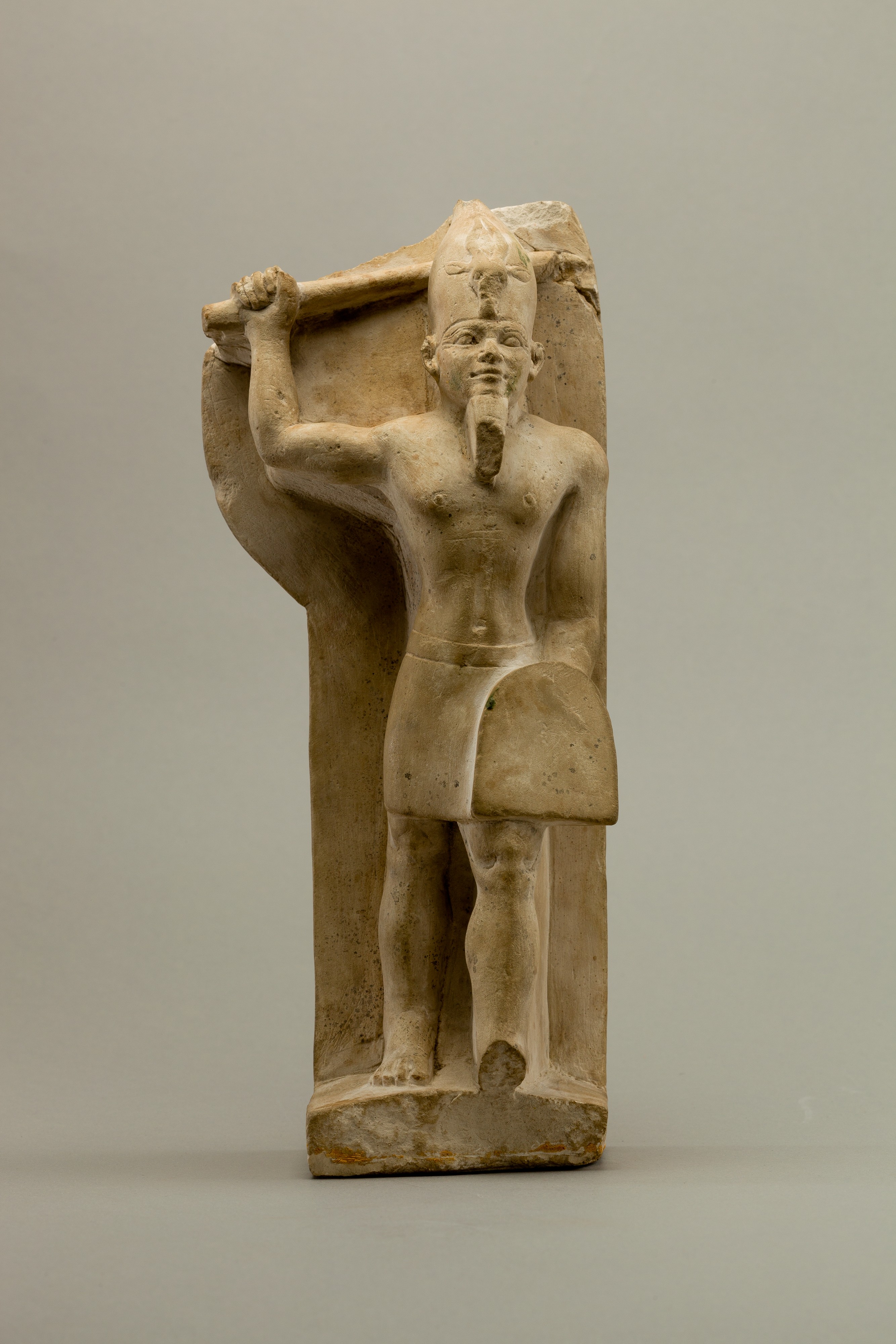
Statue of the God Reshef
The Metropolitan Museum of Art