Cleveland Museum of Art
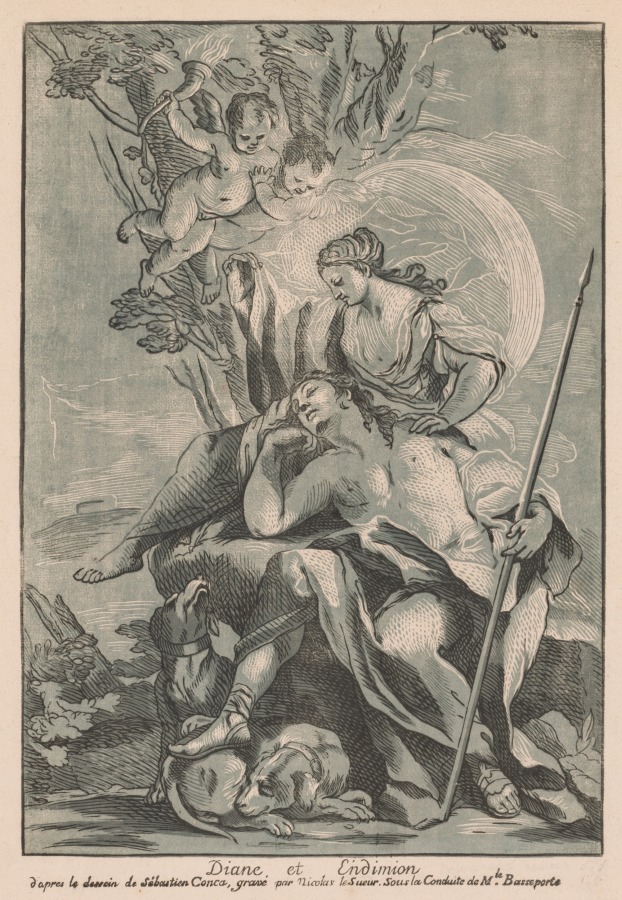
Diana and Endymion
Nicolas LeSueurLinkedCulture matchlcp-be1b558df18a
- Date
- mid-1700s
- Medium
- chiaroscuro woodcut
- Culture
- France, 18th century
- Department
- Prints
- Institution
- Cleveland Museum of Art
- Object ID
- 104696
From the Cleveland Museum of Art record
Chiaroscuro drawings were executed on paper colored a middle tone. While black or brown wash was used to create shadows, white gouache (opaque watercolor) was used for highlights. In the early 16th century, German printmakers developed a method to achieve similar effects using woodcut. The outline of the image is printed in black from one block of wood, while the shadows are printed from a second block in a color. For Diana and Endymion, two blocks were used to print two shades of green. The white, unprinted areas of the paper serve as the highlights. The technique of chiaroscuro woodcuts was revived in France in the early 18th century by LeSueur.
The authoritative record is held by Cleveland Museum of Art. LinkedCulture surfaces this object and its connections; it does not alter institutional metadata.
Get printable QR codesHide QR codes
Open QR codes for this object page and the museum record. They stay collapsed until needed.
Provenance & credit
As published by the source institution. Coverage varies — not every institution's open-data feed includes ownership history.
- Credit line
- Charles W. Harkness Endowment Fund
Related across collections
Semantically similar works from Cleveland Museum of Art and other institutions.