Cleveland Museum of Art
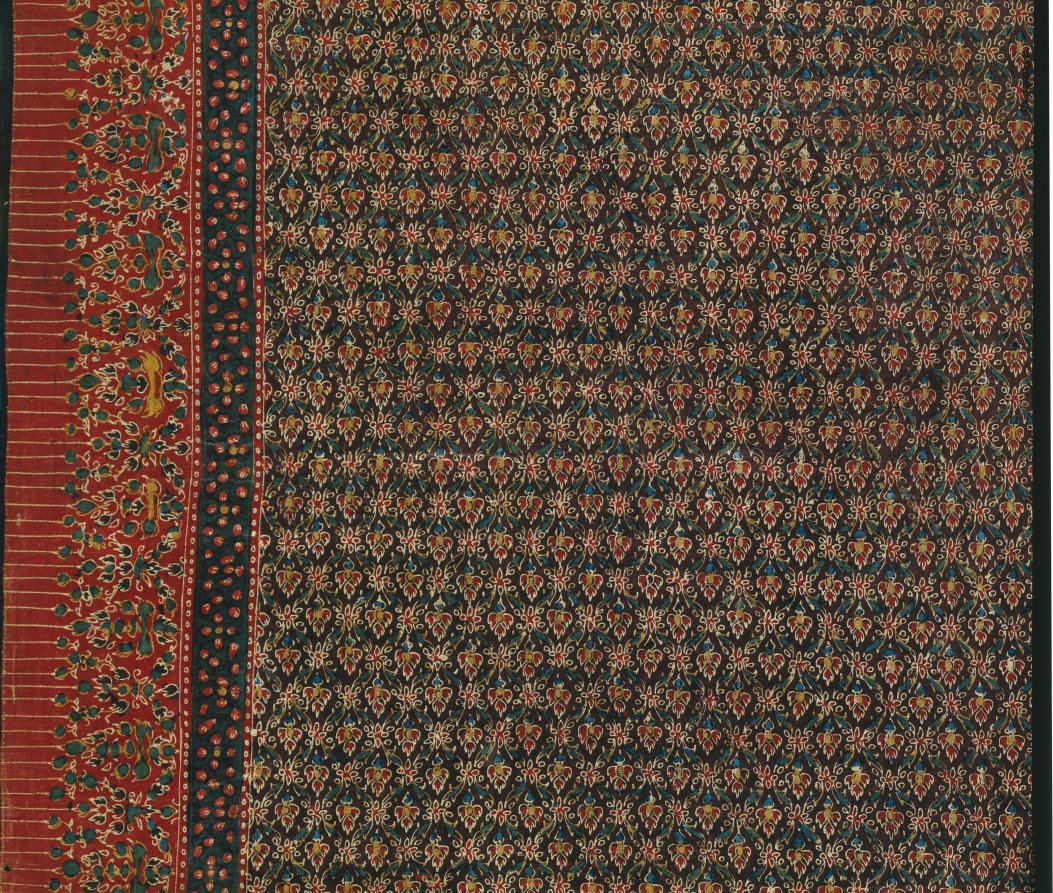
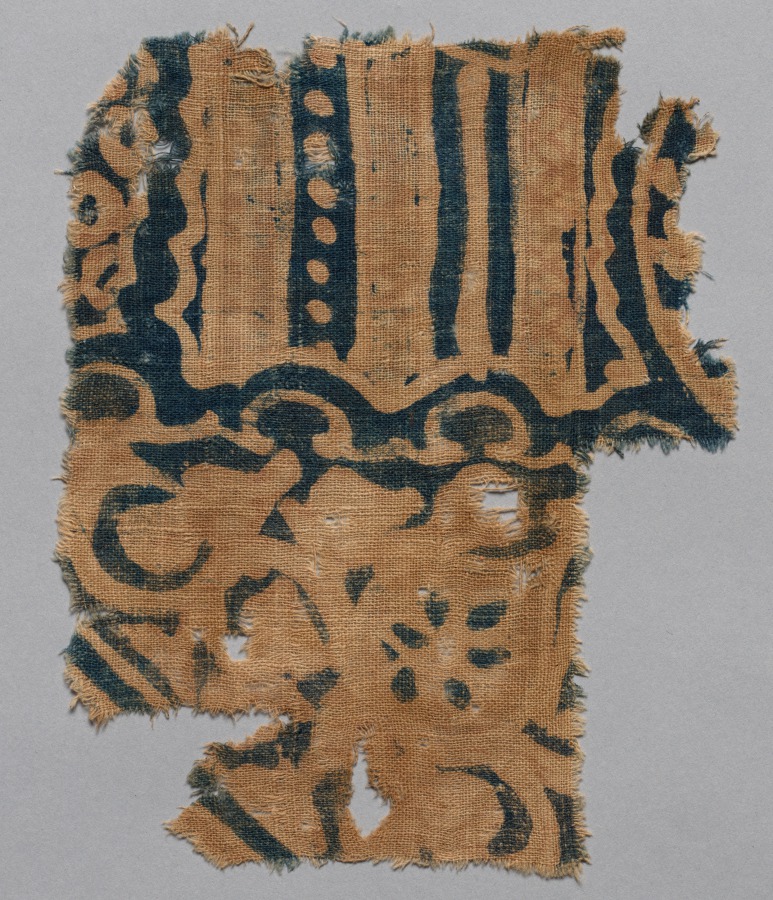
Loin Cloth "Pha nung" or Cloth for Wrapped Garment
- Date
- late 1800s-early 1900s
- Medium
- tabby weave, mordant resist and batik; cotton
- Culture
- India, East Coast, late 19th - early 20th century
- Department
- Textiles
- Institution
- Cleveland Museum of Art
Indian craftsmen developed great skill in resist dyeing using both mordants (chemicals that fix dyes) and wax, or some other resist. When mordants were selectively drawn, painted, or printed onto cotton, only those portions of the fabric would accept the dye. In this textile, this technique has been combined with wax resist batik that prevented dyes from penetrating treated portions of the fabric. Indian textiles made for export were patterned with designs and colors that suited the tastes of the markets for which they were produced. This cloth was made for export to Thailand where lattice designs were preferred. While this particular textile would have been used as a wrapped garment, Indian textiles in Thailand served also as room dividers, coverings for floors, and hangings.
The authoritative record is held by Cleveland Museum of Art. LinkedCulture surfaces this object and its connections; it does not alter institutional metadata.
Related across collections
Semantically similar works from Cleveland Museum of Art and other institutions.

Painted cotton Pha nung textile panel
Minneapolis Institute of Art
Oversize Hip Wrapper (tapis)
Cleveland Museum of Art

Cloth for woman's veil (Telia dupatta) or man's waist wrap (Telia lungi)
Minneapolis Institute of Art

Skirt cloth (kain sarong)
Minneapolis Institute of Art

Textile panel
Minneapolis Institute of Art
Man's Morning Coat
Cleveland Museum of Art
Sarong
Cleveland Museum of Art

Batik panel
Minneapolis Institute of Art

Baby Carrier
Minneapolis Institute of Art

Loin Cloth
Minneapolis Institute of Art
Fragment
Cleveland Museum of Art

Woman's Bib
Minneapolis Institute of Art