Cleveland Museum of Art
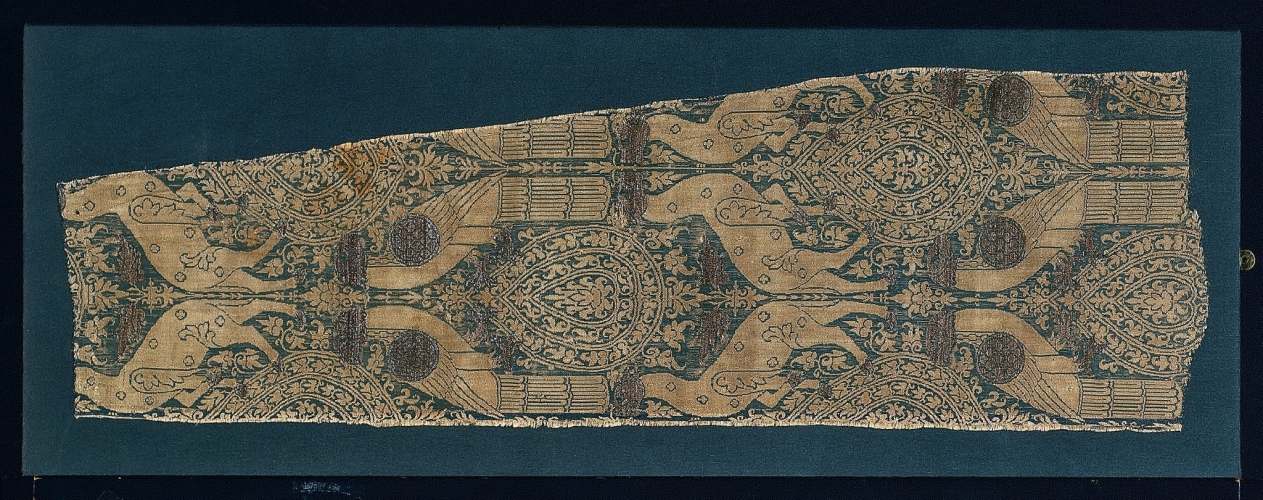
Parrots and Animals
- Date
- 1300s
- Medium
- silk, gold thread; a combination of two weaves (lampas)
- Culture
- Italy
- Department
- Textiles
- Institution
- Cleveland Museum of Art
Silk weaving became an important industry in Italy during the 13th century, especially in Lucca and Venice. Initially, it was closely associated with silk patterns that were woven in the well established textile industry in Islamic Spain. Here, the Islamic influence is apparent in the paired eagles and gazelles flanking concentric bulb-shaped palmettes. Many variations of this design were woven in Italy during the 1300s. Examples that belonged to a pope, cardinal, and bishop provide dates between 1334 and 1361 based on their obituaries. Inventories in the Vatican also describe vestments displaying animals and birds with gold heads throughout the1300s. Here, costly gold thread was only interlaced where it is visible in the pattern.
The authoritative record is held by Cleveland Museum of Art. LinkedCulture surfaces this object and its connections; it does not alter institutional metadata.
Related across collections
Semantically similar works from Cleveland Museum of Art and other institutions.
Silk with Dogs and Birds amid Vines
Cleveland Museum of Art
Silk with Dogs and Arabic Script in Swaying Bands
Cleveland Museum of Art
Silk with Dogs and Arabic Script in Swaying Bands
Cleveland Museum of Art
Silk with Dogs and Arabic Script in Swaying Bands
Cleveland Museum of Art
Chasuble Fragment with Realistic Animals
Cleveland Museum of Art
Silk and Gold Textile
Cleveland Museum of Art
Silk and Gold Textile
Cleveland Museum of Art
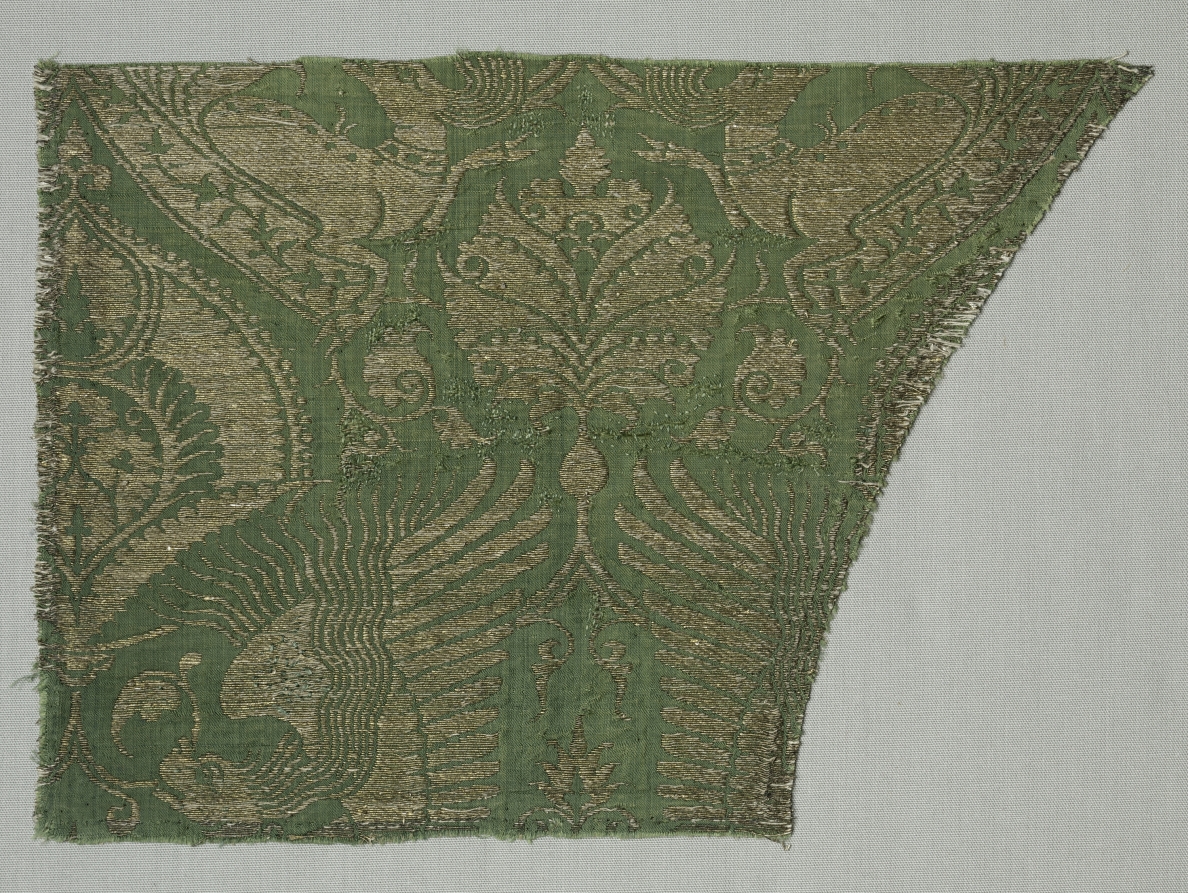
Exotic Gold-patterned Silk
Cleveland Museum of Art

Panel from a Chasuble
Minneapolis Institute of Art
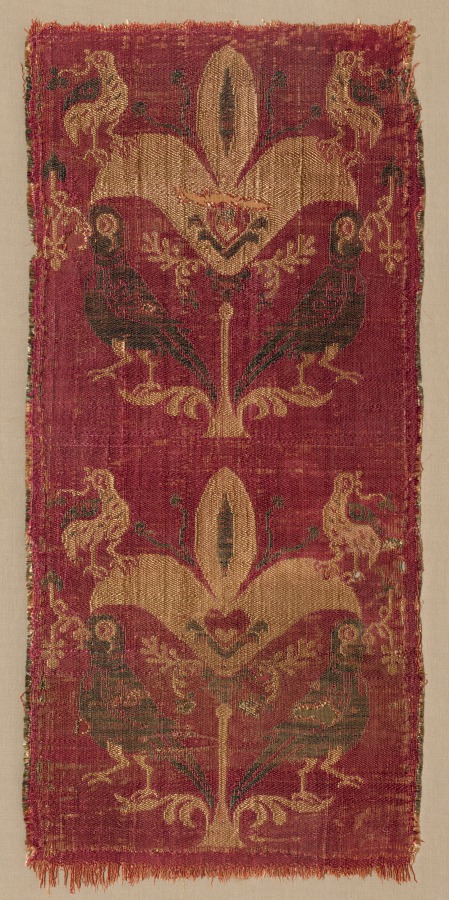
Palmettes and Birds from a Tunic or Curtain
Cleveland Museum of Art
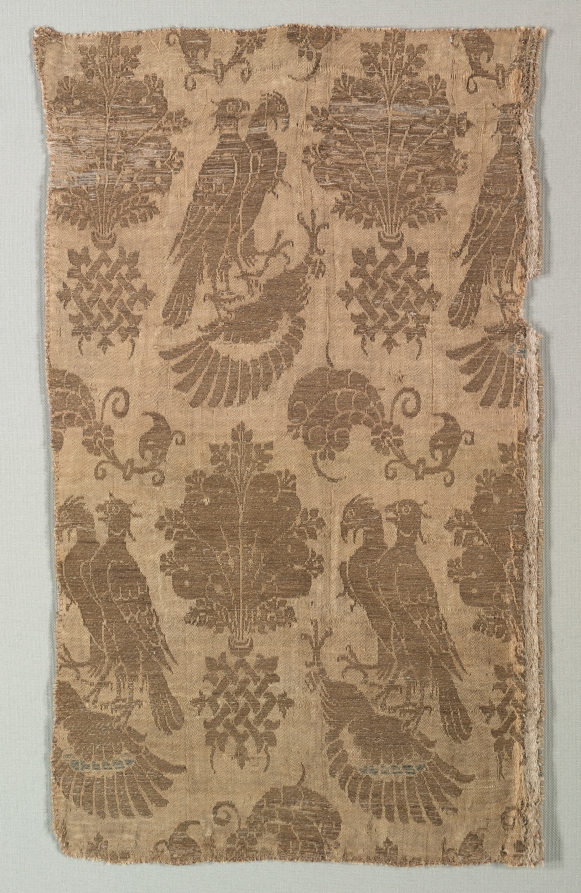
Gold-patterned Silk with Falcons and Heraldry
Cleveland Museum of Art
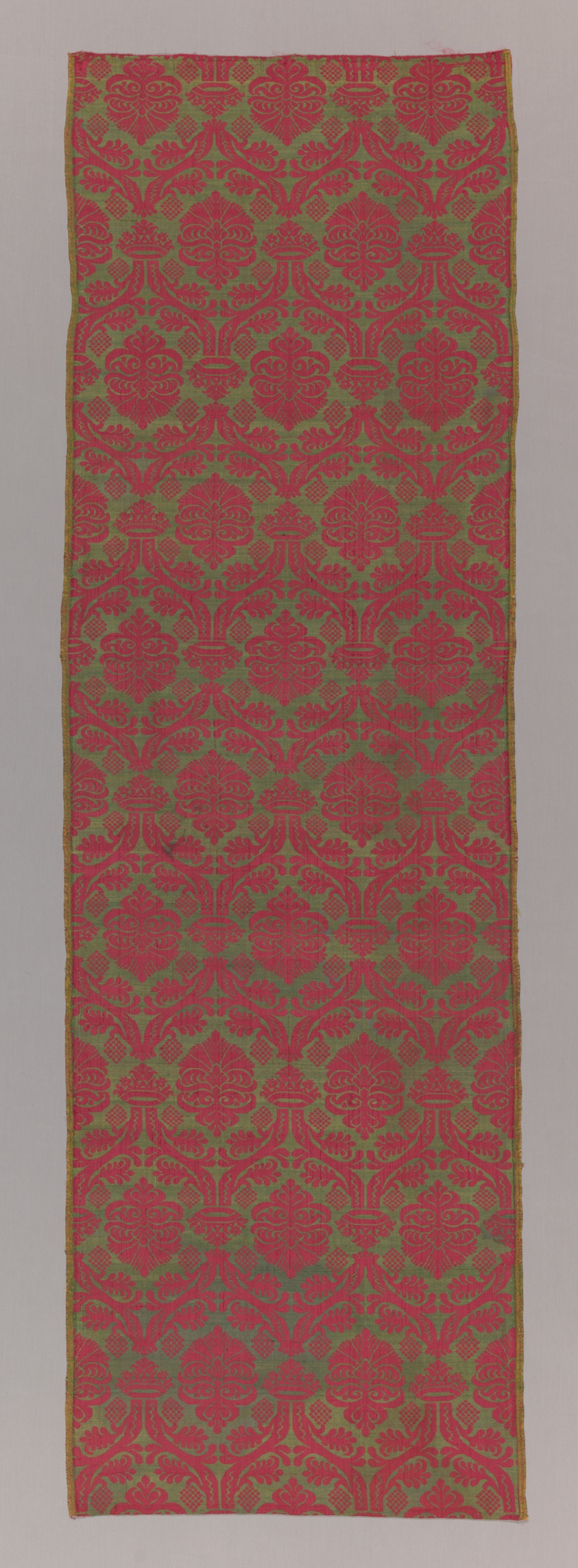
Three Lengths of Woven Silk
Art Institute of Chicago