Cleveland Museum of Art
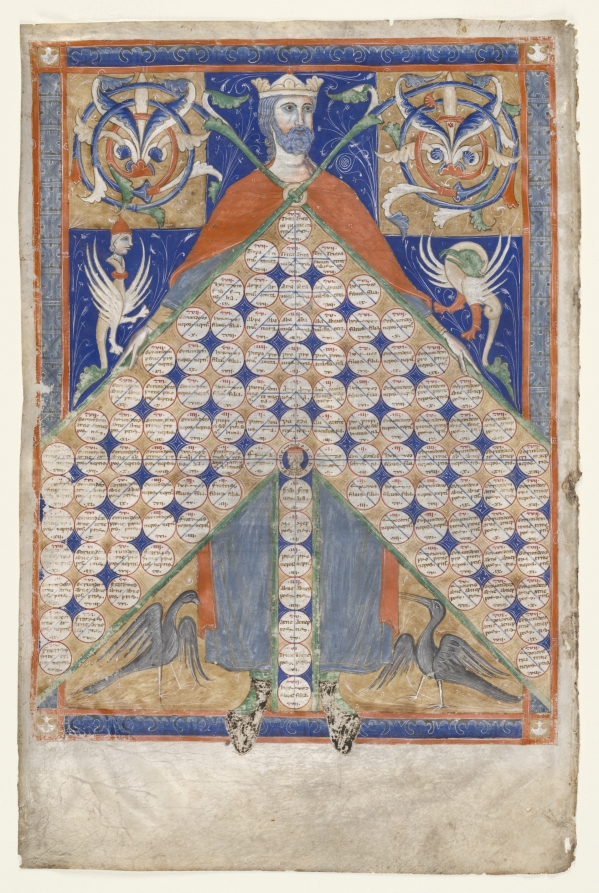
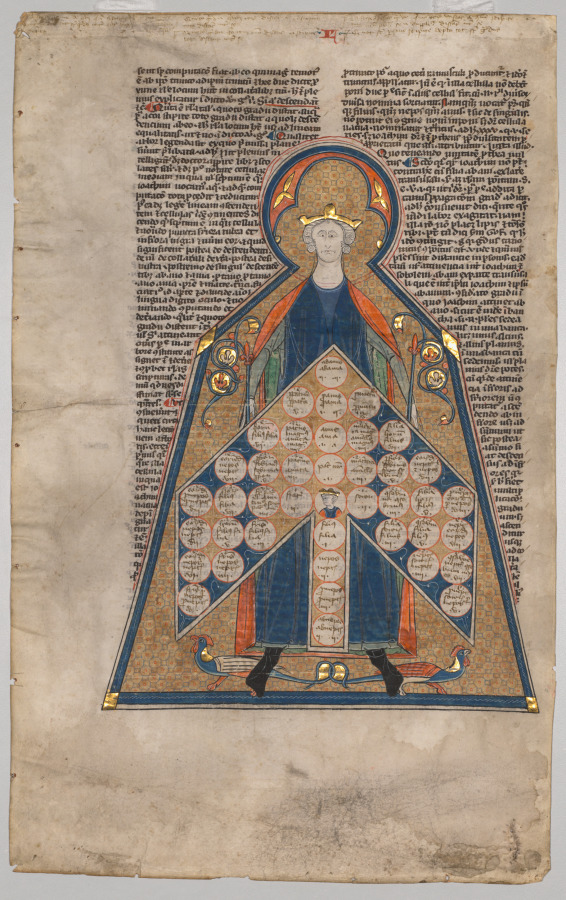
Leaf from Gratian's Decretum: Table of Consanguinity
- Date
- c. 1270–1300
- Medium
- ink, tempera and gold on parchment
- Culture
- Italy, probably Naples, 13th century
- Department
- Medieval Art
- Institution
- Cleveland Museum of Art
These leaves were excised from a copy of the handbook of canon law known simply as the Decretum written by Gratian, an Italian Camaldolese monk, in Bologna around 1130–40. The Decretum was widely copied and consulted throughout the Middle Ages. Consanguinity diagrams were used to show the degree of kinship between an individual and his or her "blood" relations. These tables followed an established tradition dating back to around 600 CE. Until church law was relaxed in 1215, a marriage could only be contracted by persons separated by seven degrees of relationship. After 1215 the degree of separation was reduced to four. Tables of Consanguinity were therefore used by church officials to regulate marriage.
The authoritative record is held by Cleveland Museum of Art. LinkedCulture surfaces this object and its connections; it does not alter institutional metadata.
Related across collections
Semantically similar works from Cleveland Museum of Art and other institutions.
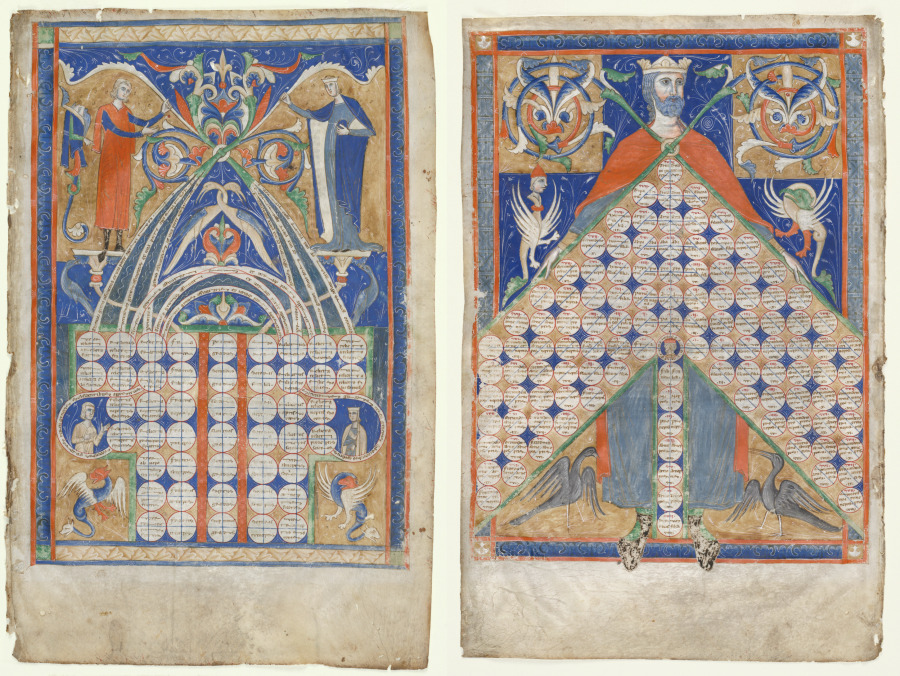
Leaves from Gratian's Decretum: Table of Affinity and Table of Consanguinity
Cleveland Museum of Art
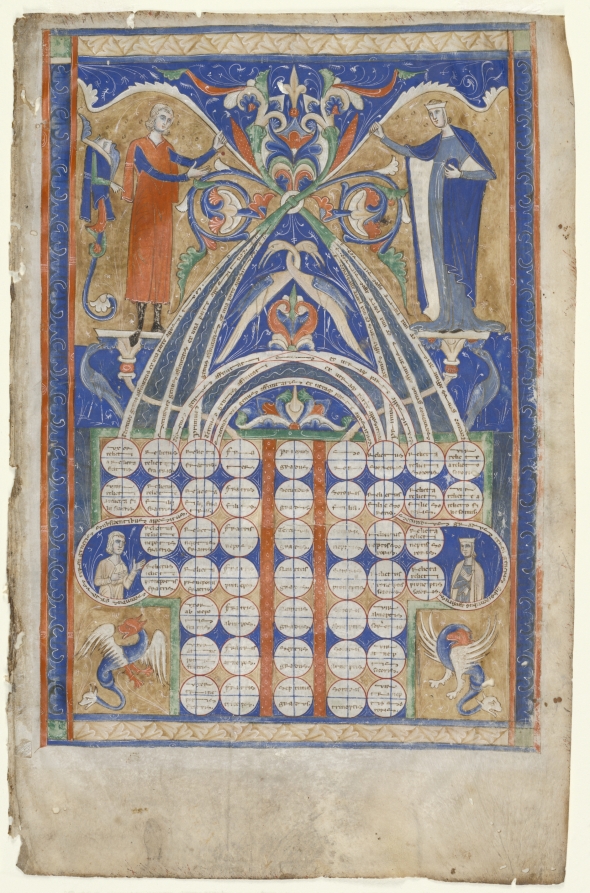
Leaf from Gratian's Decretum: Table of Affinity
Cleveland Museum of Art
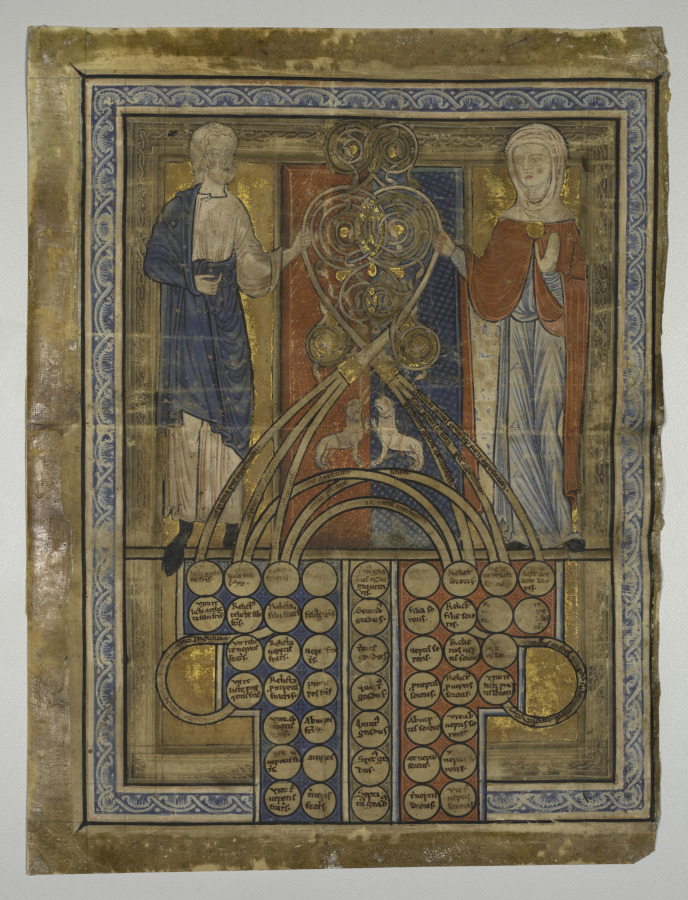
Single Leaf: Table of Consanguinity
Cleveland Museum of Art
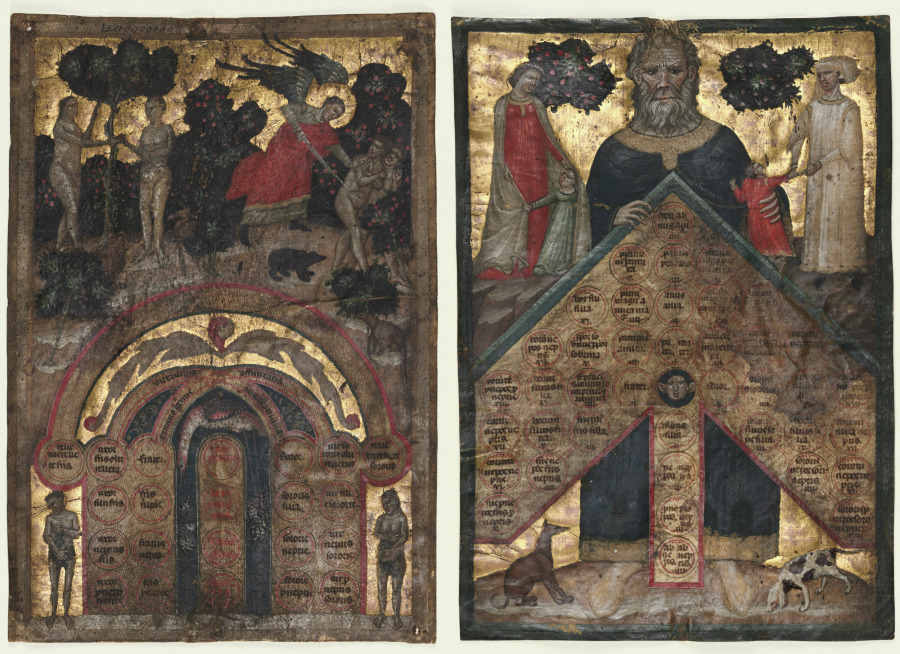
Leaves from a Volume of Johannes Andrea's "Lectura super arboris consanguinitatis et affinitatis: Table of Affinity and Table of Consanguinity"
Cleveland Museum of Art
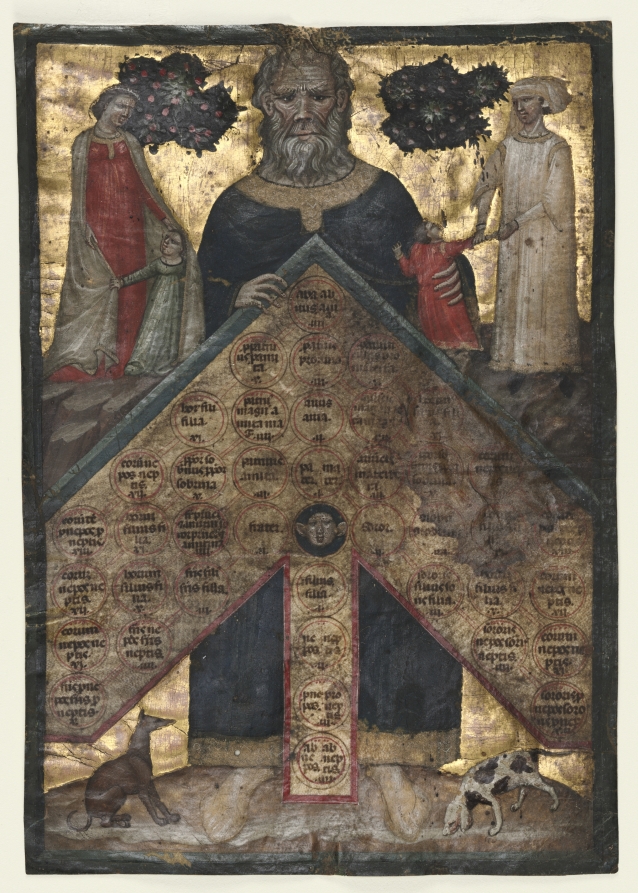
Leaf from a Volume of Johannes Andrea's "Lectura super arboris consanguinitatis et affinitatis: Table of Consanguinity
Cleveland Museum of Art

Table of Affinity
Getty Museum
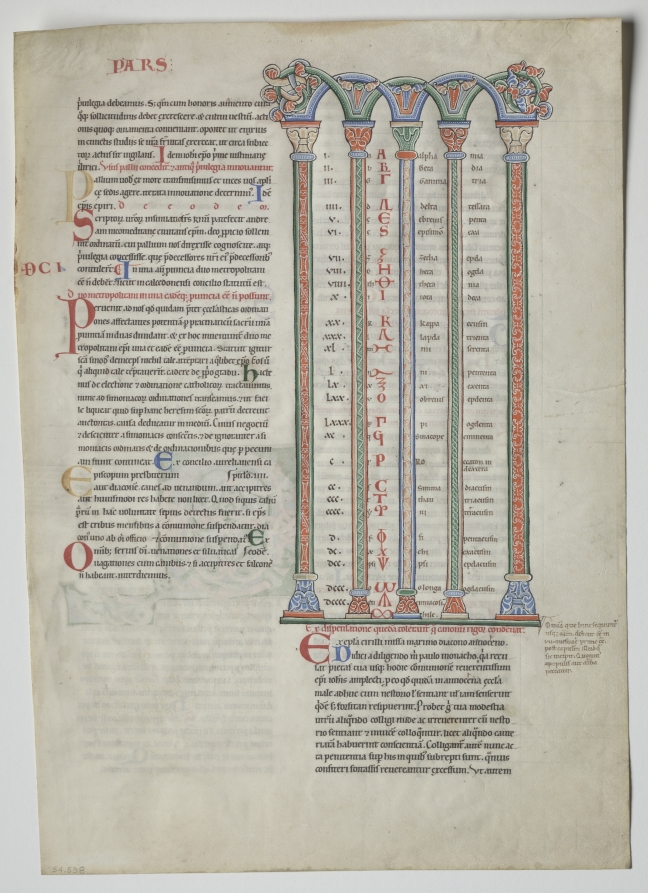
Single Leaf from a Decretum by Gratian: Quadruple Arcade with Concordance of Greek and Latin Alphabets
Cleveland Museum of Art
![Single Leaf from a Decretum by Gratian: Decorated Initial Q[uidam habens filium obtulit]](https://openaccess-cdn.clevelandart.org/1954.598.a/1954.598.a_web.jpg)
Single Leaf from a Decretum by Gratian: Decorated Initial Q[uidam habens filium obtulit]
Cleveland Museum of Art
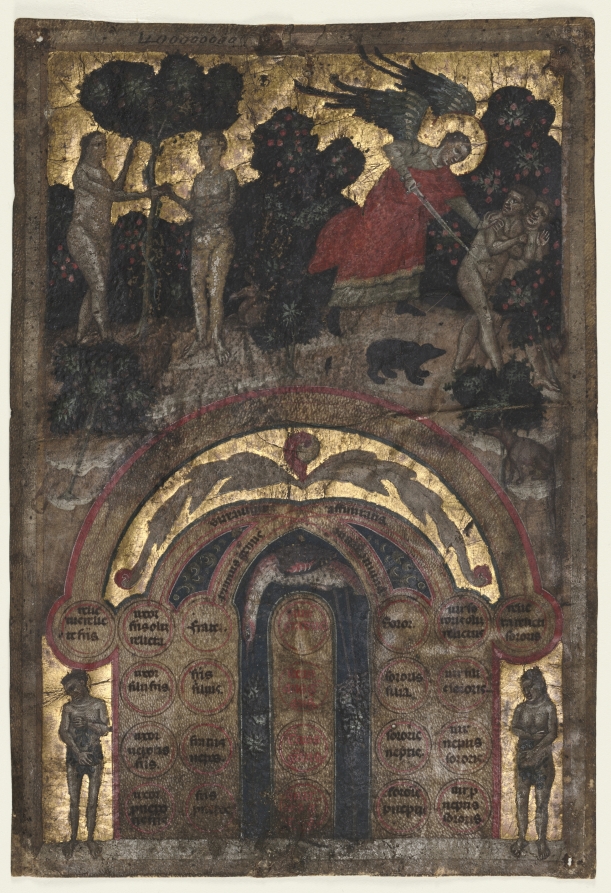
Leaf from a Volume of Johannes Andrea's "Lectura super arboris consanguinitatis et affinitatis: Table of Affinity"
Cleveland Museum of Art

Table of Consanguinity
Getty Museum
![Single Leaf from a Decretum by Gratian: Decorated Initial Q[uidam habens filium obtulit] and Quadruple Arcade with Concordance of Greek and Latin Alphabets](https://openaccess-cdn.clevelandart.org/1954.598/1954.598_web.jpg)
Single Leaf from a Decretum by Gratian: Decorated Initial Q[uidam habens filium obtulit] and Quadruple Arcade with Concordance of Greek and Latin Alphabets
Cleveland Museum of Art
Leaf Excised from Henry of Segusio's "Summa Aurea": Table of Consanguinity
Cleveland Museum of Art