Cleveland Museum of Art
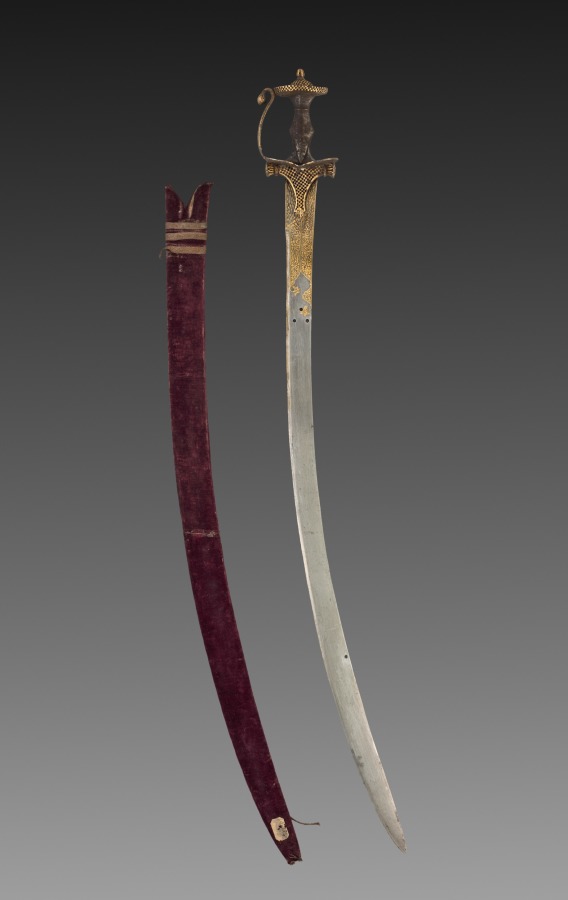
Tulwar sword
- Date
- 1700s
- Medium
- Iron hilt with gold; steel blade with gold; wood scabbard with velvet and metallic thread
- Culture
- India, probably Deccan
- Department
- Indian and Southeast Asian Art
- Institution
- Cleveland Museum of Art
This long curved sword and scabbard are of the kind used and worn by Mughal nobility, as seen often in paintings. The openwork hilt is a characteristic of swords from the southern Indian region known as the Deccan. By the end of the 1500s, the Mughals began making regular incursions into the Deccan as they attempted to expand their empire, increasing the exchange of art forms. Repeated four times, twice on one side of the blade and twice on the other in gold inlay, is the same line from the Qur'an 61:13: “Help [comes] from God, and Victory is imminent.” This is a popular inscription on daggers, banners, and other instruments of war, as it reassures the combatants that God is on their side, and therefore they can in good faith expect a speedy victory if they fight valiantly.
The authoritative record is held by Cleveland Museum of Art. LinkedCulture surfaces this object and its connections; it does not alter institutional metadata.
Related across collections
Semantically similar works from Cleveland Museum of Art and other institutions.
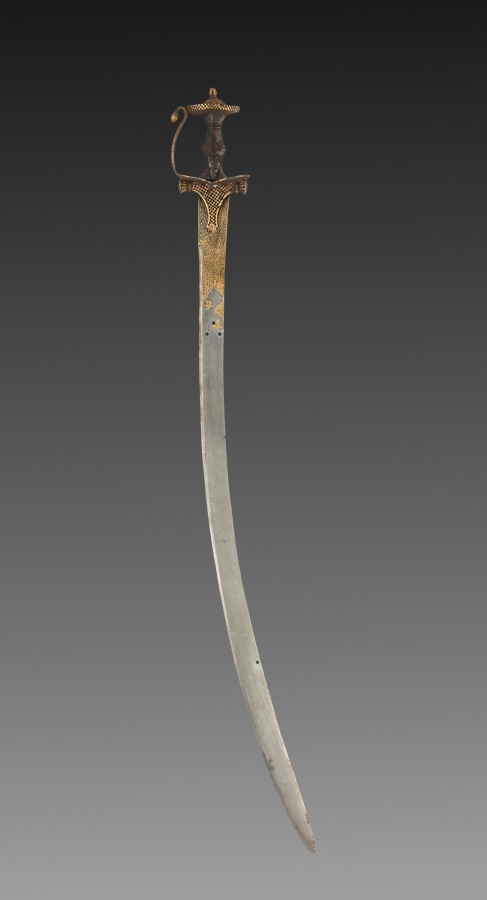
Tulwar Sword
Cleveland Museum of Art
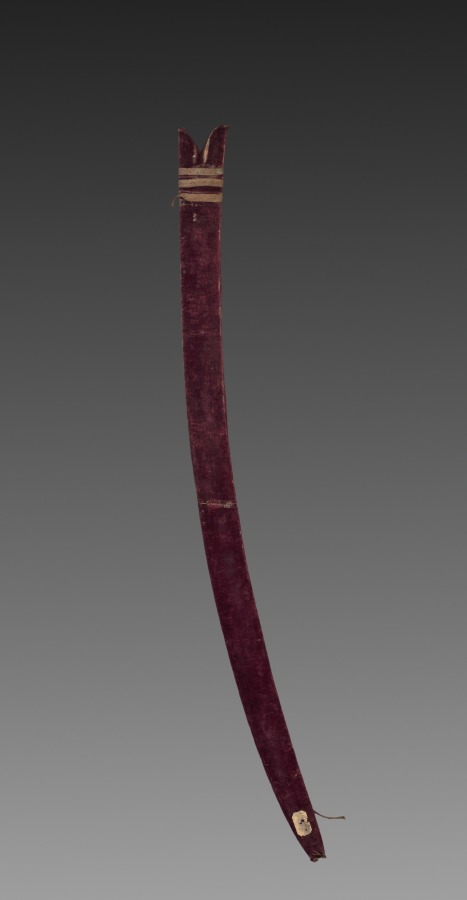
Tulwar Sword (case)
Cleveland Museum of Art
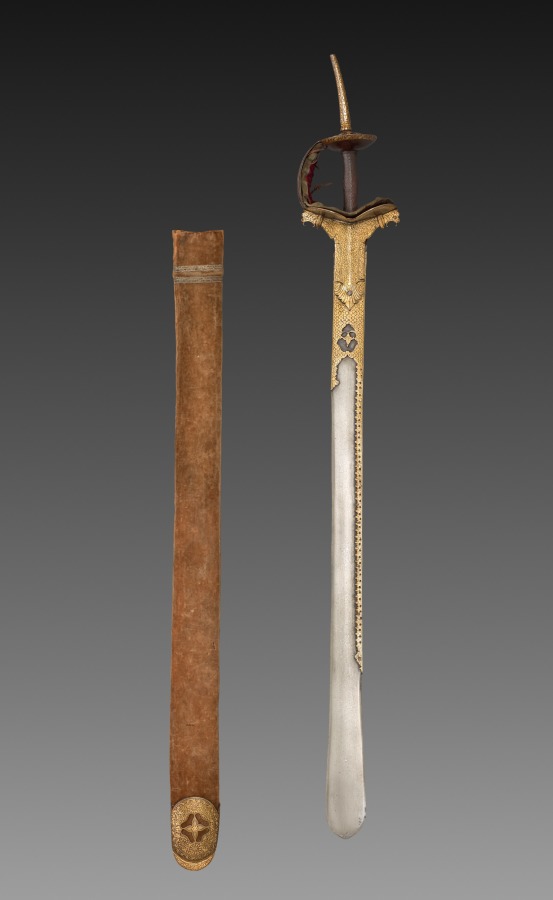
Sword with scabbard
Cleveland Museum of Art
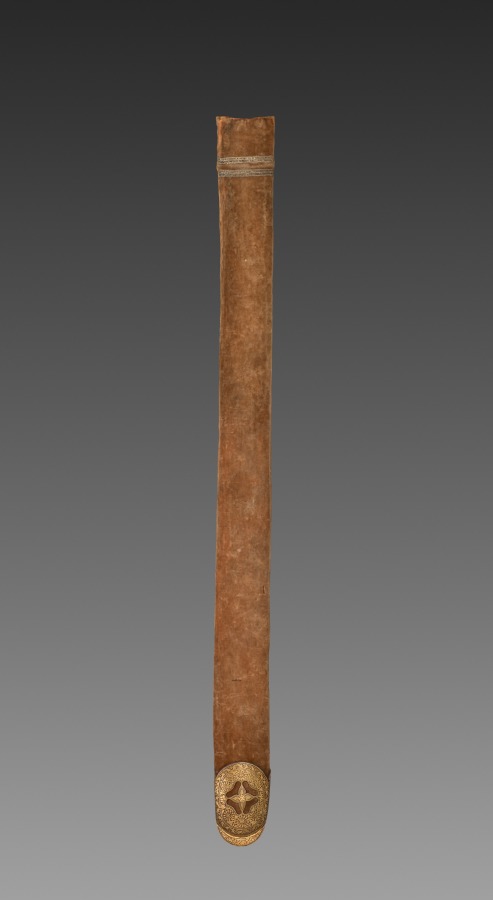
Scabbard
Cleveland Museum of Art
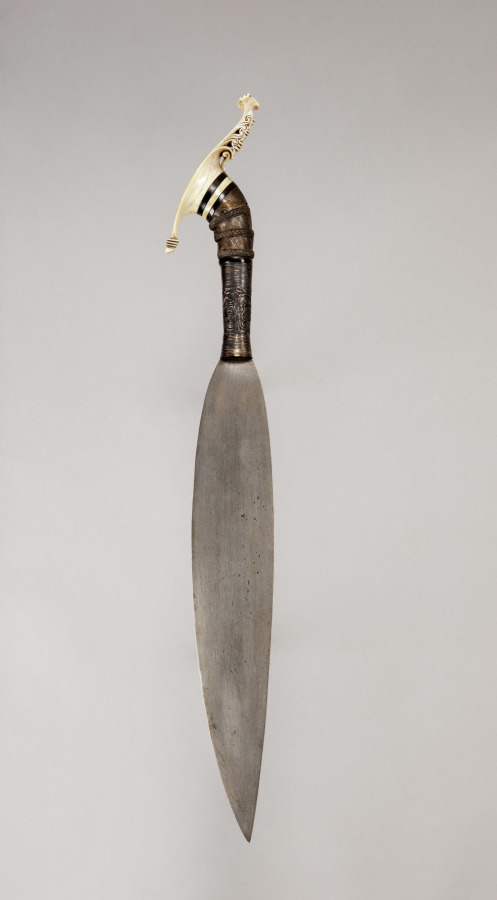
Sword (Barong)
Cleveland Museum of Art
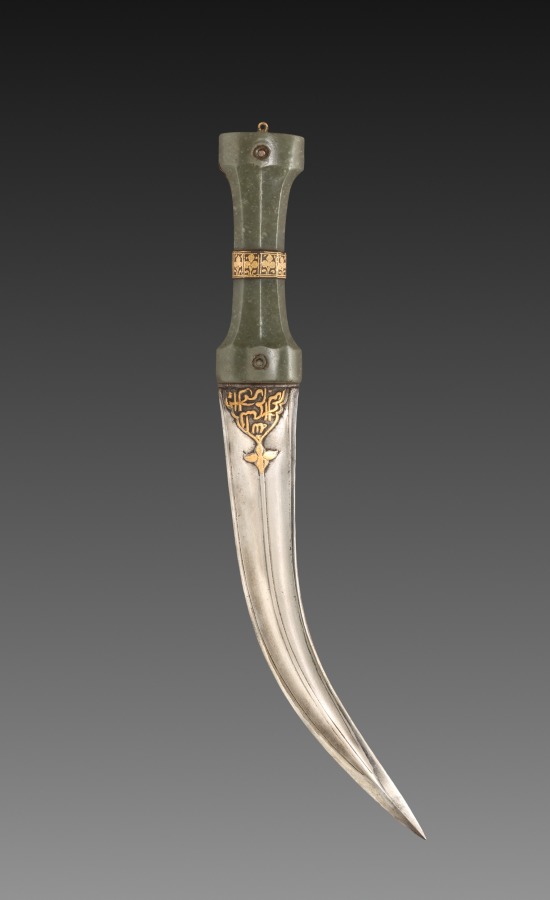
Dagger
Cleveland Museum of Art
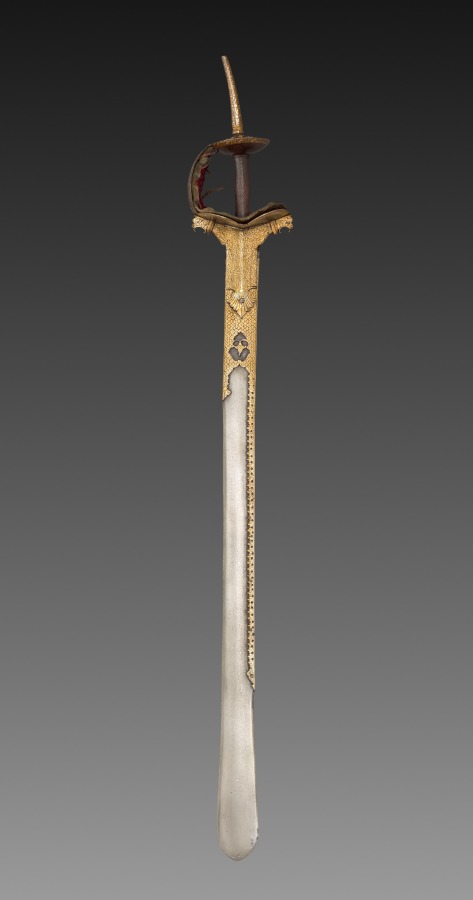
Sword
Cleveland Museum of Art
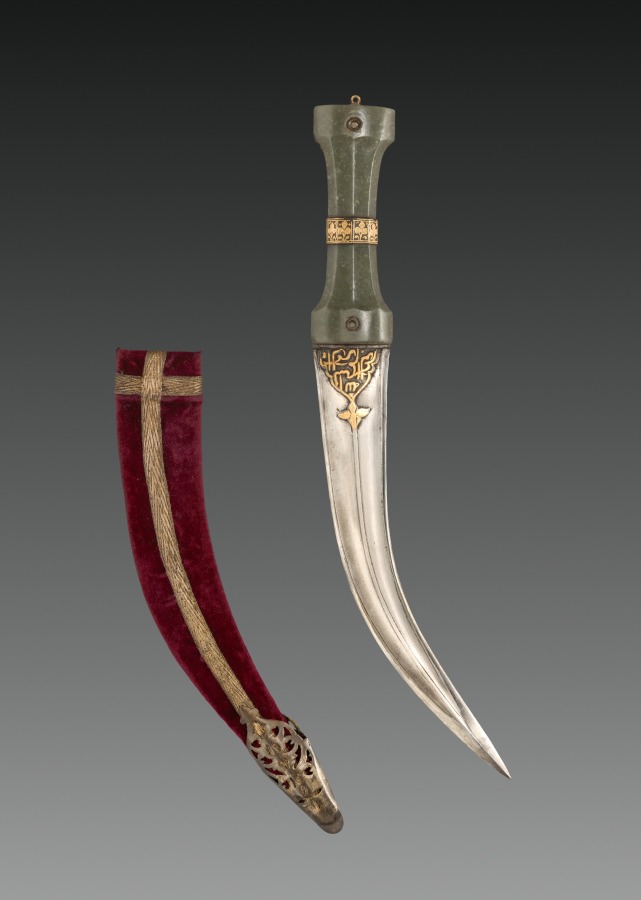
Khanjar dagger
Cleveland Museum of Art
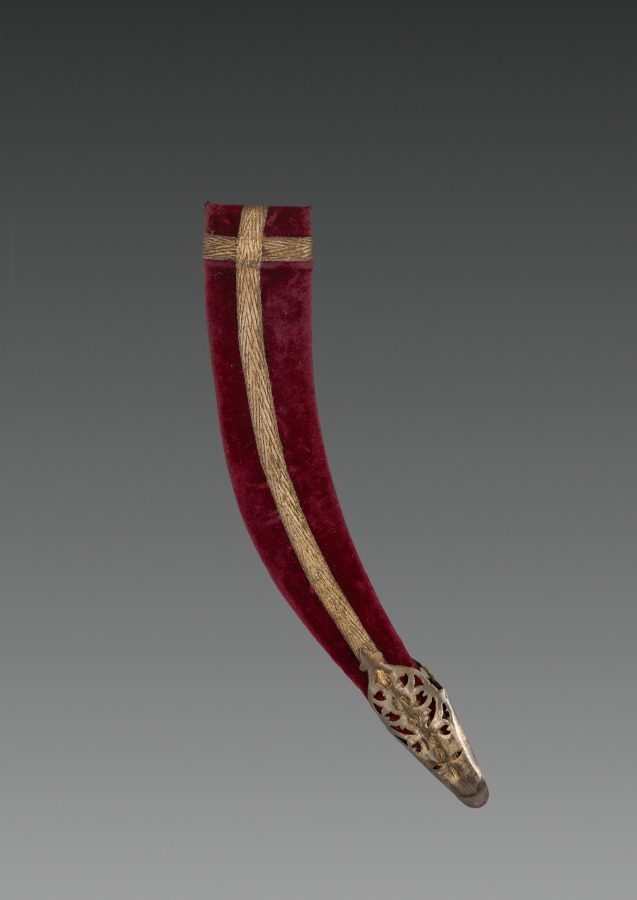
Dagger (red velvet case)
Cleveland Museum of Art
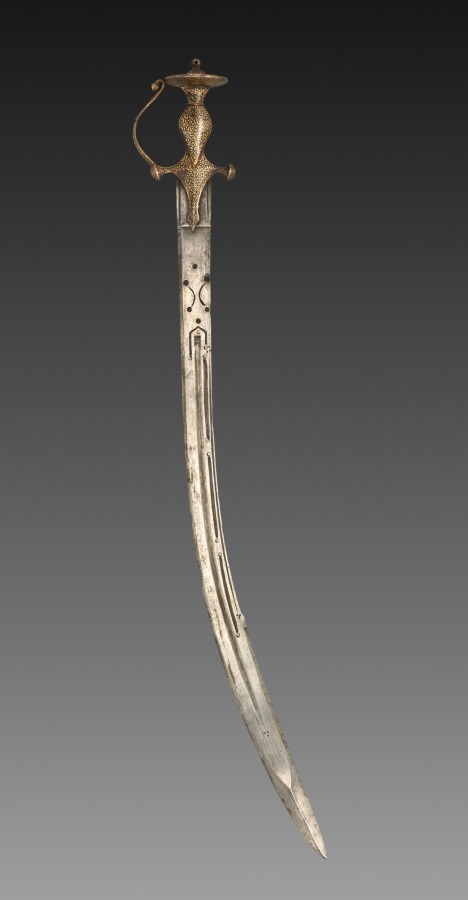
Tulwar sword
Cleveland Museum of Art
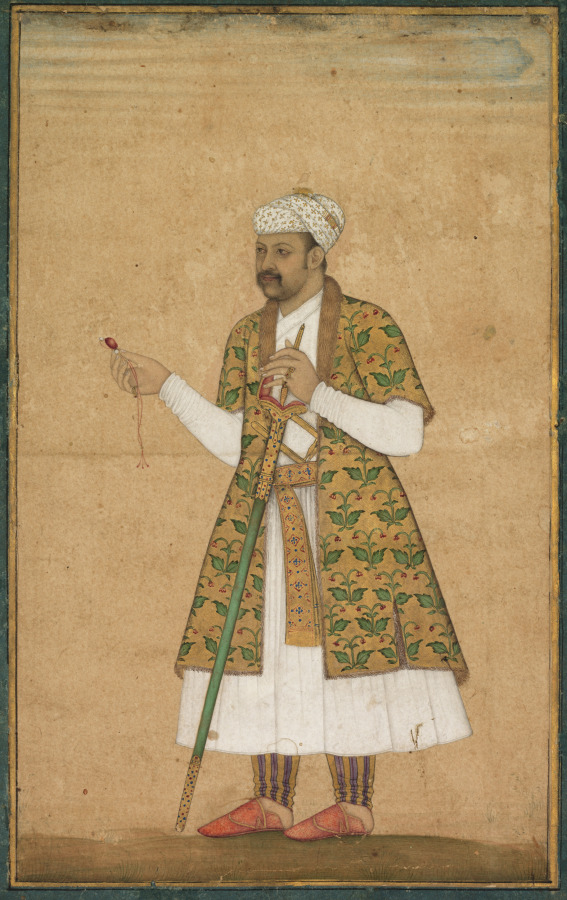
A Courtier, Possibly Khan Alam, Holding a Spinel and a Deccan Sword
Cleveland Museum of Art
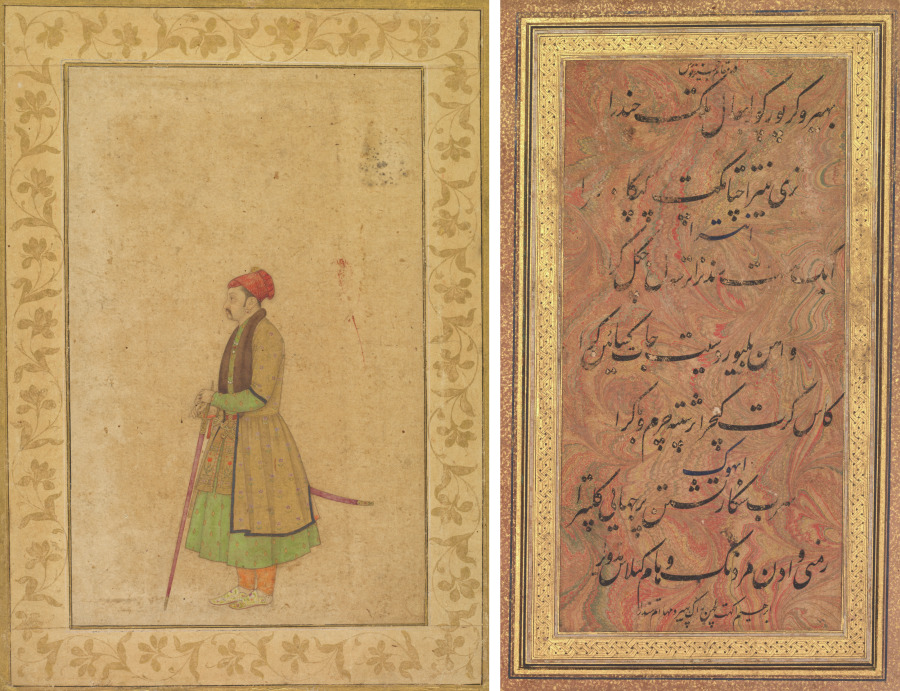
Portrait of Raja Ram Singh of Amber (r. 1667-1688) with a Deccan Sword (recto); Calligraphy (verso)
Cleveland Museum of Art