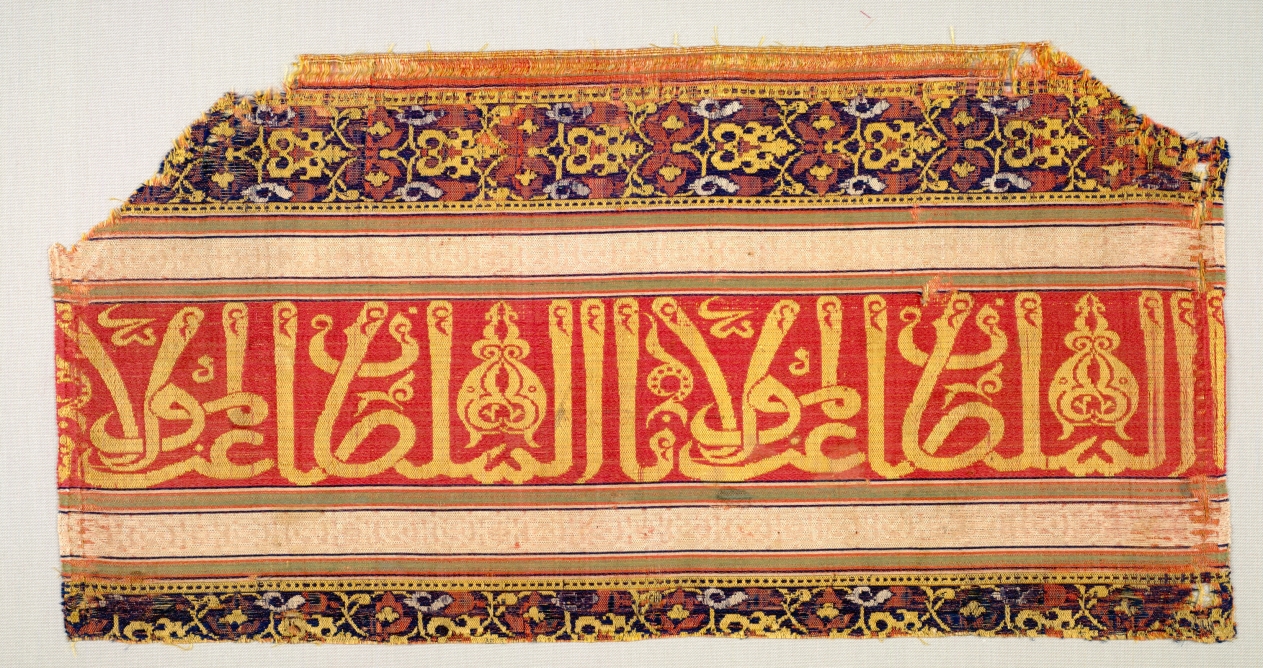
Cleveland Museum of Art
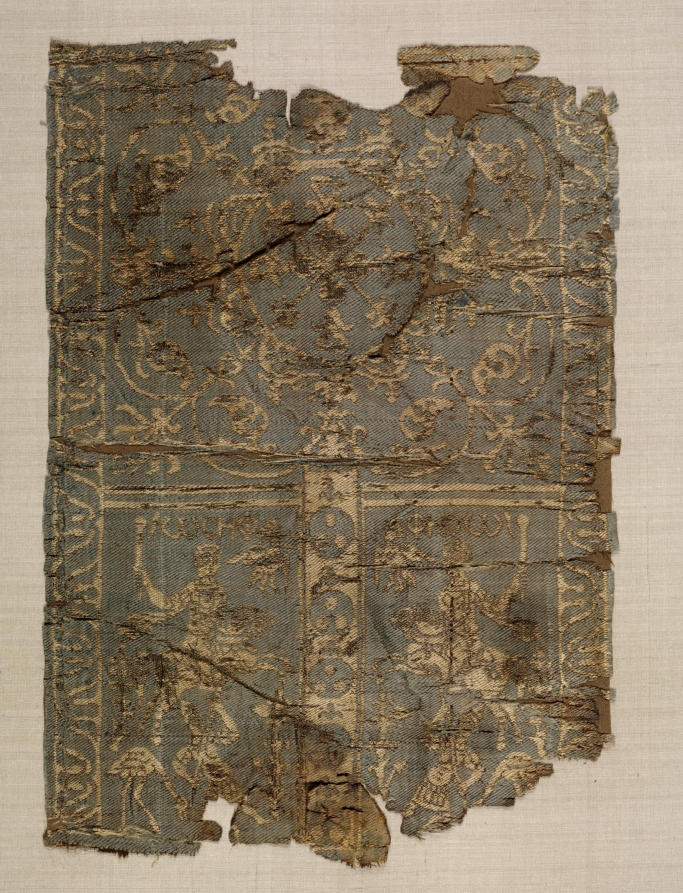
Striped Silk from a Garment
- Date
- 1400s
- Medium
- silk; lampas weave
- Culture
- Spain, Granada, Nasrid period
- Department
- Textiles
- Institution
- Cleveland Museum of Art
Arabic inscriptions had religious significance to viewers regardless of their legibility. This text repeats "Glory to our Lord the Sultan," a phrase that also enhances the Alhambra Palace walls. For Muslims, Arabic texts symbolized the divine revelation of God’s word to the Prophet Muhammad and recorded in the holy Qur’an; for Spanish Catholics it represented the Holy Land. In striped silks, inscriptions often alternate with interlacing bands and palmettes. Inscribed silks have survived as Catholic church vestments.
The authoritative record is held by Cleveland Museum of Art. LinkedCulture surfaces this object and its connections; it does not alter institutional metadata.
Related across collections
Semantically similar works from Cleveland Museum of Art and other institutions.
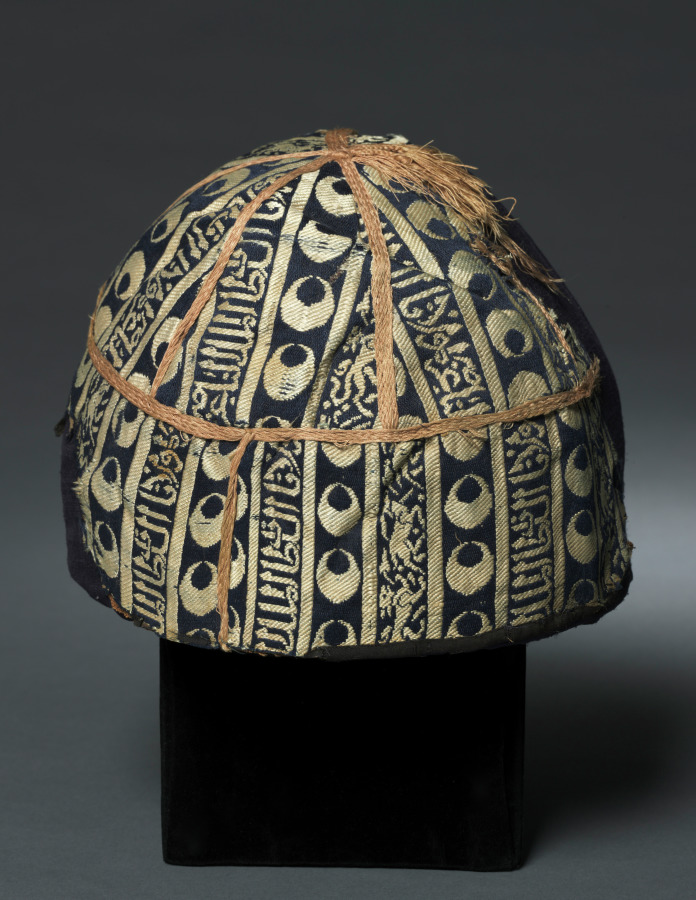
Cap with Striped Inscribed Silk
Cleveland Museum of Art
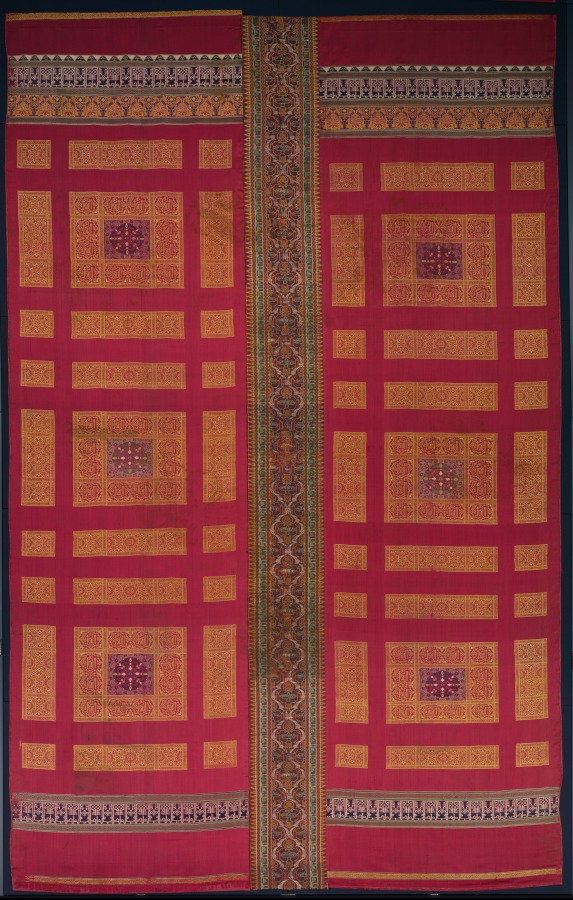
Silk curtain from the Alhambra palace
Cleveland Museum of Art
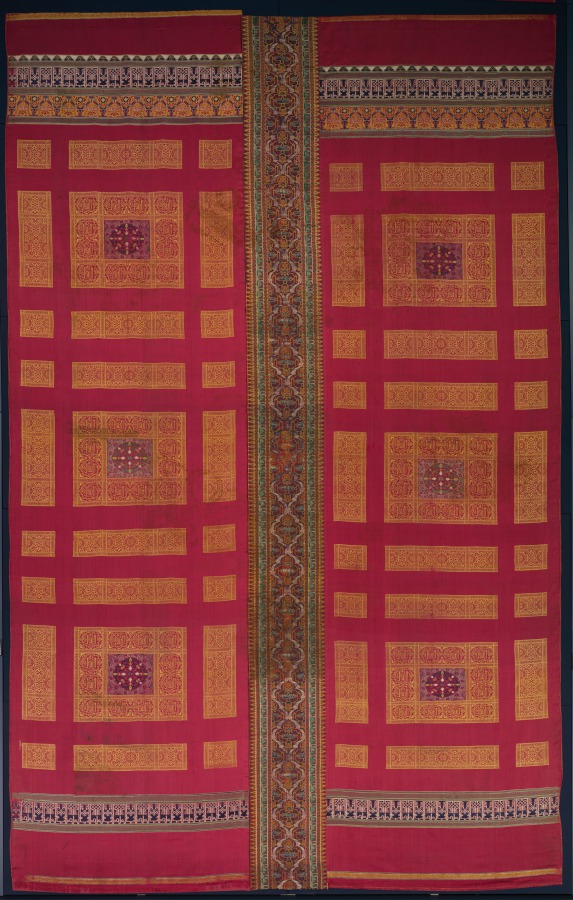
Alhambra Palace Silk Curtain
Cleveland Museum of Art
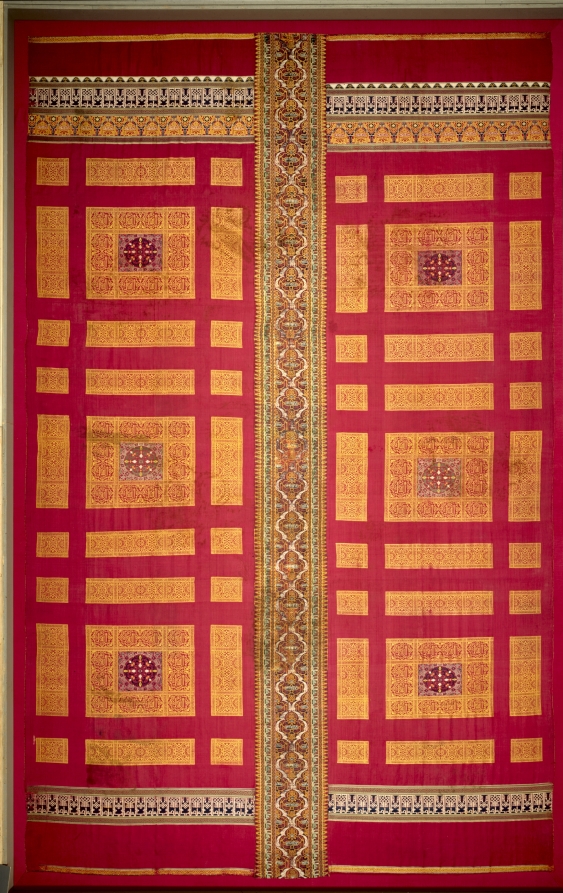
Alhambra Palace Silk Curtain
Cleveland Museum of Art
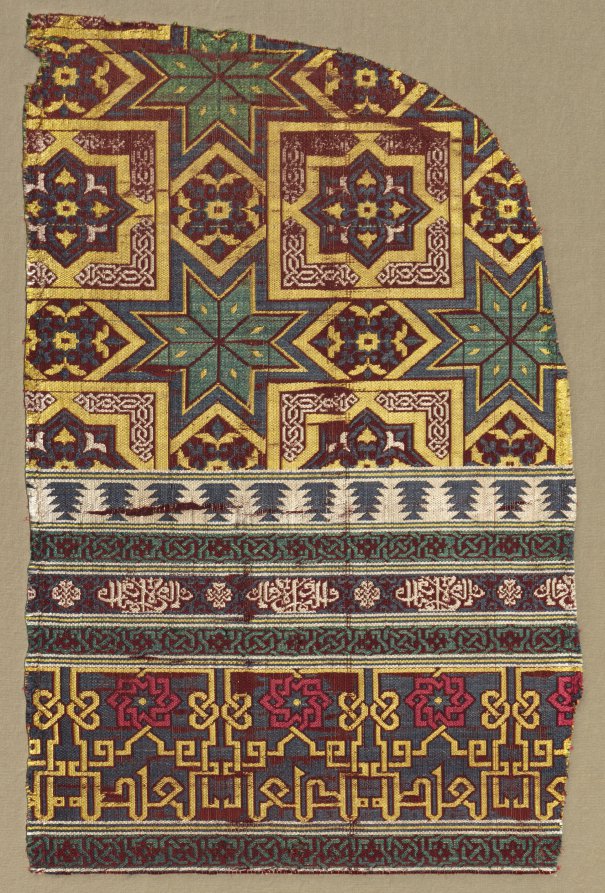
Alhambra hanging fragment with decorated bands
Cleveland Museum of Art
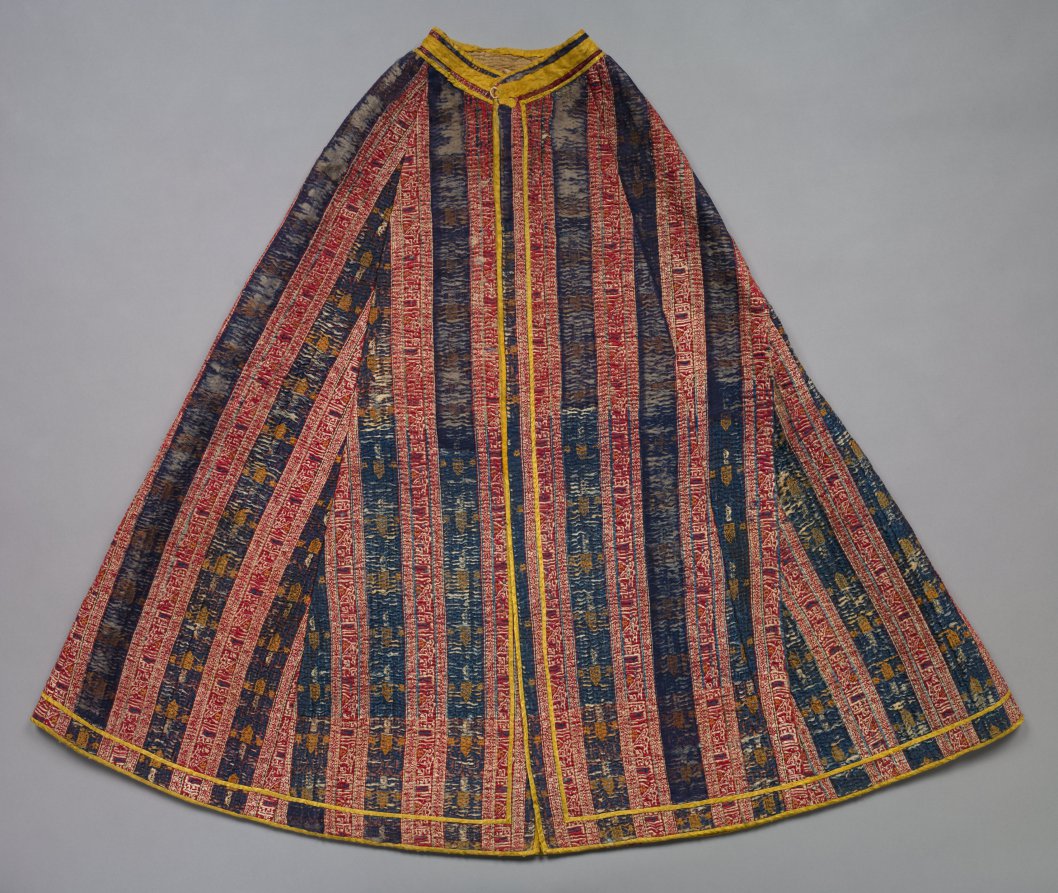
Mantle for a statue of the Virgin
Cleveland Museum of Art
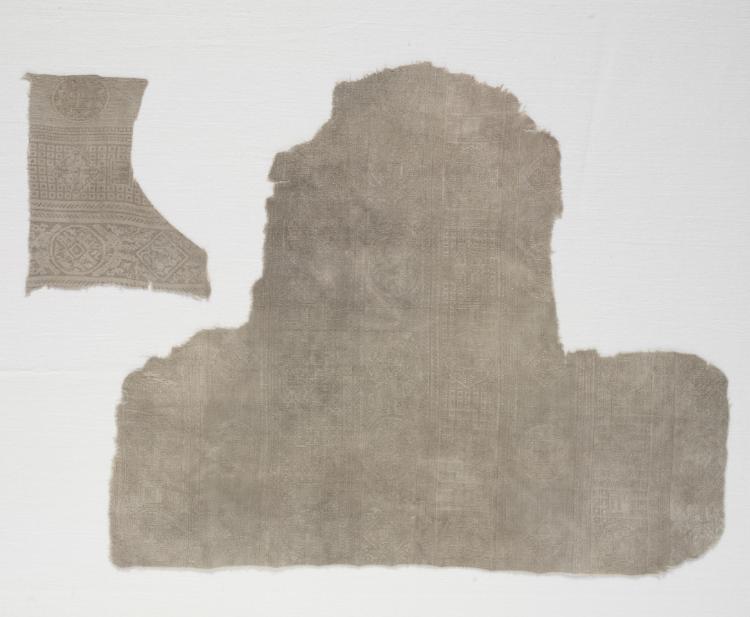
Fragment with inscriptions
Cleveland Museum of Art
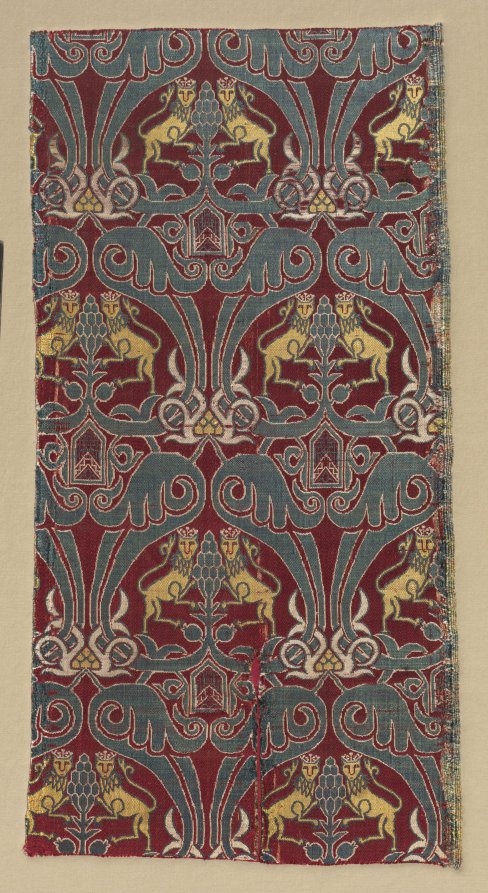
Fragment with crowned lions, palmettes, and escutcheons
Cleveland Museum of Art
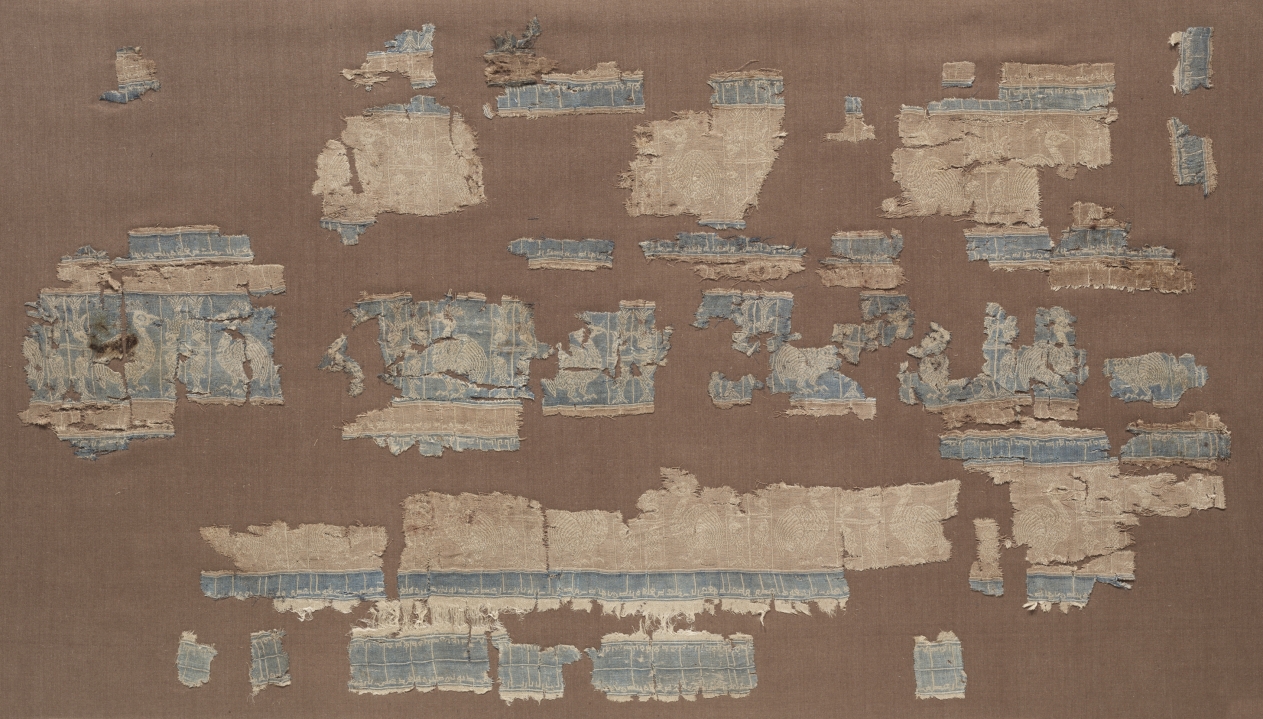
Fragment (of a Shroud?) with Inscription
Cleveland Museum of Art
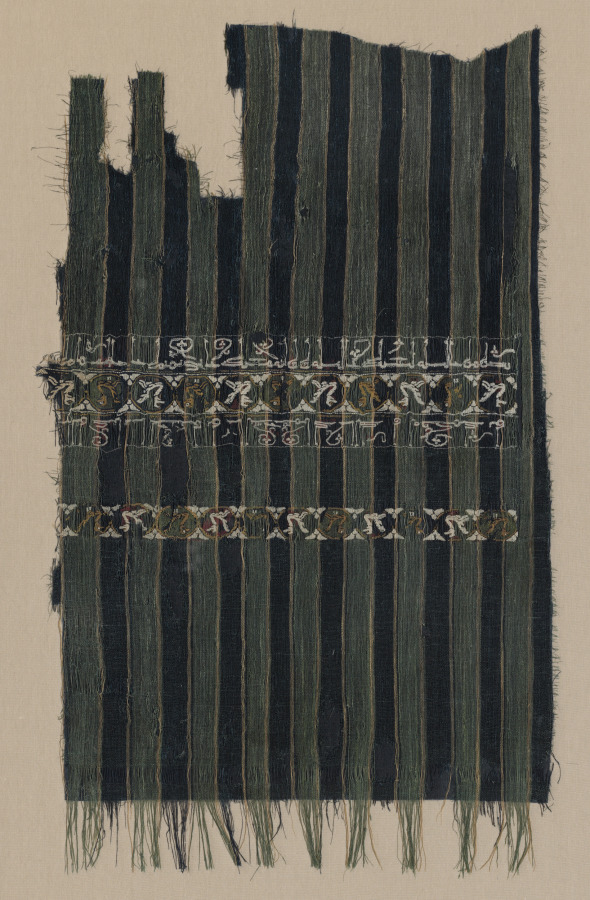
Striped tiraz
Cleveland Museum of Art
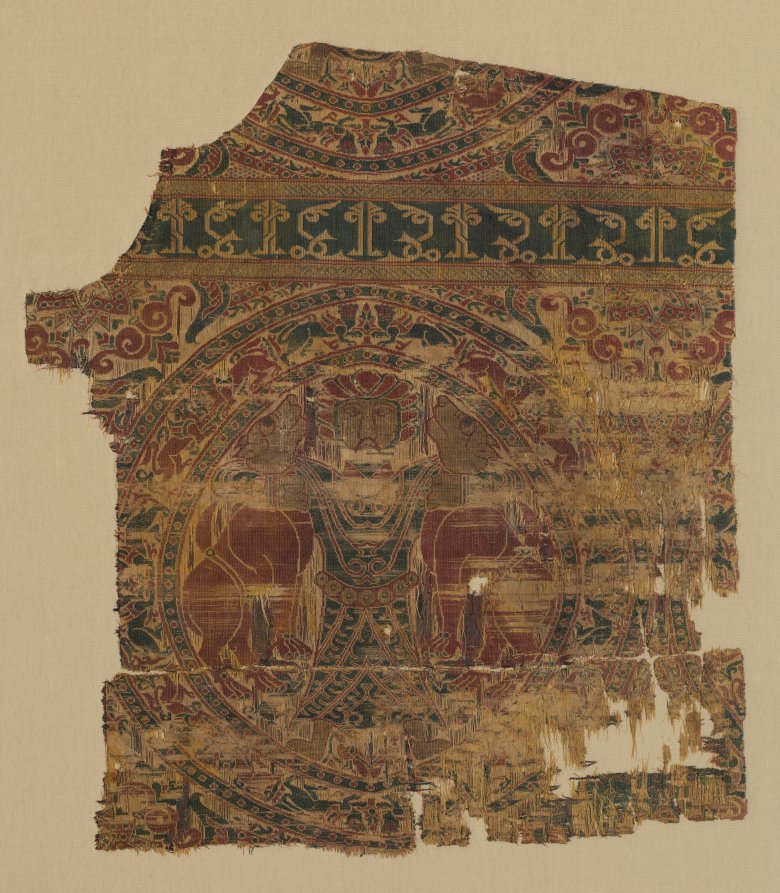
Fragment with Lion Strangler from a Dalmatic of Saint Bernard Calvo
Cleveland Museum of Art
Silk Sleeve Decoration with Hunters
Cleveland Museum of Art