Cleveland Museum of Art
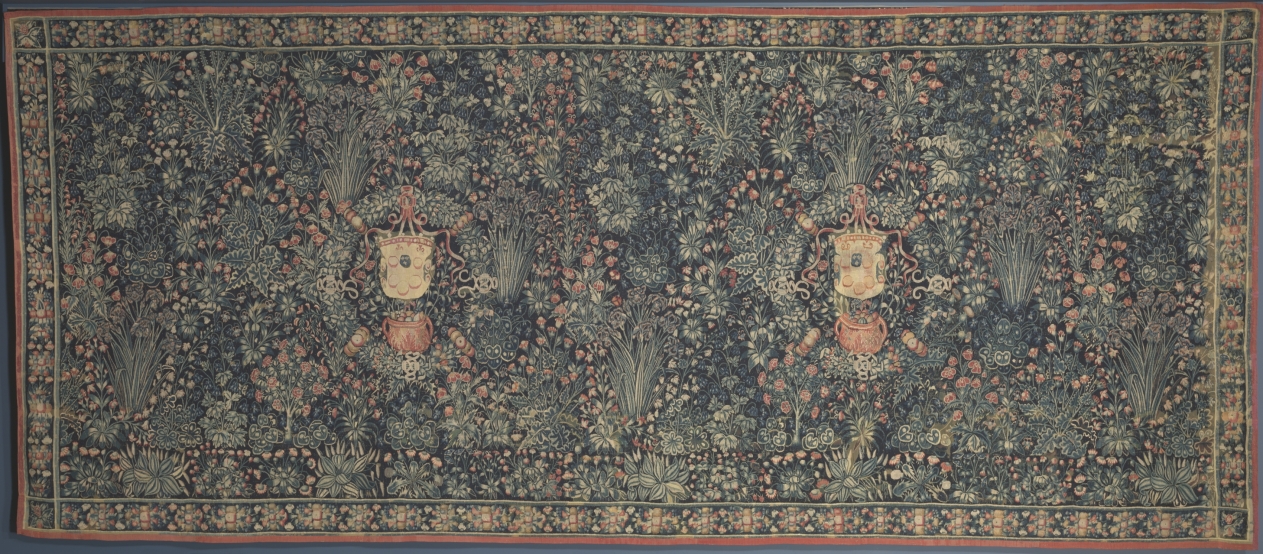
Millefleurs Tapestry with Medici Coat of Arms
- Date
- 1520s
- Medium
- tapestry weave: wool and silk
- Culture
- Netherlands, Hainault, early 16th century
- Department
- Textiles
- Institution
- Cleveland Museum of Art
- Object ID
- 122570
From the Cleveland Museum of Art record
Many identifiable flowering plants provide the French name, millefleur, for this pattern, which became fashionable around 1450. Each plant may have symbolized either religion, courtship, or morals. However, many millefleur tapestries, made for about 100 years, were probably not symbolic. Large quantities were woven only with flowers; some also incorporated birds and animals or, in this case, coats of arms. Here, the original coat of arms has been replaced by that of the Medicis, a prominent family in Renaissance Florence.
The authoritative record is held by Cleveland Museum of Art. LinkedCulture surfaces this object and its connections; it does not alter institutional metadata.
Get printable QR codesHide QR codes
Open QR codes for this object page and the museum record. They stay collapsed until needed.
Provenance & credit
As published by the source institution. Coverage varies — not every institution's open-data feed includes ownership history.
- Credit line
- Bequest of John L. Severance
- Provenance
- ?–1942: John L. Severance [1863–1936], Cleveland, OH, bequest to the Cleveland Museum of Art | 1942–: The Cleveland Museum of Art, Cleveland, OH
Part of a LinkedCulture topic
 18th-Century French Decorative Arts
These objects represent the luxury decorative traditions of 18th-century France, unified by their use of refined materials (tapestry weave, Savonnerie knotted pile, carved wood), classical themes (Ovid's Metamorphoses, S
48 objects from 5 institutions
Related across collections
Semantically similar works from Cleveland Museum of Art and other institutions.