Cleveland Museum of Art
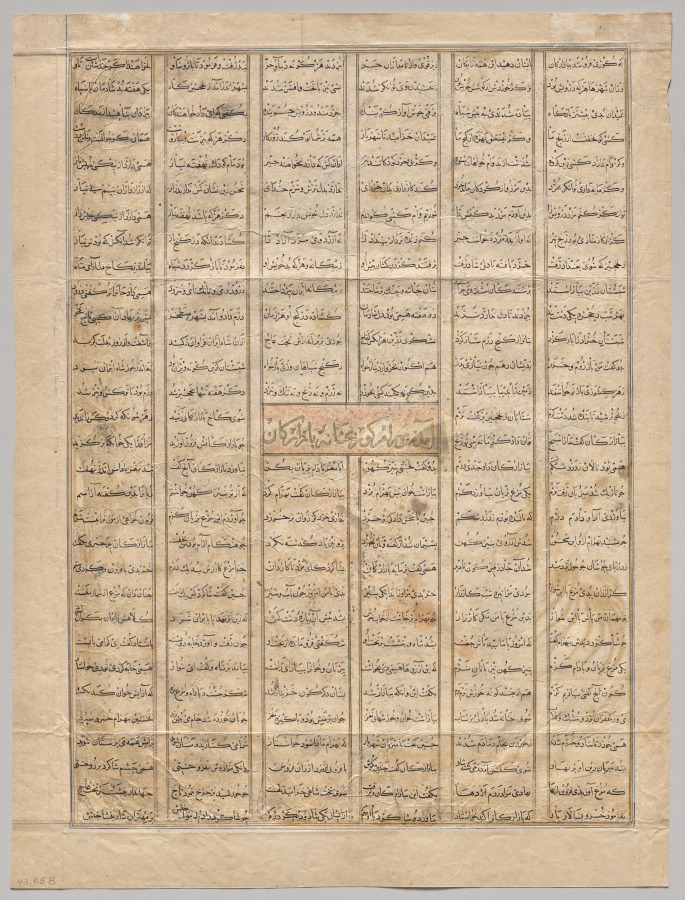
Bahram Gur Arrives at the House of a Merchant, text page (recto), from a Shahnama (Book of Kings) of Firdausi (940–1019 or 1025), known as the Great Mongol Shahnama
- Date
- 1330–35
- Medium
- opaque watercolor, ink, and gold on paper
- Culture
- Iran, Tabriz, Ilkhanid period (1256-1353)
- Department
- Islamic Art
- Institution
- Cleveland Museum of Art
In this intense painting, Bahram Gur plunges his sword into the breast of a dragon. A favorite character from Iran's pre-Islamic history, Bahram Gur (reigned 420–38 CE) was a popular ruler of the Sasanian dynasty and a great hunter. He took the name "Gur," meaning onager (a wild ass), because it was his preferred game, although he also excelled at killing dragons. As evidenced by this illustration's rock formations, tree trunk, and dragon, Iranian painting in the Mongol period borrowed numerous stylistic and spatial elements from Chinese models. With the surging landscape and writhing dragon rendered with equal energy, this is a picture of extraordinary unity and concentration. The Shahnama , a poem written by Firdawsi around 1010, tells the history of ancient Iran.
The authoritative record is held by Cleveland Museum of Art. LinkedCulture surfaces this object and its connections; it does not alter institutional metadata.
Related across collections
Semantically similar works from Cleveland Museum of Art and other institutions.
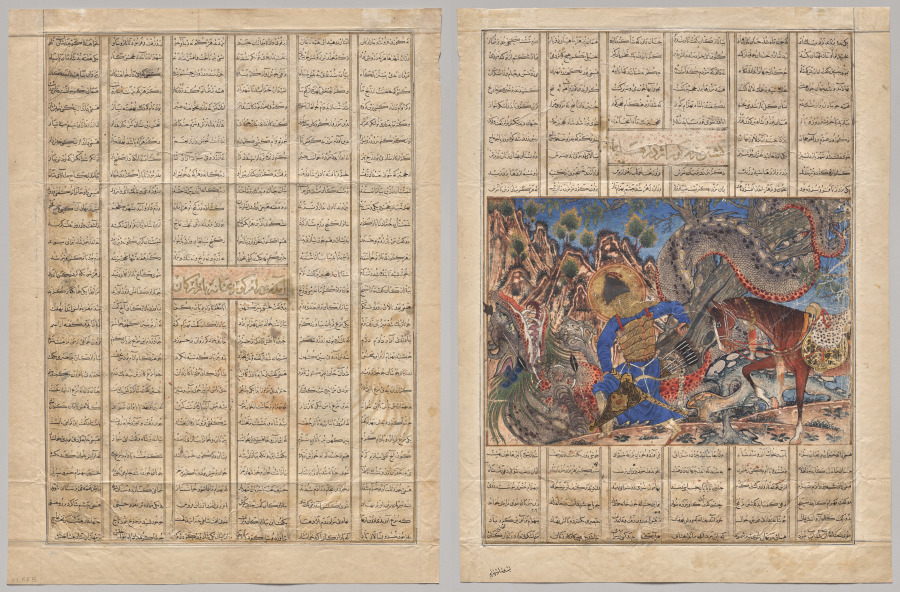
Bahram Gur Arrives at the House of a Merchant, text page (recto); Bahram Gur Slays a Dragon (verso), from a Shahnama (Book of Kings) of Firdausi (940–1019 or 1025), known as the Great Mongol Shahnama
Cleveland Museum of Art
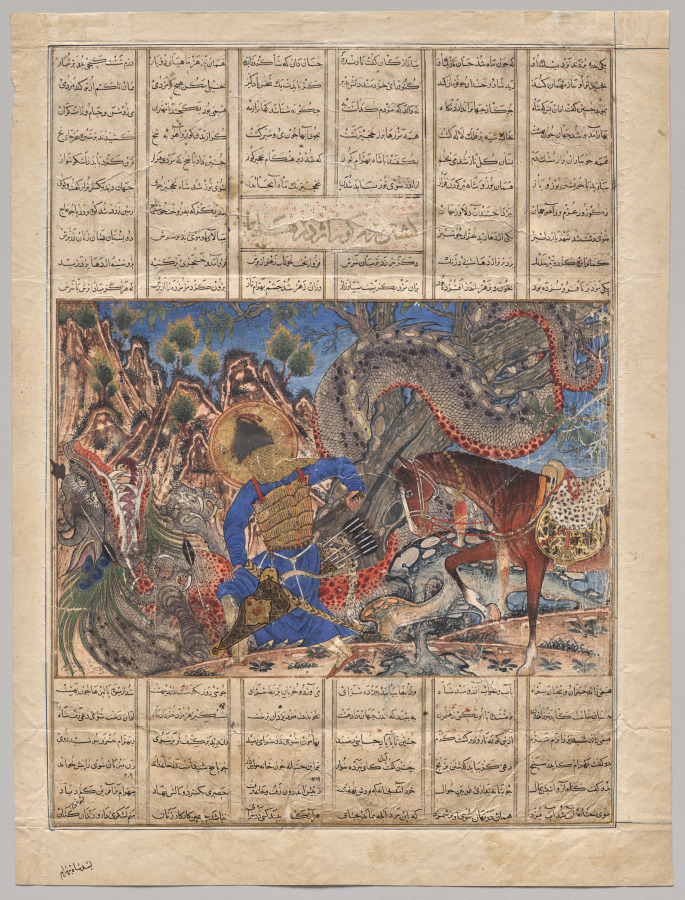
Bahram Gur Slays a Dragon (verso), from a Shahnama (Book of Kings) of Firdausi (940–1019 or 1025), known as the Great Mongol Shahnama
Cleveland Museum of Art
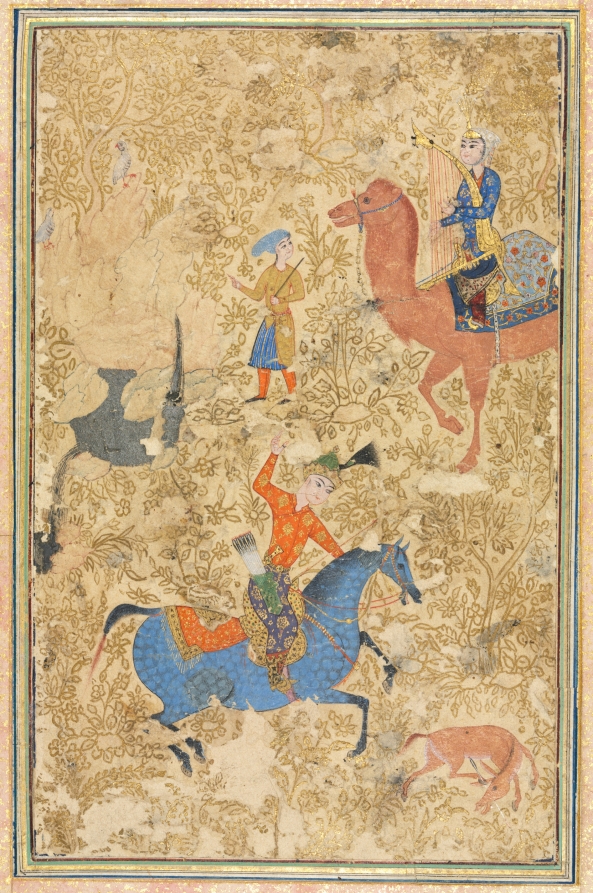
Bahram Gur and Azada, from a Shahnama (Book of Kings) of Firdausi (940–1019 or 1025)
Cleveland Museum of Art
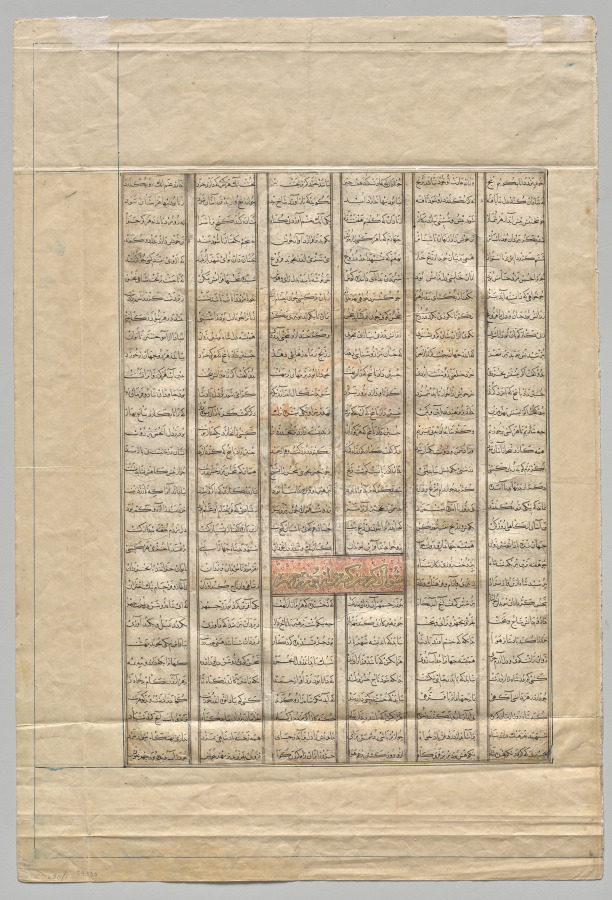
Persian Verses: The Fortieth Year of King Kisra Nushirwan's Reign and the Story of Buzurgmihr (recto) from a Shahnama (Book of Kings) of Firdausi (940–1019 or 1025)
Cleveland Museum of Art
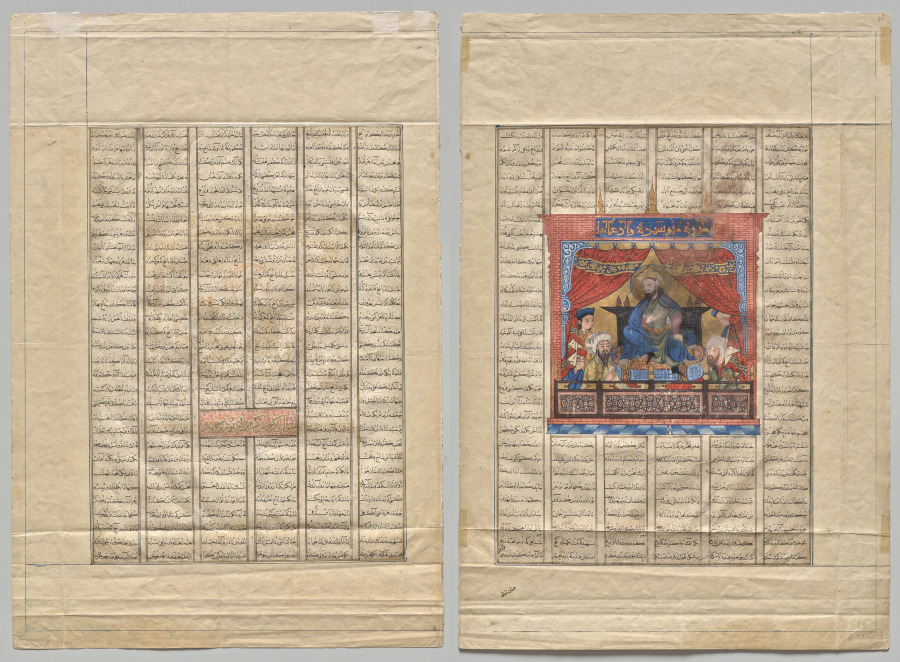
Persian Verses: The Fortieth Year of King Kisra Nushirwan's Reign and the Story of Buzurgmihr (recto); Portrait of Nushirwan the Just (verso) from a Shahnama (Book of Kings) of Firdausi (940–1019 or 1025)
Cleveland Museum of Art
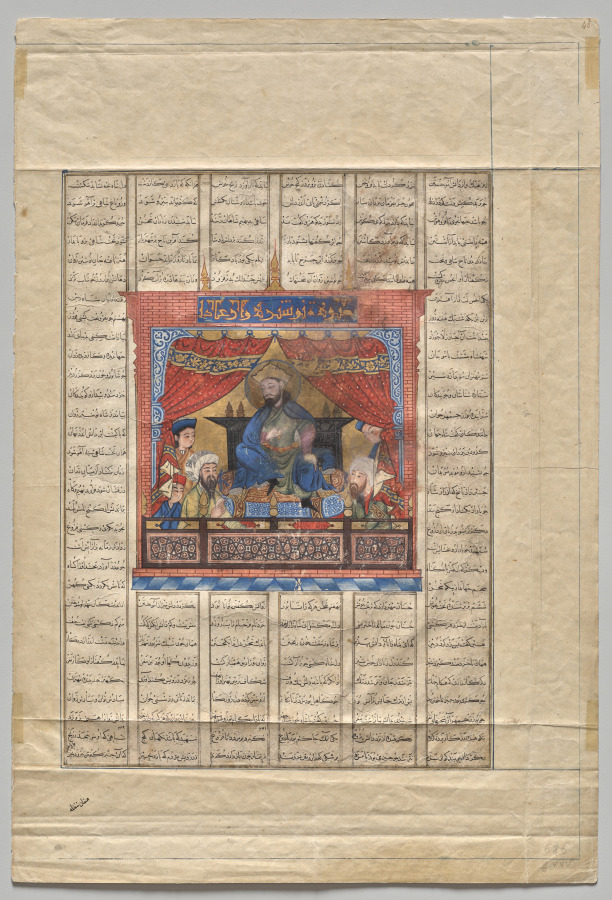
Portrait of Nushirwan the Just (verso) from a Shahnama (Book of Kings) of Firdausi (940–1019 or 1025)
Cleveland Museum of Art
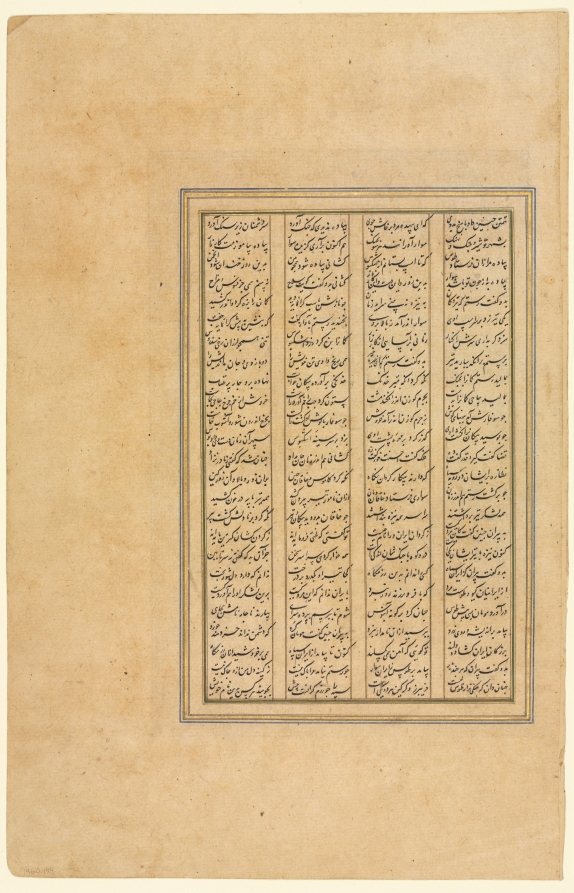
Page from a Shah-nama (Book of Kings) of Firdausi (Persian, about 934–1020)
Cleveland Museum of Art
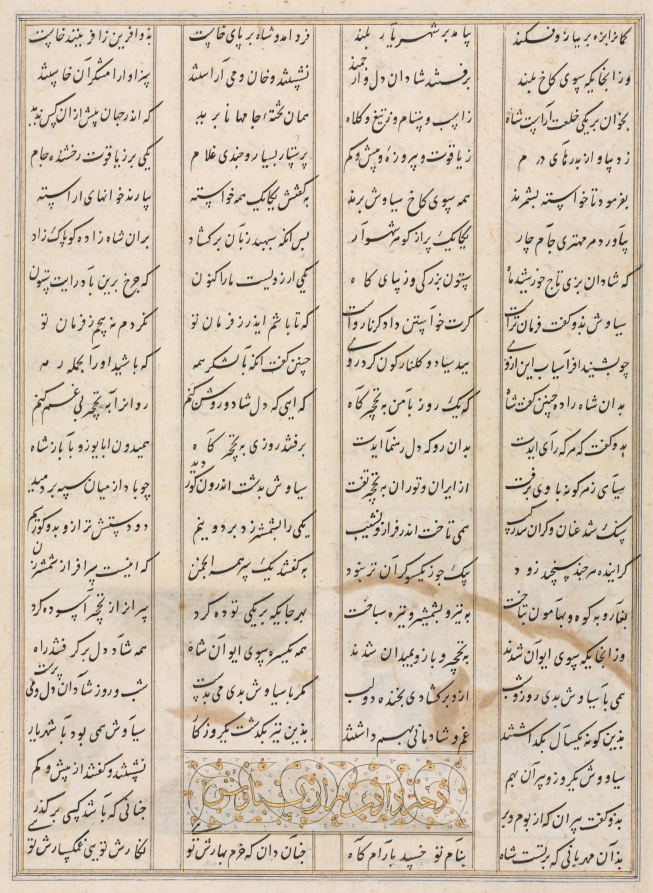
Persian verses (verso) from a Shahnama (Book of Kings) of Firdausi (940-1019 or 1025)
Cleveland Museum of Art
![Bahram Gur Visits the Princess of India in the Black Pavilion (recto): Illustration and Text, Persian Verses, from a manuscript of the Khamsa of Nizami, Haft Paykar [Seven Portraits]](https://openaccess-cdn.clevelandart.org/1944.486.a/1944.486.a_web.jpg)
Bahram Gur Visits the Princess of India in the Black Pavilion (recto): Illustration and Text, Persian Verses, from a manuscript of the Khamsa of Nizami, Haft Paykar [Seven Portraits]
Cleveland Museum of Art
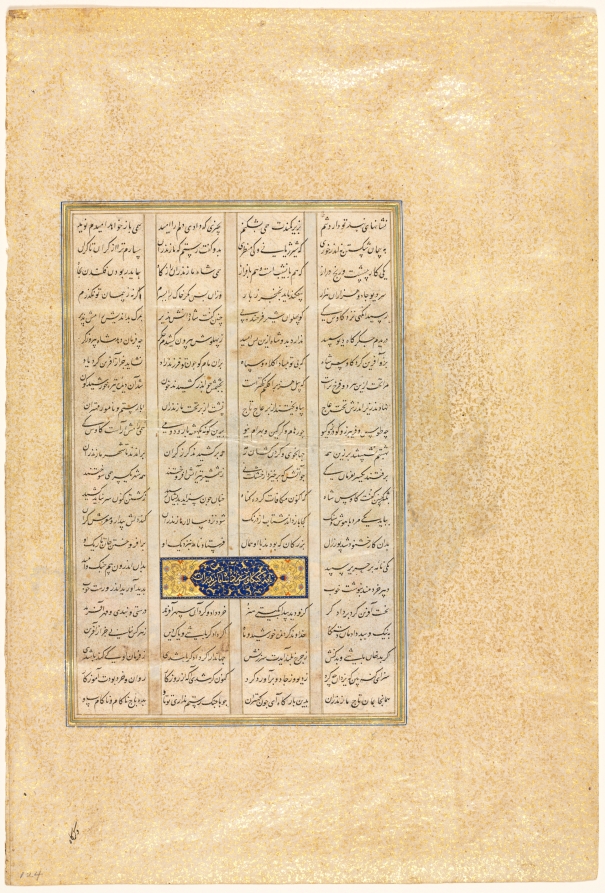
Page from a Shah-nama (Book of Kings) of Firdausi (Persian, about 934–1020)
Cleveland Museum of Art
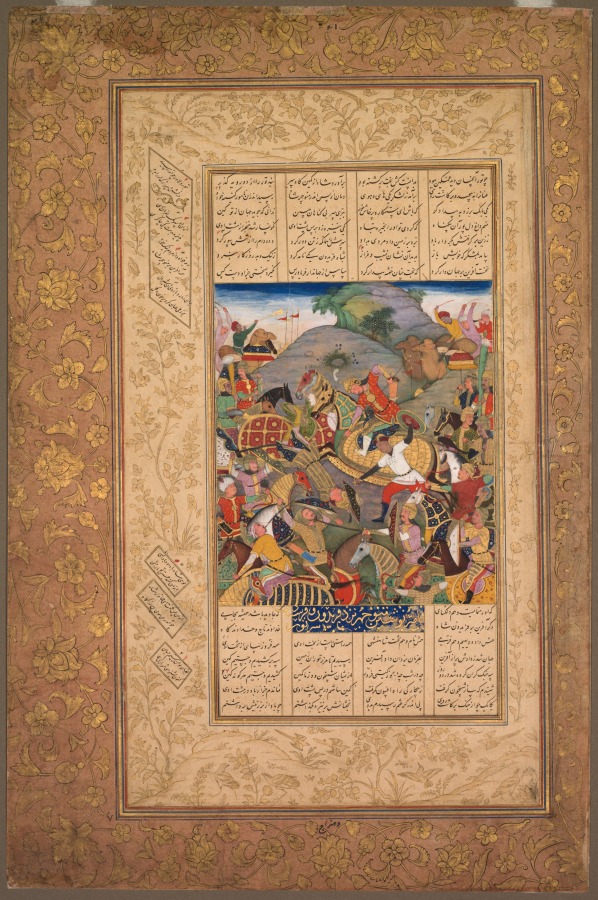
Battle between Manuchihr and Tur, from a Shah-nama (Book of Kings) of Firdausi (Persian, c. 934–1020)
Cleveland Museum of Art
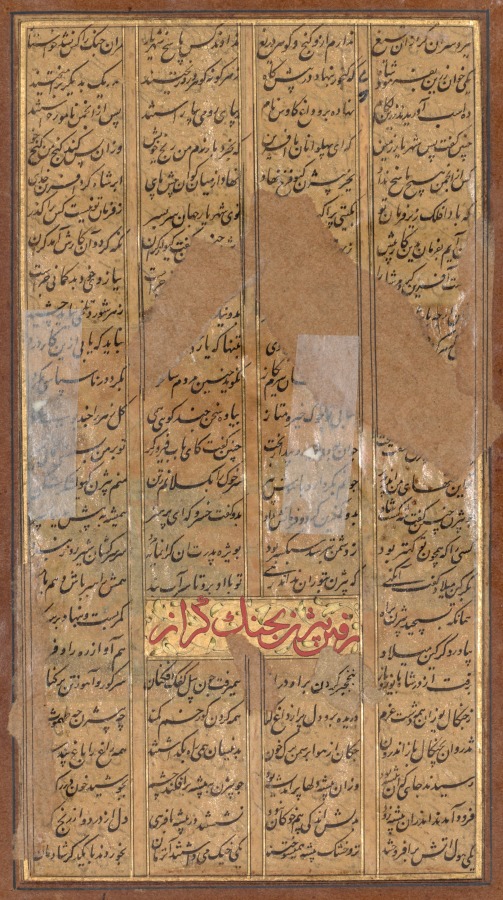
Bijan killing the wild boars of Irman, from a Shah-nama (Book of Kings) of Firdausi (Persian, about 934–1020), (recto)
Cleveland Museum of Art