Cleveland Museum of Art
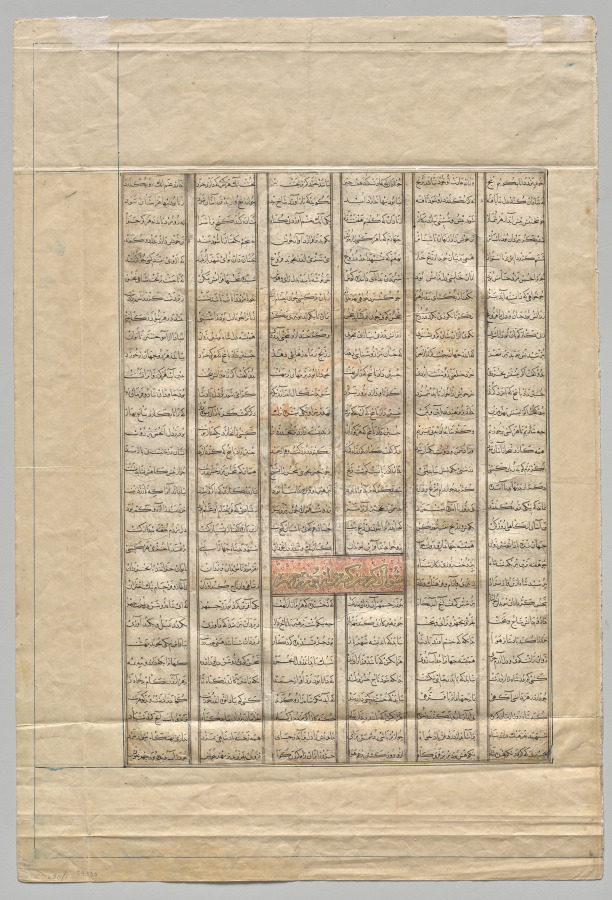
Persian Verses: The Fortieth Year of King Kisra Nushirwan's Reign and the Story of Buzurgmihr (recto) from a Shahnama (Book of Kings) of Firdausi (940–1019 or 1025)
- Date
- 1330–35
- Medium
- Ink and opaque watercolor on paper
- Culture
- Iran, Tabriz, Ilkhanid period (1256-1353)
- Department
- Islamic Art
- Institution
- Cleveland Museum of Art
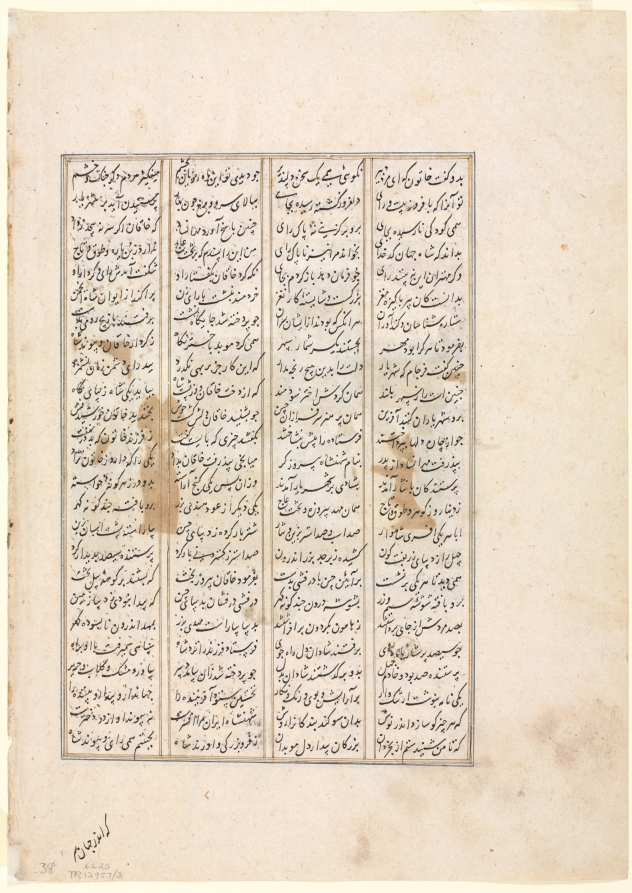
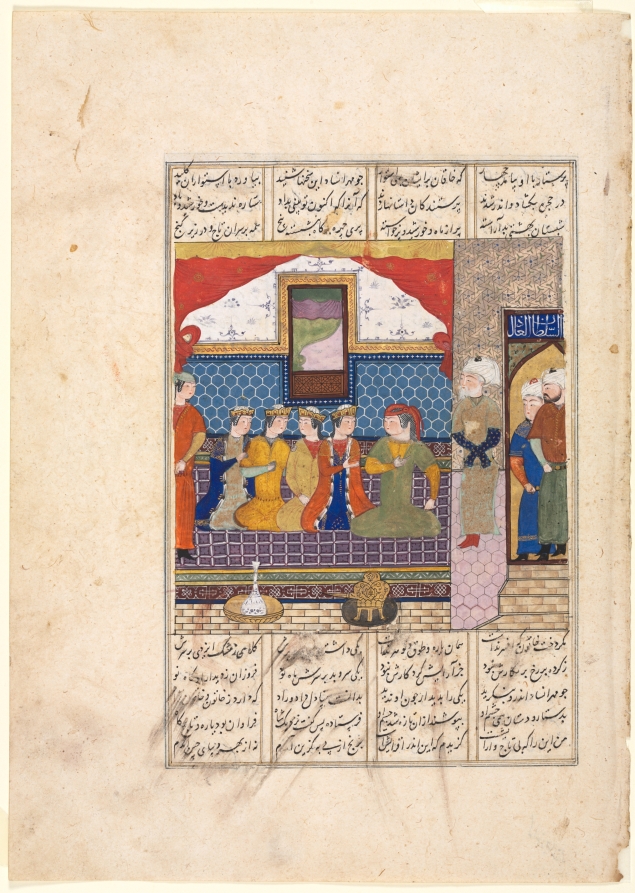
Mongol interest in the production of illustrated manuscripts eventually focused on Persian epic poetry. The Shahnama , a compilation of the epics and tales of Iran's legendary heroes, was a natural choice; the book included many subjects that suited Mongol taste, such as banquets, battles, hunting, and magical or fantastic events. The painting on the other side of this page is of the Sasanian ruler of Iran, Khusraw I Anushirwan (531–579), descendant of Bahram Gur. Above the king's head an inscription reads, "Picture of Nushirwan the Just." The figure in the elaborate turban to the left of the king is probably the young Minister Buzurgmihr, famous for his wisdom and virtue. To celebrate the explanation of a troublesome dream by Buzurgmihr, Nushirwan held a series of seven banquets. The text around this painting describes the fifth banquet. The Mongol rulers of Iran placed high value on illustrated manuscripts, especially histories, and established royal library-workshops.
The authoritative record is held by Cleveland Museum of Art. LinkedCulture surfaces this object and its connections; it does not alter institutional metadata.
Related across collections
Semantically similar works from Cleveland Museum of Art and other institutions.
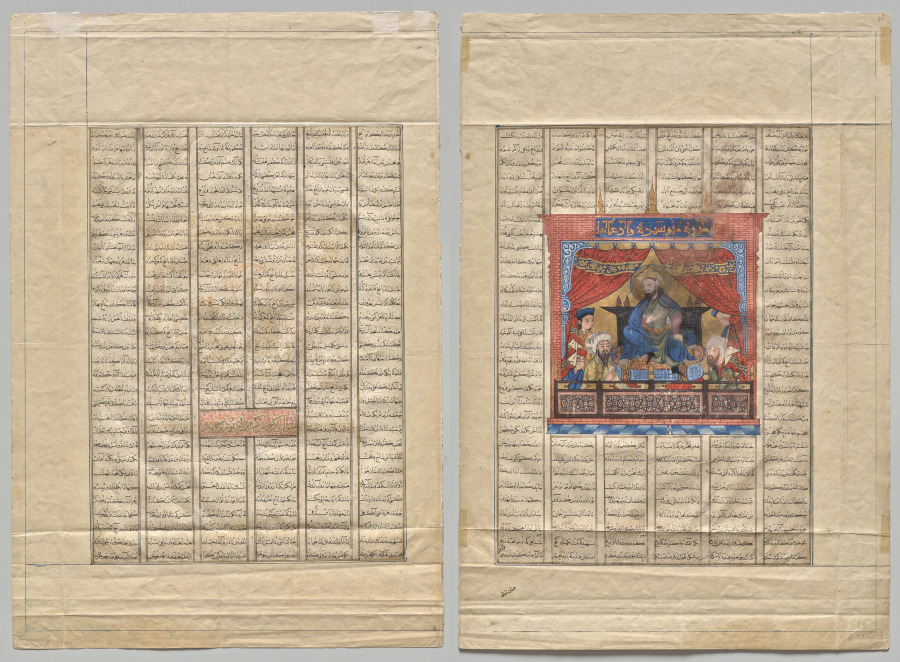
Persian Verses: The Fortieth Year of King Kisra Nushirwan's Reign and the Story of Buzurgmihr (recto); Portrait of Nushirwan the Just (verso) from a Shahnama (Book of Kings) of Firdausi (940–1019 or 1025)
Cleveland Museum of Art
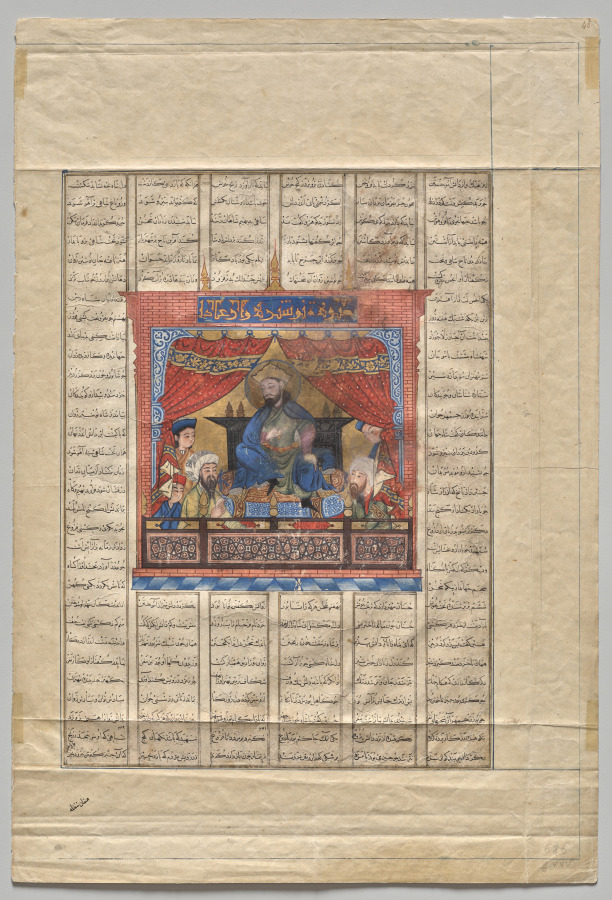
Portrait of Nushirwan the Just (verso) from a Shahnama (Book of Kings) of Firdausi (940–1019 or 1025)
Cleveland Museum of Art
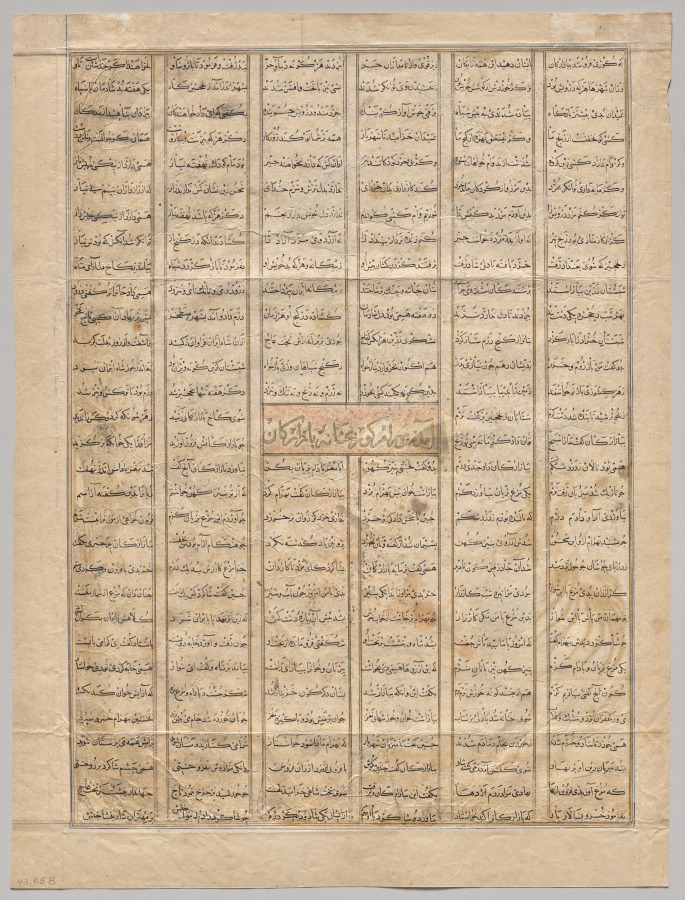
Bahram Gur Arrives at the House of a Merchant, text page (recto), from a Shahnama (Book of Kings) of Firdausi (940–1019 or 1025), known as the Great Mongol Shahnama
Cleveland Museum of Art
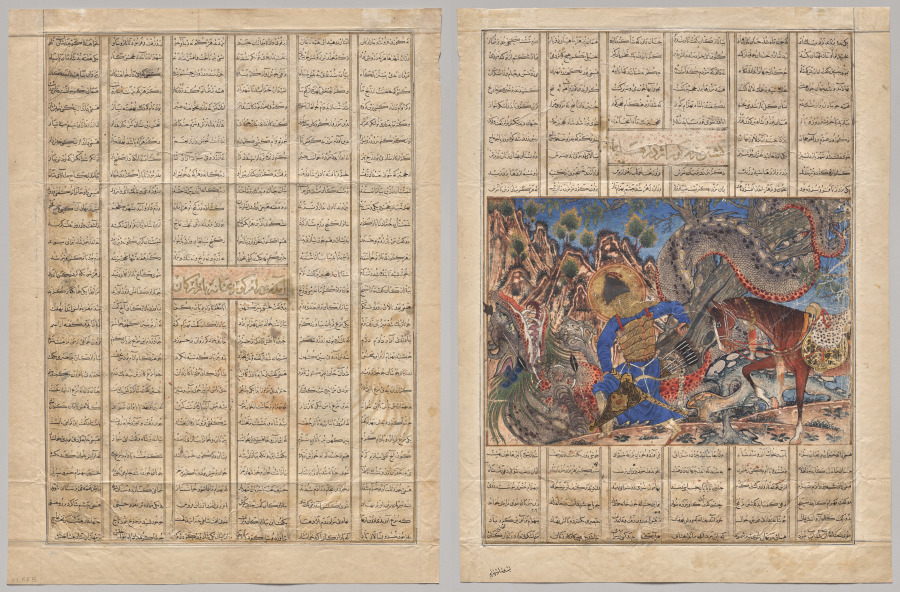
Bahram Gur Arrives at the House of a Merchant, text page (recto); Bahram Gur Slays a Dragon (verso), from a Shahnama (Book of Kings) of Firdausi (940–1019 or 1025), known as the Great Mongol Shahnama
Cleveland Museum of Art
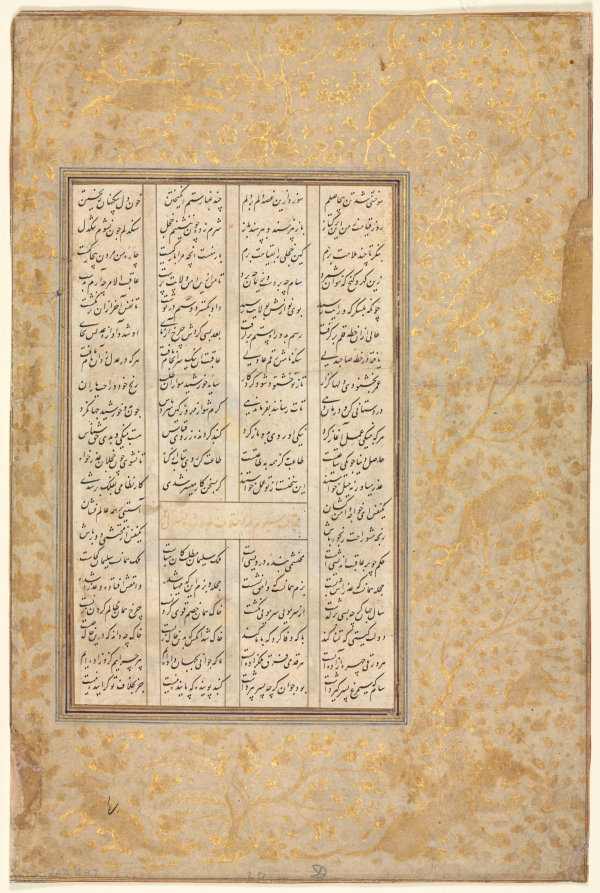
The Story of Nushirwan and his Minister, "The Third Discourse on Diverse Events and Disorder in Life" from a Khamsa (Quintet) of Nizami (1141–1209) (verso)
Cleveland Museum of Art
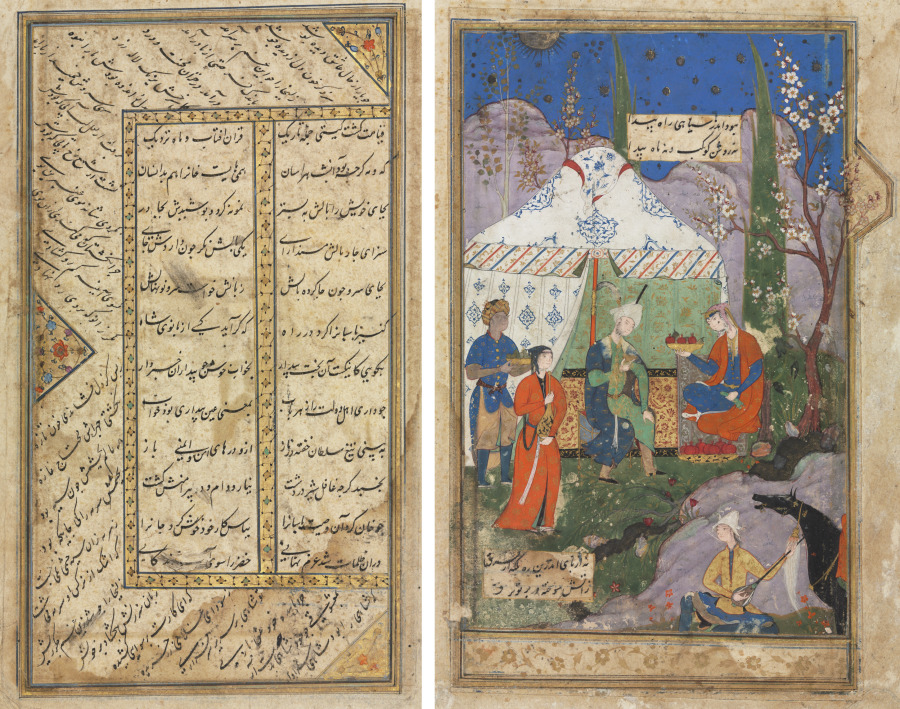
An Episode from the Story of the Sasanian King Khusrau and His Beloved Shirin, from a Khamsa (Quintet) of Nizami (1141–1209) (verso); Persian verses from a Haft Awrang (Seven Thrones) of Jami (d. 1492) (recto)
Cleveland Museum of Art
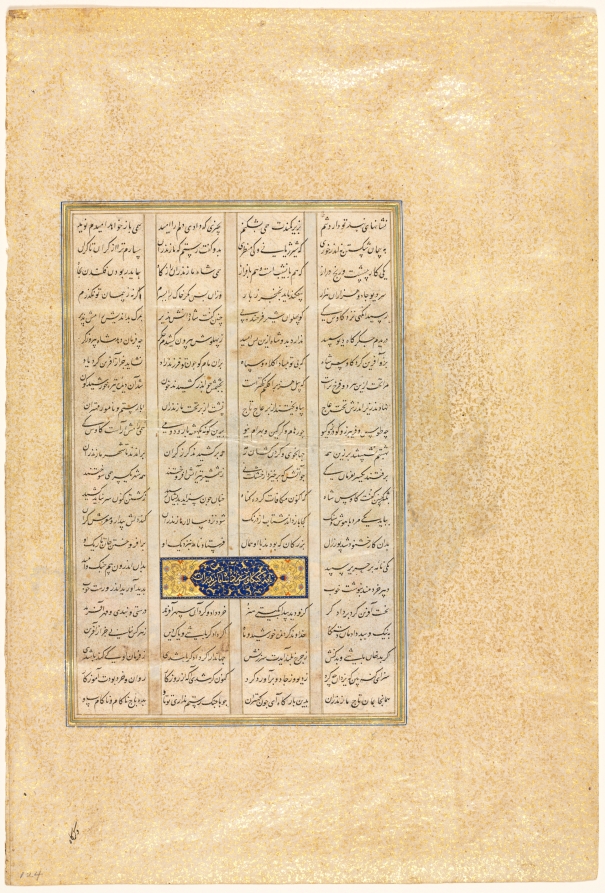
Page from a Shah-nama (Book of Kings) of Firdausi (Persian, about 934–1020)
Cleveland Museum of Art
The Forty-Eighth Year of Nushirwan's Reign: the Combat of the Khaqan of China with the Haithalians (verso) from a Shahnama (Book of Kings) of Firdausi (940–1019 or 1025)
Cleveland Museum of Art
Nushirwan Sends Mihran Sitad to Fetch the Daughter of the King of China (recto) from a Shahnama (Book of Kings) of Firdausi (940–1019 or 1025)
Cleveland Museum of Art
An Episode from the Story of the Sasanian King Khusrau and His Beloved Shirin, from a Khamsa (Quintet) of Nizami (1141–1209) (verso)
Cleveland Museum of Art
![Nushirwan Listens to the Owls (recto): Illustration and Text, Persian Verses, from a Manuscript of the Khamsa of Nizami, Makhzan al-Asrar [Treasure of Secrets]](https://openaccess-cdn.clevelandart.org/1944.487.a/1944.487.a_web.jpg)
Nushirwan Listens to the Owls (recto): Illustration and Text, Persian Verses, from a Manuscript of the Khamsa of Nizami, Makhzan al-Asrar [Treasure of Secrets]
Cleveland Museum of Art
Nushirwan Listens to the Owls (recto); the Story of Nushirwan and his Minister, "The Third Discourse on Diverse Events and Disorder in Life" (verso) from a Khamsa (Quintet) of Nizami (1141–1209)
Cleveland Museum of Art