Cleveland Museum of Art
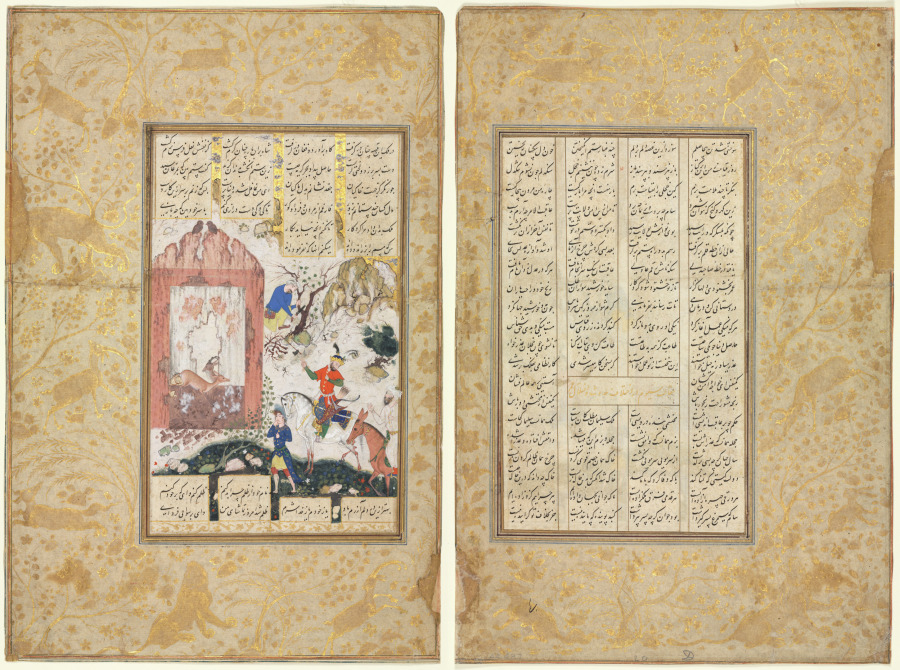
Nushirwan Listens to the Owls (recto); the Story of Nushirwan and his Minister, "The Third Discourse on Diverse Events and Disorder in Life" (verso) from a Khamsa (Quintet) of Nizami (1141–1209)
- Date
- 1555–65
- Medium
- opaque watercolor, ink, and gold on paper
- Culture
- Iran, Qazvin, Safavid period (1501-1722)
- Department
- Islamic Art
- Institution
- Cleveland Museum of Art
This scene is from the Makhzan al-Ashrar, the first of the Quintet. Although more historically oriented than the following poems, it served more as a vehicle for moralizing tales than for historical events. In this scene Nushirwan asks the sage Buzurgmihr to explain what the owls perched on a ruined building are saying. He explains that one owl is offering the other as many ruined cities as he likes in exchange for his daughter's hand. He thus reproves Nushirwan for his love of conquest and war and the consequent destruction of many cities. King Nushirwan is on a white horse, while his minister Buzurjmihr is riding a mule.
The authoritative record is held by Cleveland Museum of Art. LinkedCulture surfaces this object and its connections; it does not alter institutional metadata.
Related across collections
Semantically similar works from Cleveland Museum of Art and other institutions.
![Nushirwan Listens to the Owls (recto): Illustration and Text, Persian Verses, from a Manuscript of the Khamsa of Nizami, Makhzan al-Asrar [Treasure of Secrets]](https://openaccess-cdn.clevelandart.org/1944.487.a/1944.487.a_web.jpg)
Nushirwan Listens to the Owls (recto): Illustration and Text, Persian Verses, from a Manuscript of the Khamsa of Nizami, Makhzan al-Asrar [Treasure of Secrets]
Cleveland Museum of Art
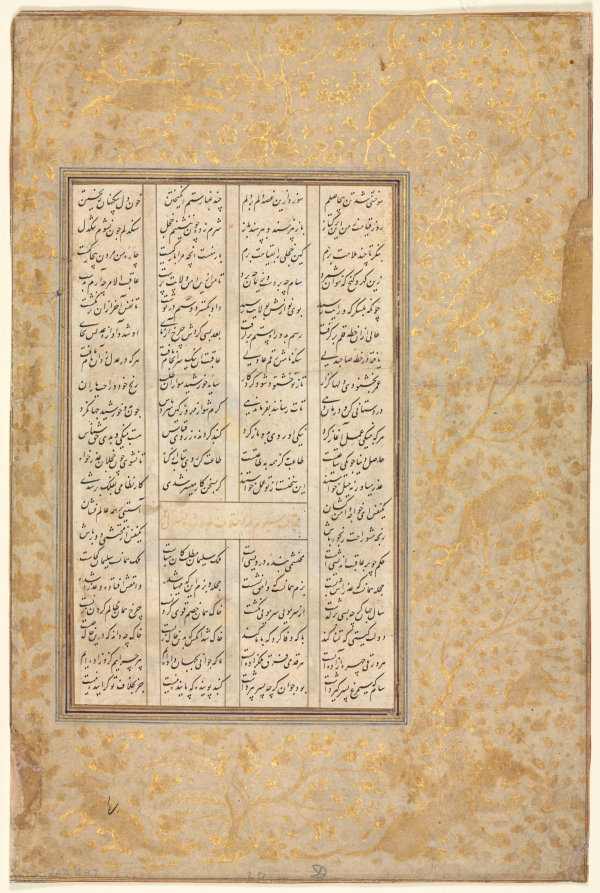
The Story of Nushirwan and his Minister, "The Third Discourse on Diverse Events and Disorder in Life" from a Khamsa (Quintet) of Nizami (1141–1209) (verso)
Cleveland Museum of Art
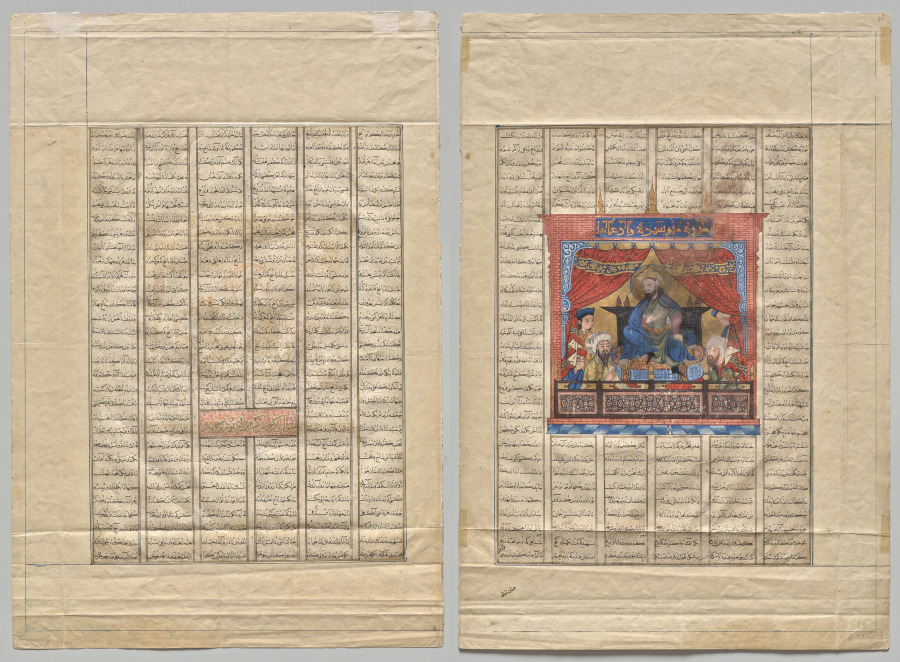
Persian Verses: The Fortieth Year of King Kisra Nushirwan's Reign and the Story of Buzurgmihr (recto); Portrait of Nushirwan the Just (verso) from a Shahnama (Book of Kings) of Firdausi (940–1019 or 1025)
Cleveland Museum of Art
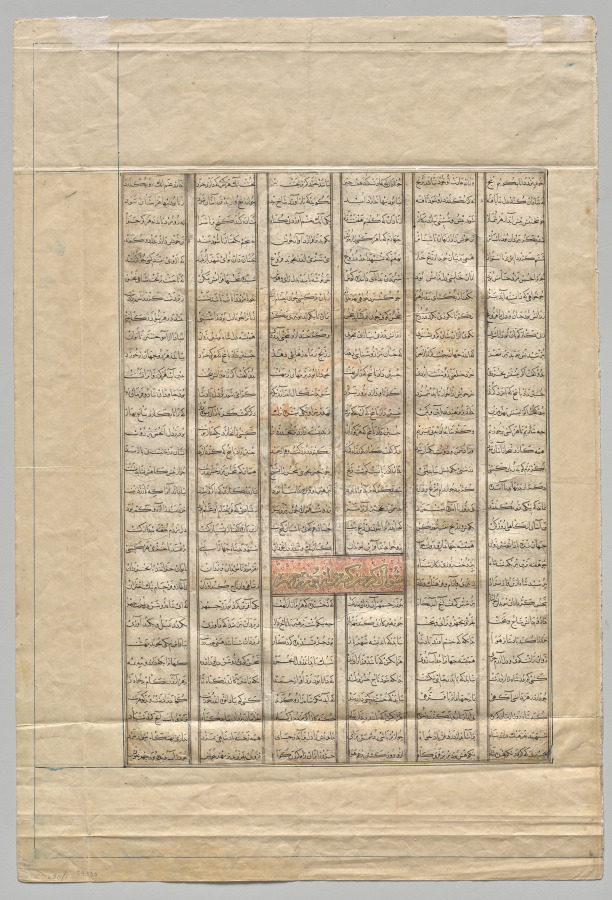
Persian Verses: The Fortieth Year of King Kisra Nushirwan's Reign and the Story of Buzurgmihr (recto) from a Shahnama (Book of Kings) of Firdausi (940–1019 or 1025)
Cleveland Museum of Art
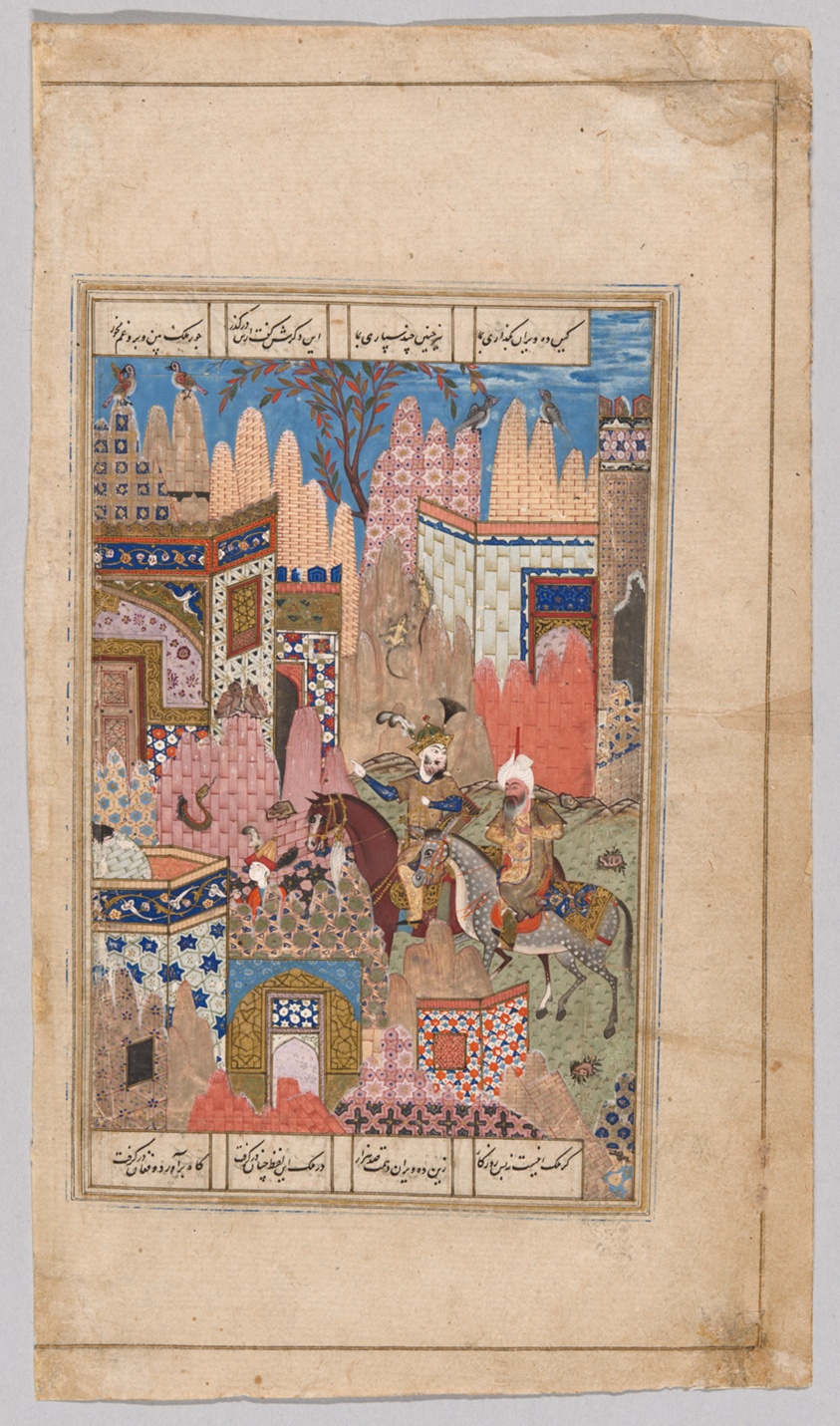
King Anushirwan and the Owls, from the Khamsa of Nizami
Art Institute of Chicago
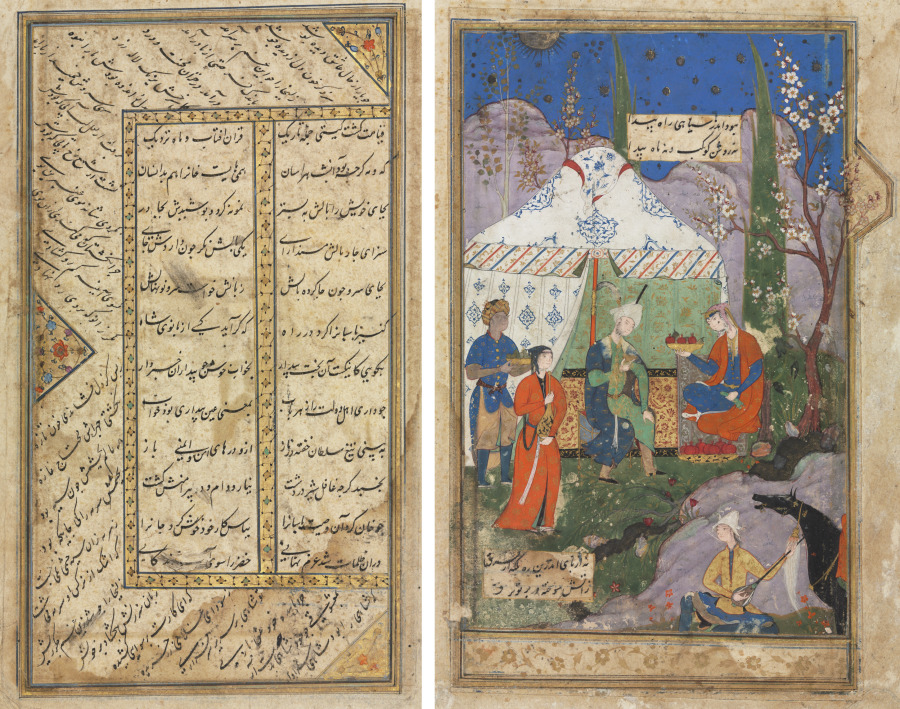
An Episode from the Story of the Sasanian King Khusrau and His Beloved Shirin, from a Khamsa (Quintet) of Nizami (1141–1209) (verso); Persian verses from a Haft Awrang (Seven Thrones) of Jami (d. 1492) (recto)
Cleveland Museum of Art
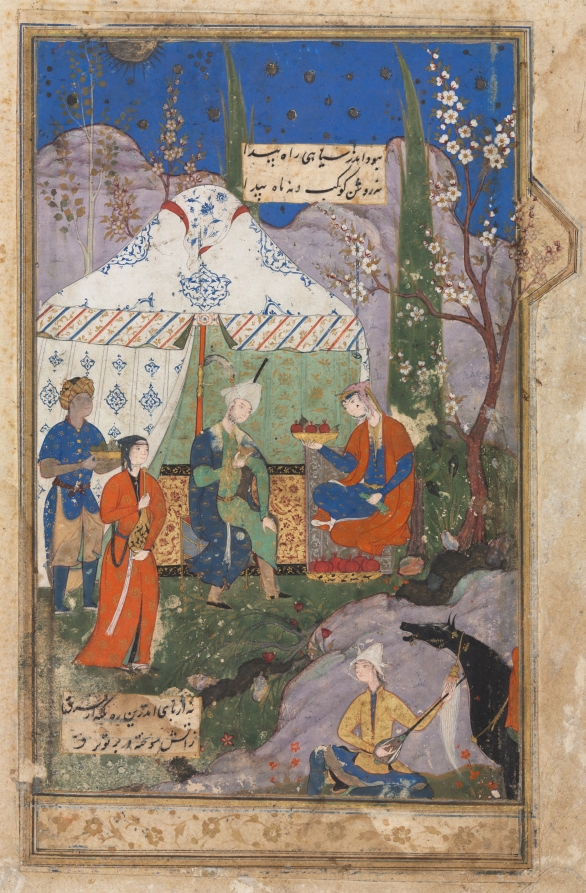
An Episode from the Story of the Sasanian King Khusrau and His Beloved Shirin, from a Khamsa (Quintet) of Nizami (1141–1209) (verso)
Cleveland Museum of Art

Khusrau Subduing a Lion
Minneapolis Institute of Art
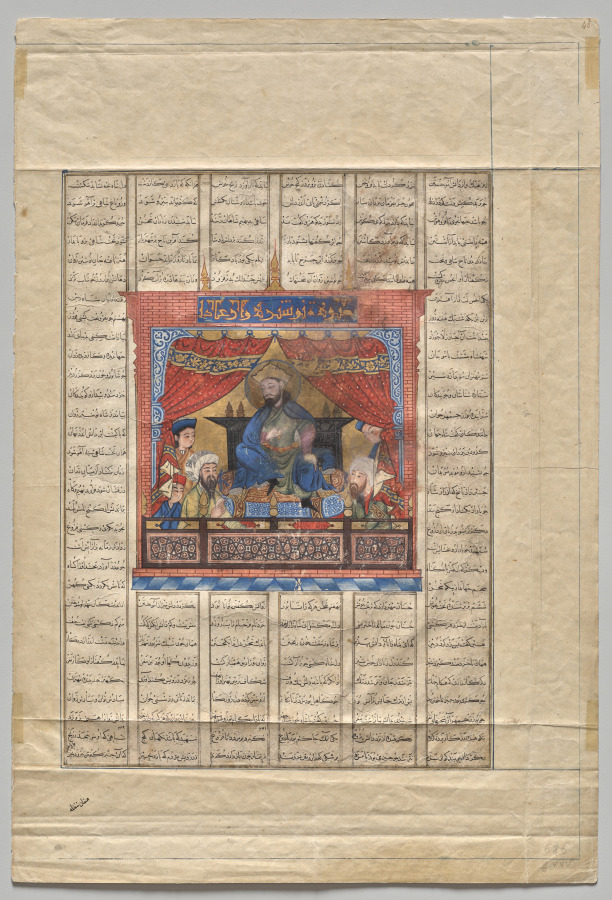
Portrait of Nushirwan the Just (verso) from a Shahnama (Book of Kings) of Firdausi (940–1019 or 1025)
Cleveland Museum of Art
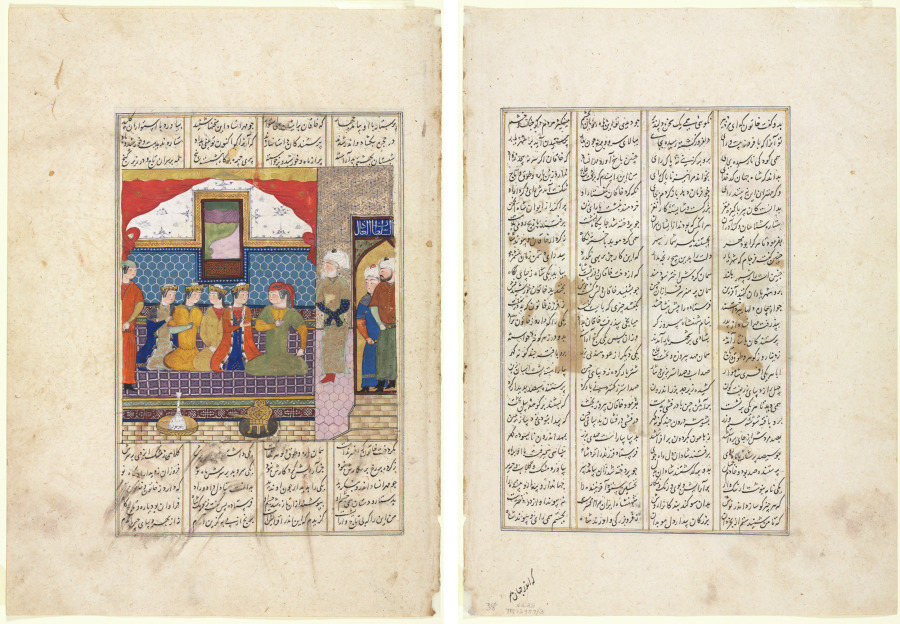
Nushirwan Sends Mihran Sitad to Fetch the Daughter of the King of China (Recto); The Forty-Eighth Year of Nushirwan's Reign. The Combat of the Khaqan of China with the Haithalians (Verso)
Cleveland Museum of Art
![Bahram Gur Visits the Princess of India in the Black Pavilion (recto): Illustration and Text, Persian Verses, from a manuscript of the Khamsa of Nizami, Haft Paykar [Seven Portraits]](https://openaccess-cdn.clevelandart.org/1944.486.a/1944.486.a_web.jpg)
Bahram Gur Visits the Princess of India in the Black Pavilion (recto): Illustration and Text, Persian Verses, from a manuscript of the Khamsa of Nizami, Haft Paykar [Seven Portraits]
Cleveland Museum of Art
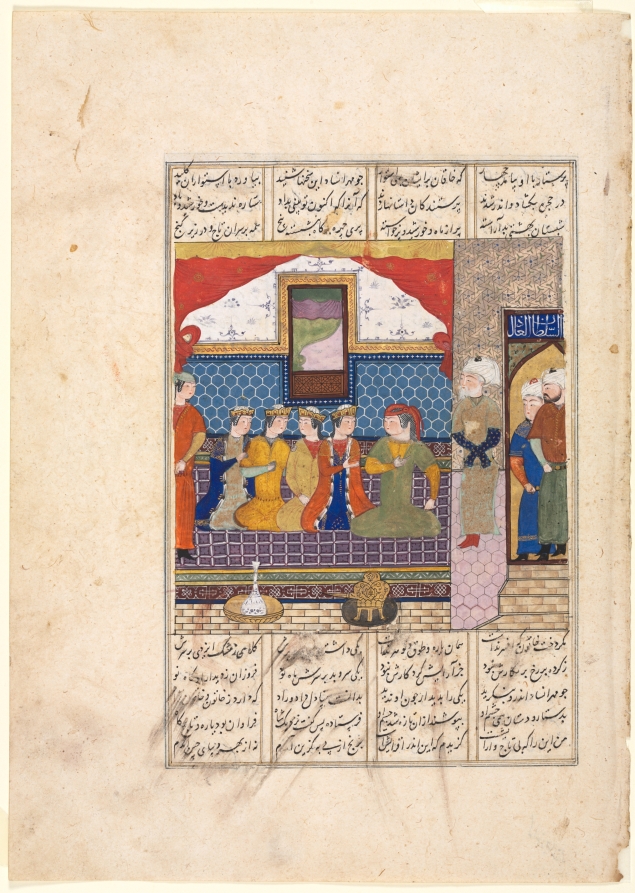
Nushirwan Sends Mihran Sitad to Fetch the Daughter of the King of China (recto) from a Shahnama (Book of Kings) of Firdausi (940–1019 or 1025)
Cleveland Museum of Art