Cleveland Museum of Art
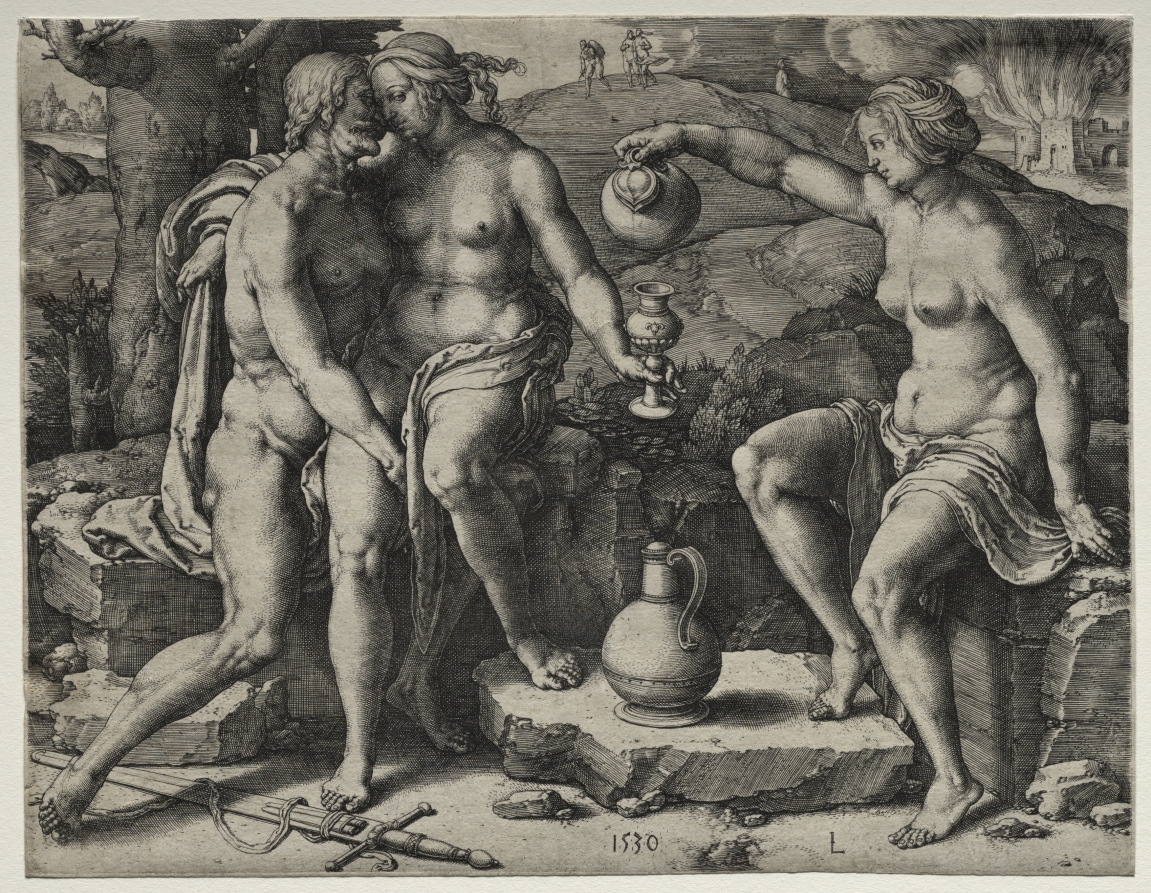
Lot and His Daughters
Lucas van LeydenLinkedCulture matchlcp-0101cd592d86
- Date
- 1530
- Medium
- engraving
- Culture
- Netherlands, 16th century
- Department
- Prints
- Institution
- Cleveland Museum of Art
- Object ID
- 123730
What the image shows
Three nude figures interact near a stone structure with pottery.
Generated by LinkedCulture from the photograph alone, without the museum’s catalogue text (Qwen/Qwen2.5-VL-7B-Instruct), and not yet reviewed by a person. It describes the picture, not the object’s history, and it is not part of the museum’s record.
From the Cleveland Museum of Art record
Few Old Testament stories are more morally charged than that of Lot and his daughters. After fleeing the city of Sodom, Lot’s wife disobeyed God and looked back at the city and was turned into a pillar of salt. Believing that they were the last humans on earth, Lot’s two daughters conspired to intoxicate their father with wine to conceive children with him. Lucas van Leyden’s interpretation takes license with the episode’s moral impropriety, doubling down on its erotic content by showing the daughters as naked temptresses and Lot, much younger than described, overwhelmed with desire. The middle ground of this image depicts Lot leaving behind the salt-pillar figure of his wife with his two daughters trailing behind him. The nakedness of the figures and Lot's dejected posture echo representations of Adam and Eve being expelled from paradise.
The authoritative record is held by Cleveland Museum of Art. LinkedCulture surfaces this object and its connections; it does not alter institutional metadata.
Get printable QR codesHide QR codes
Open QR codes for this object page and the museum record. They stay collapsed until needed.
Provenance & credit
As published by the source institution. Coverage varies — not every institution's open-data feed includes ownership history.
- Credit line
- Mr. and Mrs. Lewis B. Williams Collection
- Provenance
- (M. Knoedler & Co.)
Related across collections
Semantically similar works from Cleveland Museum of Art and other institutions.