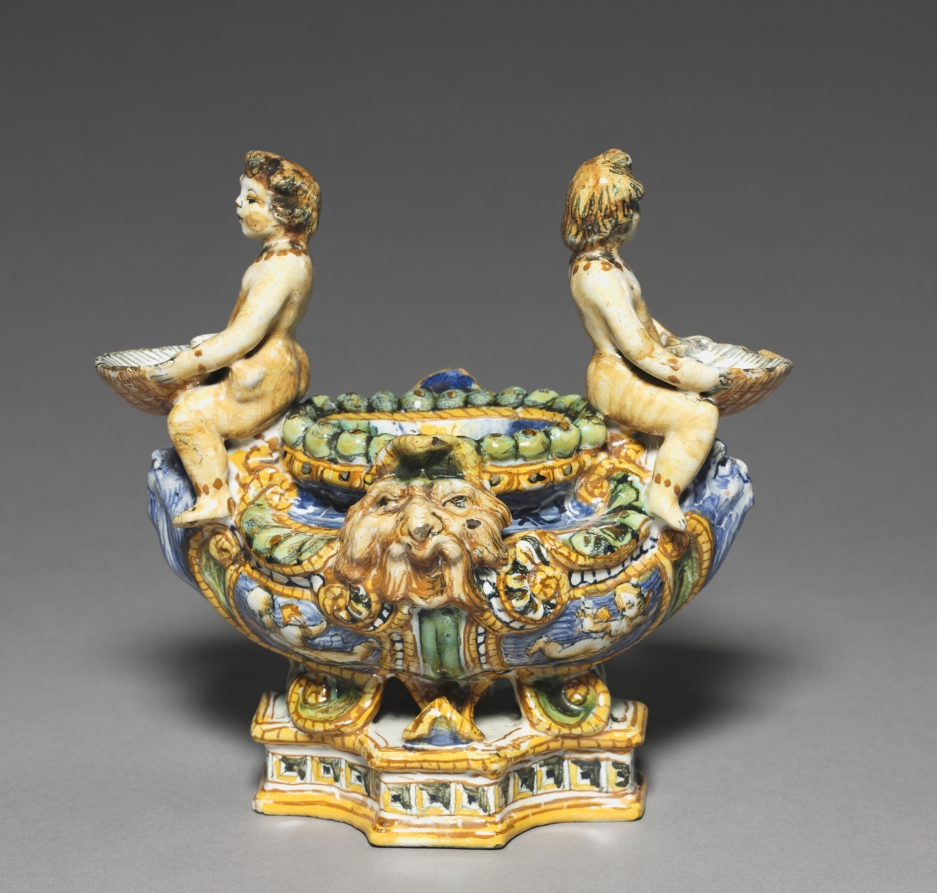
Cleveland Museum of Art
Saltcellar
the Patanazzi Family
- Date
- c. 1570–90
- Medium
- tin-glazed earthenware (maiolica)
- Culture
- Italy, Urbino, 16th century
- Department
- Decorative Art and Design
- Institution
- Cleveland Museum of Art
During the Italian Renaissance of the 1400s and 1500s, nobles and merchants eager to express their wealth and sophistication ordered ceramics for dining, display, and storage. Known as maiolica, because it resembled the brightly colored ceramics from the Mediterranean island of Majorca, these ceramic vessels were covered with a tin glaze that provided an opaque white surface on which colorful decoration could be painted. During the Renaissance, salt was an expensive commodity and was used to both season and preserve food.
The authoritative record is held by Cleveland Museum of Art. LinkedCulture surfaces this object and its connections; it does not alter institutional metadata.
Related across collections
Semantically similar works from Cleveland Museum of Art and other institutions.
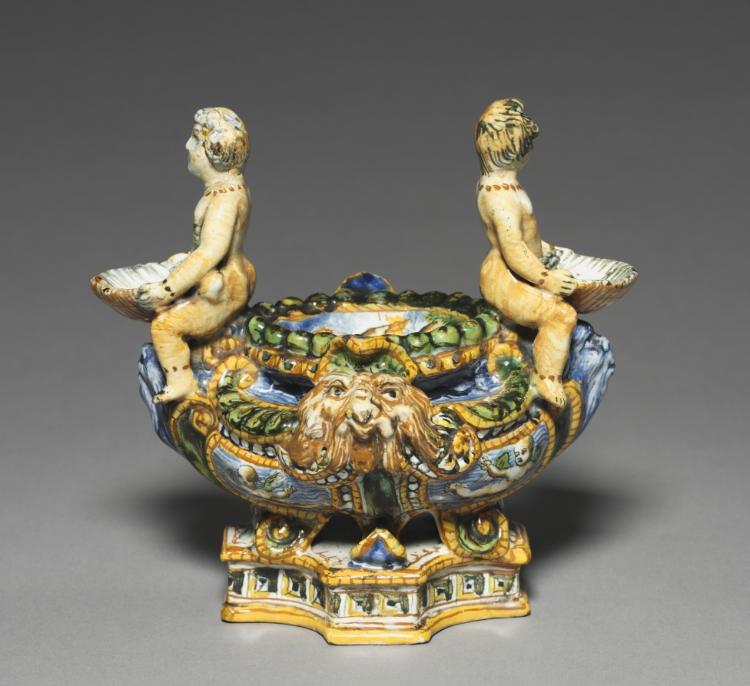
Saltcellar
Cleveland Museum of Art
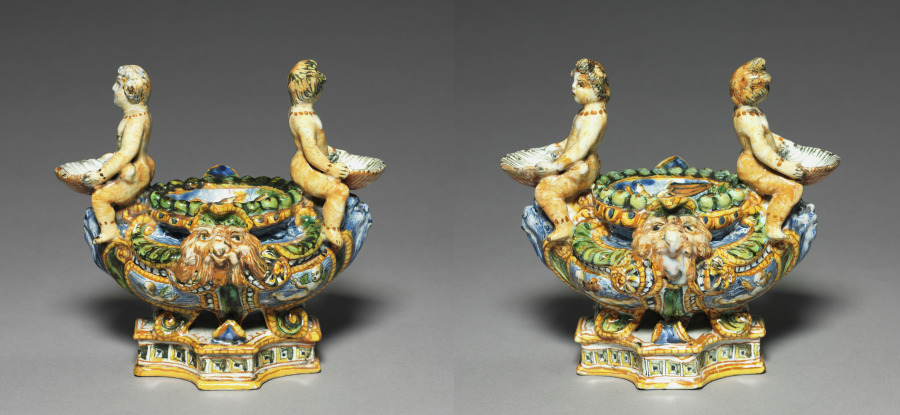
Pair of Saltcellars
Cleveland Museum of Art
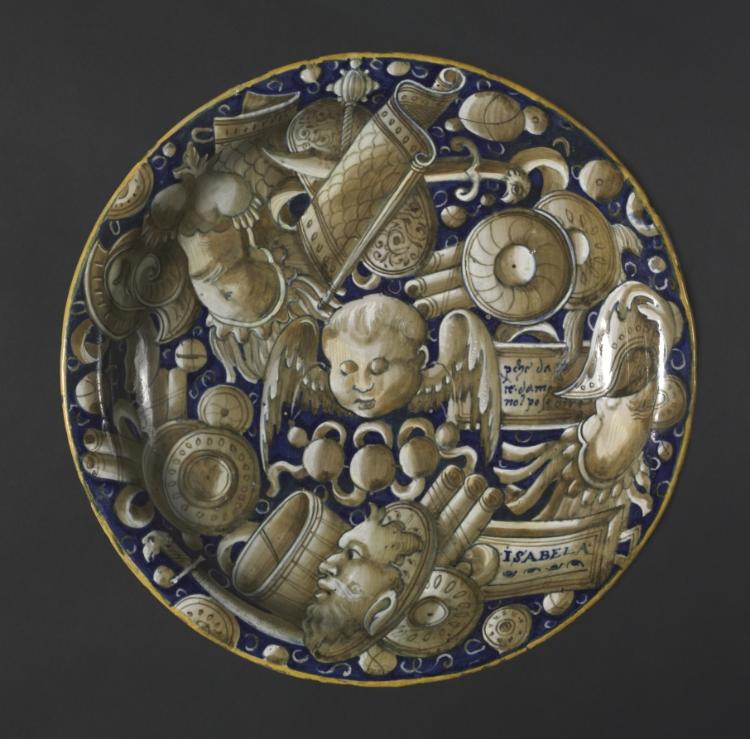
Plate with Putto, Masques, and Trophies
Cleveland Museum of Art
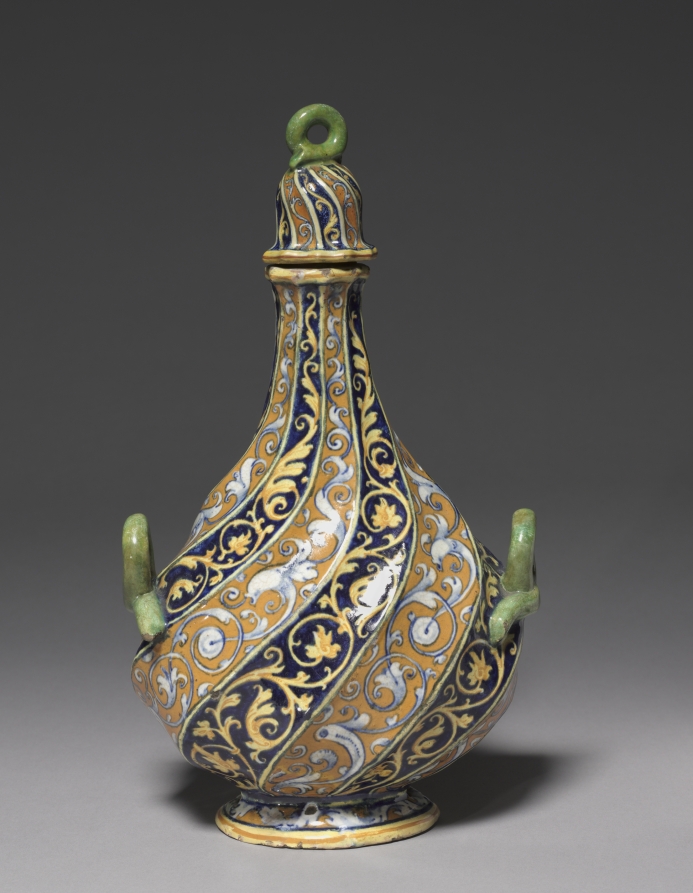
Pilgrim Bottle
Cleveland Museum of Art
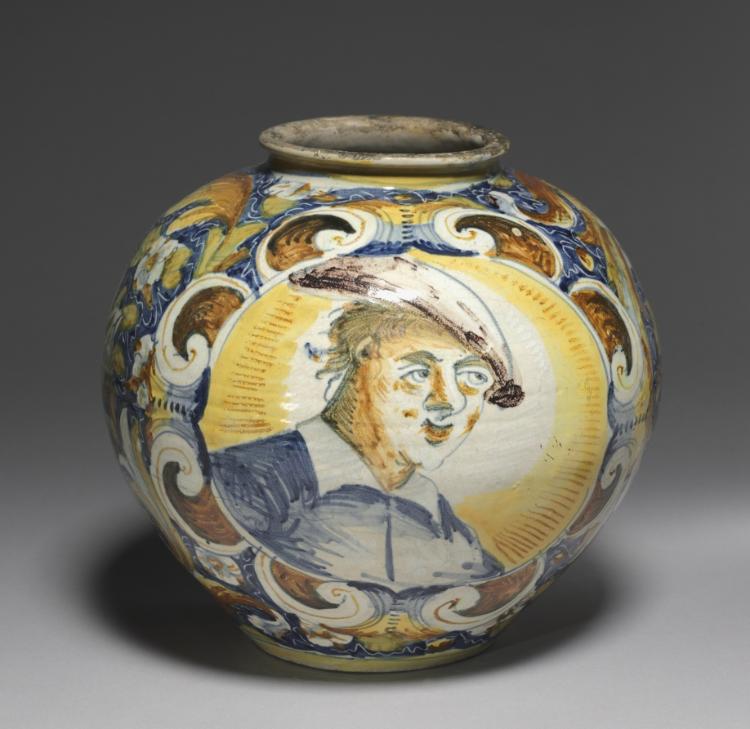
Storage Jar (Vaso a Palla)
Cleveland Museum of Art
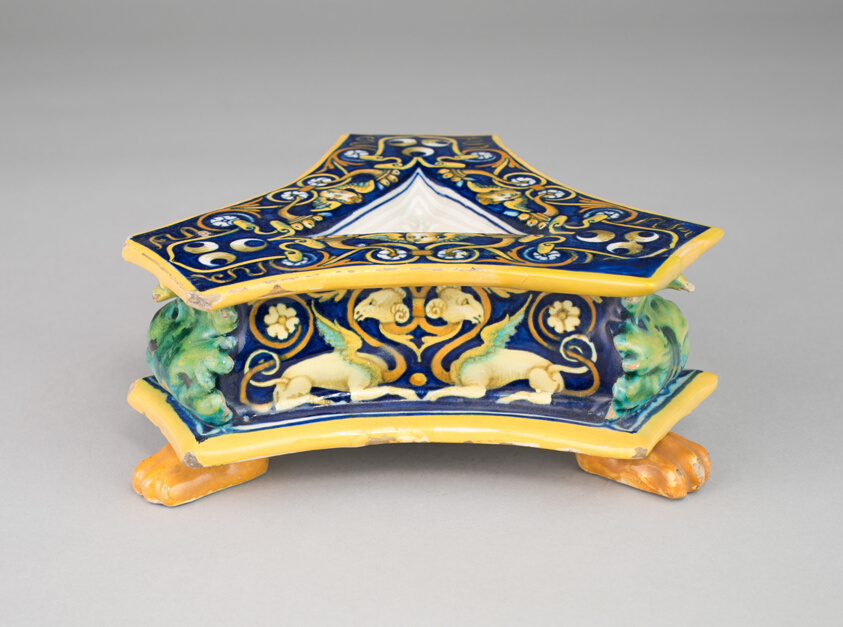
Salt Cellar
Art Institute of Chicago
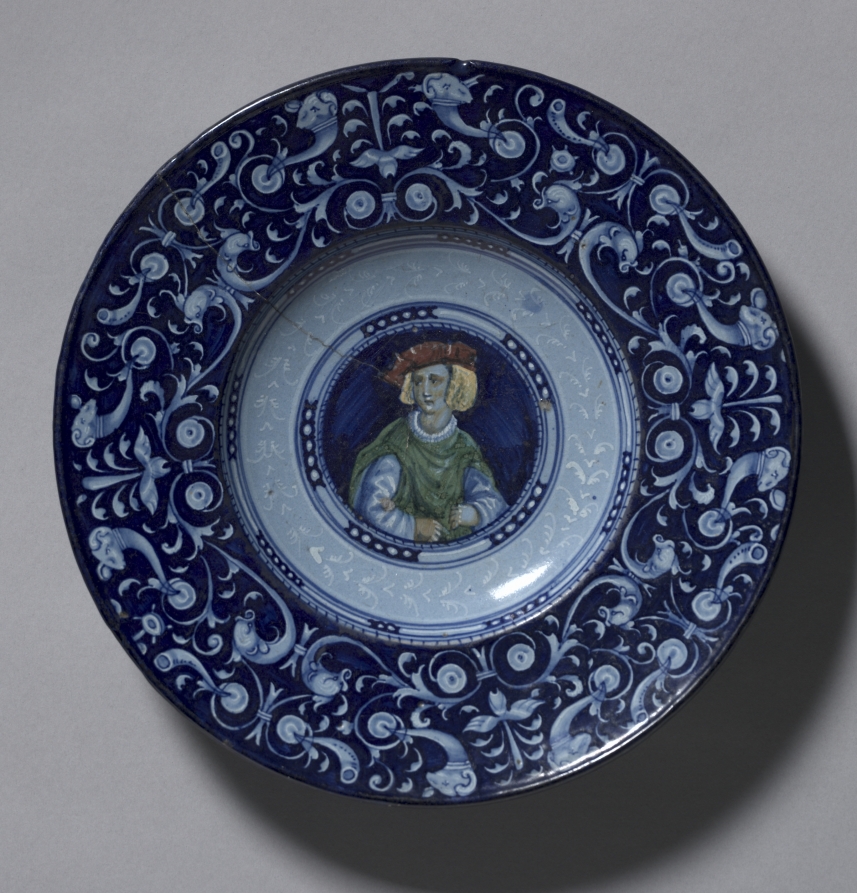
Plate with a Portrait of a Gentleman
Cleveland Museum of Art

Wine Cistern
Art Institute of Chicago

Basin with Hercules and Cacus
Minneapolis Institute of Art
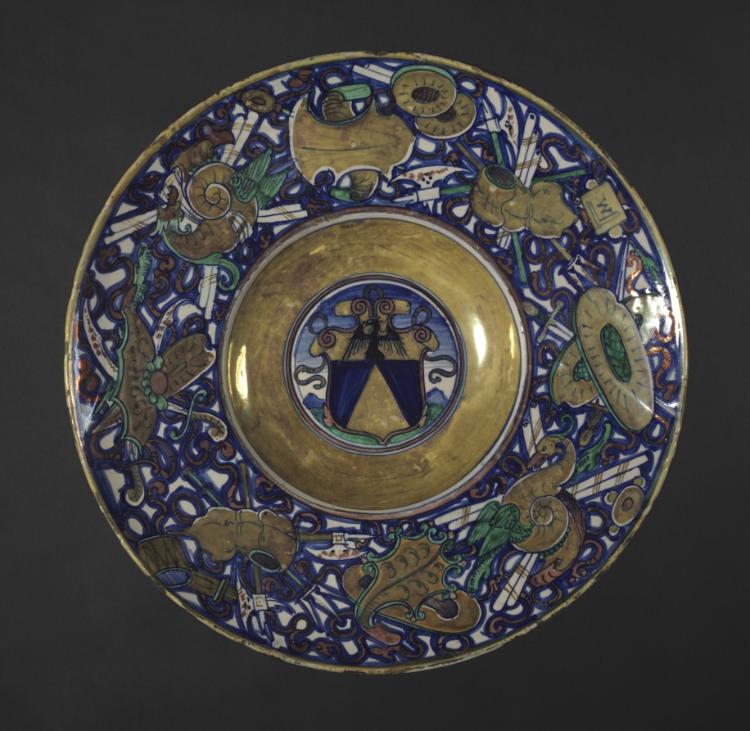
Charger with Arms of the Vigeri Family
Cleveland Museum of Art
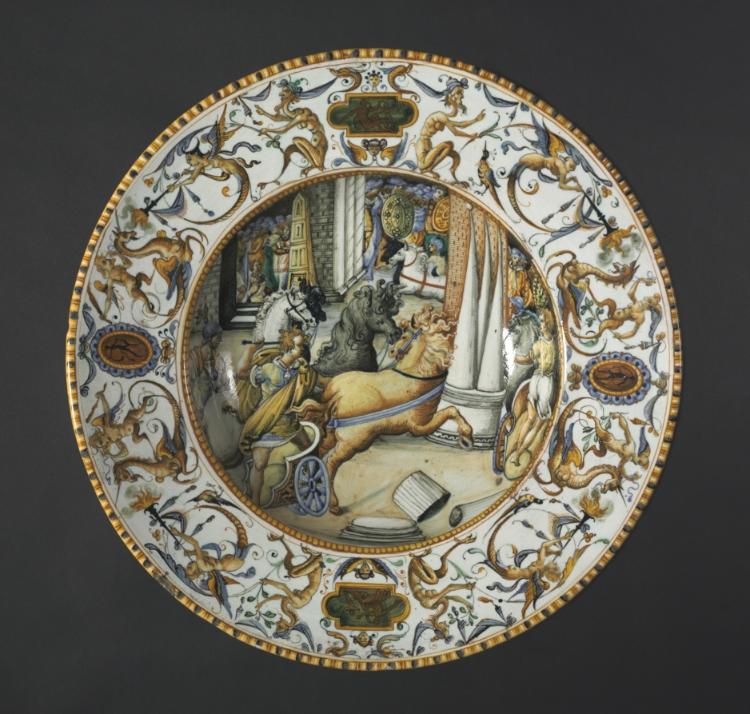
Charger Depicting a Chariot Race
Cleveland Museum of Art
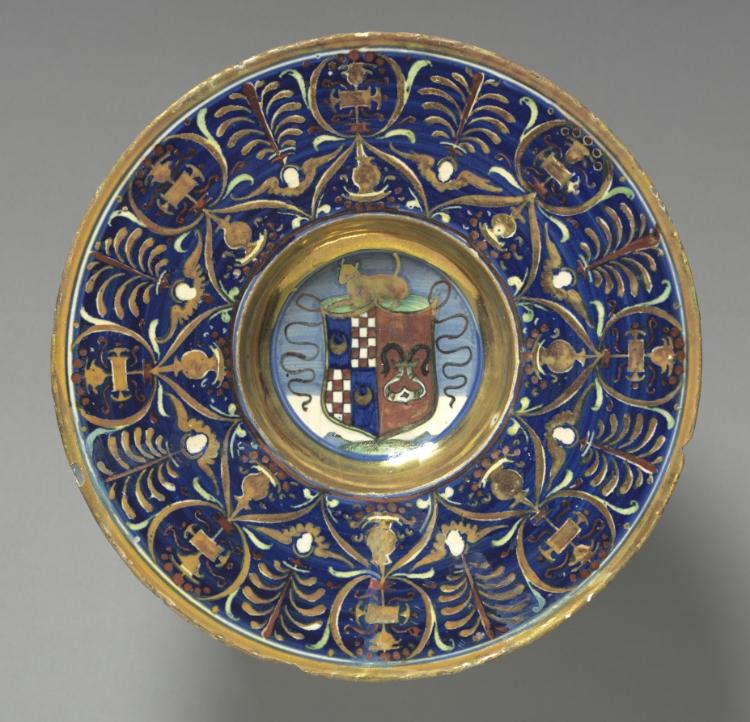
Plate with Arms of the Vitelleschi Family
Cleveland Museum of Art