Cleveland Museum of Art
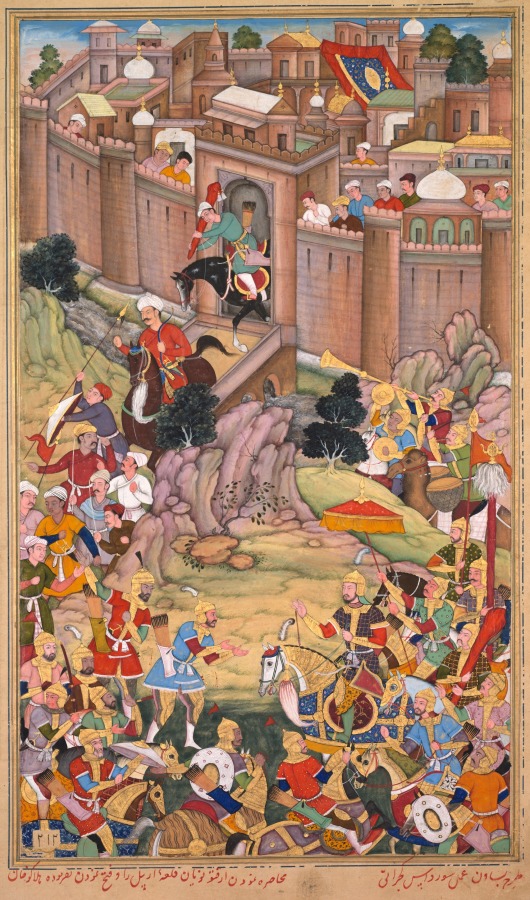
The siege of Arbela in the era of Hulagu Khan, page from a Chingiz-nama (Book of Chingiz Khan) of the Jami al-tavarikh (Compendium of Chronicles) of Rashid al-Din (Persian,1247–1318)
Sur Das
- Date
- c. 1596
- Medium
- Gum tempera and gold on paper
- Culture
- Mughal India, court of Akbar (reigned 1556–1605)
- Department
- Indian and Southeast Asian Art
- Institution
- Cleveland Museum of Art
A Mongol conqueror riding a white horse gazes stonily at his defeated West Asian opponent in a scene that took place more than 300 years before this painting was made. By the end of the 1500s there was a new emphasis on creating paintings to accompany historical texts. Visually, the diagonal composition with cityscape at the top of the page—also found among the earliest Mughal paintings—was expanded to include throngs of participants and a startling new naturalism. Painting from the Akbar period reached its maturity by the 1590s in works such as this: dynamic in composition and gestures but contained within organized spaces and emphasized three-dimensionality. This fortified city in the heart of Kurdistan, now called Irbil, is in Iraq.
The authoritative record is held by Cleveland Museum of Art. LinkedCulture surfaces this object and its connections; it does not alter institutional metadata.
Related across collections
Semantically similar works from Cleveland Museum of Art and other institutions.
The siege of Arbela in the era of Hulagu Khan, from a Chingiz-nama (Book of Chingiz Khan) of the Jami al-tavarikh (Compendium of Chronicles) of Rashid al-Din (Persian, 1247–1318)
Cleveland Museum of Art
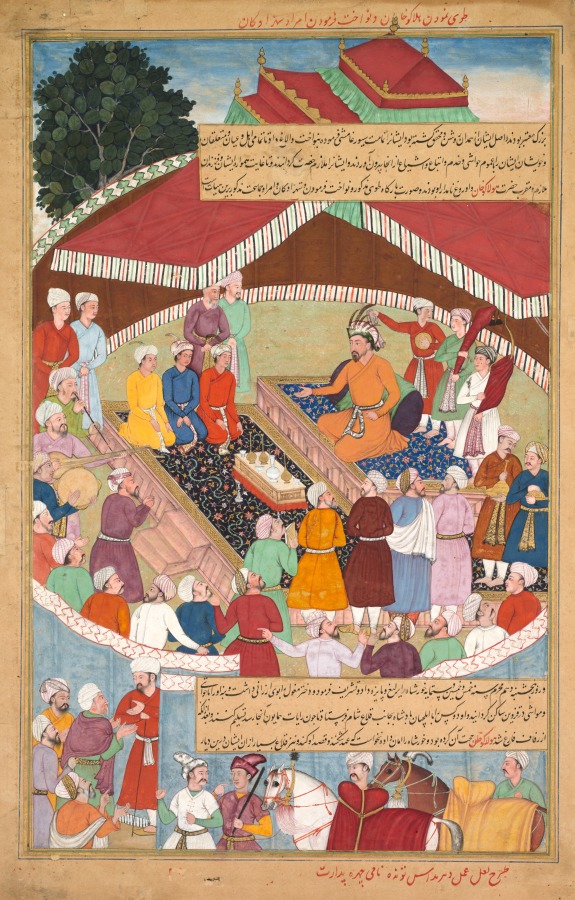
Hulagu Khan giving a feast and dispensing favor upon the amirs and princes, from a Chingiz-nama (Book of Chingiz Khan) of the Jami al-tavarikh (Compendium of Chronicles)
Cleveland Museum of Art
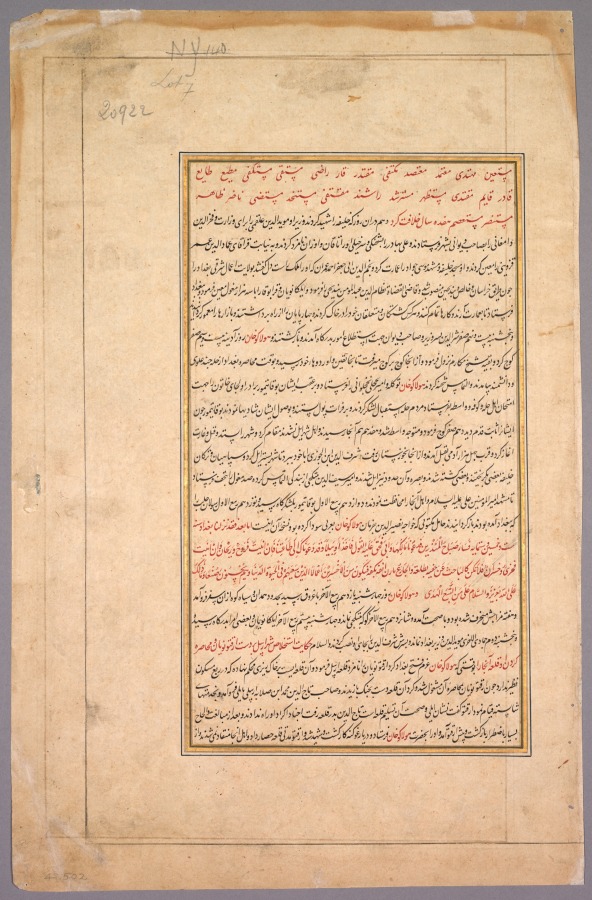
Calligraphy
Cleveland Museum of Art
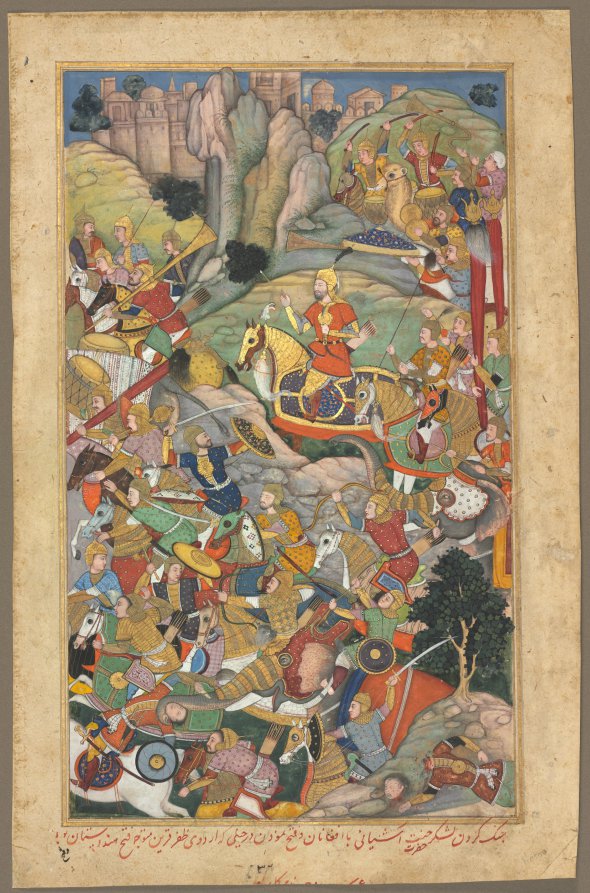
Mughal ruler Humayun defeating the Afghans before reconquering India, folio from an Akbar-nama (Book of Akbar) of Abu’l Fazl (Indian, 1551–1602)
Cleveland Museum of Art
Page from a Shah-nama (Book of Kings) of Firdausi (Persian, about 934–1020)
Cleveland Museum of Art
![Page of disasters, from the Tarikh-i Alfi (History of the Thousand [Years])](https://openaccess-cdn.clevelandart.org/1932.36/1932.36_web.jpg)
Page of disasters, from the Tarikh-i Alfi (History of the Thousand [Years])
Cleveland Museum of Art
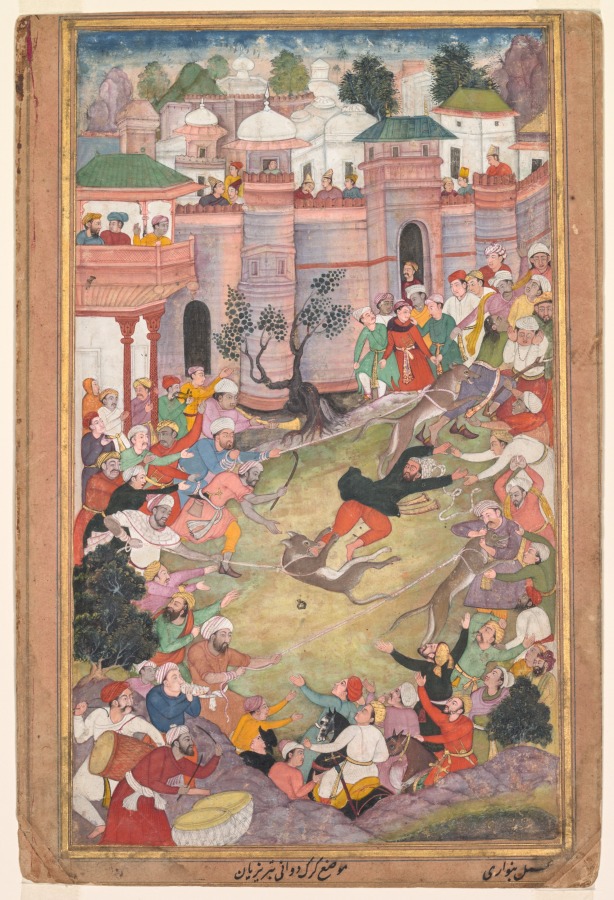
The game of wolf-running in Tabriz, from an Akbar-nama (Book of Akbar)
Cleveland Museum of Art
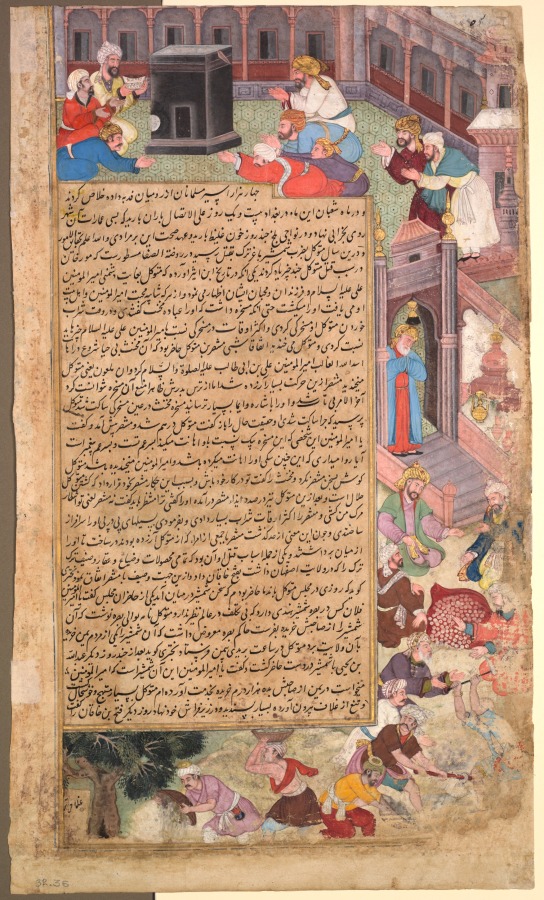
Page of disasters, from the Tarikh-i Alfi (History of a Thousand Years)
Cleveland Museum of Art
![Page of disasters, from the Tarikh-i Alfi (History of the Thousand [Years])](https://openaccess-cdn.clevelandart.org/1932.36.a/1932.36.a_web.jpg)
Page of disasters, from the Tarikh-i Alfi (History of the Thousand [Years])
Cleveland Museum of Art
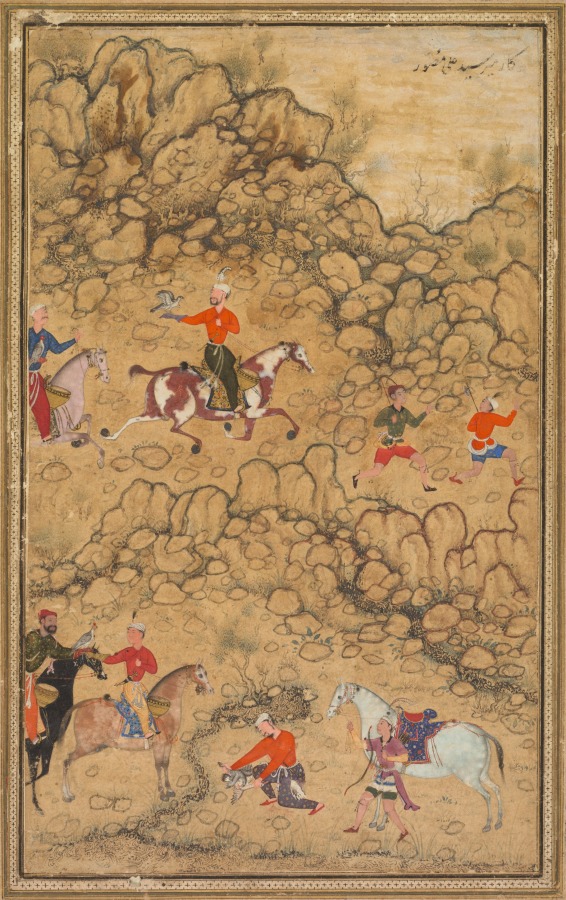
Hunting with falcons in a landscape; verso: Calligraphy of Chaghatai Turkish poems in praise of wine, Sultan Muhammad Nur (Persian, c. 1472–1536) and Mirza Muhammad (probably Persian, active c. 1520s)
Cleveland Museum of Art

Majnun in the Wilderness
Minneapolis Institute of Art
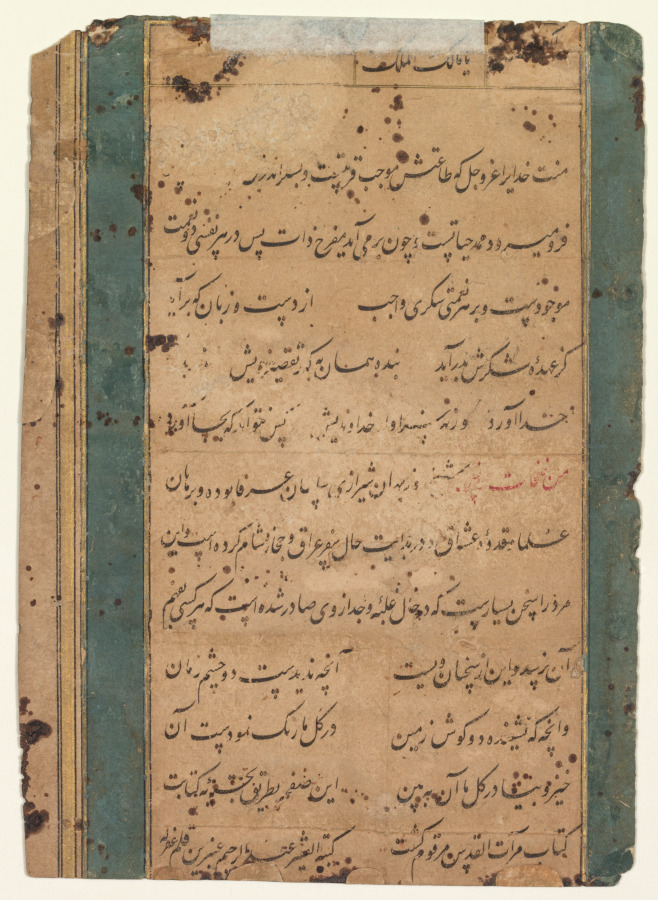
Page from the Mirror of Holiness (Mir’at al-quds)
Cleveland Museum of Art