Cleveland Museum of Art
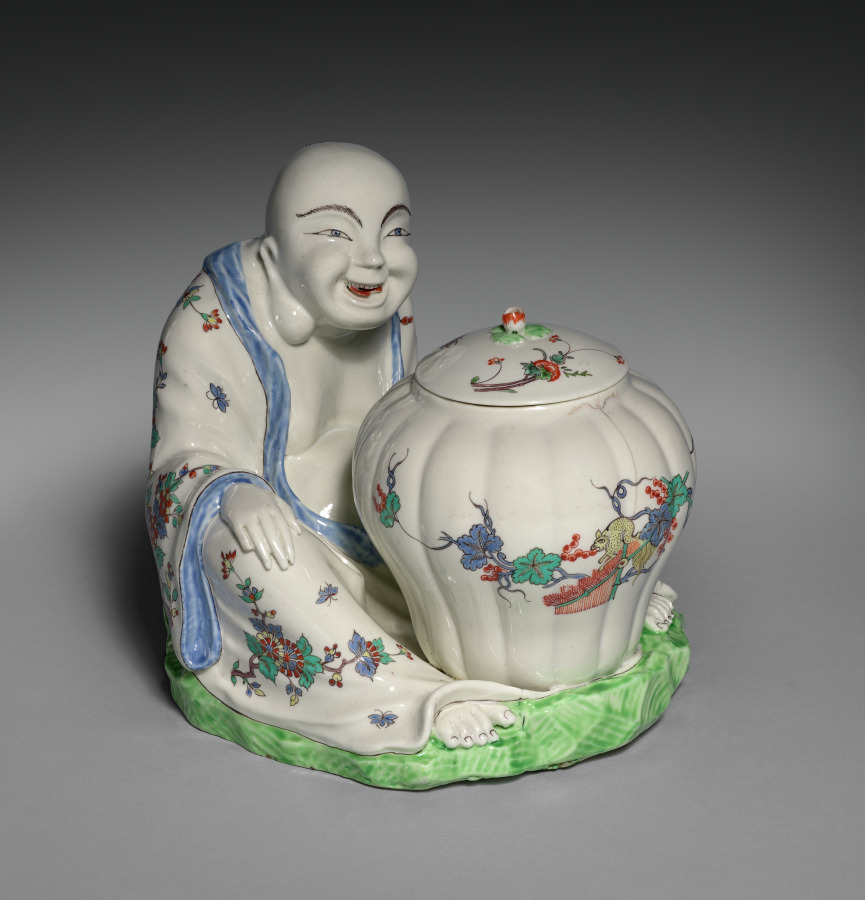
Figure of Budai or Hotei with Jar
Chantilly Porcelain FactoryLinkedCulture matchlcp-12da545d8d9b
- Date
- c. 1735–40
- Medium
- Tin-glazed soft-paste porcelain with enamel decoration
- Culture
- France, Chantilly
- Department
- Decorative Art and Design
- Institution
- Cleveland Museum of Art
- Object ID
- 125723
What the image shows
A smiling figure in traditional robes sits beside a decorative ceramic container.
Generated by LinkedCulture from the photograph alone, without the museum’s catalogue text (Qwen/Qwen2.5-VL-7B-Instruct), and not yet reviewed by a person. It describes the picture, not the object’s history, and it is not part of the museum’s record.
From the Cleveland Museum of Art record
The production of decorative figures like this one, referred to as magots or pagodes in European texts, was the result of an 18th-century European interest in Chinese and Japanese culture and porcelain. Budai, pronounced Hotei in Japanese, was a semilegendary Chinese monk known in Japan through the transmission of Chan Bhuddism. This figure’s decoration with multicolor overglaze enamels on a milky-white is typical of Japanese Kakiemon style. In 1735, the Chantilly factory was given a 25-year royal privilege for the manufacture of objects that imitated Japanese porcelain.
The authoritative record is held by Cleveland Museum of Art. LinkedCulture surfaces this object and its connections; it does not alter institutional metadata.
Get printable QR codesHide QR codes
Open QR codes for this object page and the museum record. They stay collapsed until needed.
Provenance & credit
As published by the source institution. Coverage varies — not every institution's open-data feed includes ownership history.
- Credit line
- Grace Rainey Rogers Fund
Related across collections
Semantically similar works from Cleveland Museum of Art and other institutions.