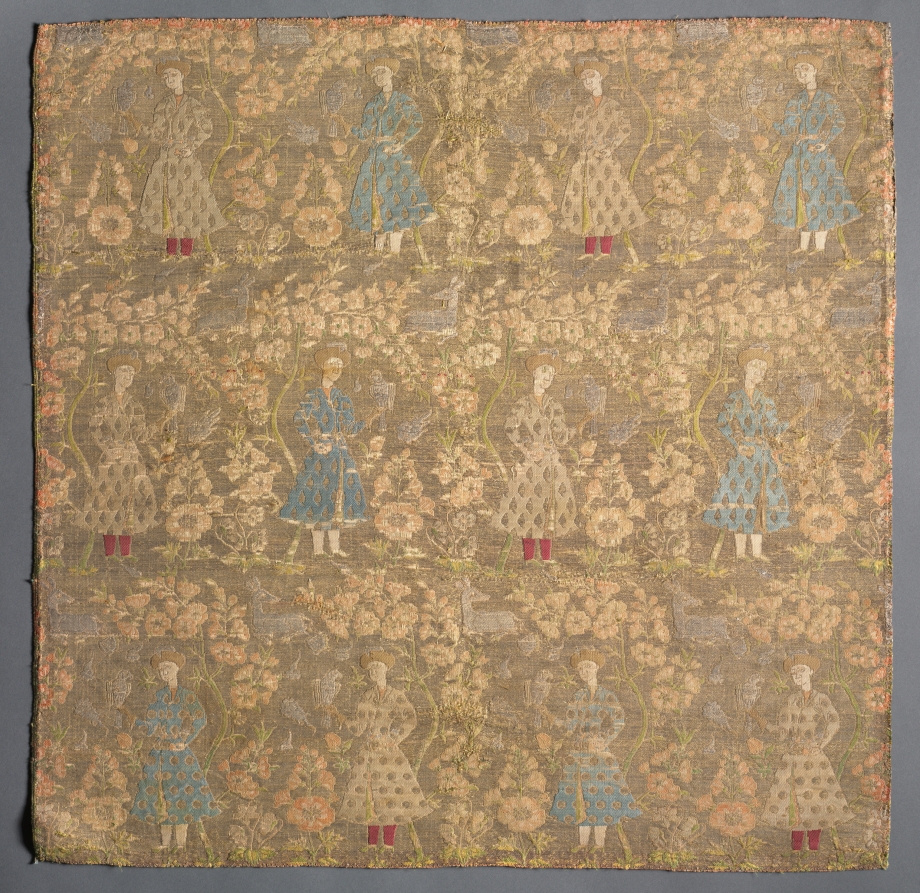
Cleveland Museum of Art
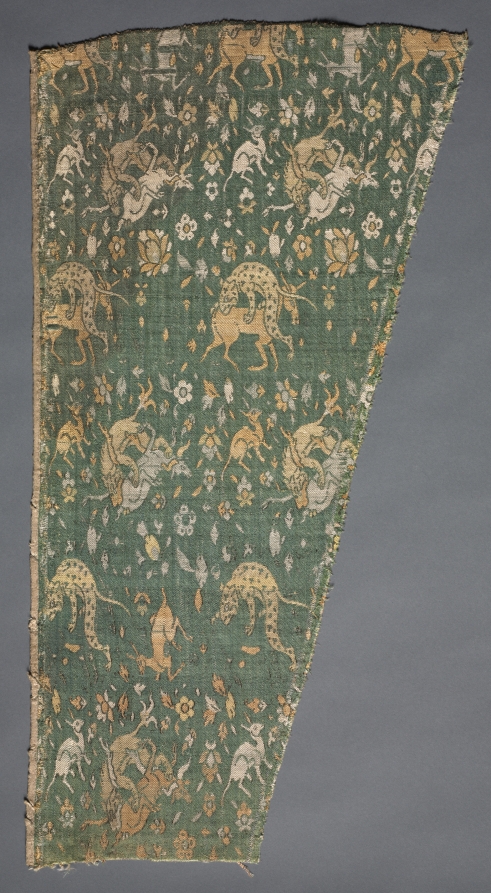
Section of Silk Fabric with Falconers Amid Rose Bushes
- Date
- c. 1675
- Medium
- Silk and silver-metal thread: twill weave with complementary and discontinuous weft
- Culture
- Iran, Safavid period (1501–1722)
- Department
- Textiles
- Institution
- Cleveland Museum of Art
Twill-weave fabrics were used to make garments, especially jackets, during the Safavid period. It was not until after the 1570s that Iranian textiles began to regularly feature the human figure as a decorative motif. Weavers drew from Persian paintings for their subject matter, such as the favorite princely pastime of falconing. Trained falcons were brought on royal hunts to locate and retrieve the prey; close relationships developed between the falcon and the falconer.
The authoritative record is held by Cleveland Museum of Art. LinkedCulture surfaces this object and its connections; it does not alter institutional metadata.
Related across collections
Semantically similar works from Cleveland Museum of Art and other institutions.
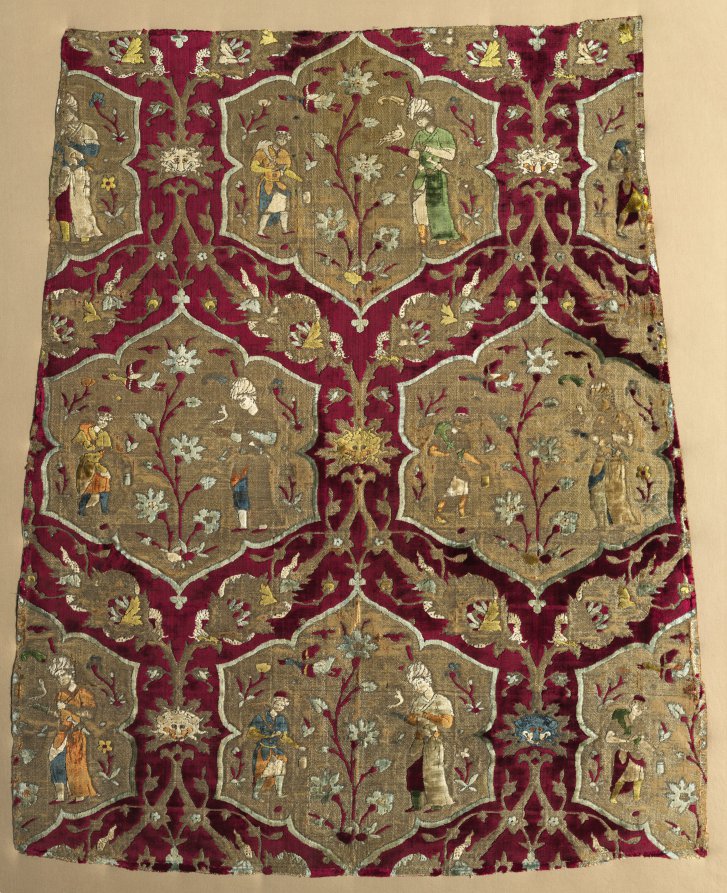
Fragment with falconer and attendant in animated lattice, from a robe
Cleveland Museum of Art
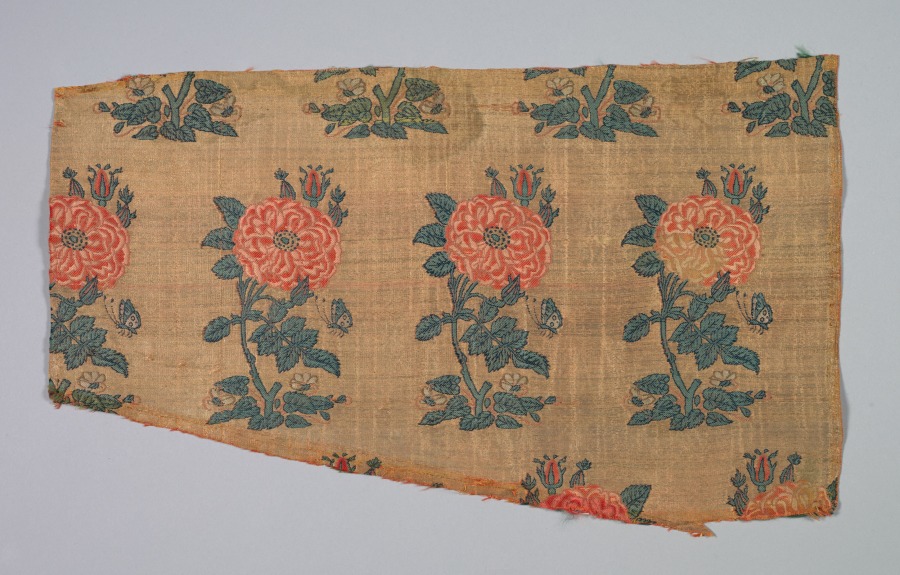
Sleeve with rose bushes and butterflies
Cleveland Museum of Art
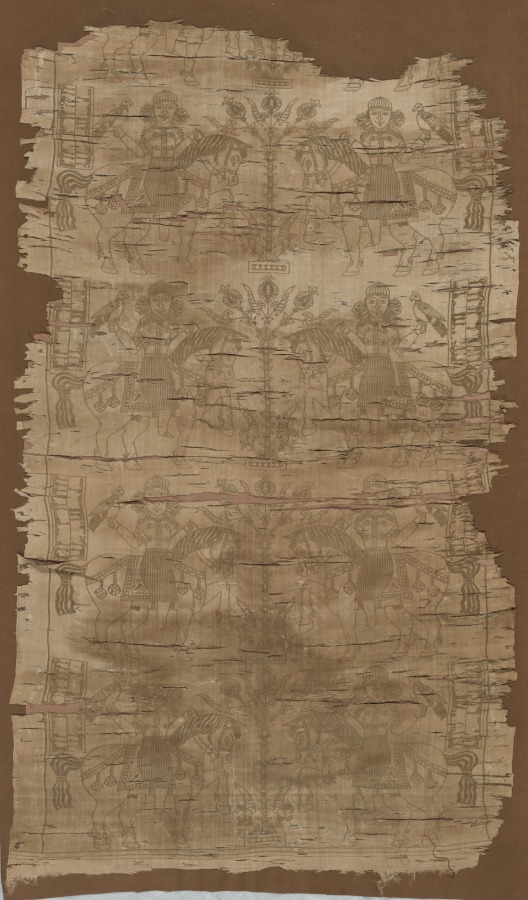
Panel with Falconers
Cleveland Museum of Art
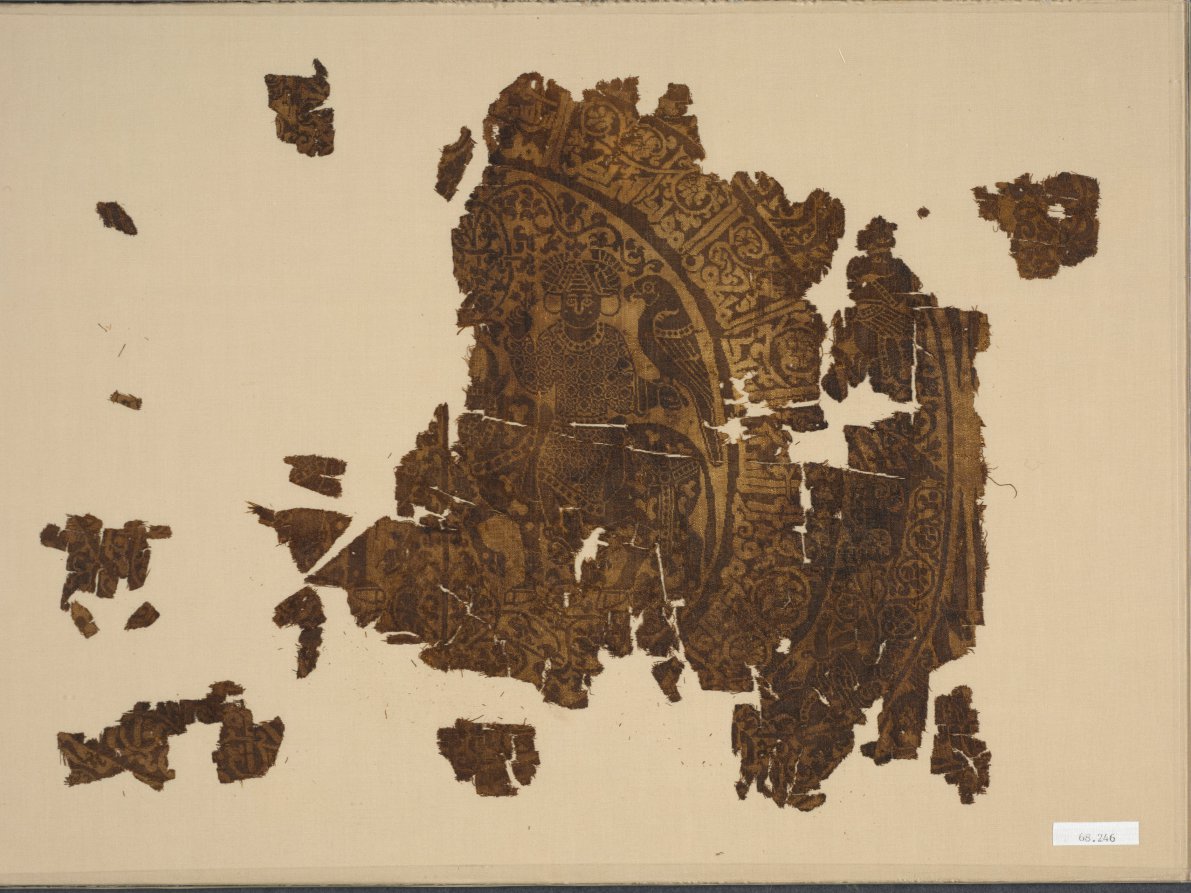
Fragment with falconer riding a bull in a rondel
Cleveland Museum of Art
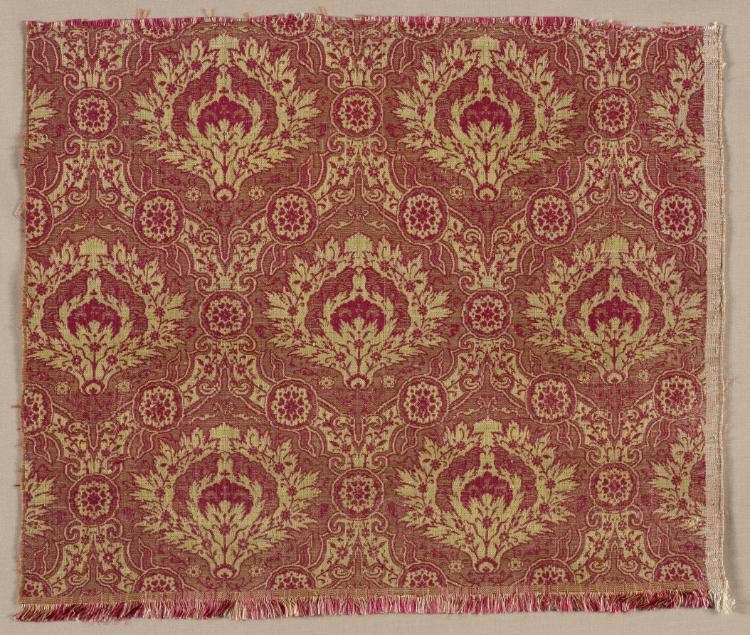
Fragment
Cleveland Museum of Art
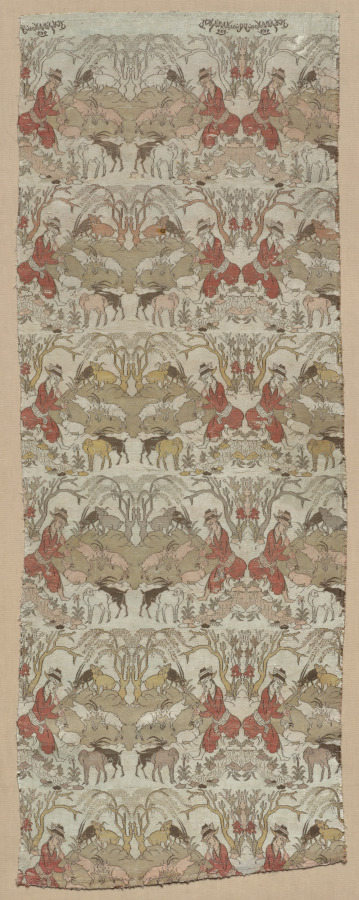
Silk Textile with Goatherds in a Landscape
Cleveland Museum of Art
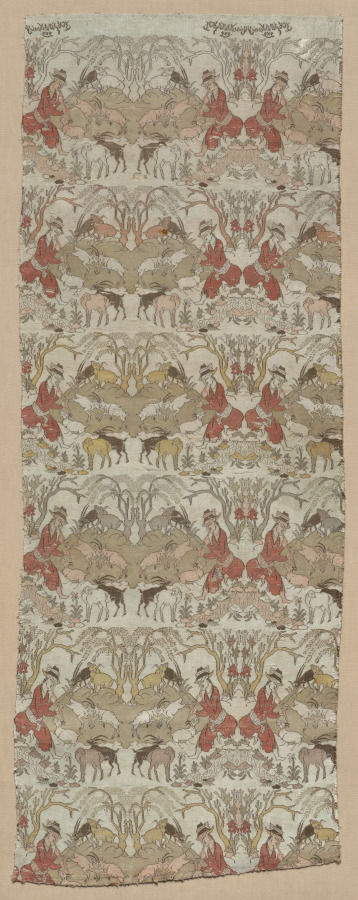
Silk Textile with Goatherds in a Landscape
Cleveland Museum of Art
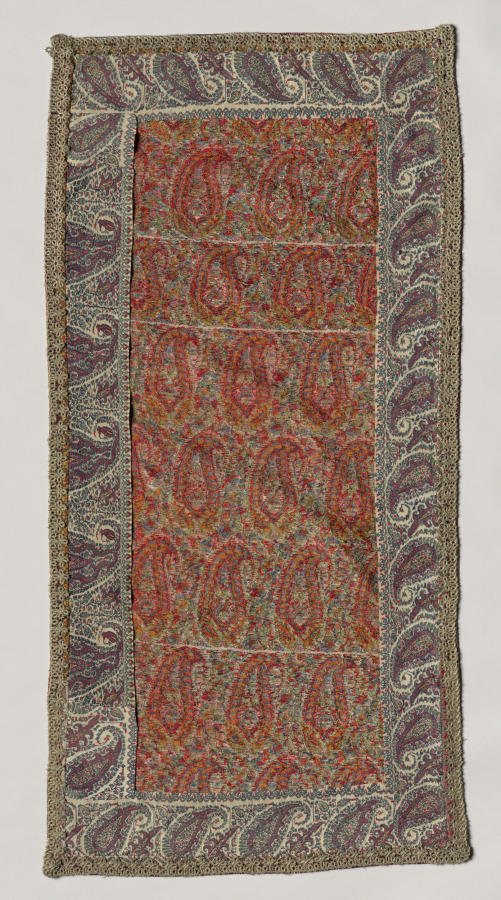
Lining from Silk Textile with Goatherds in a Landscape
Cleveland Museum of Art
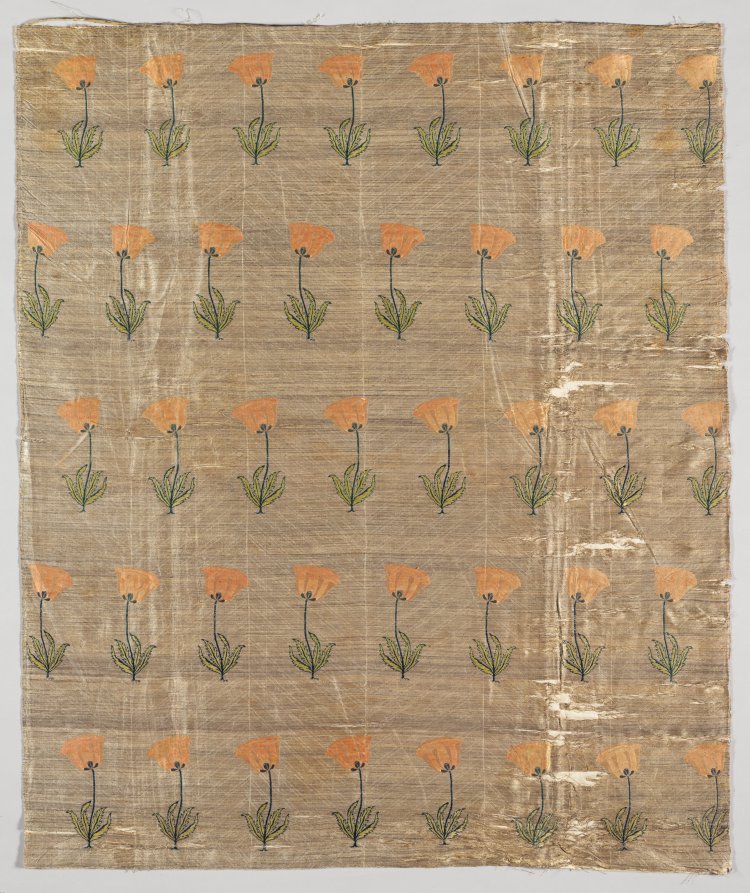
Textile with field of poppies on a golden ground
Cleveland Museum of Art
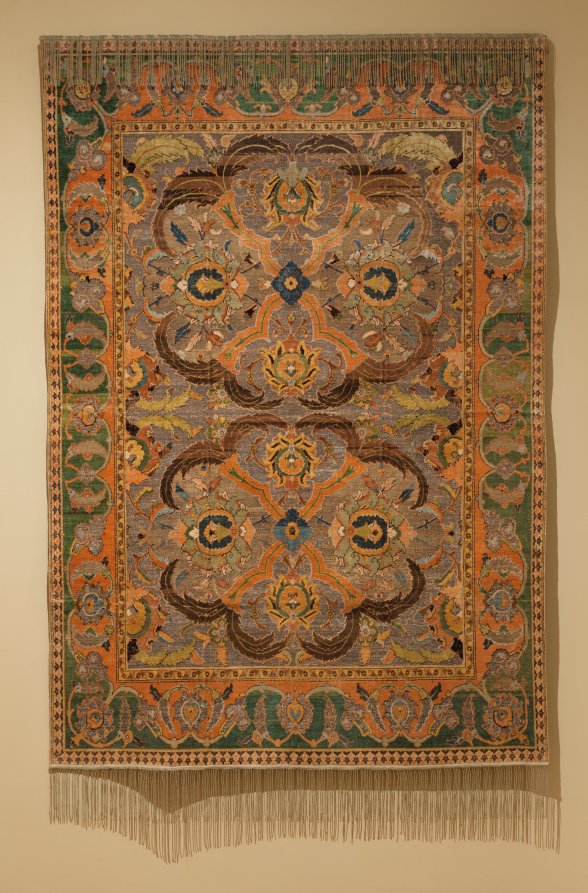
Royal Carpet with Silk and Metal Thread
Cleveland Museum of Art
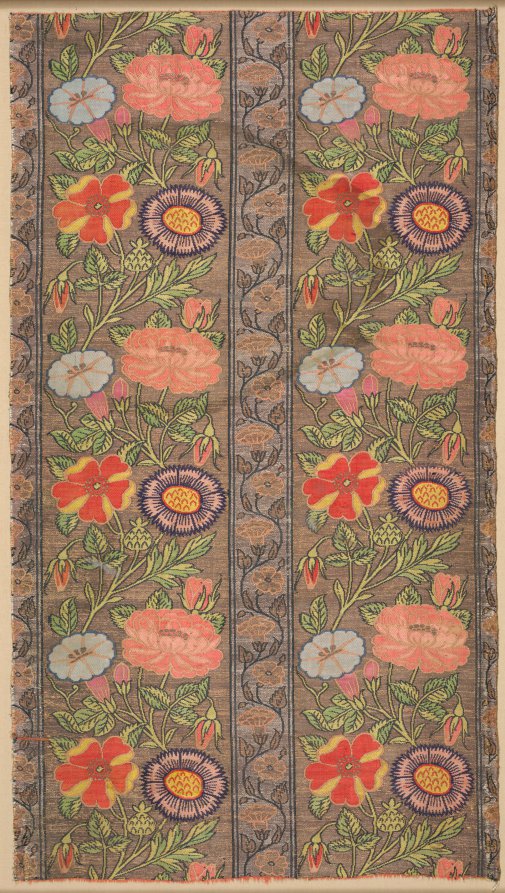
Floral striped silk on a golden ground
Cleveland Museum of Art
Lampas with scenes of wild animals
Cleveland Museum of Art