Cleveland Museum of Art
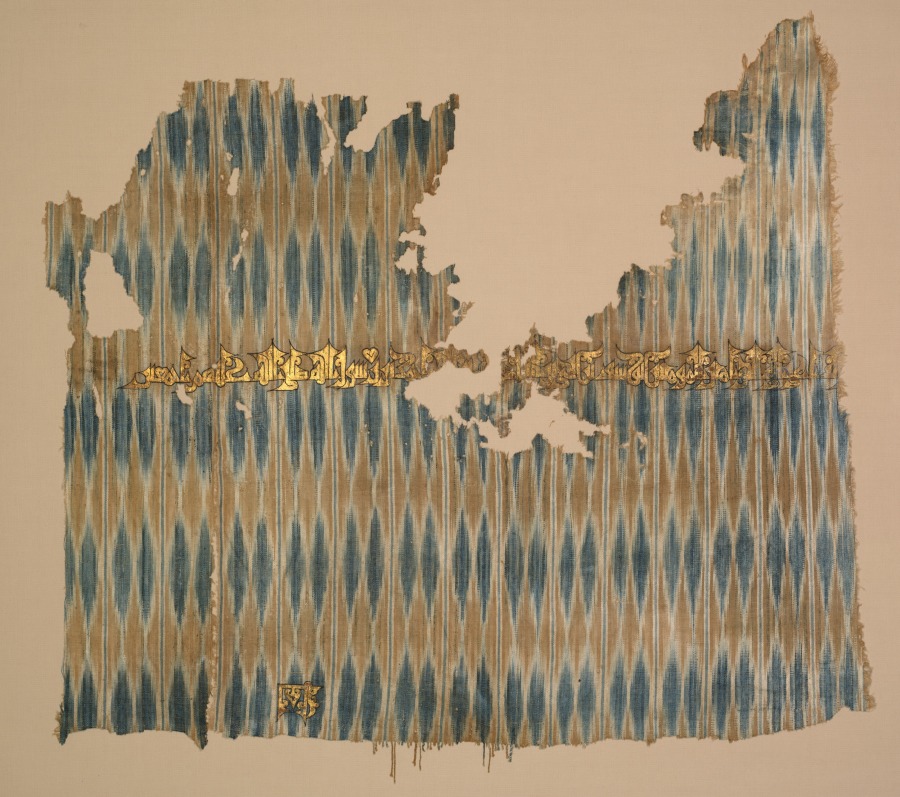
Ikat tiraz
- Date
- 960–80
- Medium
- resist-dyed warp (ikat); plain weave with inscription: cotton and gold leaf
- Culture
- Yemen, San'a', Zaydi Imam period
- Department
- Textiles
- Institution
- Cleveland Museum of Art
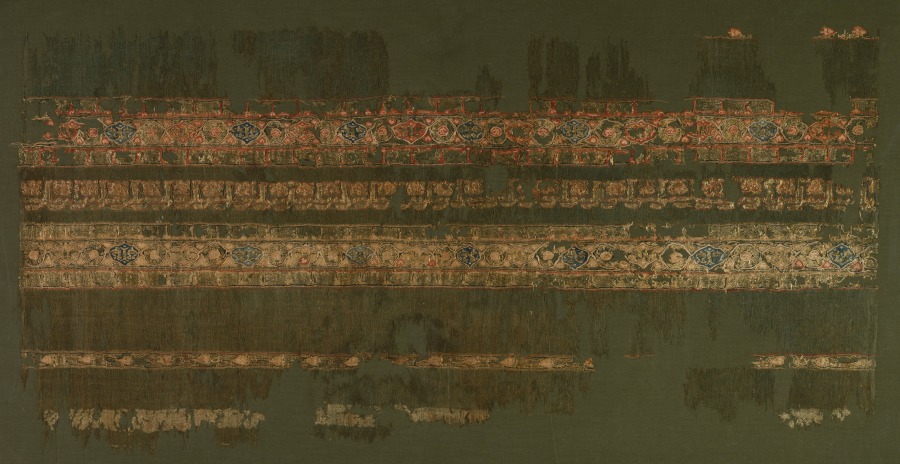
The "flame" pattern was dyed on the vertical warp threads before weaving began by tightly binding them to resist dye penetration, and repeated for each color. The process and fabric are called ikat, a Malaysian word which may have originated in South Arabia. Yemeni ikats with historical Arabic inscriptions from the 10th century are among the oldest known. This text, written in Kufic script with gold leaf outlined in black, identifies a ruler of the Yemen: ". . . [a]l-Da’i ila al-Haqq, Commander of the Believers, Yusuf b. Yahya b. al-Nasir li-Din Allah Ahmad, son of the apostle of God, may God bless the all." The Arabic phrase "to God" is inverted at the bottom.
The authoritative record is held by Cleveland Museum of Art. LinkedCulture surfaces this object and its connections; it does not alter institutional metadata.
Related across collections
Semantically similar works from Cleveland Museum of Art and other institutions.
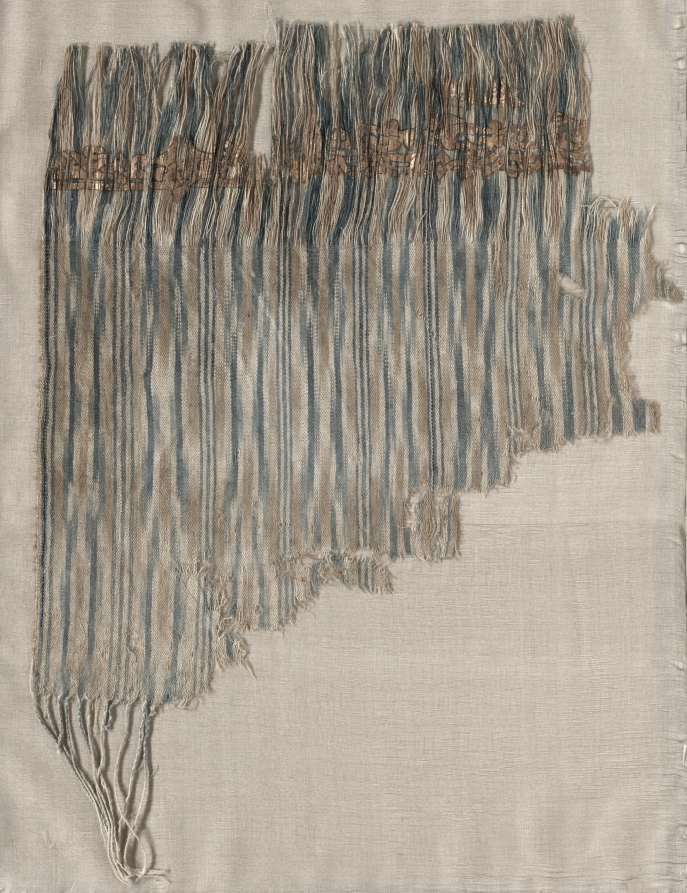
Ikat tiraz
Cleveland Museum of Art
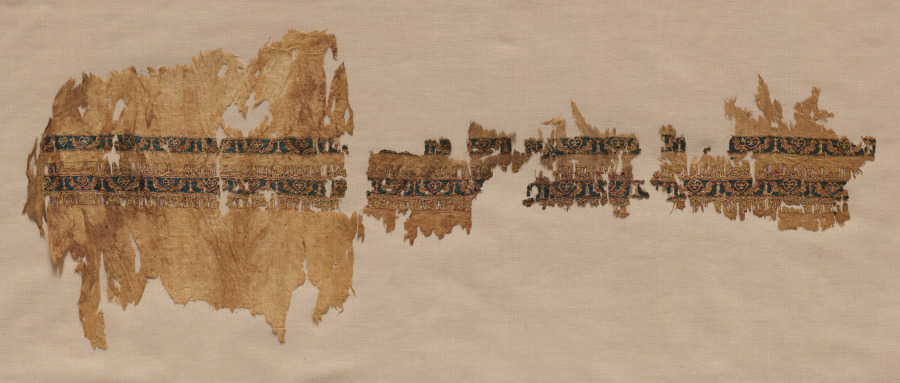
Tiraz with gold, probably from a wide sleeve
Cleveland Museum of Art
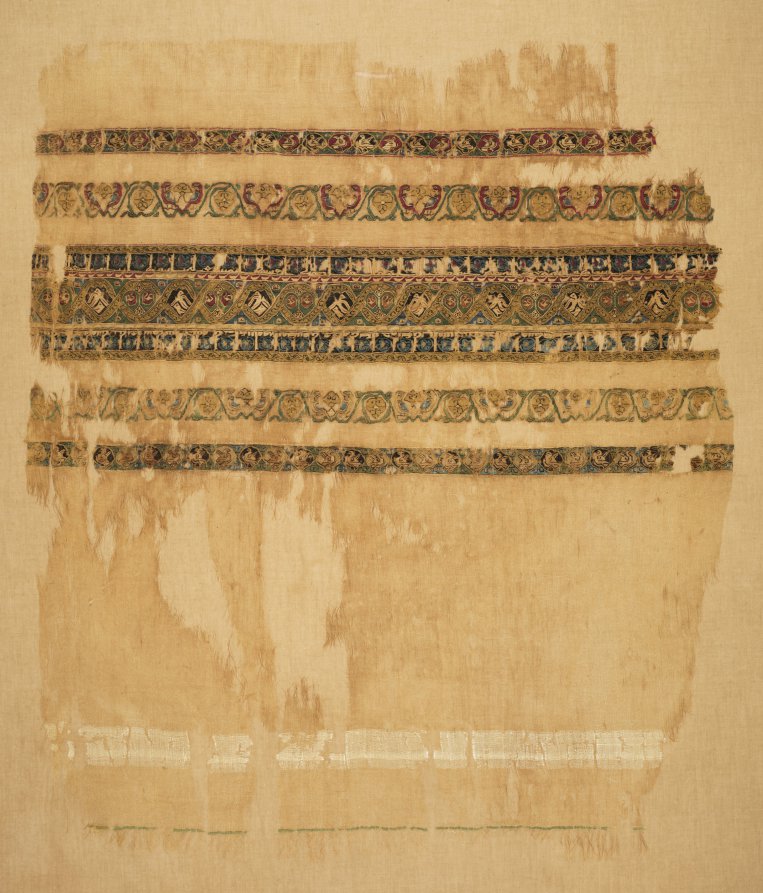
Turban or shawl end with tiraz and gold
Cleveland Museum of Art
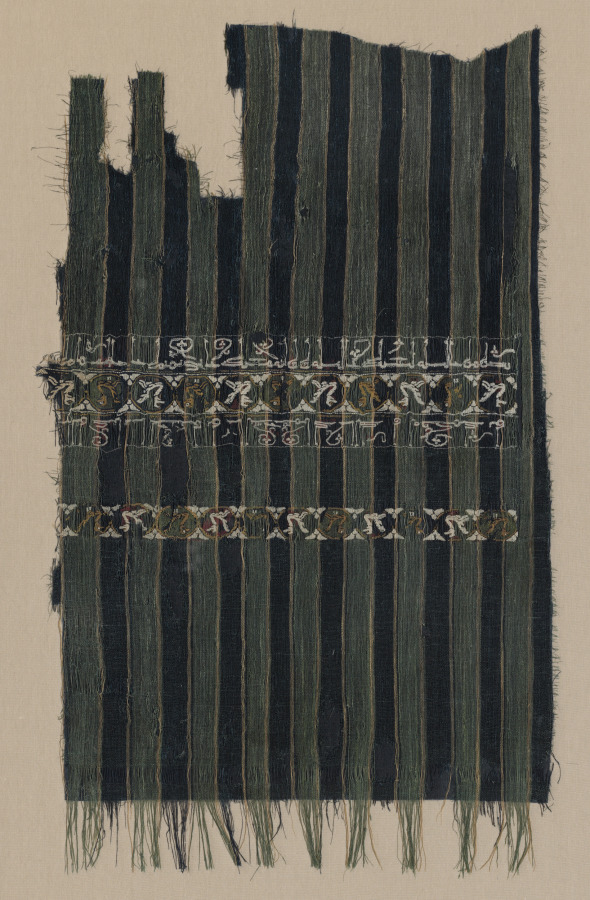
Striped tiraz
Cleveland Museum of Art
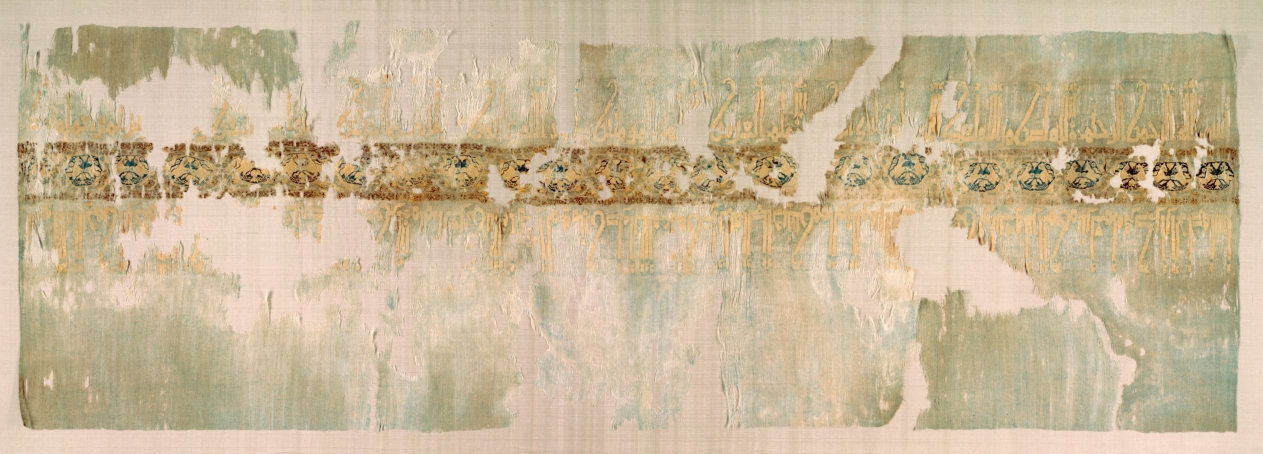
Turban end with tiraz
Cleveland Museum of Art
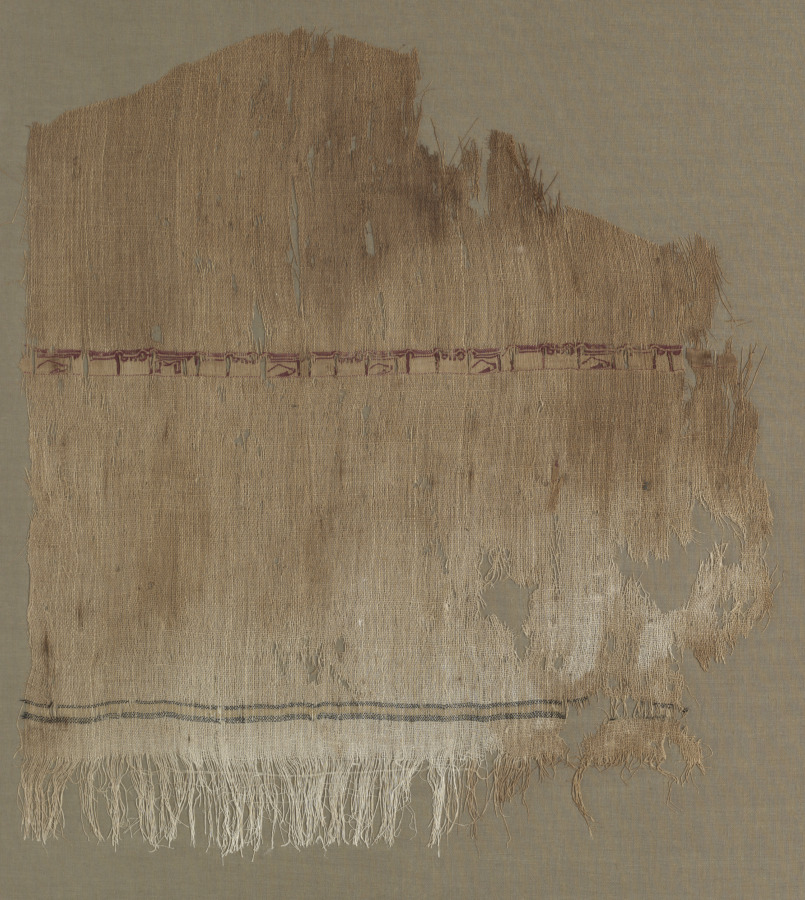
Fragment of a Tiraz
Cleveland Museum of Art
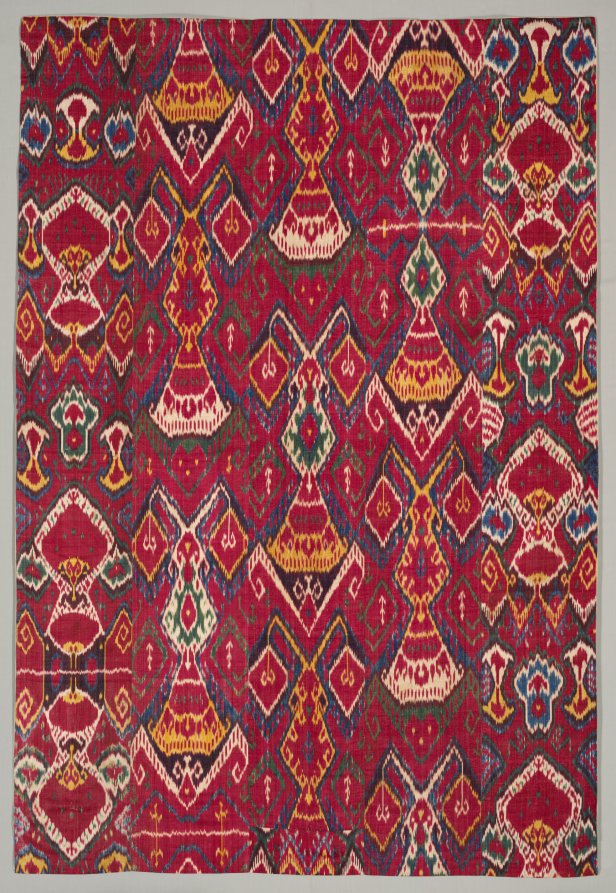
Wall Hanging (pardah)
Cleveland Museum of Art
Pillow cover with Arabic inscription
Cleveland Museum of Art
Tiraz with gold
Cleveland Museum of Art
Tiraz with gold
Cleveland Museum of Art
Tiraz with gold
Cleveland Museum of Art
Tiraz with gold
Cleveland Museum of Art