Cleveland Museum of Art
Wearing Cloth
- Date
- 1900–1950
- Medium
- tabby weave; silk brocaded with silk and metallic threads
- Culture
- Indonesia, Sumatra, Palembang, 1st half 20th century
- Department
- Textiles
- Institution
- Cleveland Museum of Art
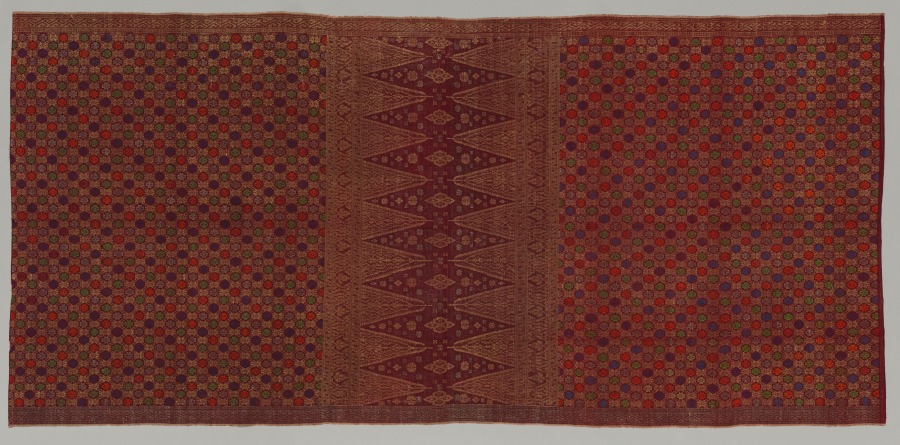
The small pattern of rosettes in the main field, the selvage borders, and the tumpal (triangle) border are characteristic of the gold, silver, and red silk cloths woven in the Palembang region. Sumptuous silks of this type were only made in the eastern coastal cities of Sumatra that maintained active trade with China and India. Not only were the silk, gold, and silver threads imported, but the elements of the design were derived from Indian patola (warp and weft ikat) silks. Traditionally, cloths like this were worn for ceremonial occasions and were also used in the exchange of gifts required on the occasion of a wedding.
The authoritative record is held by Cleveland Museum of Art. LinkedCulture surfaces this object and its connections; it does not alter institutional metadata.
Related across collections
Semantically similar works from Cleveland Museum of Art and other institutions.
Woman's Shoulder Cloth (Selendang limar)
Art Institute of Chicago
Patolu
Art Institute of Chicago

Patolu
Art Institute of Chicago
Woman's Selendang Limar (Shoulder Cloth)
Art Institute of Chicago
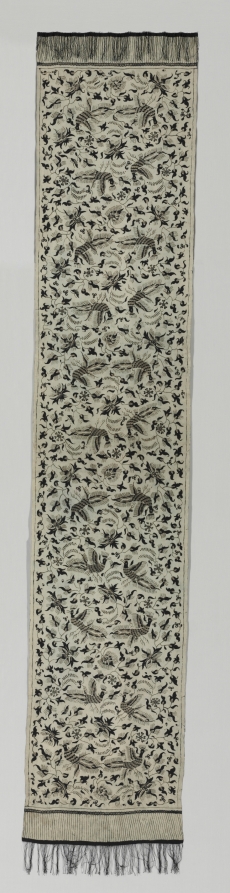
Slendang (Shoulder Cloth)
Cleveland Museum of Art
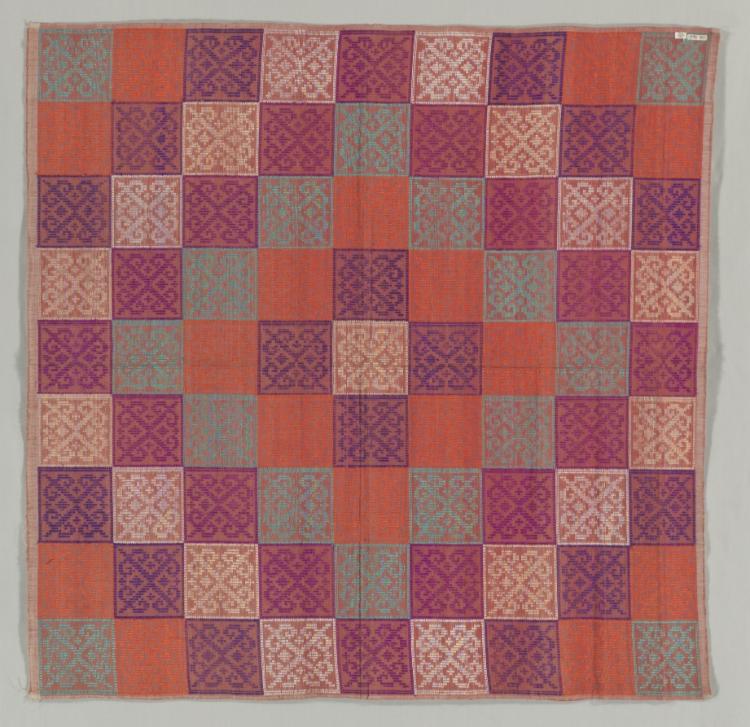
Headcloth (Yakan seputangan)
Cleveland Museum of Art
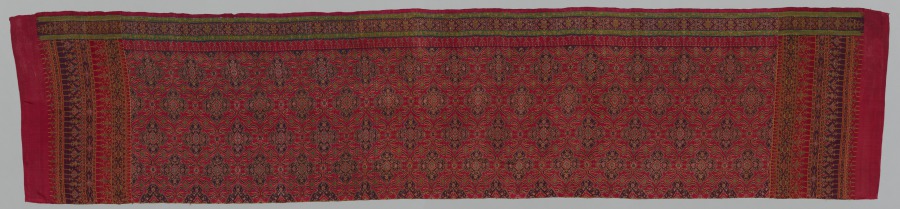
Half of a "Sampot" (Skirt Cloth)
Cleveland Museum of Art
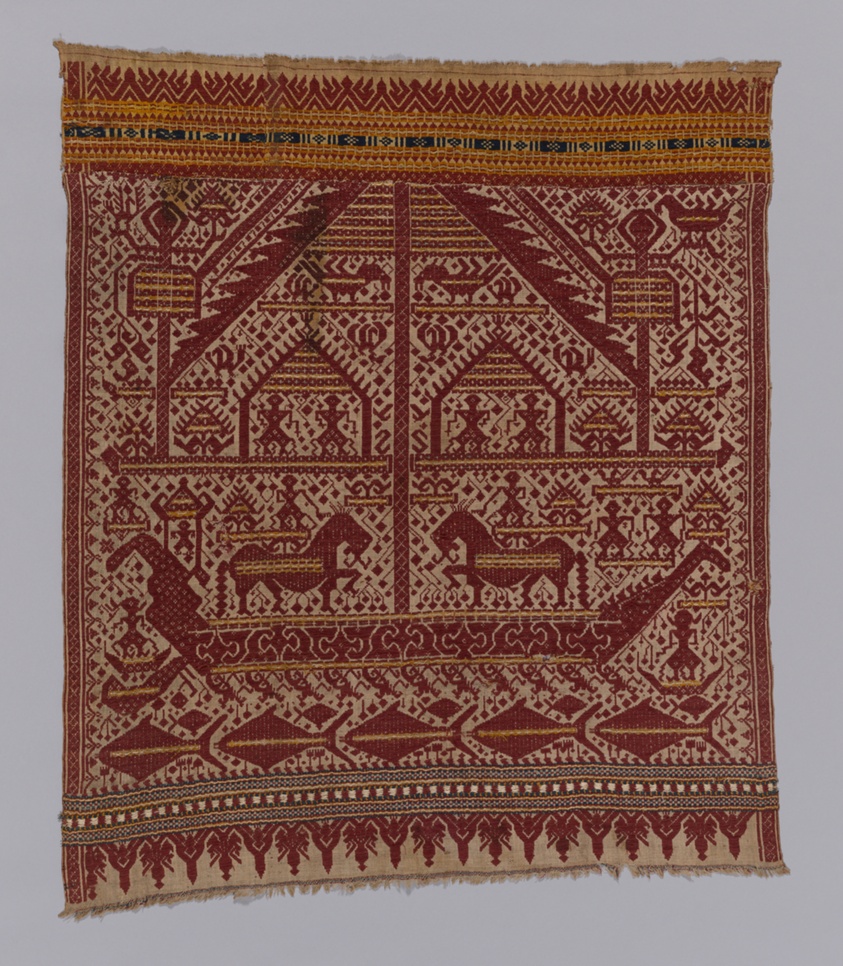
Ritual Cloth with Prancing Horses (Tampan)
Art Institute of Chicago
Woman's Ceremonial Skirt (Kain pantang)
Art Institute of Chicago
Shoulder Cloth
Cleveland Museum of Art
Shoulder or Head Cloth (selendang)
Art Institute of Chicago
Tampan (Ceremonial Cloth)
Art Institute of Chicago