Cleveland Museum of Art
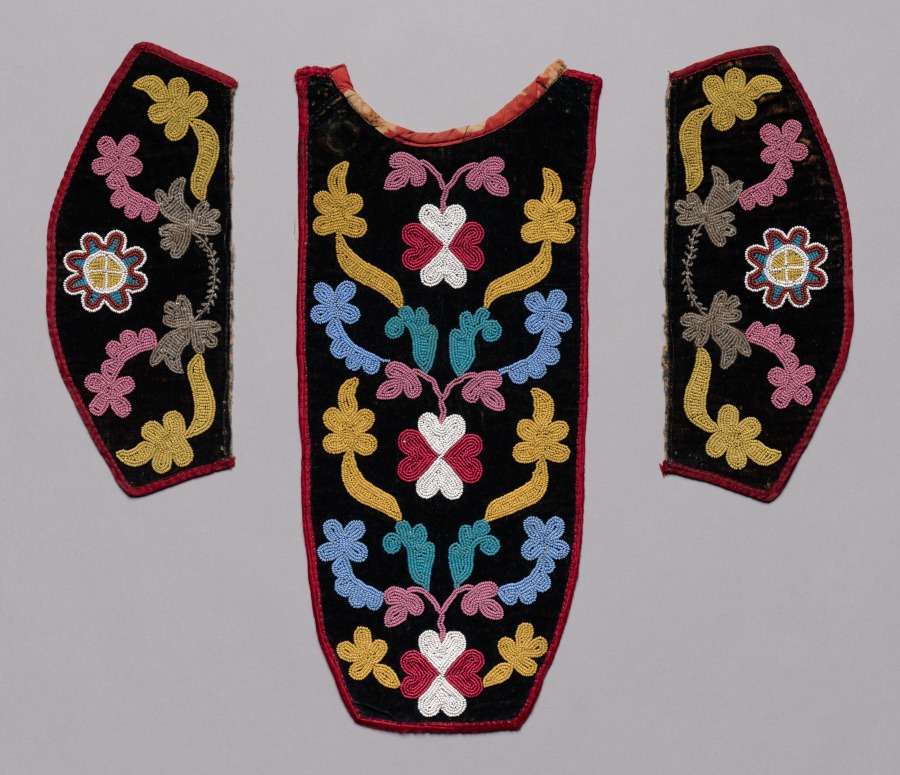
Placket and Cuffs
- Date
- late 1800s
- Medium
- Velvet, cotton
- Culture
- Northeast Woodlands, Great Lakes Region, Anishinaabe (Ojibwe) or Nehiyawak (Cree) People?
- Department
- Textiles
- Institution
- Cleveland Museum of Art
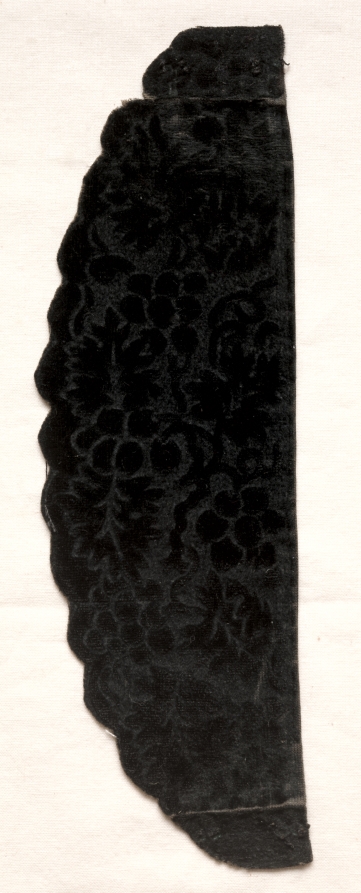
In the 1800s, native peoples began to use European fabrics to fashion fine formal garments; they favored sturdy cloth, such as velvet and wool broadcloth, which provided support for heavy decorative beadwork that was added by hand. Often the fabric was a dark color, providing dramatic contrast for the multicolored beads. Rather than encrusting the entire garment, beadwork was confined to cuffs, “epaulettes,” bib-like plackets and yokes, rectangular panels sewn to leggings, shirts, and dresses, and the like.
The authoritative record is held by Cleveland Museum of Art. LinkedCulture surfaces this object and its connections; it does not alter institutional metadata.
Related across collections
Semantically similar works from Cleveland Museum of Art and other institutions.
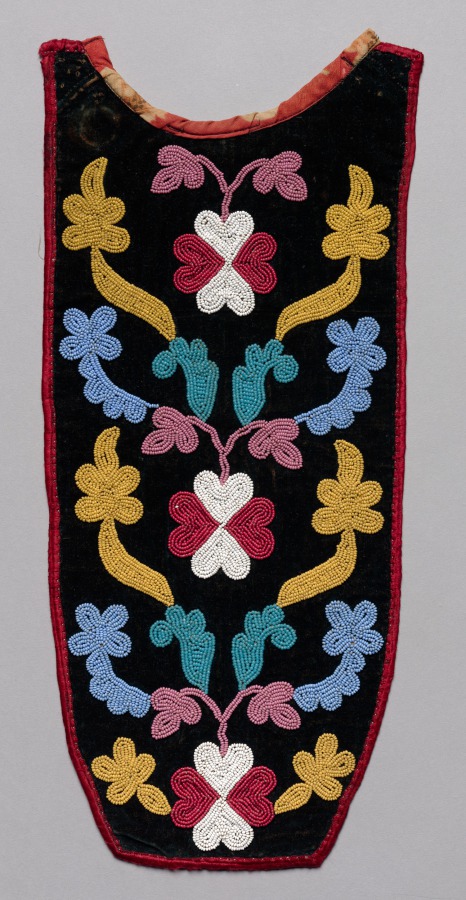
Placket
Cleveland Museum of Art
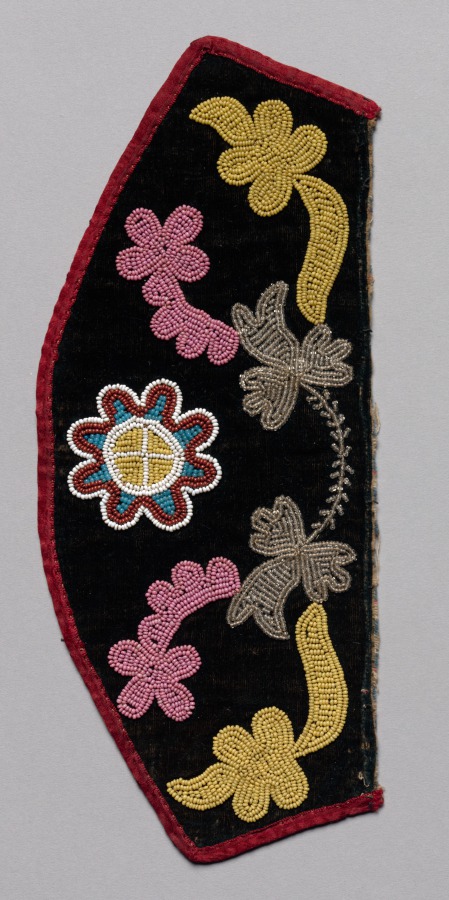
Cuff
Cleveland Museum of Art
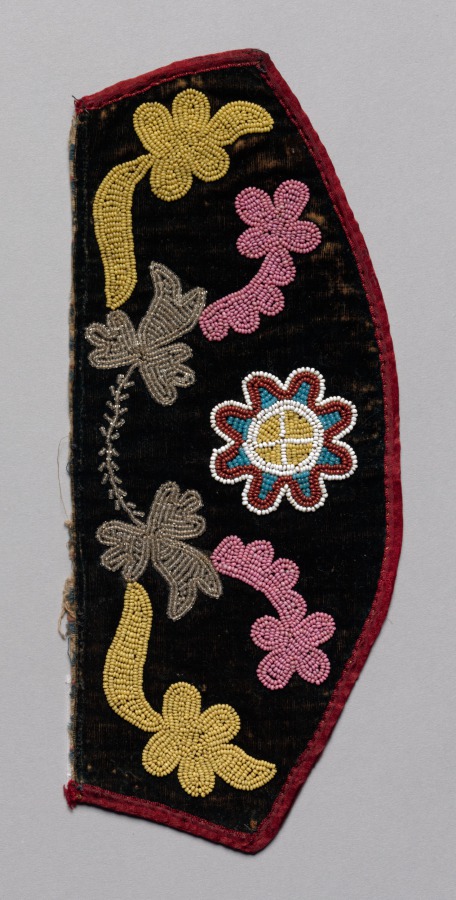
Cuff
Cleveland Museum of Art
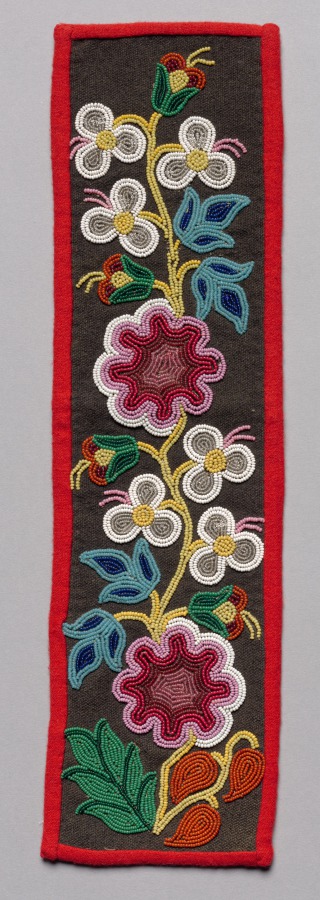
Beaded Panel
Cleveland Museum of Art
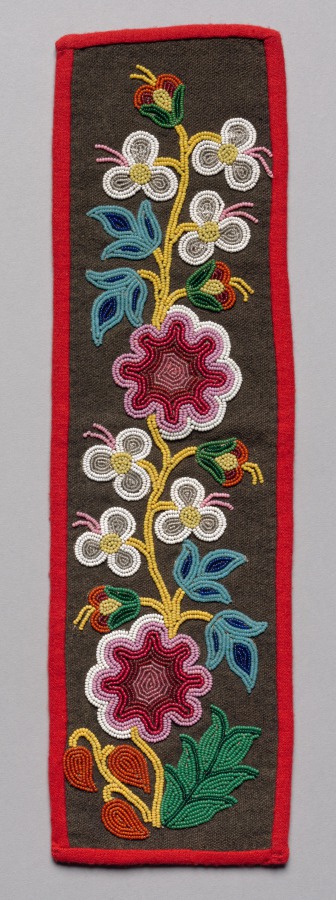
Beaded Panel
Cleveland Museum of Art
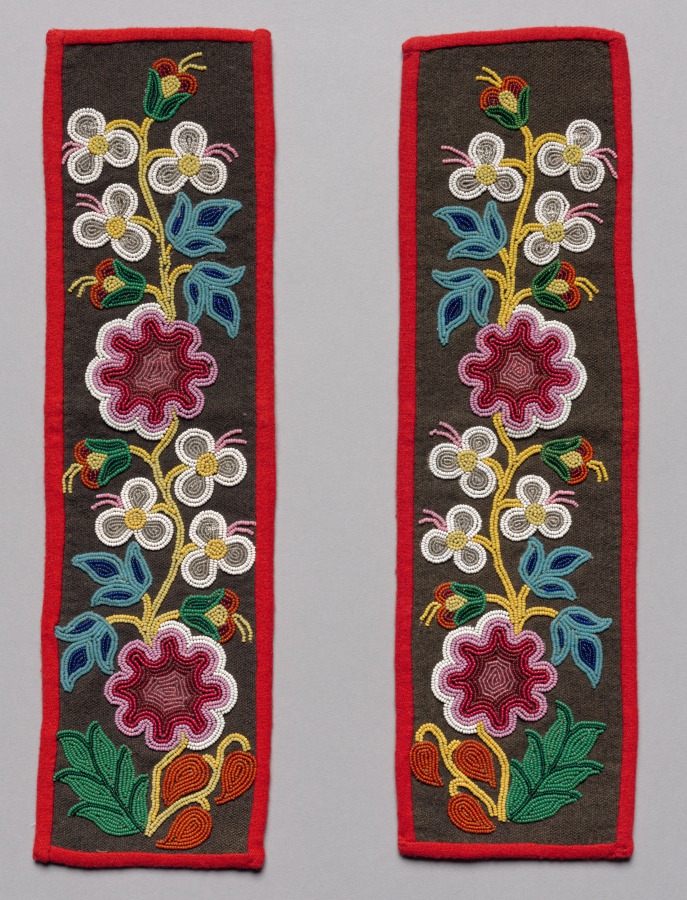
Two Beaded Panels
Cleveland Museum of Art
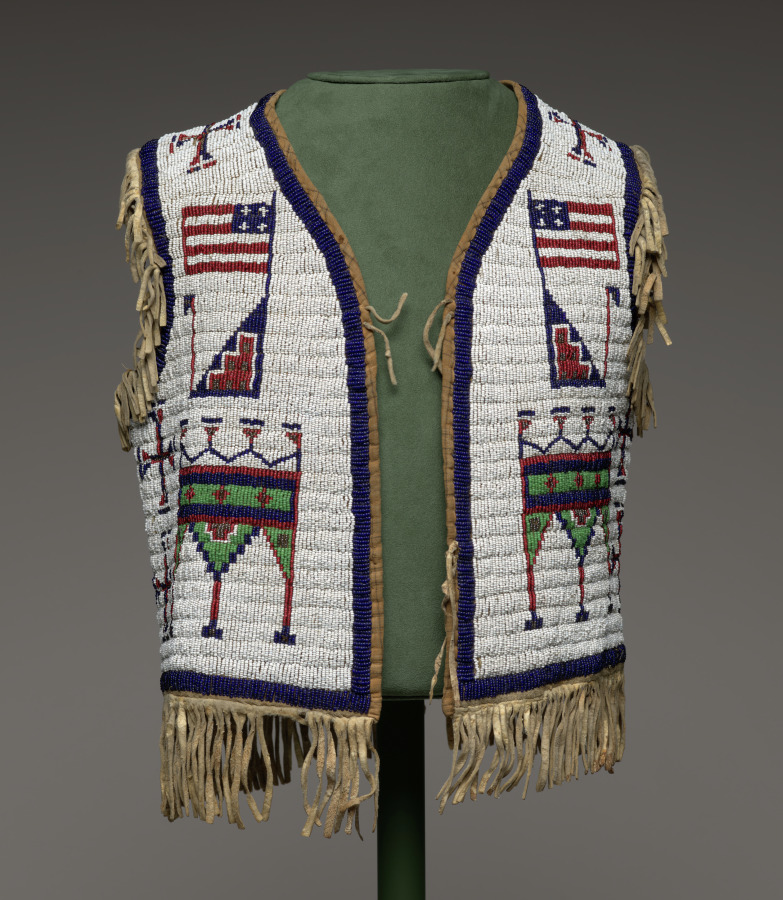
Boy's Vest
Cleveland Museum of Art
Velvet Cuffs
Cleveland Museum of Art
Cuff
Art Institute of Chicago
“Classical Medallions” Furnishing Fabric
Art Institute of Chicago
Curtain Fragment
Art Institute of Chicago

Panel
Minneapolis Institute of Art