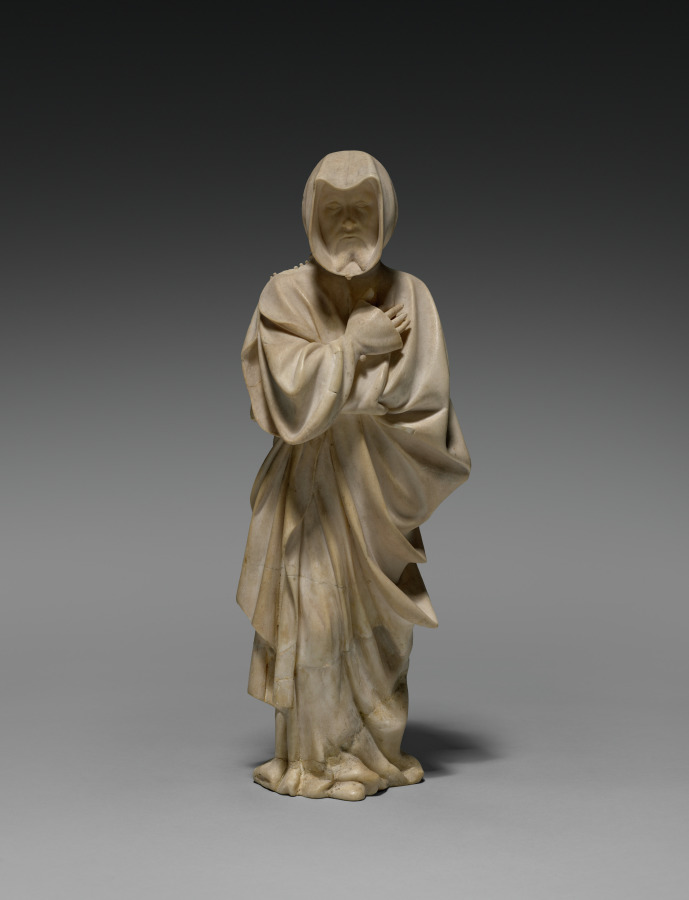
Cleveland Museum of Art
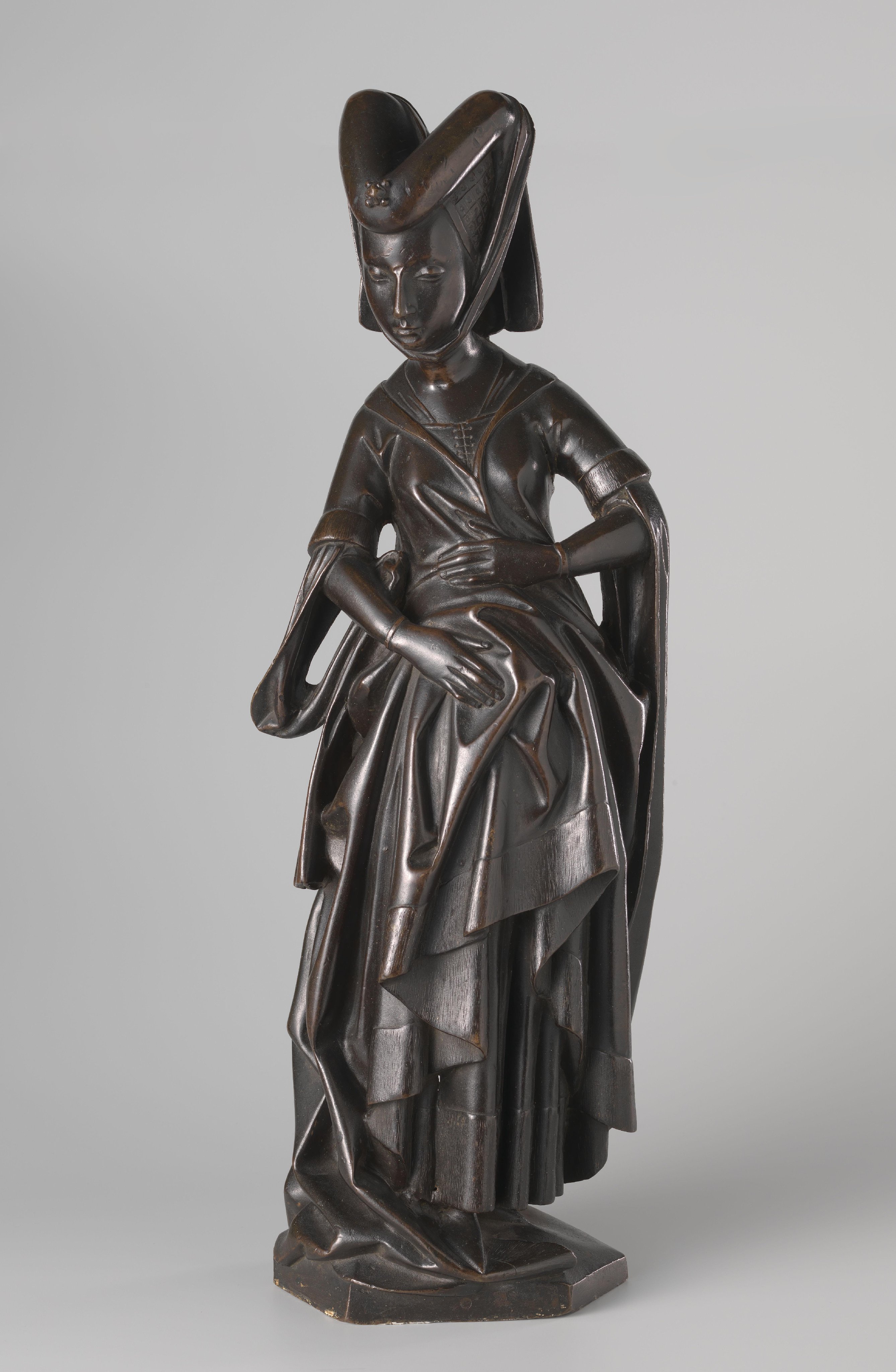
Mourner from the Tomb of Philip the Bold, Duke of Burgundy (1364–1404)
Claus de Werve
- Date
- 1404–10
- Medium
- vizille alabaster
- Culture
- Netherlands, active Dijon, 15th century
- Department
- Medieval Art
- Institution
- Cleveland Museum of Art
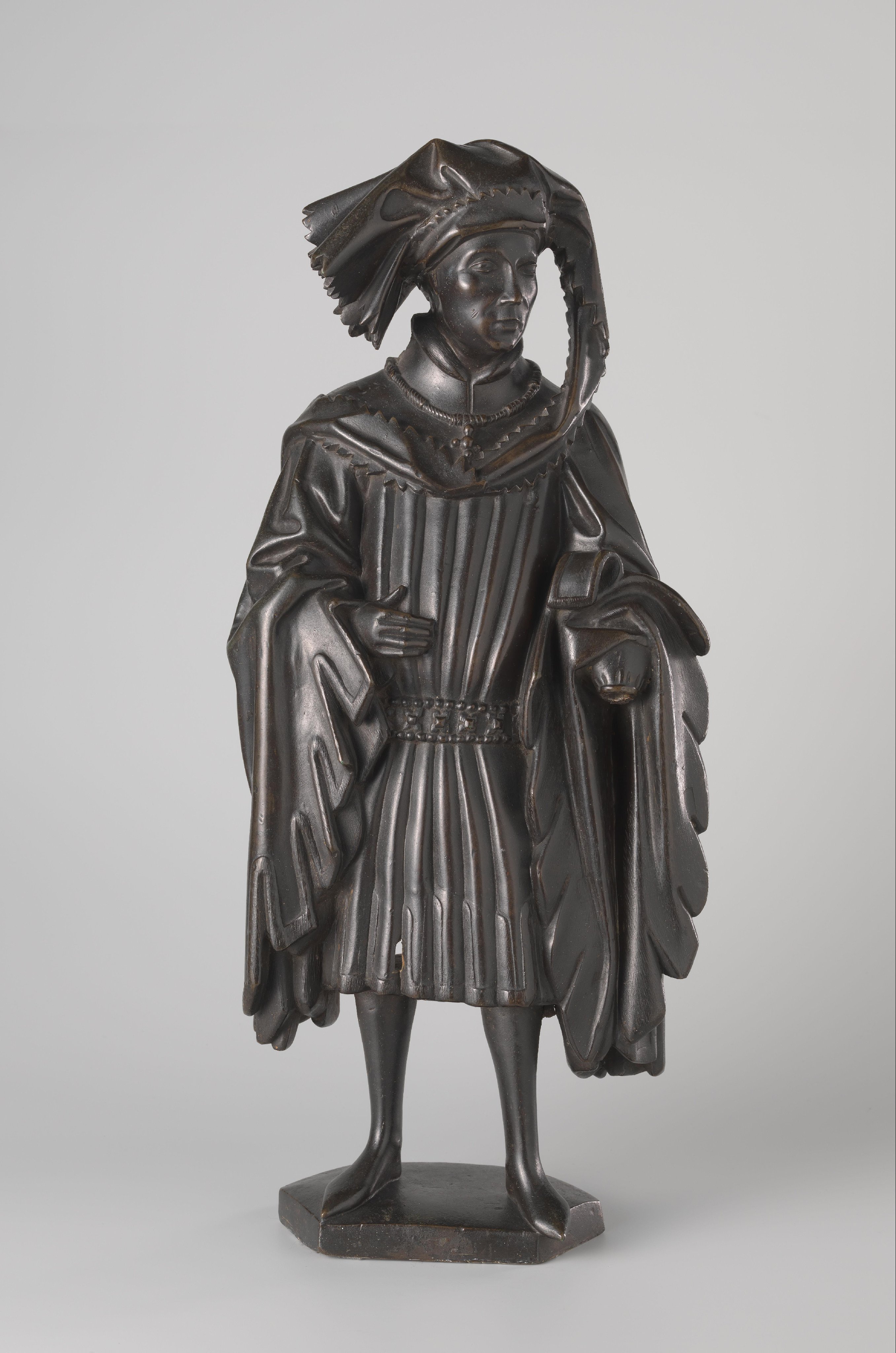
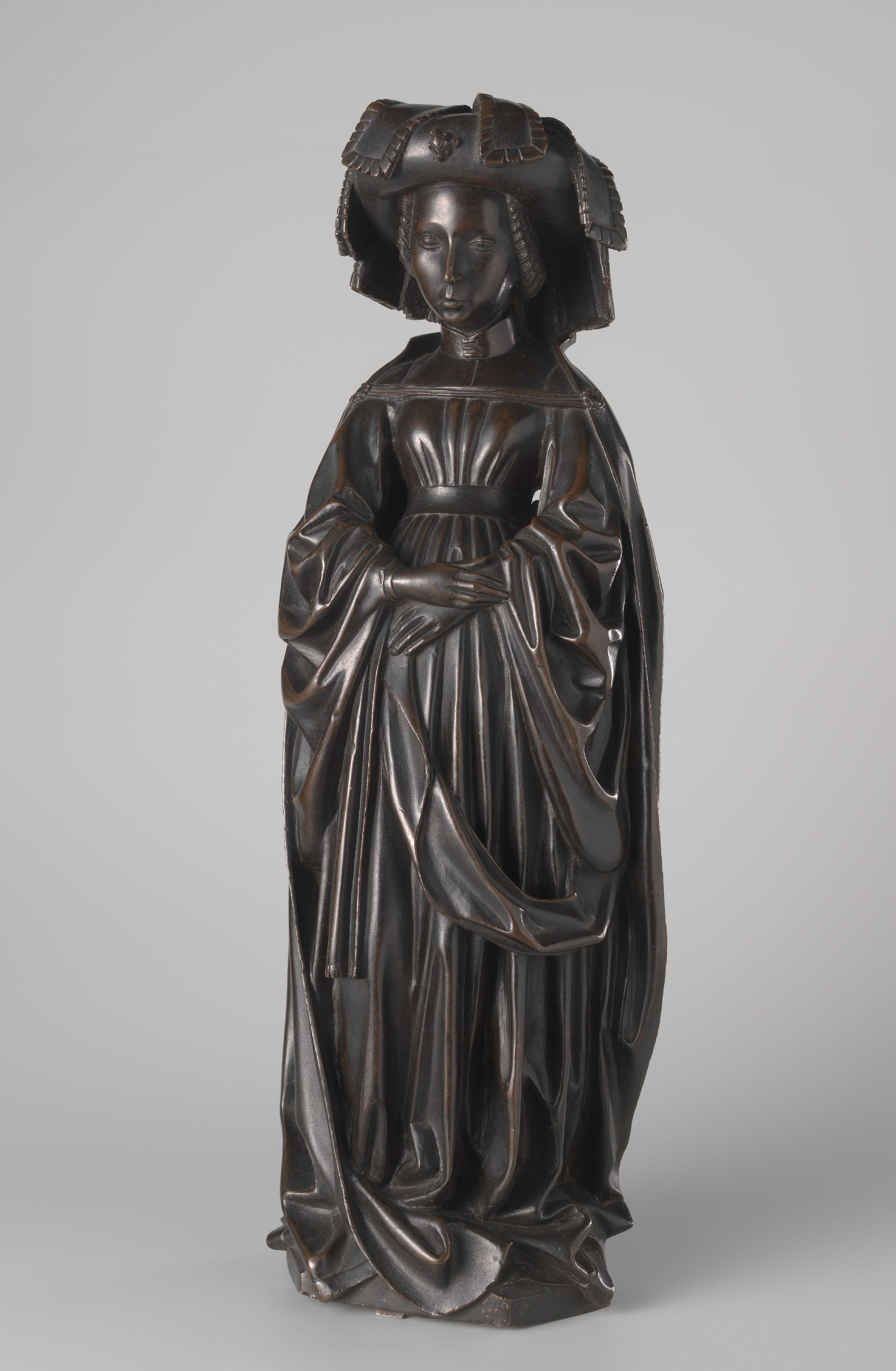
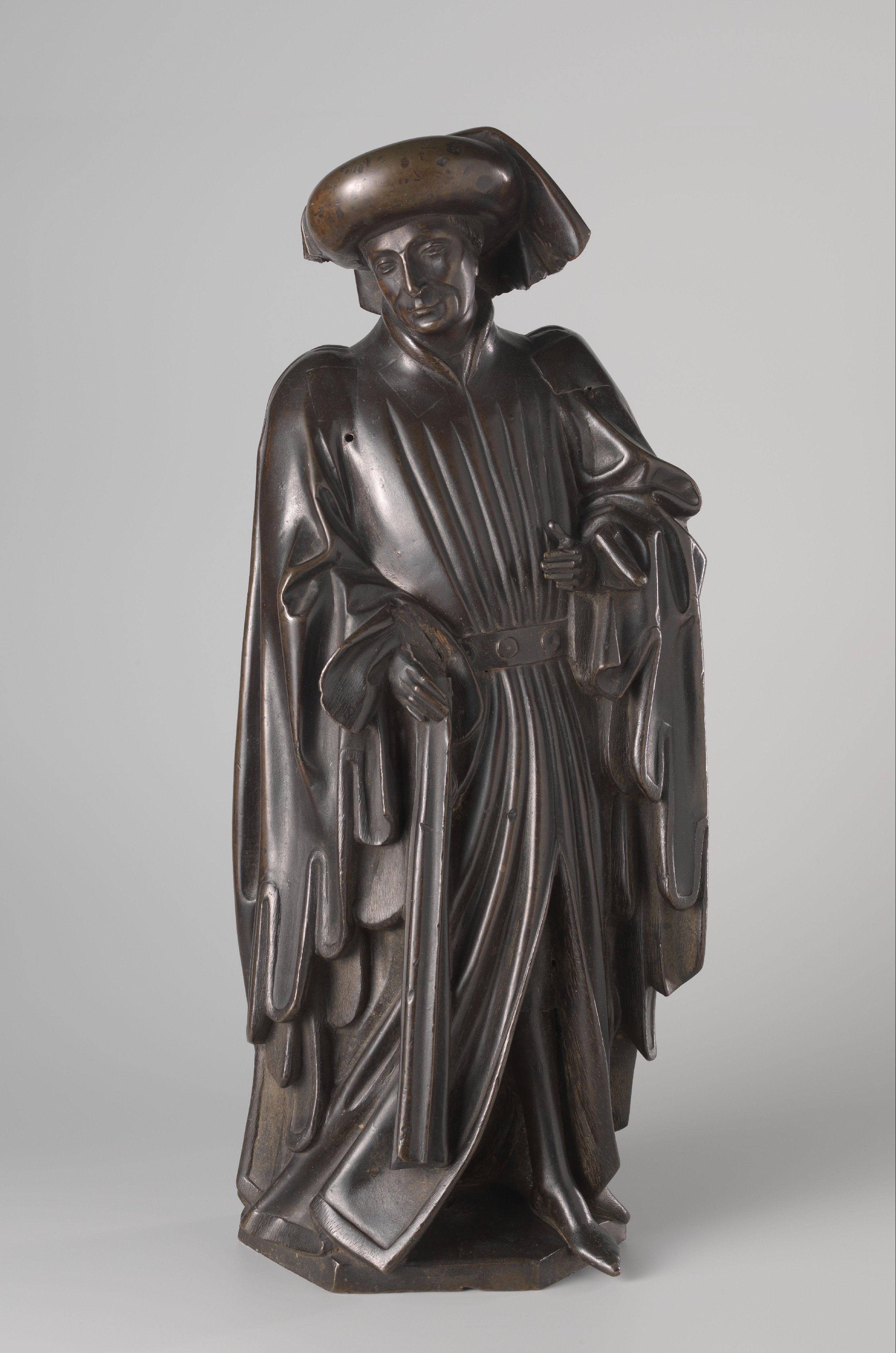
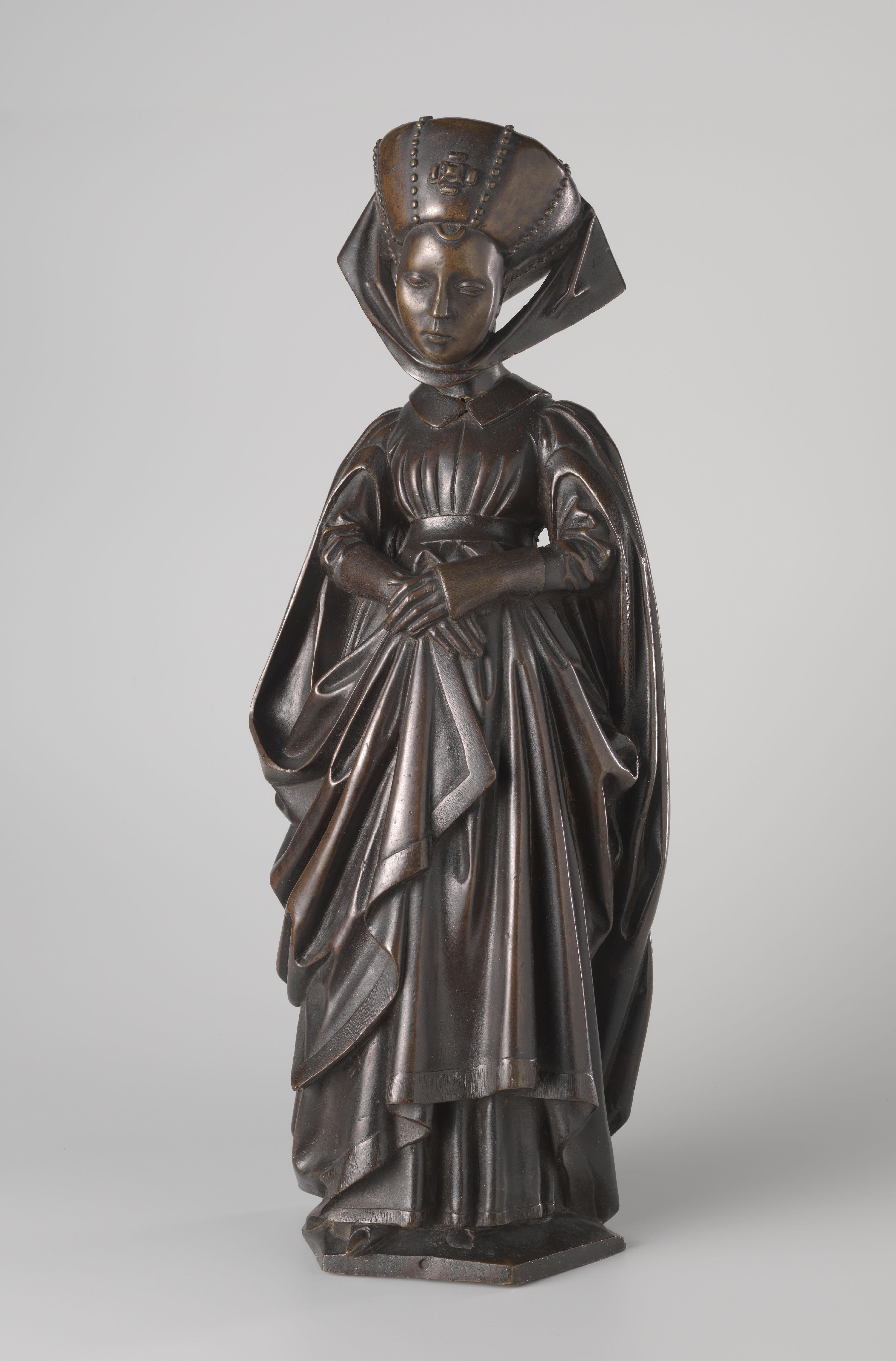
This figure comes from the tomb of Duke Philip the Bold from the church of Champmol near Dijon (Burgundy, France). Philip, who founded the monastery and designated it as his burial place, hired the best artists, many of whom came from the Netherlands. While the commission was given in 1381, the work was not completed until 1410, six years after the duke’s death. This mourner is unusual for the time because it is not carved as a static low relief on the pedestal of the tomb but interacts with the viewers and their fellow procession members. The lifelike quality of the figure is due in large part to the alabaster. Its softness allowed artists to carve details into the material, and the transparent, milky white stone could also be polished to a high gloss. A plaster cast of this mourner decorates the empty niche in the Tomb of Philip the Bold in Dijon, France.
The authoritative record is held by Cleveland Museum of Art. LinkedCulture surfaces this object and its connections; it does not alter institutional metadata.
Related across collections
Semantically similar works from Cleveland Museum of Art and other institutions.
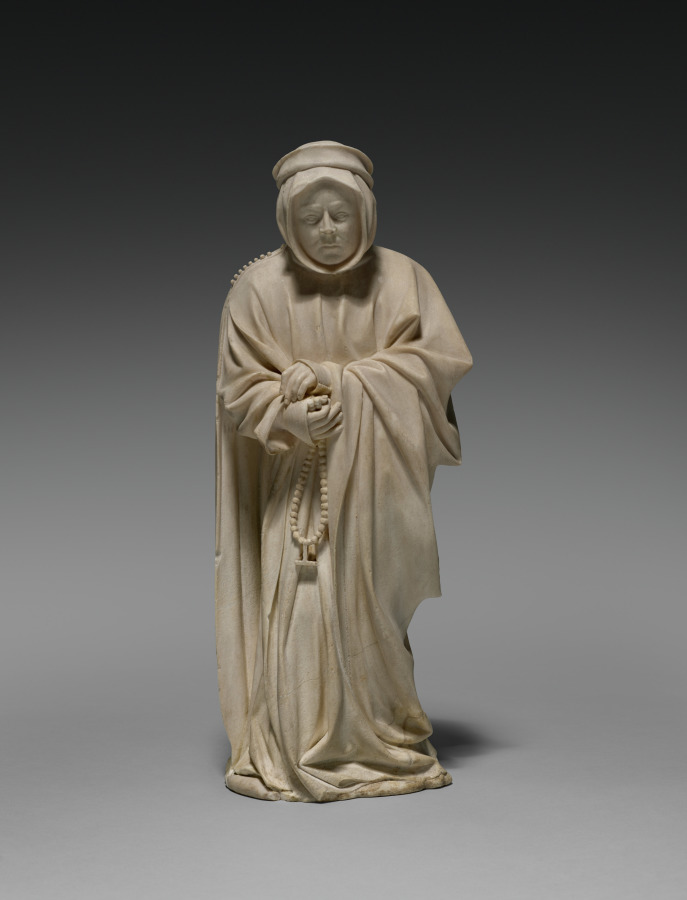
Mourner from the Tomb of Philip the Bold, Duke of Burgundy (1364–1404)
Cleveland Museum of Art
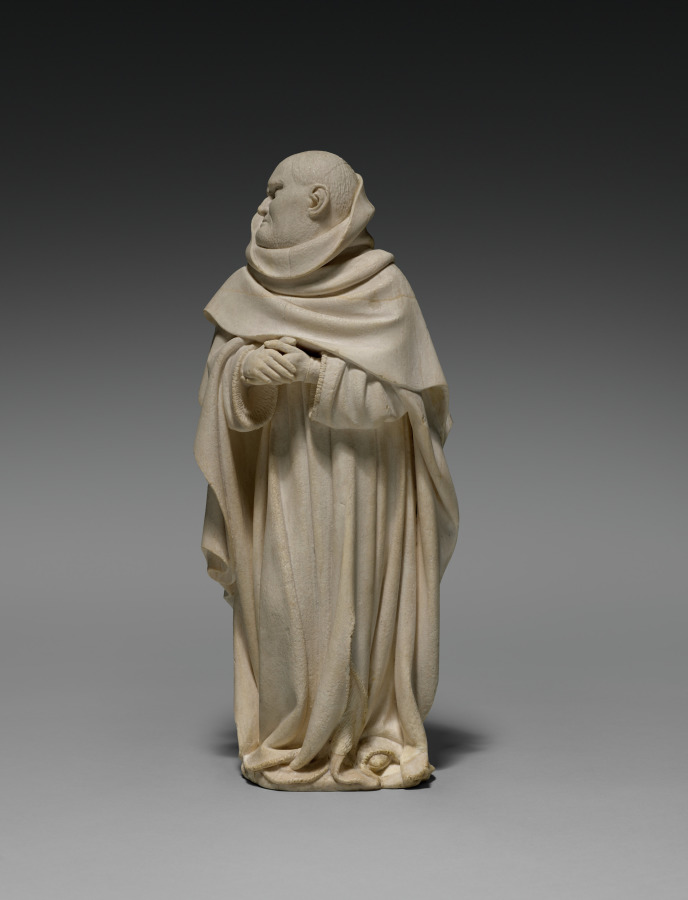
Mourner from the Tomb of Philip the Bold, Duke of Burgundy (1364–1404)
Cleveland Museum of Art
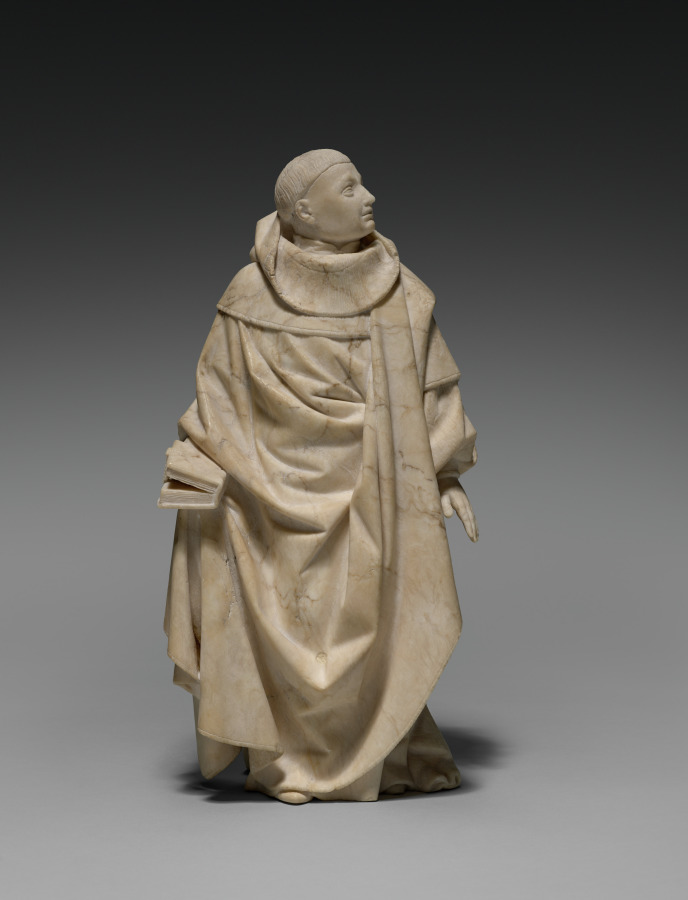
Mourner from the Tomb of John the Fearless and Margaret of Bavaria
Cleveland Museum of Art
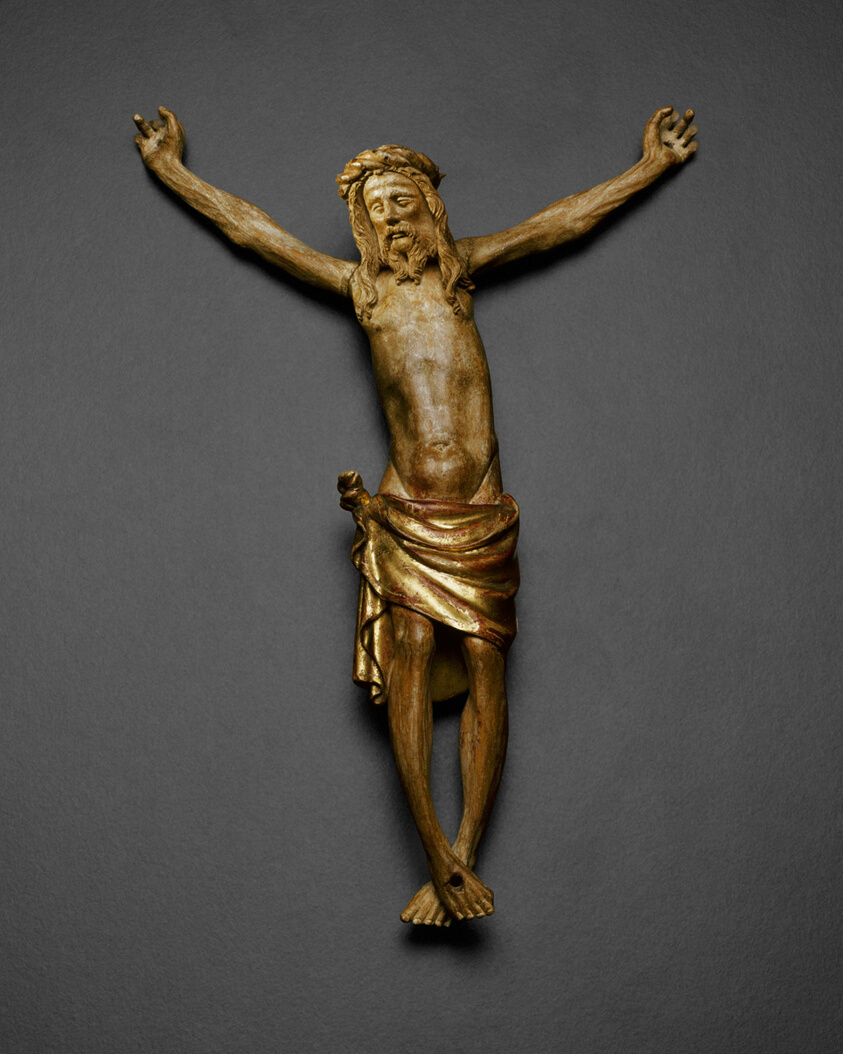
Corpus of Christ, from the Altarpiece of the Crucifixion
Art Institute of Chicago
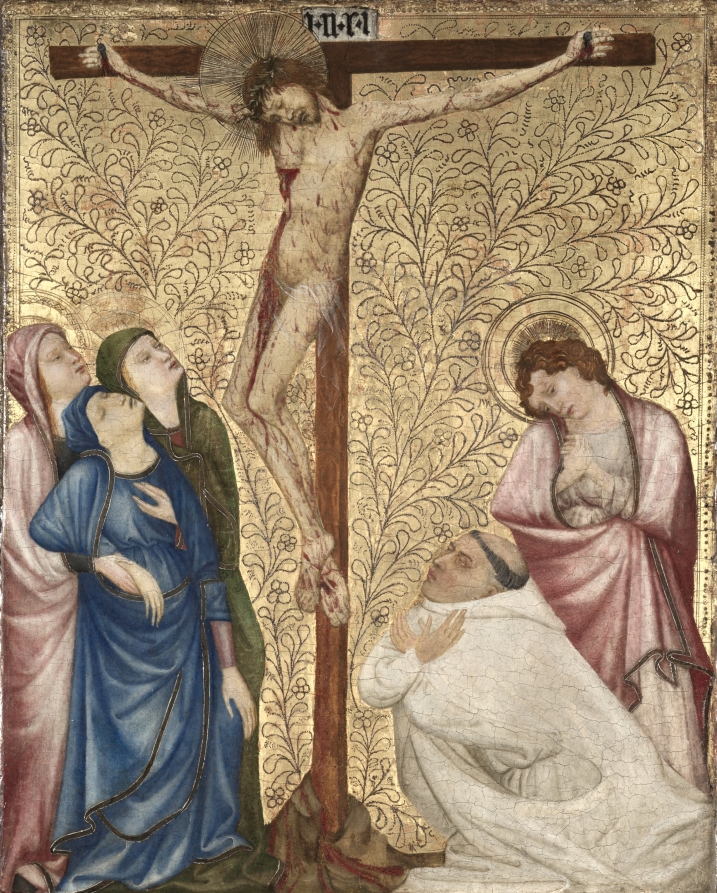
Calvary with a Carthusian Monk
Cleveland Museum of Art
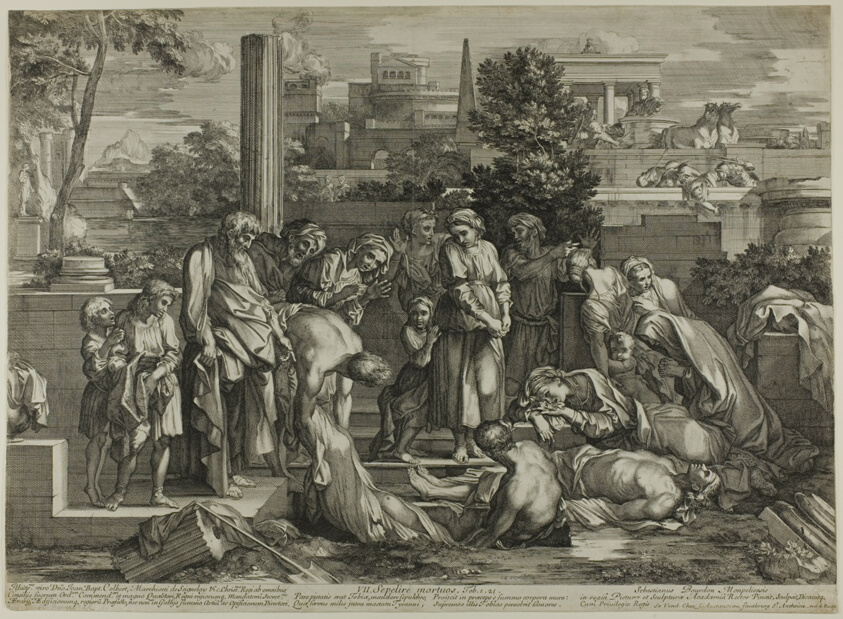
To Bury the Dead, from The Works of Mercy
Art Institute of Chicago
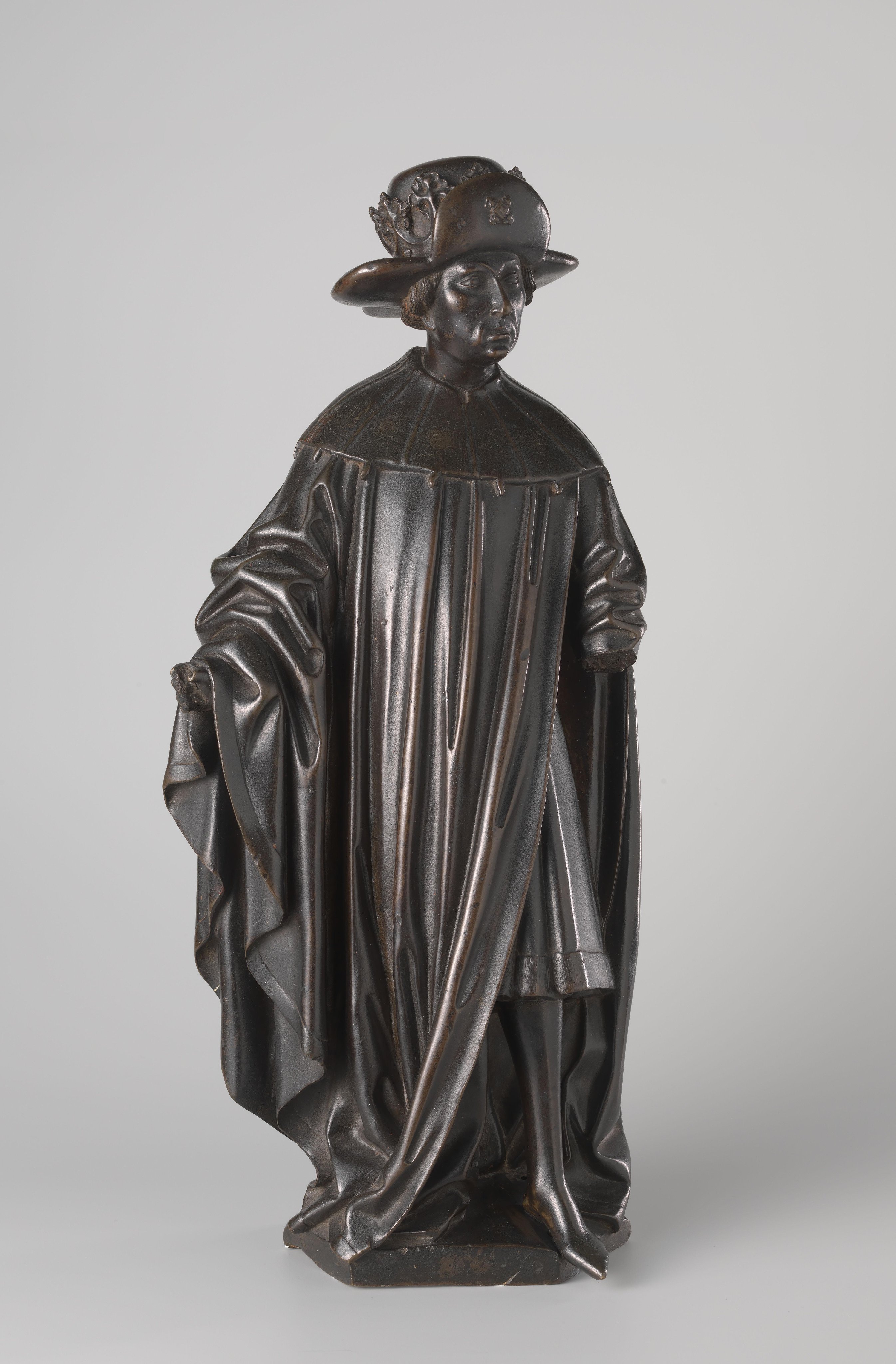
Isabella van Bourbon & Pleurants
Rijksmuseum
Isabella van Bourbon & Pleurants
Rijksmuseum
Isabella van Bourbon & Pleurants
Rijksmuseum
Isabella van Bourbon & Pleurants
Rijksmuseum
Isabella van Bourbon & Pleurants
Rijksmuseum
Isabella van Bourbon & Pleurants
Rijksmuseum