Cleveland Museum of Art
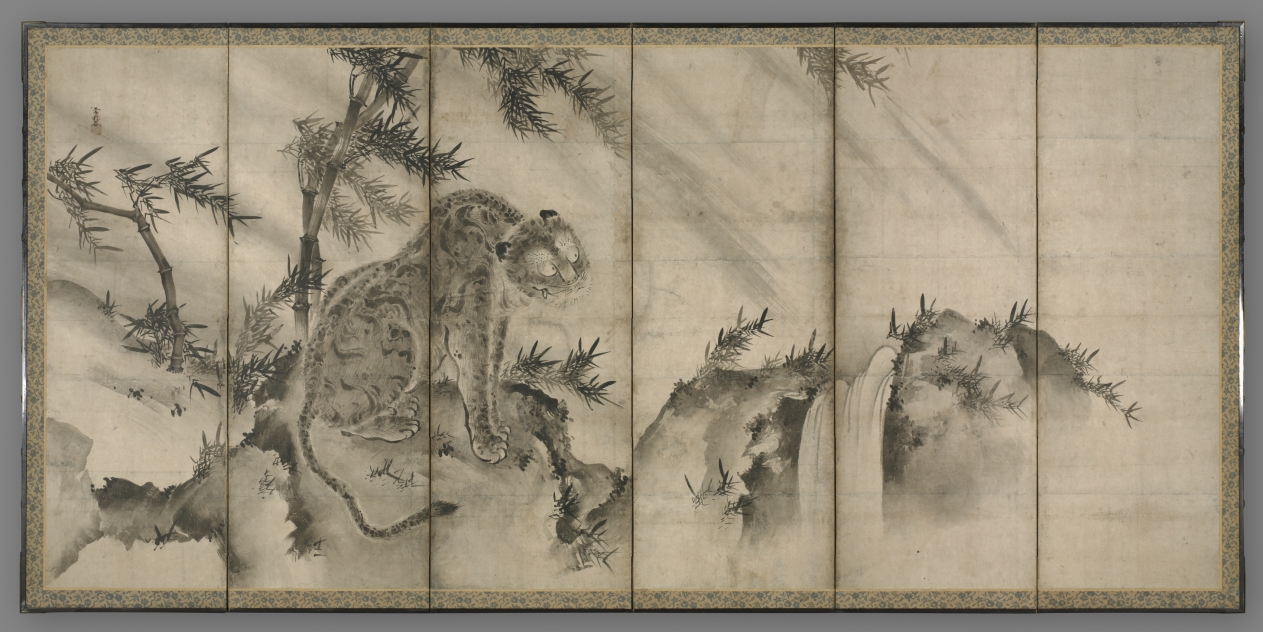
Dragon and Tiger
Sesson ShūkeiLinkedCulture matchlcp-b56ed7bf3266
- Date
- c. 1546–56
- Medium
- One of a pair of six-panel folding screens; ink on paper
- Culture
- Japan, Muromachi period (1392–1573) to Momoyama period (1573–1615)
- Department
- Japanese Art
- Institution
- Cleveland Museum of Art
- Object ID
- 135594
From the Cleveland Museum of Art record
In Chinese cosmology, the tiger's roar is said to produce wind. In Chinese paintings, the tiger is often shown with a dragon, who creates rain clouds. Together, they represent the balancing forces of the universe. Chinese presentations of the theme, often in hanging scroll format, provided the basic composition for the pair of screens to which this one belongs. Although the theme of this painting derives from Chinese philosophy and pictorial culture, Sesson's tiger is likely modeled after Korean prototypes of the Joseon period circulating in Japan.
The authoritative record is held by Cleveland Museum of Art. LinkedCulture surfaces this object and its connections; it does not alter institutional metadata.
Get printable QR codesHide QR codes
Open QR codes for this object page and the museum record. They stay collapsed until needed.
Provenance & credit
As published by the source institution. Coverage varies — not every institution's open-data feed includes ownership history.
- Credit line
- Purchase from the J. H. Wade Fund
- Provenance
- H. Mitsui; C. Satomi | ?-1959: (Howard Hollis and Co., Cleveland, OH, sold to the Cleveland Museum of Art) | 1959-: The Cleveland Museum of Art, Cleveland, OH, 1959-present
Related across collections
Semantically similar works from Cleveland Museum of Art and other institutions.